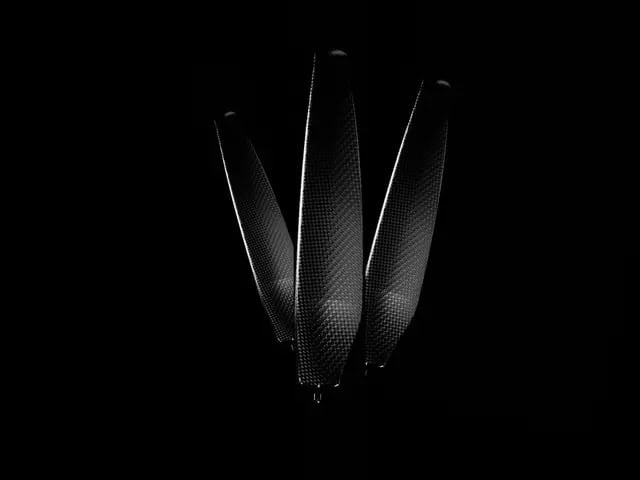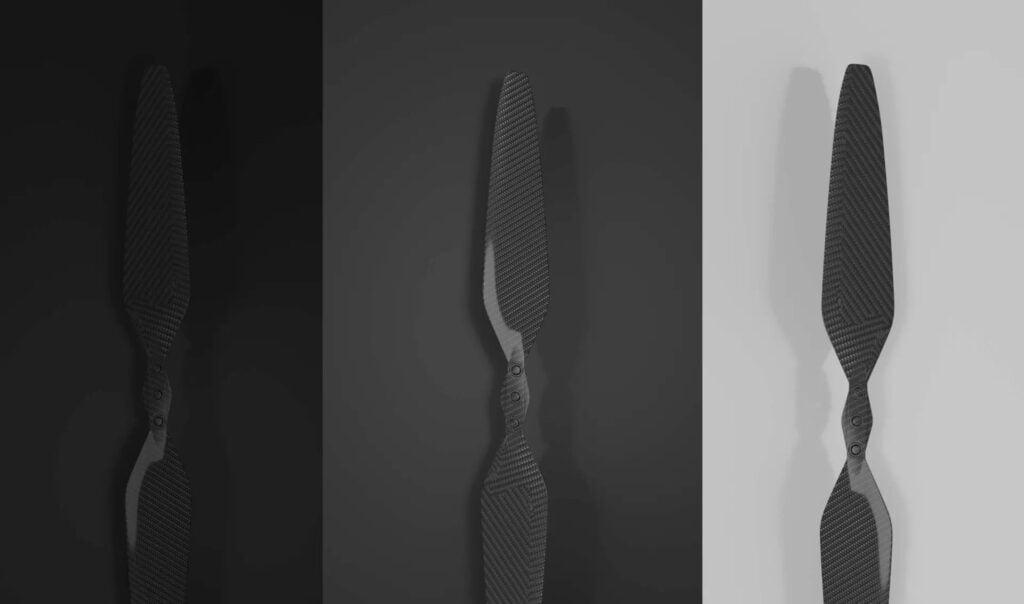
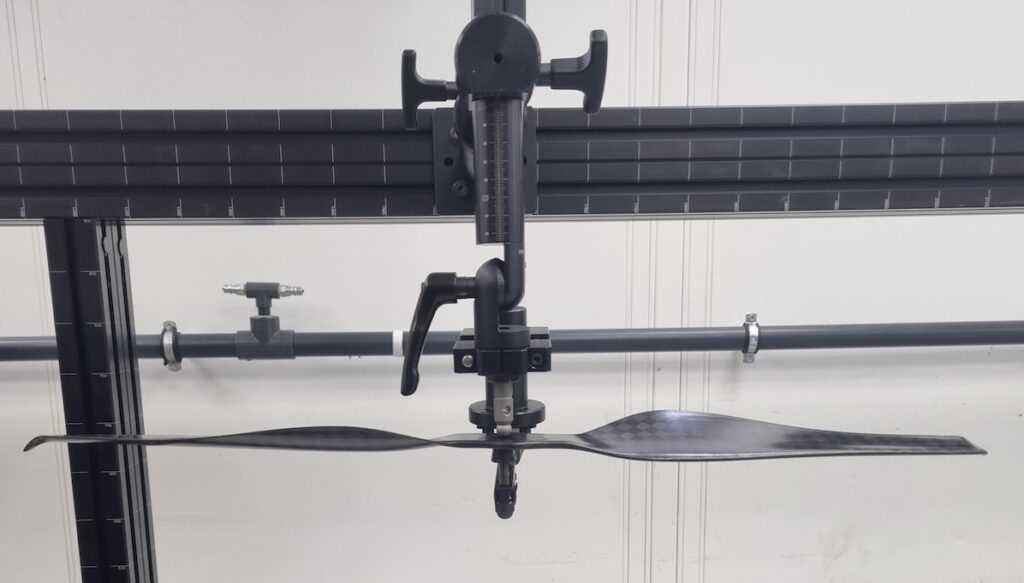
Flyber’s proprietary UK-based production method for composite Unmanned Aerial Vehicle (UAV) propellers combines blade design flexibility, short lead times, scalable output, and stronger supply chain integrity.
 The company’s approach addresses a longstanding UK manufacturing gap. While the UK has strong design and research capability, scaling advanced composite production domestically has remained a challenge. Flyber’s Northampton facility is intended to support UK and NATO UAV manufacturers with locally produced propulsion components.
Composite propellers present a technically demanding manufacturing challenge. Flyber combines proprietary algorithms, in-house simulation, and automated production to optimize carbon fiber parts and transfer designs directly into manufacturing. This enables blade performance to be tailored to specific aircraft requirements rather than relying solely on standard off-the-shelf components.
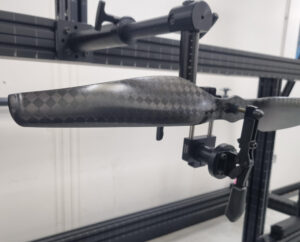 The out-of-autoclave process avoids lengthy cure cycles, supporting lower energy use, reduced material waste, on-demand fabrication, and improved recyclability. Validation trials provided by Flyber show 15-minute cycle times, aerodynamic performance improvements of up to 30%, 5% lower weight, and 250% longer service life.
A modular, cell-based manufacturing model is designed to scale production capacity with demand, supporting higher volumes and shorter lead times while reducing reliance on distant or politically sensitive supply chains.
Rowan Carstensen, Co-founder and CEO of Flyber, “Composites have long promised unmatched strength-to-weight ratios but came with penalties in design flexibility, production scalability and cost, and Flyber’s platform and process remove those trade-offs by combining software-driven design optimisation with fully integrated manufacturing tailored to composite propellers.”
Carstensen added, “Customers want production-ready composite propellers with bespoke performance for their aircraft and end users, along with high volumes and reduced lead times, and Flyber bridges the gap the UK traditionally falls behind on in rapidly scaling manufacturing and services.”
The UK Ministry of Defence’s Defence Investment Plan 2026 allocates more than £5 billion to autonomous systems over four years and places emphasis on domestic industrial capacity and trusted supply chains. Flyber’s UK-based manufacturing model aligns with that wider requirement for greater domestic production capability.