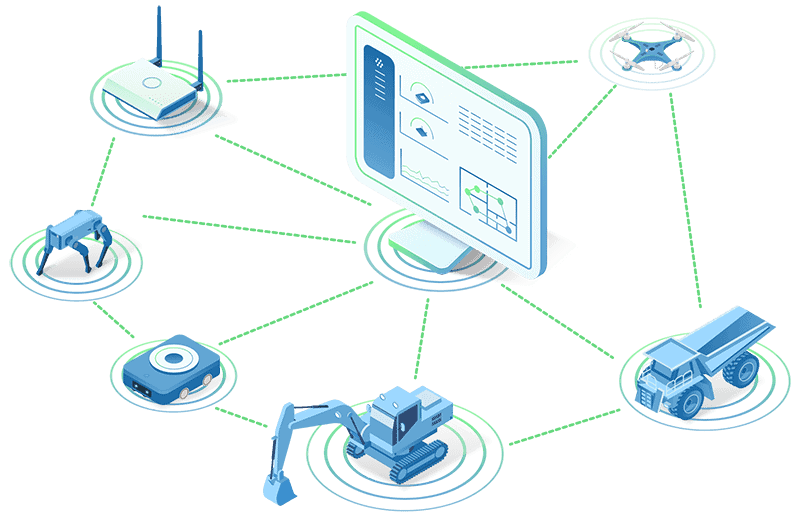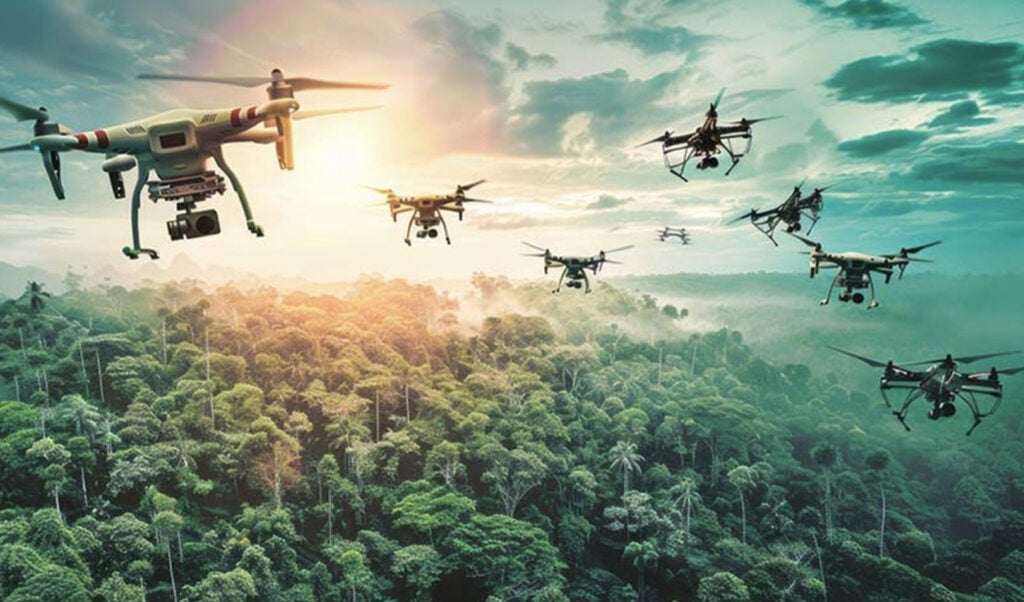



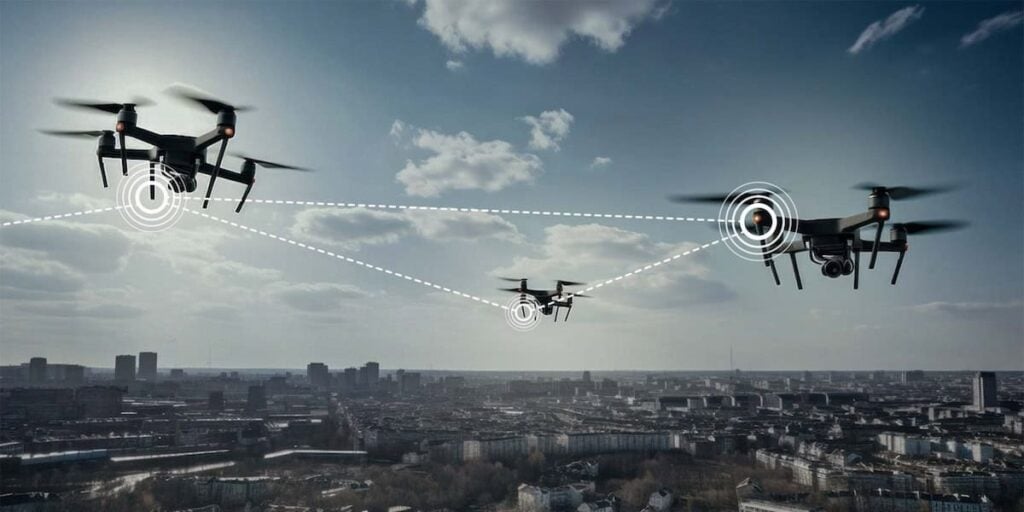
Autonomous UAV swarms require communications networks that allow multiple aircraft to exchange information with each other and with ground units during operations. Meshmerize is addressing this requirement through a drone networking approach that enables UAVs to form an independent wireless network while also making use of available cellular and satellite connectivity where it exists.
Drones have traditionally relied on near-line-of-sight communications controlled by a single operator. While this approach can support individual UAV operations, autonomous drone swarms require a different communications model in which aircraft can collaborate and share information directly.
A search-and-rescue mission, for example, could involve multiple drones working together to locate lost hikers in rough terrain. Such applications require a drone network capable of supporting communication between UAVs and connections to ground personnel.
Extending UAV Connectivity Beyond Existing Infrastructure
Existing 4G and 5G cellular infrastructure is primarily optimized for ground communication and usually focuses on urban areas. Remote locations such as farms, forests and camps can experience patchy cellular coverage, creating challenges for UAV operations and drone swarms that require reliable communications.
Meshmerize provides a mesh networking approach that allows drones to create an independent wireless network without relying on cellular or satellite coverage, while also using cellular connectivity wherever it is available.
Within the network, each UAV can act as an access point, relaying messages between other drones and a gateway node. This enables drones to create a dynamic network that can extend coverage to remote areas when and where required.
The Meshmerize software provides low-latency connectivity designed to remain resilient to mobility and environmental changes. The hardware-independent technology can be installed directly on drones and is designed to coexist with existing infrastructure rather than replace it.
For drone swarm applications, Meshmerize’s software scales over 200 nodes, supporting distributed control and low-latency connectivity. The company describes the approach as providing a resilient last-mile connectivity layer for environments where cellular networks have limited coverage.
Applying Drone Mesh Networking Through 6G Life
The use of Meshmerize’s drone networking technology is being explored through projects focused on aerial communications, disaster response and connectivity in areas without existing infrastructure.
The 6G Life project uses Meshmerize’s drone network technology for improved disaster management and firefighting applications. One scenario considered by the project involves a drone swarm connected through Meshmerize hovering above a wildfire, providing real-time data and a reliable connection for disaster workers.
The application highlights the role that aerial networks could play in supporting communications during emergency situations where connectivity requirements extend beyond conventional infrastructure.
Exploring Adaptive Connectivity Through 6G for Connected Sky
The 6G for Connected Sky project is focused on providing robust and reliable connectivity for aerial and ground users through an adaptive network architecture.
A key area of interest for the project is connectivity in locations without existing infrastructure. Such approaches could support applications including remote healthcare and education by extending communications capabilities into areas where conventional connectivity is limited.
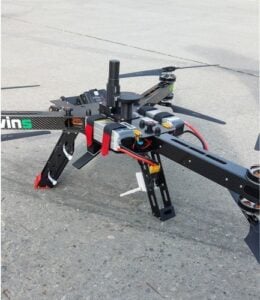
Image above are from drone testing with Lakeside Labs in Austria, as a part of the 6G Sky project.
Supporting Teleoperated Construction Through 5G FoLa
Meshmerize also contributed to the 5G FoLa project, which examined the integration of mesh networks with 5G infrastructure in a teleoperated construction use case.
During the project, drones formed a secondary mesh network to maintain stable connections for teleoperated excavators. The mesh network supported the 5G link in areas where maintaining stable connectivity was challenging.
The project examined how UAV-based networking could work alongside existing cellular infrastructure, with drones providing an additional communications layer for specific operational scenarios.
Building Connectivity for Future UAV Operations
Autonomous UAV applications, from emergency response to agricultural operations, depend on reliable communications between aircraft and ground users. As drone operations become more distributed, connectivity remains a key requirement for enabling collaboration between multiple UAVs.
Mesh networking provides one approach by allowing drones to relay messages between one another and create a dynamic network when required. Combined with the ability to use available cellular and satellite infrastructure, this approach provides a way to support communications in locations where cellular coverage may be limited.
The 6G Life, 6G for Connected Sky and 5G FoLa projects demonstrate different applications of Meshmerize’s networking technology, including disaster management, aerial and ground connectivity, and teleoperated construction. Across these examples, the focus remains on maintaining reliable communications for UAV operations through adaptable networking approaches.