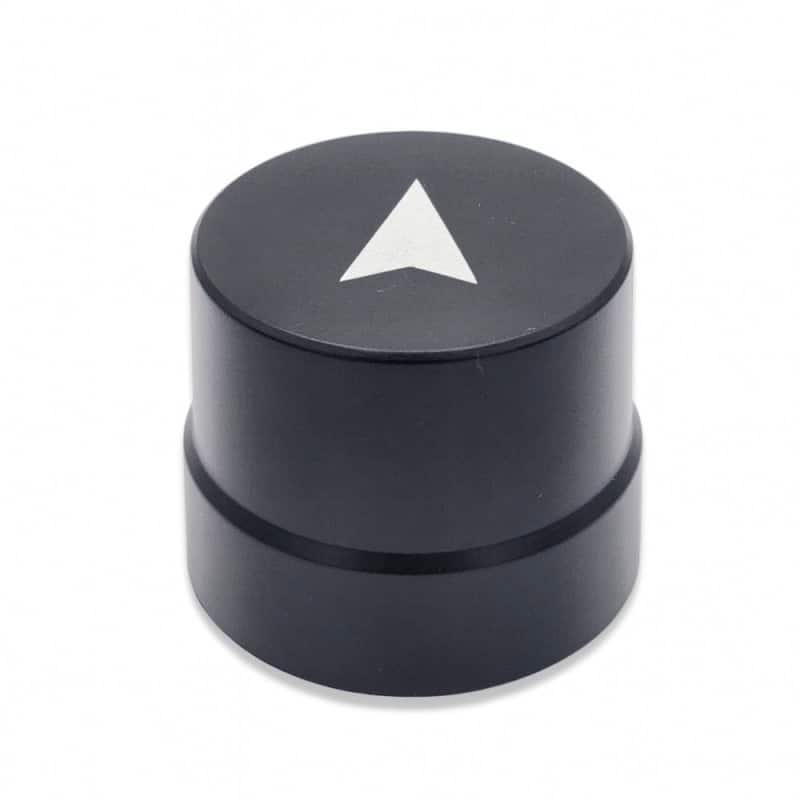



GNSS.store develops positioning and navigation solutions for unmanned systems, including the ELT0251, an ultraLight DroneCAN compass designed for UAVs, robotic platforms, and autonomous systems. Read more >>
ELT0251 from GNSS.store
The compact module is designed to provide clean, stable magnetic field data, supporting more reliable heading estimation by helping reduce the effects of magnetic interference.
Compass performance is an important consideration in autonomous flight. Many integrated compass modules are positioned close to motors, electronic speed controllers (ESCs), batteries, and high-current wiring, where magnetic interference is typically strongest. These conditions can introduce noise into magnetic measurements, affecting yaw estimation and overall navigation performance.
The ELT0251 is designed to be mounted away from power electronics, helping to reduce magnetic interference and improve navigation stability. Weighing only 9 g and measuring 27 × 36 × 15 mm, the module combines a compact form factor with a robust DroneCAN interface. It operates from a 4.75 to 5.25 V supply, uses a 4-pin JST-GH 1.25 connector, and supports screw mounting for integration into unmanned platforms.
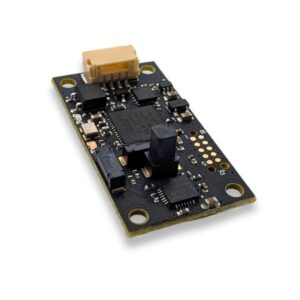
Built around the RM3100 three-axis magnetometer, the compass uses PNI’s proprietary magneto-inductive sensing technology to support stable magnetic field measurement. Compared with many low-cost compass solutions, the RM3100 offers higher sensitivity, low noise, and strong measurement repeatability, making it suitable for applications requiring precise heading information and consistent magnetic data.
The RM3100 provides measurement across the X, Y, and Z axes, with a magnetic field range of ±800 µT. The magnetometer operates from a 2.4 to 3.6 V supply, with typical operating current of 8 mA and standby current of 2 µA. Its operating temperature range is -40°C to +85°C, while the ELT0251 module is rated for -25°C to +85°C. The output data rate is configurable up to 600 Hz.
DroneCAN communication supports reliable long-distance connectivity while simplifying integration by eliminating the need for serial ports. Compatibility with Pixhawk flight controllers, PX4, and ArduPilot enables the ELT0251 to be deployed across a range of UAV and robotic navigation architectures.
Despite its protective housing, the module remains highly compact and is supplied fully assembled, tested, and ready for use. The kit includes one ELT0251 compass, one 400 mm DroneCAN JST-GH 4-pin male cable with 1.25 mm pitch, and two 2.5 × 6 mm screws. The product is RoHS and REACH compliant.