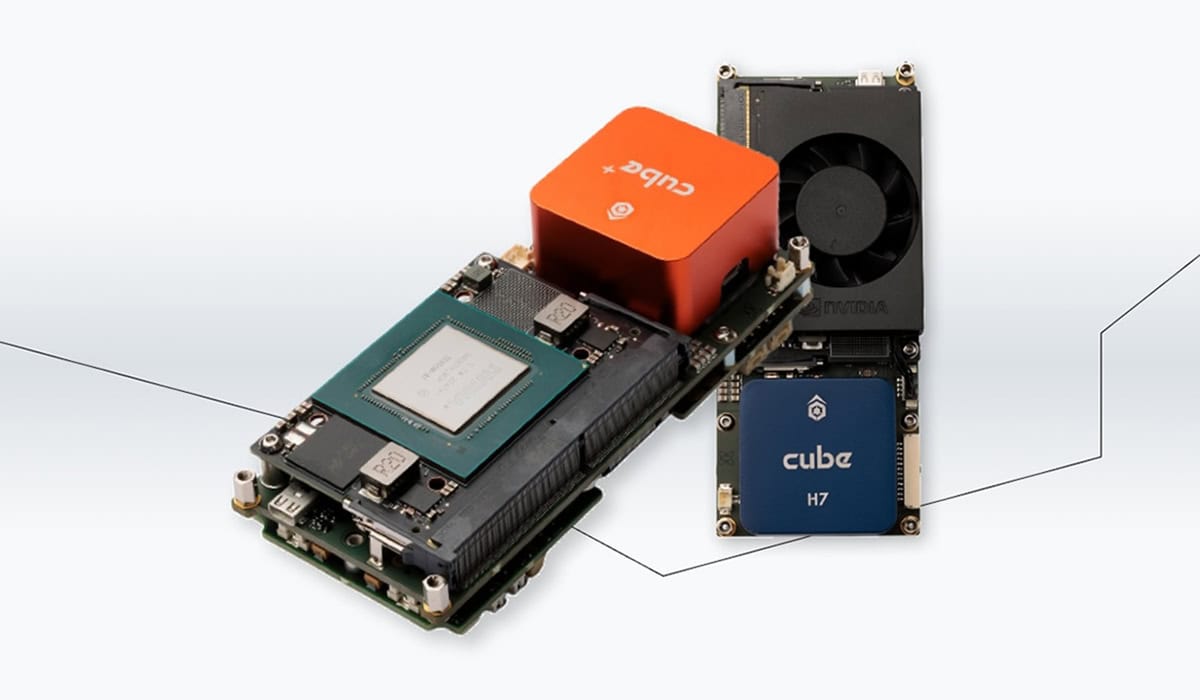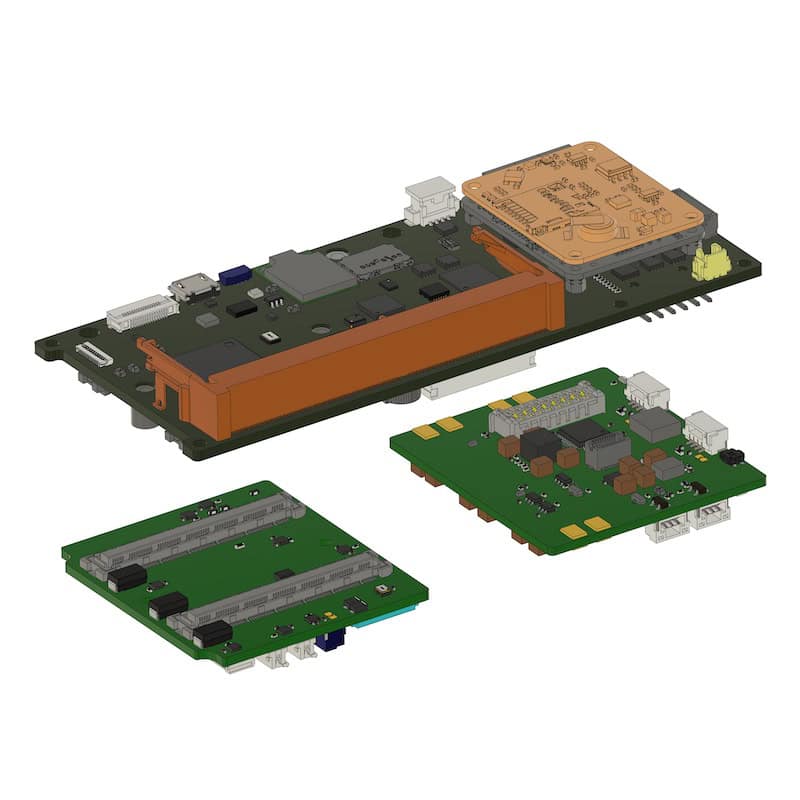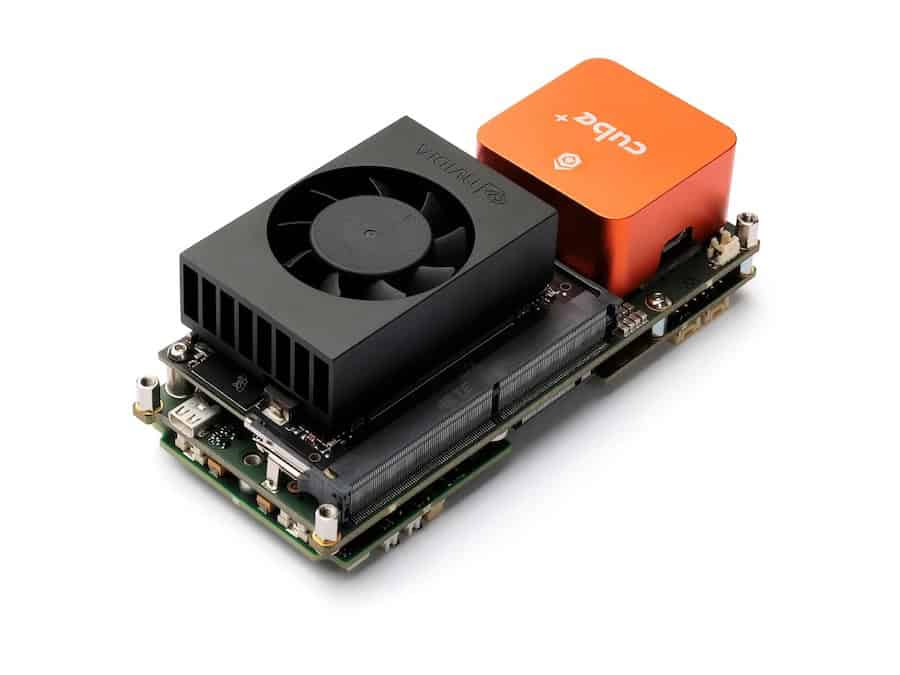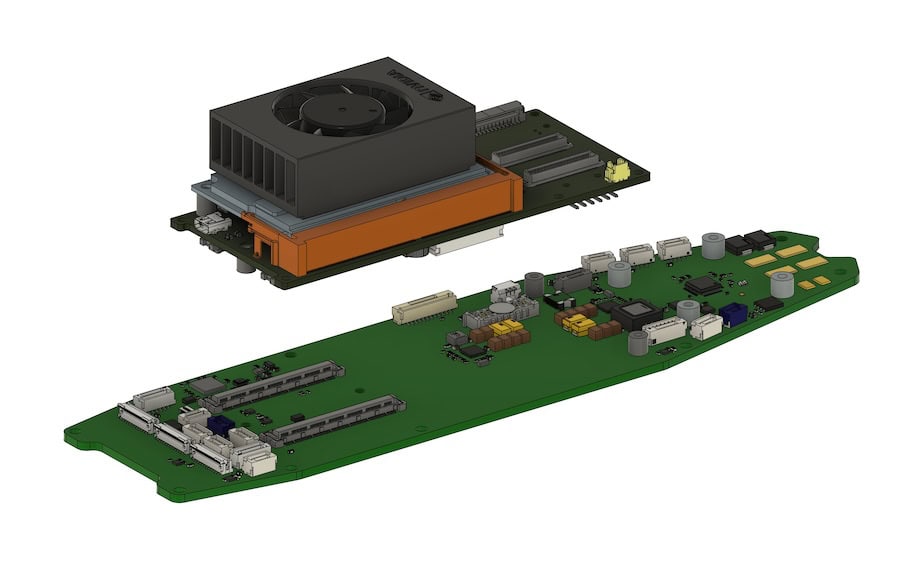
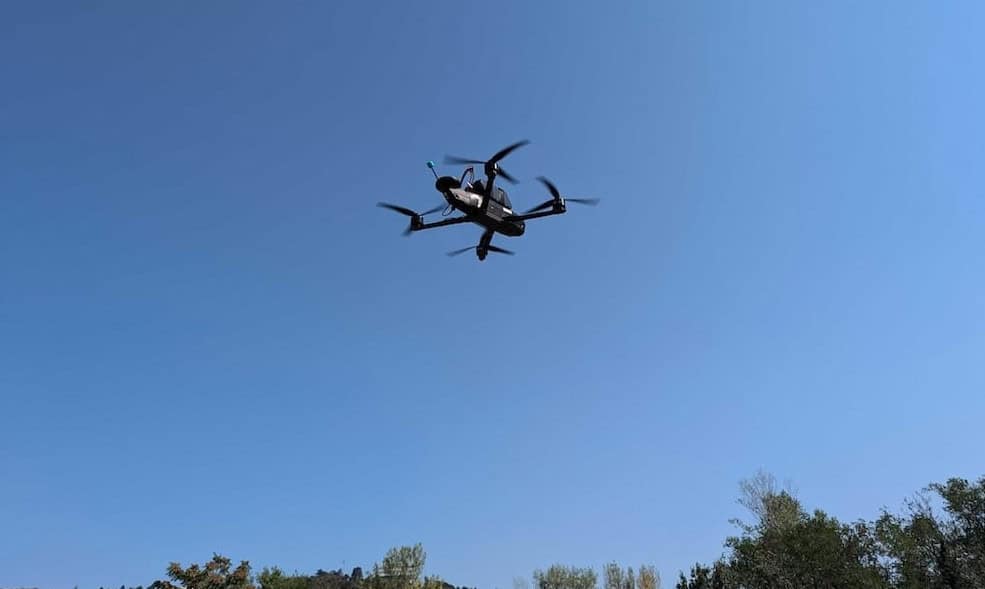
Airvolute‘s Patron FPV is a versatile First Person View (FPV) quadcopter platform engineered for pilot training, autonomous mission development, and precision strike operations in contested environments.
Designed to combine advanced artificial intelligence with intuitive operation, the Patron FPV enables operators to achieve high mission success rates with minimal training requirements.
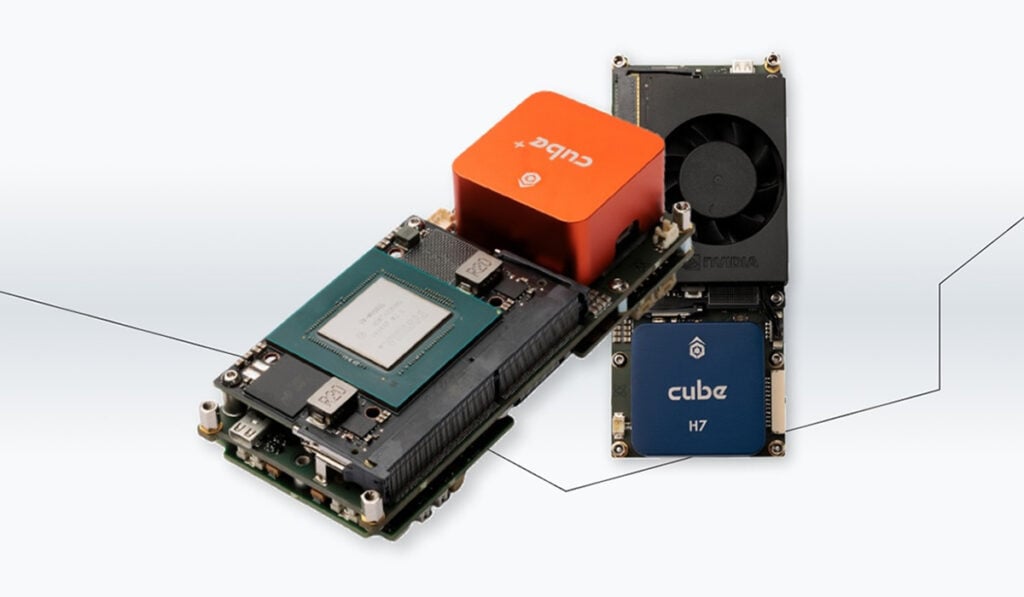
At the heart of the Patron FPV platform is the NVIDIA Jetson Orin Nano computing module and the DroneCore Lite flight controller, delivering up to 40 TOPS of AI processing power. This onboard computing capability supports a range of advanced features, including head tracking for intuitive target selection, deep neural network based object detection, and terminal guidance algorithms that allow autonomous strike capabilities from distances of 300 to 400 metres.
The platform’s open architecture ensures it can rapidly evolve alongside changing operational requirements. New AI algorithms and software updates can be integrated with ease, while security measures ensure all mission algorithms are automatically destroyed if the aircraft is captured.
Patron FPV features a high resolution camera payload capable of processing real time video feeds of up to 4K at 28 fps and provides up to 10x digital zoom for enhanced situational awareness. An optional infrared camera further expands operational flexibility in low light and nighttime environments.
The quadcopter offers a maximum payload capacity of 3kg, speeds of up to 100 km/h, and a range of up to 14km. Standard communications are provided through an analog radio system, with optional digital command and control links from Doodle Labs and Silvus Technologies enabling high throughput, long range networking capabilities.
As part of the broader Airvolute ecosystem, Patron FPV can operate as a connected node within an intelligent aerial network, sharing data in real time and integrating with third party systems, sensors, and command infrastructures. This enables the platform to support a wide range of missions, from individual tactical deployments to coordinated multi drone operations and scalable aerial defense architectures.