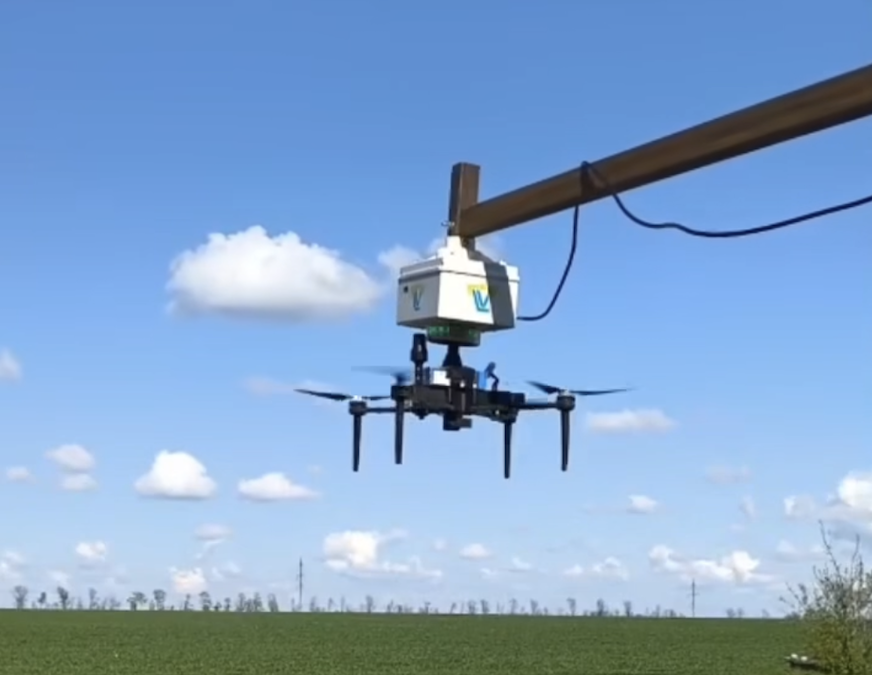
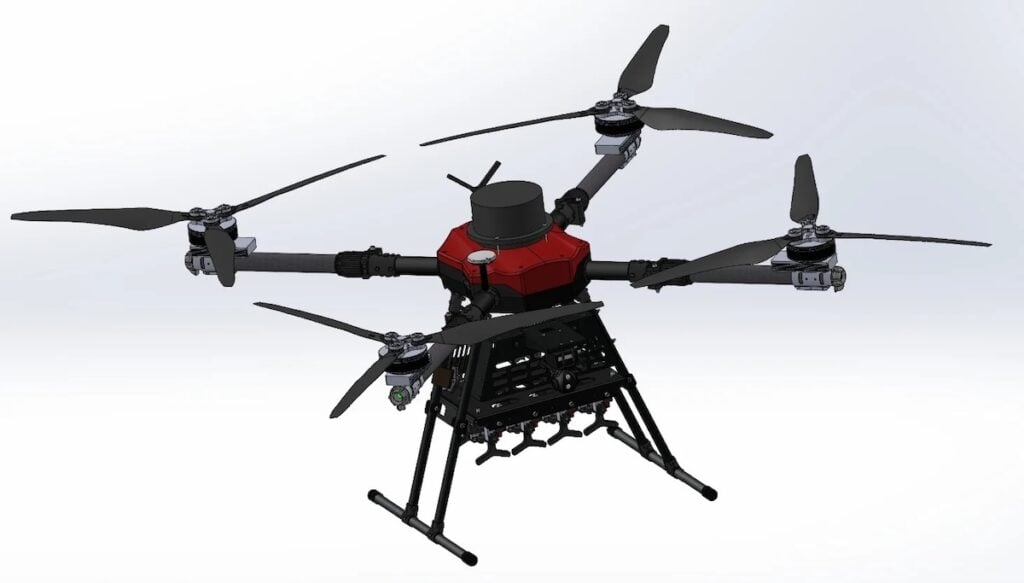
Rotary-wing unmanned aircraft have moved from a technically challenging alternative to fixed-wing flight into widespread use across commercial and defense applications. For Reactive Drone, this development has included the transition of multirotor technologies originally used for surveying and agriculture into platforms adapted to meet changing operational requirements in Ukraine. Read more >>
From Fixed Wings to Rotary Flight
For much of aviation history, flight was closely associated with fixed-wing aerodynamic principles. In this configuration, an aircraft relies on airflow over an airfoil to generate lift, with forward speed playing a fundamental role in maintaining controlled flight.
Rotary flight developed along a different path. Leonardo da Vinci conceptualized an early vertical-flight machine centuries before practical rotary-wing aviation became possible. In unmanned aviation, multirotor concepts were also investigated relatively early, but their development was constrained by engineering limitations.
The emergence of comparatively lightweight electric motors and improved battery technologies helped address some of those constraints. These developments made it practical for electrically powered multirotor aircraft to maintain stable flight while carrying useful payloads.
Multirotor UAVs are now used across applications ranging from aerial imaging to battlefield reconnaissance. Their development has accelerated particularly rapidly since the beginning of Russia’s full-scale invasion of Ukraine, where evolving operational requirements have driven continued changes in drone design, production, and deployment.
Fixed-Wing and Multirotor Flight
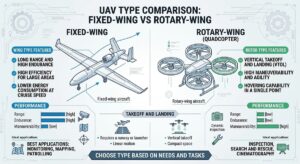
The operational differences between fixed-wing and multirotor aircraft begin with the way each generates lift.
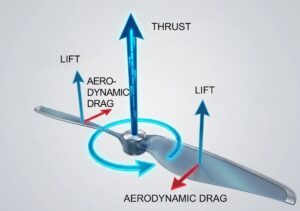 A fixed-wing aircraft relies primarily on its wing profile. Airflow over the wing produces the lift required for flight, meaning the aircraft must maintain continuous forward movement at or above its specific stall speed.
This aerodynamic configuration can provide efficient long-distance flight. However, fixed-wing aircraft generally require suitable infrastructure or equipment for launch and recovery, such as a runway or catapult system. They also cannot remain stationary in the air.
Multirotor aircraft operate differently. A conventional helicopter generates lift using a rotary-wing system that incorporates complex swashplate mechanics, flight controls, and structural components.
Multirotor drones simplify this approach by using multiple fixed-pitch rotors. Their ability to generate lift is not dependent on forward airspeed, allowing them to hover at a fixed position as well as take off and land vertically.
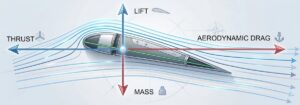
As a result, a multirotor aircraft can operate from a relatively small, flat area without requiring a runway or catapult. It can also change direction, speed, and trajectory without first establishing the forward movement required by a fixed-wing platform.
These characteristics help explain the use of multirotors in missions where precise positioning, constrained operating areas, or rapid changes in flight direction are required.
Choosing a Multirotor Architecture
The number of axes and motors used on a multirotor determines its basic structural configuration. This decision is made early in the development process because it influences factors including payload capacity, redundancy, and the aircraft’s overall dimensions.
Several configurations are commonly considered.
3-axis tricopters are relatively uncommon. Some use coaxial motor arrangements, with two motors installed on each axis.
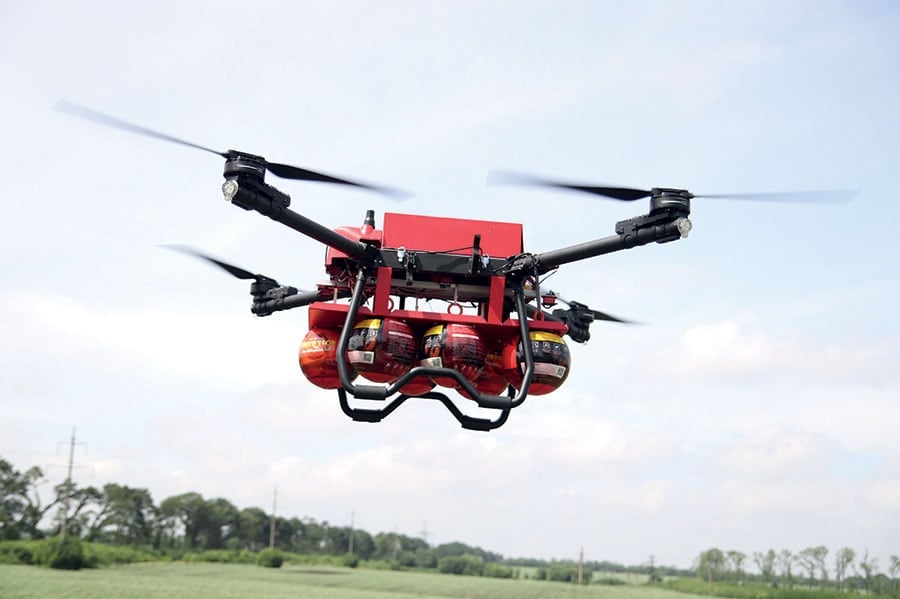
4-axis quadcopters are among the most widely used multirotor configurations. A conventional arrangement uses four motors, with one motor mounted on each arm. Four-axis airframes can also use coaxial propulsion, including X8 configurations that install eight motors across four arms.
6-axis hexacopters provide additional propulsion redundancy and increased resistance to wind. With six motors, the configuration can allow an aircraft to carry out an emergency landing if one motor fails.
8-axis octocopters are intended for applications requiring the carriage of particularly heavy payloads.
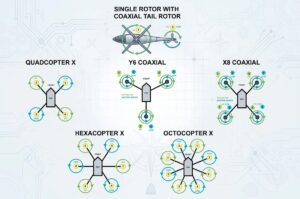
The appropriate arrangement is established during the Research & Development (R&D) process rather than selected independently of the mission.
Engineers first determine operational requirements, including the required flight time and payload weight. Those parameters are then used to define factors such as frame materials, propulsion architecture, the number of axes, and the allocation of motors across the aircraft’s arms.
This process means that multirotor architecture is closely linked to the task the aircraft is expected to perform.
From Surveying and Agriculture to Defense Applications
Before the full-scale invasion of Ukraine, Reactive Drone’s work with rotary-wing aircraft was focused on commercial applications.
These included land surveying, precision agriculture, crop-protection spraying, and agricultural monitoring. Such applications provided an existing engineering and manufacturing basis for multirotor aircraft before defense requirements became a central consideration.
The full-scale invasion led to significant changes in both drone technology and manufacturing. Commercial systems were adapted within months to address defense requirements, drawing on established engineering experience and existing production capabilities.
The resulting rotary-wing platforms include quadcopter and hexacopter designs intended for different operational requirements.
KAZHAN and SHMAVIK Platforms
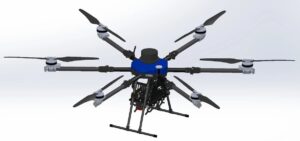
 The KAZHAN 630 Hexacopter (BAT 630) is a six-axis platform configured for high payload capacity and use on complex missions where substantial carrying capability is required.
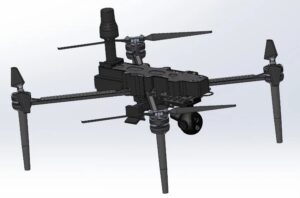
The KAZHAN 620 Quadcopter (BAT 620) uses a four-axis configuration that combines speed, operational range, and energy efficiency.
The SHMAVIK Quadcopter is an EW-resistant reconnaissance UAV developed as a domestic alternative to imported commercial drones.
Together, the three aircraft illustrate how different multirotor configurations can be selected according to specific mission requirements rather than applying a single architecture across every use case.
The KAZHAN 630 uses six axes where payload capacity and redundancy are important considerations, while the KAZHAN 620 employs the four-axis configuration widely used for balancing aircraft size, propulsion requirements, and efficiency. SHMAVIK applies the quadcopter architecture to reconnaissance in an environment where resistance to electronic warfare is a significant operational consideration.
Multirotors Across Commercial and Defense Operations
The same characteristics that have supported the adoption of multirotor UAVs in defense applications also apply to many commercial missions.
Vertical takeoff and landing reduces the requirement for dedicated launch infrastructure, while hovering allows an aircraft to maintain a fixed position over a target or area of interest. Rapid changes in direction can also support operations conducted within relatively confined areas.
Those characteristics contributed to the use of rotary-wing drones in surveying, agricultural monitoring, crop spraying, aerial imaging, and reconnaissance before their increasing deployment in defense operations.
Ukraine’s operational environment has subsequently placed additional emphasis on payload capacity, redundancy, energy efficiency, reconnaissance capability, and resistance to electronic warfare.
For Reactive Drone, the progression from commercial multirotor applications to defense-focused platforms demonstrates how the underlying rotary-wing architecture can be configured around different mission requirements.
While defense operations currently represent a major application for these systems in Ukraine, the same rotary-wing technologies also retain relevance to commercial activities and future reconstruction work. Their ability to operate vertically, hover, carry mission-specific payloads, and function without conventional runway infrastructure continues to distinguish multirotor UAVs from fixed-wing alternatives.
Read Why Rotary-Wing Drones Have Become the Cutting Edge of Unmanned Aviation on the Reactive Drone website.