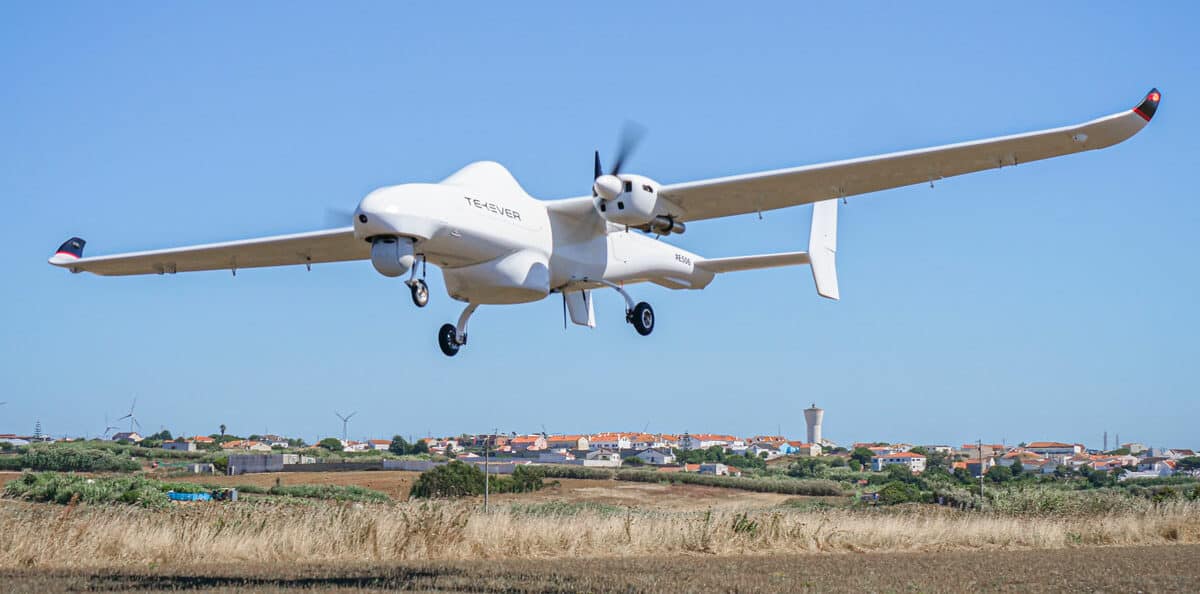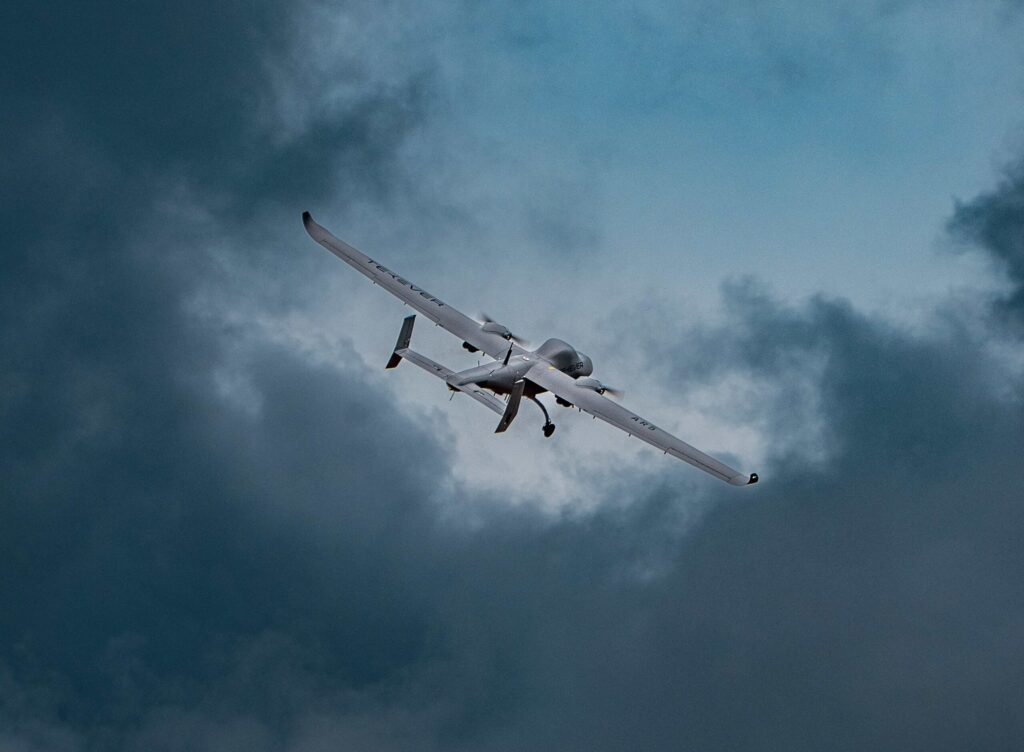



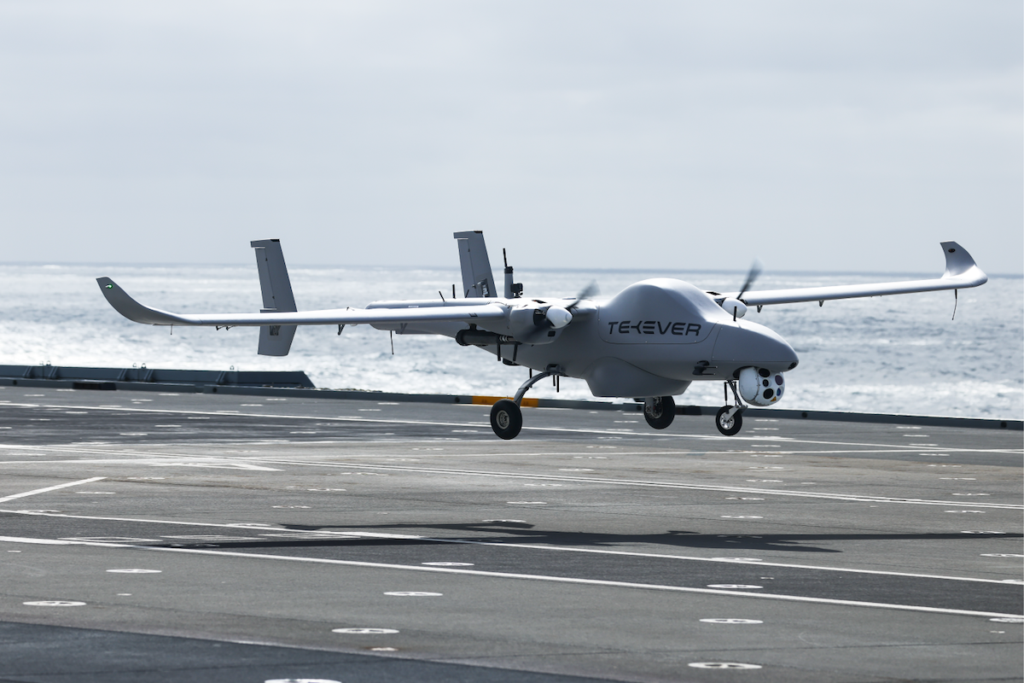
TEKEVER’s uncrewed aerial system, the AR5, has completed its first series of take-offs and landings from the flight deck of HMS Queen Elizabeth during the Heavy Lift Challenge 3 demonstration.
The trial commenced with a departure from TEKEVER’s Flight Operations and Training Centre in Atouguia da Baleia, Portugal, followed by an approximate 90-minute flight to rendezvous with the aircraft carrier. The AR5 then executed two landings and two take-offs directly from the warship’s flight deck before undertaking a 120-minute transit back to its mainland operating base.
The exercise explored how fixed-wing uncrewed platforms can be deployed and recovered at sea to conduct logistics, sustainment, and maritime intelligence, surveillance, target acquisition and reconnaissance (ISTAR) missions, while evaluating joint operations alongside other systems in a carrier strike group. Delivered through collaboration between the Royal Navy, British Army, Royal Air Force, and industry partners, the trials form part of broader efforts to integrate autonomous capabilities into front-line operations.
Tiago Nunes, TEKEVER Director of Platforms, said, “Operating an AR5 from a carrier for the first time marks an important step in bringing more proven capabilities into naval operations. TEKEVER is enabling naval forces to conduct missions with greater flexibility, extend operational reach, and respond to evolving requirements at sea. This demonstration showcases the level of systems integration achieved by working closely with the Royal Navy, turning advanced autonomous technology into capabilities delivering real operational value.”
Lieutenant Commander David Burton, trials sponsor for Navy Capability at the Royal Navy, added, “Heavy Lift Challenge 3 and Rapid Eagle have demonstrated the significant potential that autonomous fixed-wing systems could offer to future maritime operations. The successful operation of a TEKEVER AR5 from HMS Queen Elizabeth has provided valuable insight into how uncrewed systems might support logistics, sustainment and wider operational tasking in demanding maritime environments. Working alongside colleagues from Project Corvus and Pantheon has also highlighted the benefits of connecting future ISTAR, logistics and operational capabilities into a more coherent system. Activities such as Rapid Eagle help us understand how autonomous technologies can increase operational flexibility, extend reach and support the Royal Navy’s transition towards a hybrid navy.”
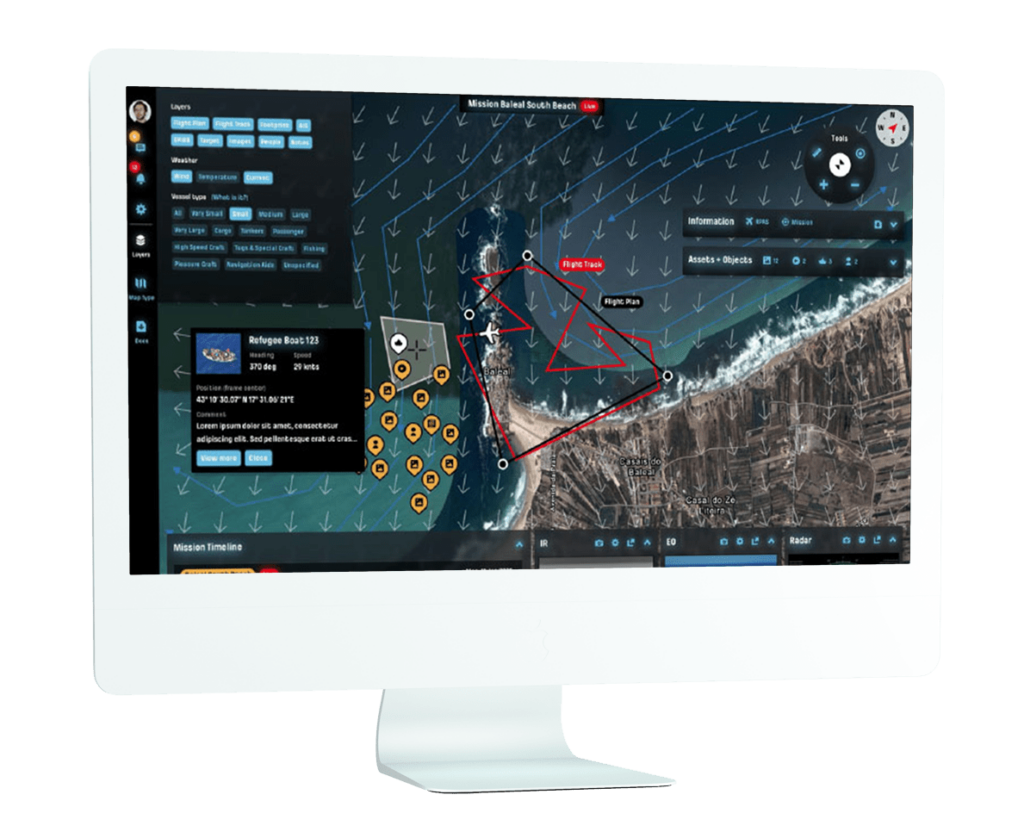
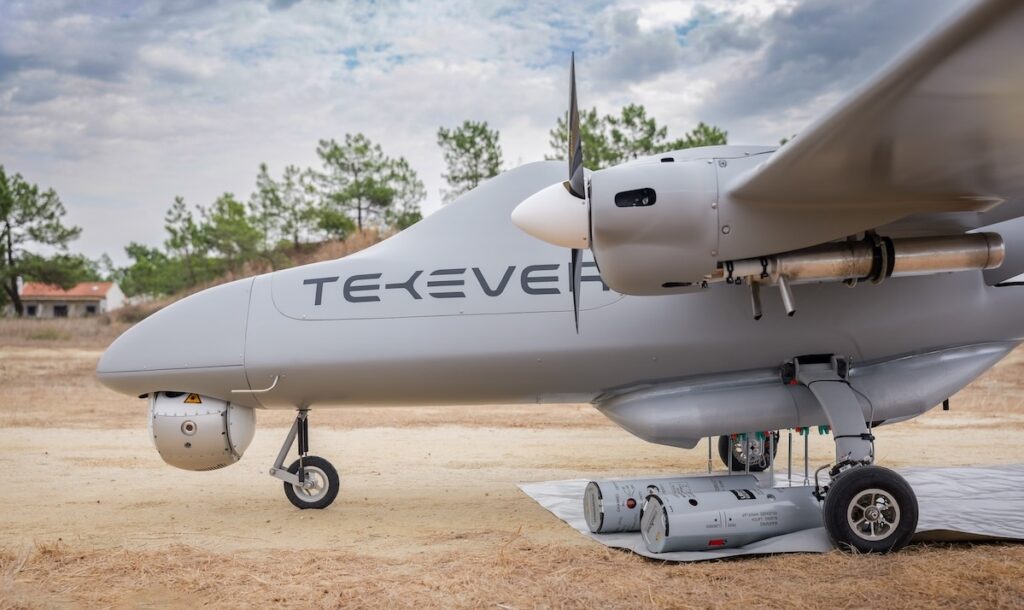
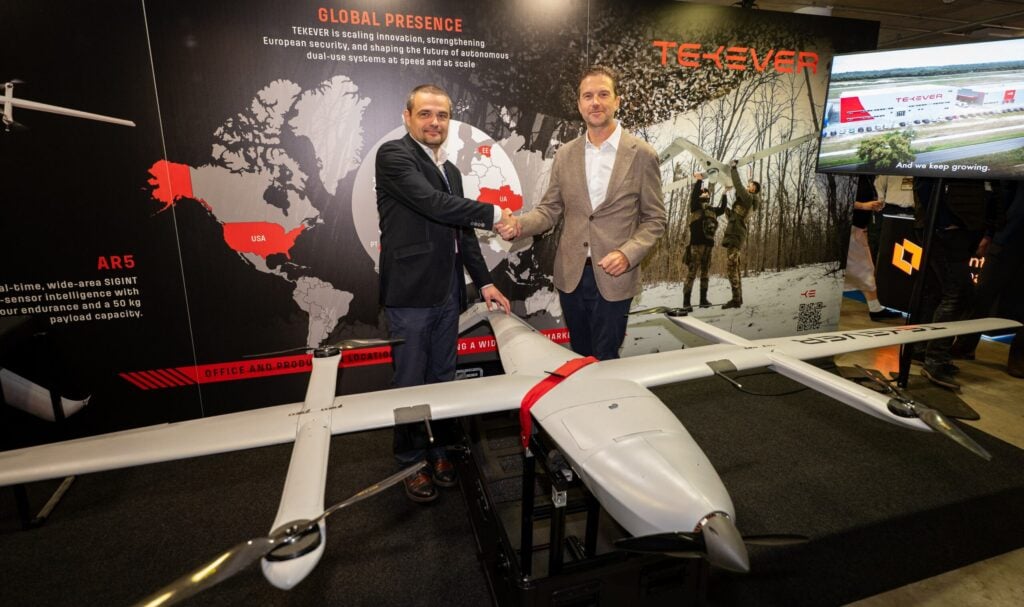
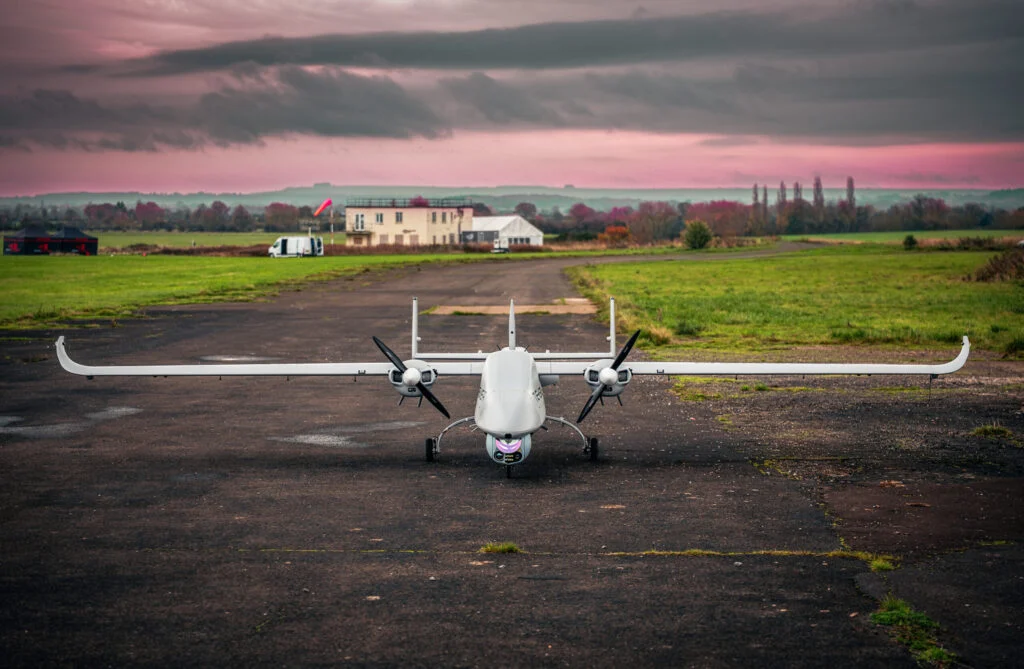
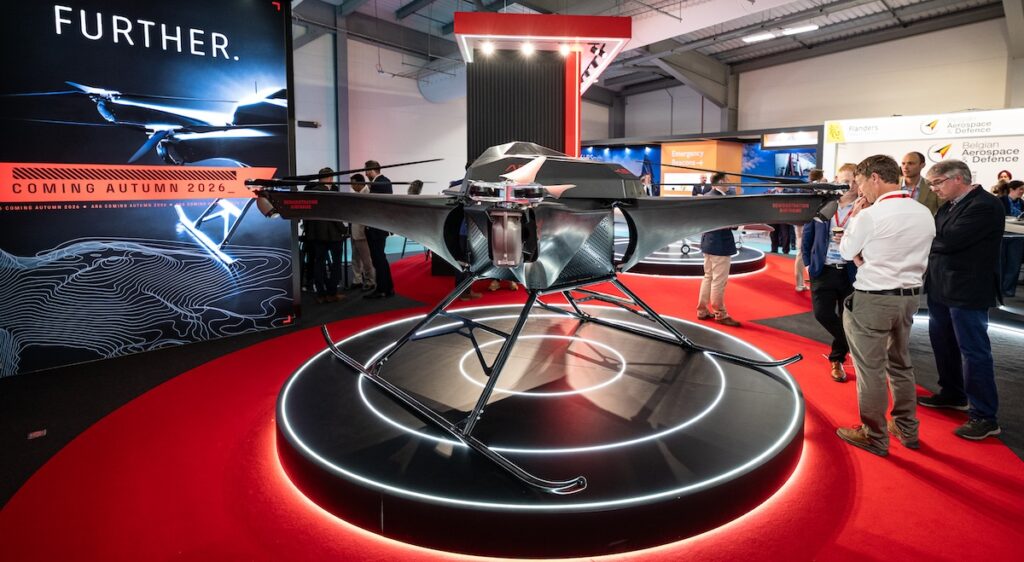
Designed with fully autonomous take-off and landing capabilities suited for short or unpaved platforms, the AR5 provides extended endurance for diverse operational environments, including search and rescue, border surveillance, and maritime patrol. The successful carrier integration comes as TEKEVER advances OVERMATCH, its five-year, £400 million UK investment programme focused on infrastructure, artificial intelligence, and autonomous defence technology, alongside its delivery of the AR5 to the British Army under the UK Ministry of Defence’s Project CORVUS.