Discover World-Leading Unmanned and Autonomous Technologies
Discover cutting-edge solutions from leading global suppliers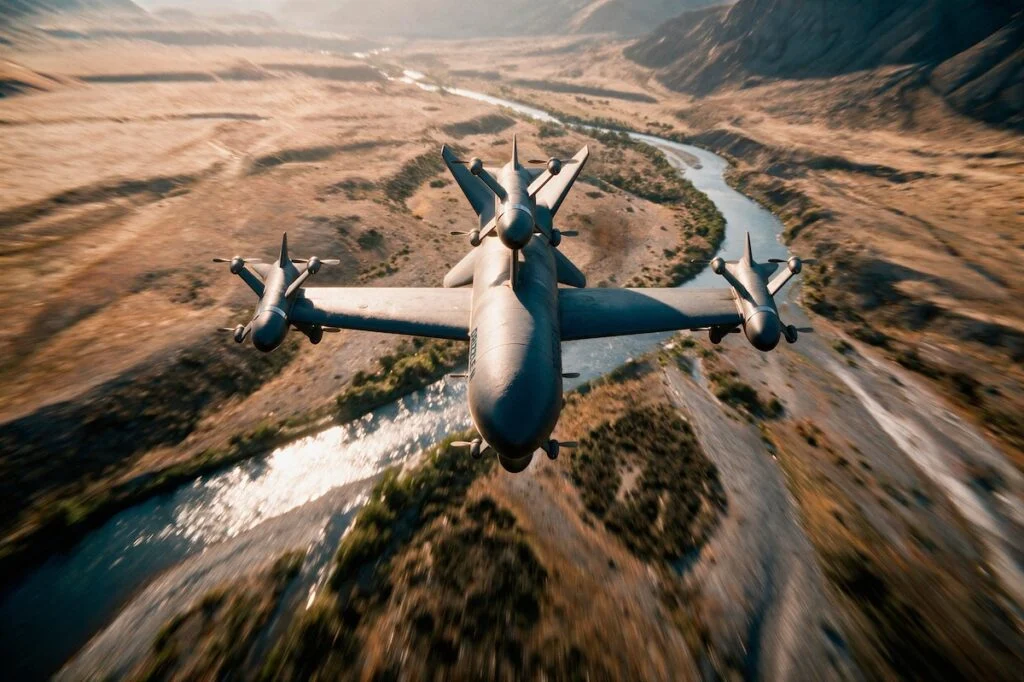
Indra has presented its new DRIZZLE family of autonomous interceptor drones at the UNVEX unmanned systems trade fair, offering a compact solution engineered to neutralize saturation drone attacks against infrastructure, land convoys, and military units.
The lightweight unmanned system utilizes a specialized propulsion system to achieve flight speeds exceeding 400 kilometers per hour. Operating independently, the compact effector maintains a baseline operational range of approximately 80 kilometers. The interceptors are engineered to integrate into existing counter-drone architectures as hard-kill effectors, while also serving as onboard self-protection systems for mobile land vehicles and helicopters.
At the core of the interceptor is an advanced search and detection processing unit designed to discriminate threats and lock onto targets with high precision. During the terminal phase of an attack, the onboard system processes data in real time from combined electro-optical and infrared sensors to guide the vehicle to its target. Future system iterations are slated to incorporate an onboard radar system to further enhance target detection and tracking capabilities in saturated environments.
To extend operational reach, Indra developed a dedicated mothership drone vector capable of transporting multiple interceptors at altitudes up to 30,000 feet over an initial 80-kilometer transit phase. Upon release, the smaller interceptors travel an additional 50 kilometers, expanding the overall operational radius to approximately 130 kilometers. These carrier platforms can operate in swarms to release a dense concentration of interceptors that saturate enemy air defenses, while the motherships themselves can transition into active attack vectors following payload release. Built around a fungible system concept, the disposable effectors provide armed forces with a cost-effective defense scale against low-cost unmanned threats.