Autonomous Underwater Vehicles (AUV)
Discover cutting-edge solutions from 6 leading global suppliers
The Royal Navy and Infleqtion, a leader in neutral atom–based quantum technology, have completed the first-ever deployment of a quantum optical atomic clock on an Underwater Autonomous Vehicle (AUV).
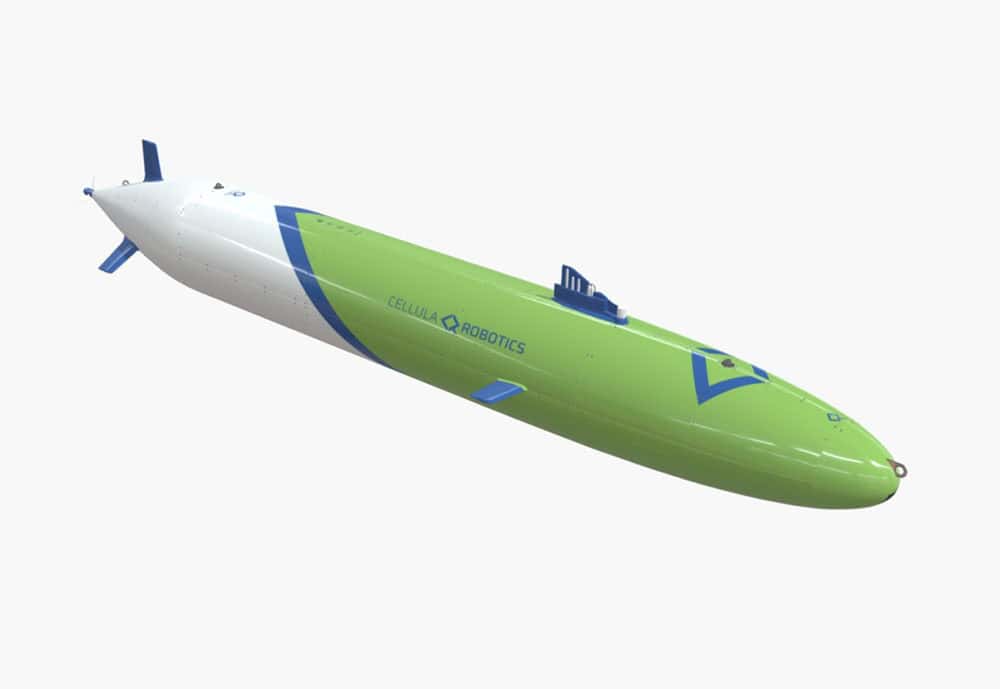
The successful trial integrated Infleqtion’s Tiqker optical atomic clock into the Royal Navy’s Excalibur (XCal) testbed submarine, a pioneering extra-large Uncrewed Autonomous vehicle (XLUAV). This demonstrated the precision timing capabilities crucial for resilient Positioning, Navigation, and Timing (PNT) in environments where Global Navigation Satellite System (GNSS) signals are unavailable or denied. Infleqtion is the first external technology partner invited to participate in the XCal program.
Submarines cannot rely entirely on GNSS for timing and navigation. Traditional microwave-based clocks offer stability but can accumulate drift over time, which degrades accuracy in GPS-denied settings. High-precision local clocks, like Tiqker, enhance submarine capability by maintaining accurate timing and navigation autonomously, thereby reducing reliance on external signals and improving overall resilience.
By placing a compact optical clock with performance equivalent to a national laboratory-grade time reference directly onboard a submarine, the trial showed how Tiqker can provide a steady “time heartbeat” to smooth out the noise that causes navigation drift. This enables submarines to remain submerged, accurate, and hidden for longer durations. Furthermore, Tiqker provides a precise onboard reference for other critical submarine systems, such as sonar, fire control, and secure communications, improving mission performance across multiple domains.
Commander Matthew Steele, Head of Futures in the Royal Navy’s Disruptive Capabilities and Technologies Office, said, “This experiment was a first critical step towards understanding how quantum clocks can be deployed on underwater platforms to enable precision navigation and timing (PNT) in support of prolonged operations.
“The DCTO looks forward to championing further trials of quantum-based navigation technologies, such as Tiqker, onboard Excalibur as we seek to deliver quantum operational advantage for the Royal Navy.”
Ryan Hanley, General Manager UK, Infleqtion, added, “By putting Tiqker directly on the Royal Navy’s Excalibur (XCal) testbed submarine, a next-generation autonomous platform, we are laying the foundation for fleets to navigate, coordinate, and operate with precision in any environment.”
The trial confirmed Tiqker’s ability to operate reliably during multiple dives, validating its ruggedisation for real-world naval deployment. While additional performance benchmarking against high-grade time standards will follow, the trial underscores the feasibility of deploying advanced quantum timing solutions in challenging maritime conditions.
Matthew Troughton, Engineering Director, MSubs Ltd., added, “Integrating a quantum clock onto XCal demonstrates how advanced timing can redefine what autonomous submarines are capable of.” He added that the trial “points the way to platforms that can operate independently for longer durations, with the precision and reliability needed for future undersea missions.”