For many people, the name “North Dakota” conjures images of a distant prairie with nothing in it – but that’s not the whole story. In fact, because it’s distant and empty, in one key section of the Flickertail State is a world-beating center of aerospace evaluation and education.
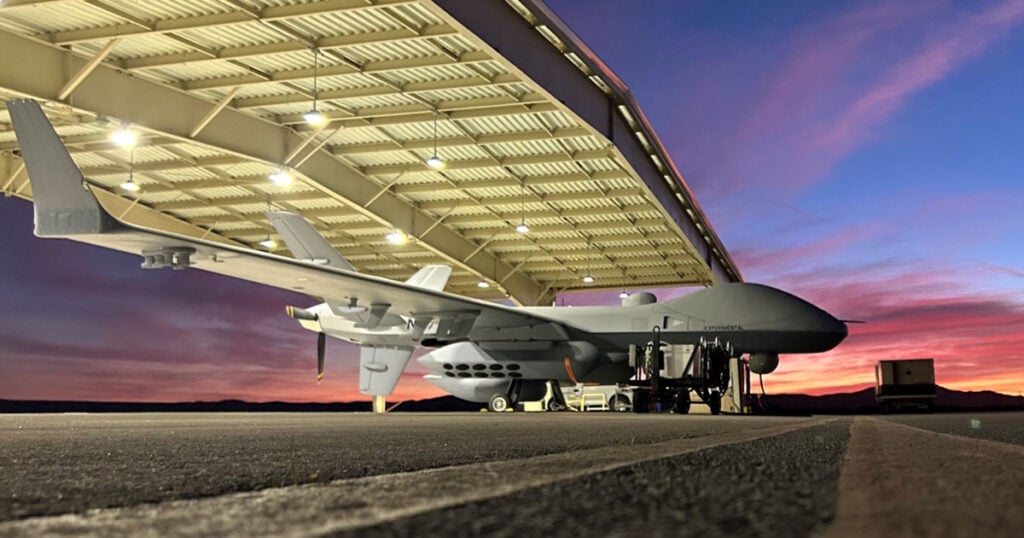
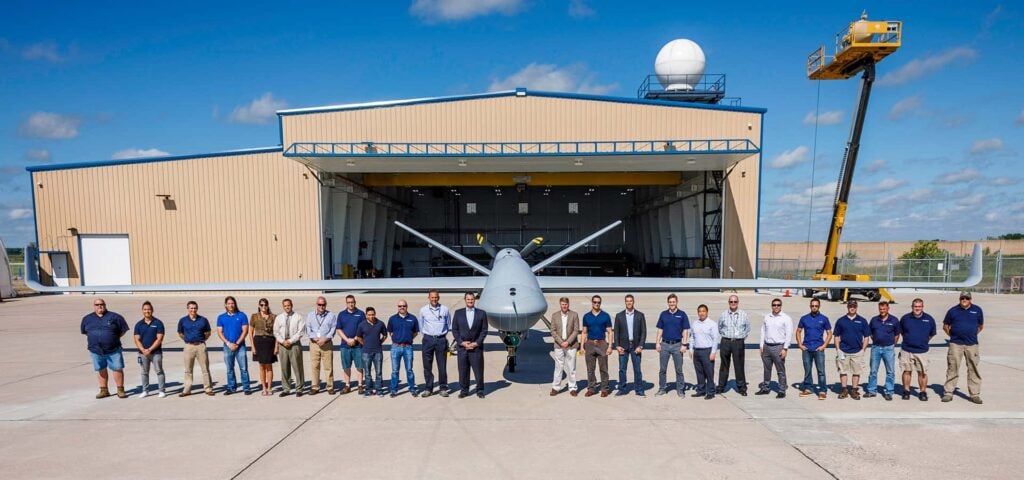
The Flight Test & Training Center, or FTTC, which is located outside the city of Grand Forks and owned and operated by General Atomics Aeronautical Systems, Inc., harnesses the state’s open skies and opens doors to new and important opportunities for unmanned aerial systems, or UAS.
“When the FTTC started, I think we were looked at as a bit of a remote outpost,” said Dean Gorder, director of the FTTC. “But we’ve evolved into a pivotal component of GA-ASI’s business, providing ready access to flight testing without major constraints, as well as providing state-of-the-art facilities for our customers who prepare to use and operate their new aircraft.”
Originally conceived in 2015 with first flights taking place in 2016, the FTTC is part of the Grand Sky UAS Business Park adjacent to Grand Forks Air Force Base. The facility employs close to 100 people and is focused on flight testing and a growing training business targeted to GA-ASI’s international customers.
Aircraft builders always have needed out-of-the-way places with room to test and instruct so as not to interfere with other aviation traffic. GA-ASI uses several locations for these purposes, but none has quite the same advantages as the FTTC.
At an event convened by the North Dakota Chamber of Commerce in Grand Forks on June 4, 2024, GA-ASI President David R. Alexander said, “We have developed a great relationship with the people of Grand Forks. So, in turn, we have continued to invest in our FTTC to make it into a world-class test and training facility that provides great jobs in the local community. It’s been a real win-win for the region and for our business. And of course, the airspace access with wide-open skies has been a great benefit to our business.”
New Aircraft, New Business, New Capabilities
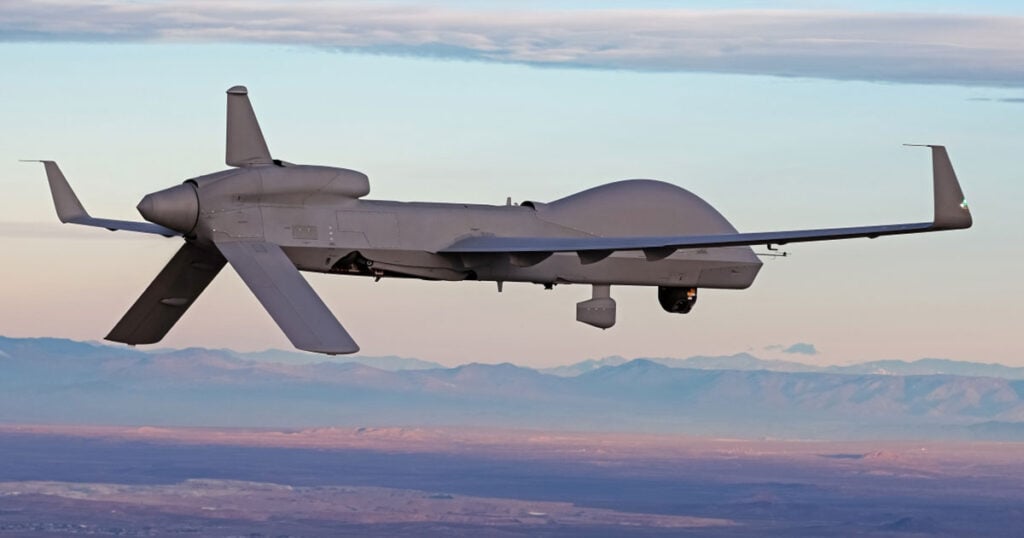
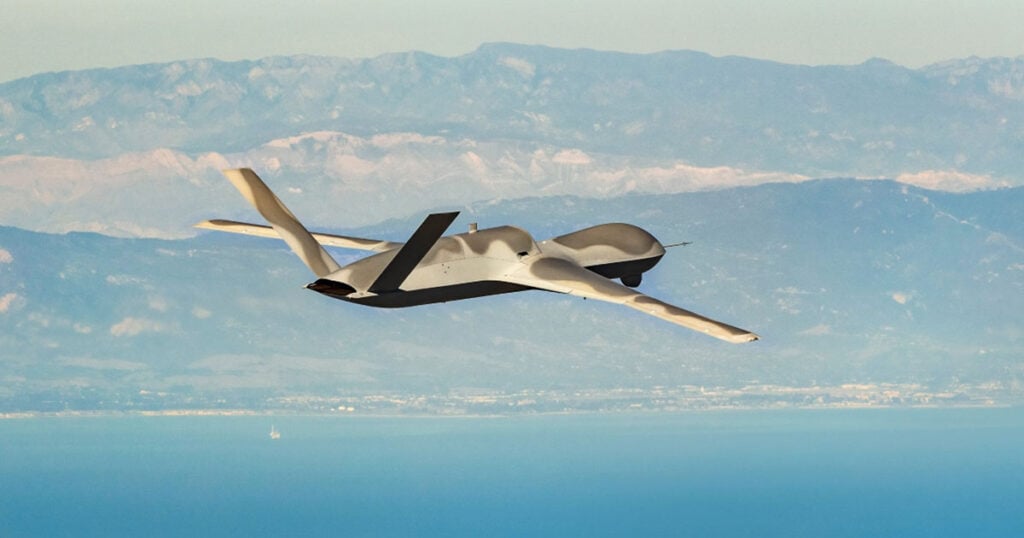
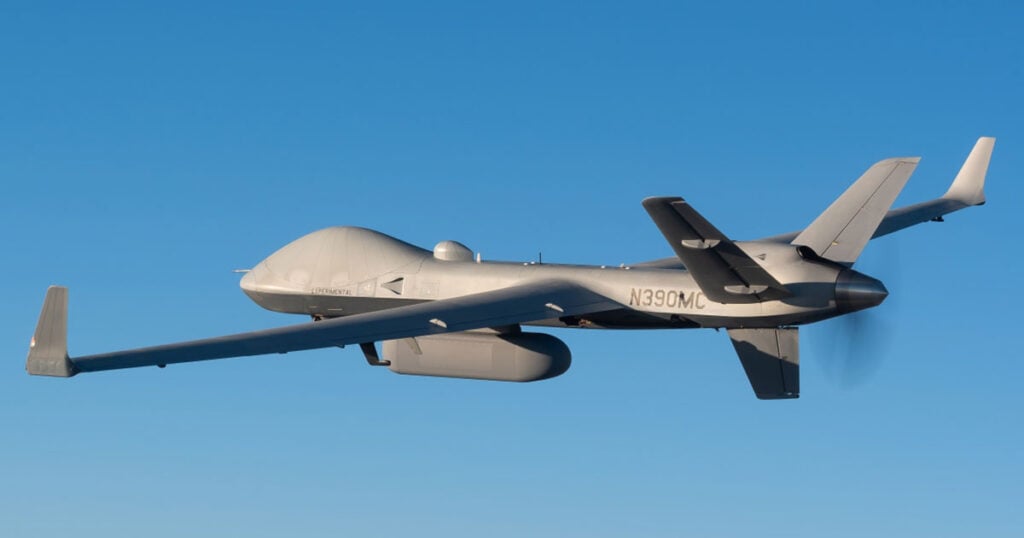
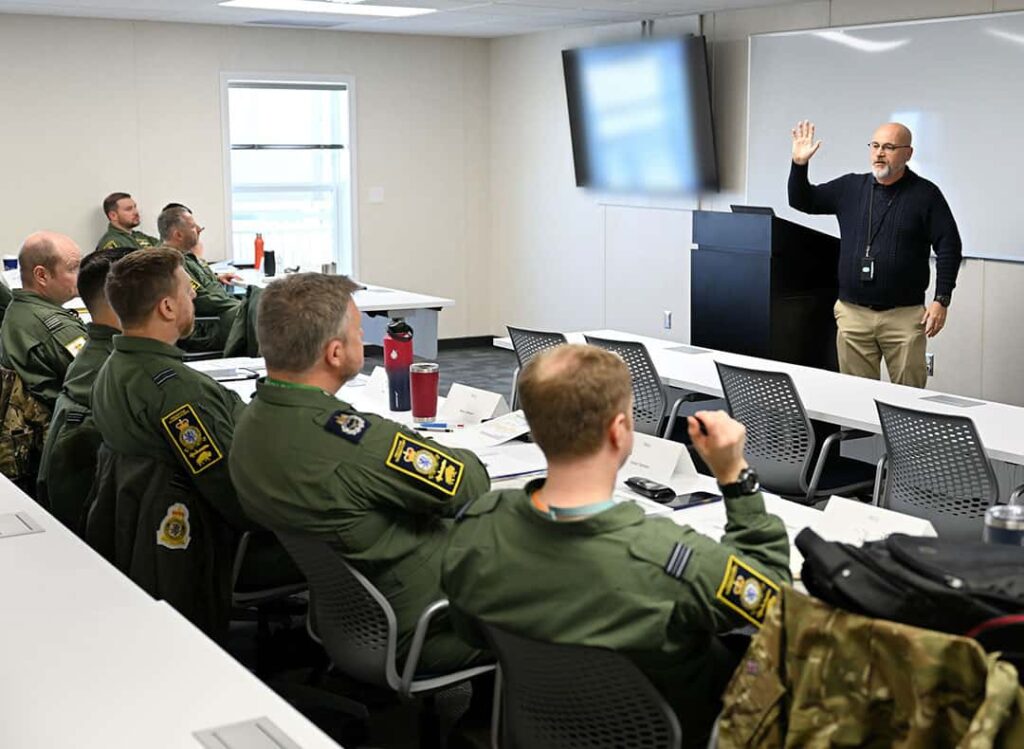
GA-ASI’s new MQ-9B SkyGuardian® and SeaGuardian® unmanned aircraft systems have attracted a lot of attention throughout the world, with a growing number of purchases that include the United Kingdom, Belgium, Canada, and Taiwan. What that has meant to the Grand Forks community is an influx of allied military personnel who are in town for training.
“I’ve even noticed it when visiting local restaurants or attending a University of North Dakota hockey game,” said David O’Neill, the FTTC’s manager of business operations. “Sometimes now at these venues, I’ll detect a unique accent and turn to see the familiar faces of one of our foreign customers, oftentimes out with their families.”
The increasing demand for MQ-9B has been driven by its industry-leading capabilities. The long-endurance UAS provides operators with automatic takeoff and landing under satellite communications-only control and will be able to operate in unsegregated airspace using the GA-ASI-developed Detect and Avoid System. All of these systems have been flight tested at the FTTC.
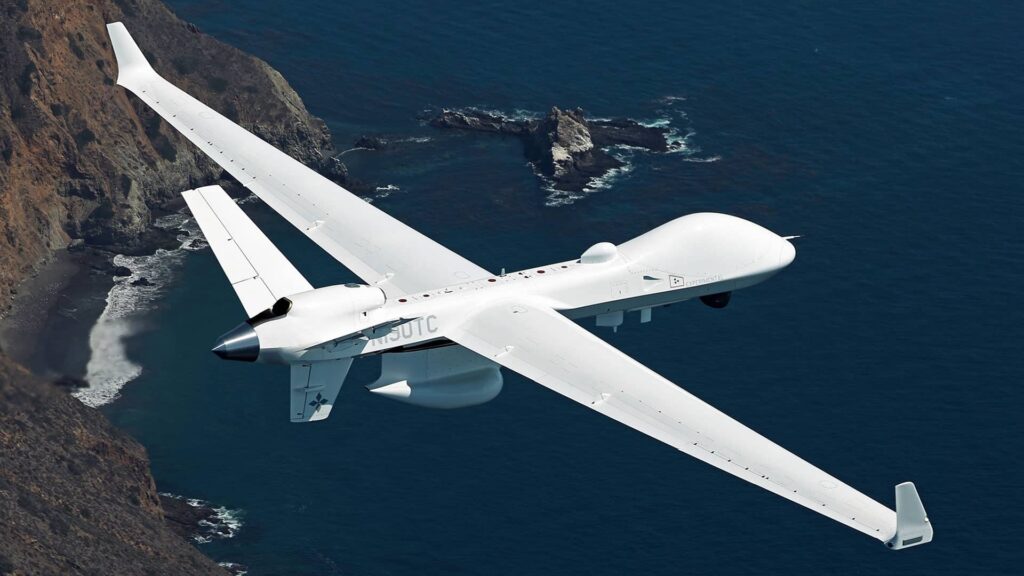
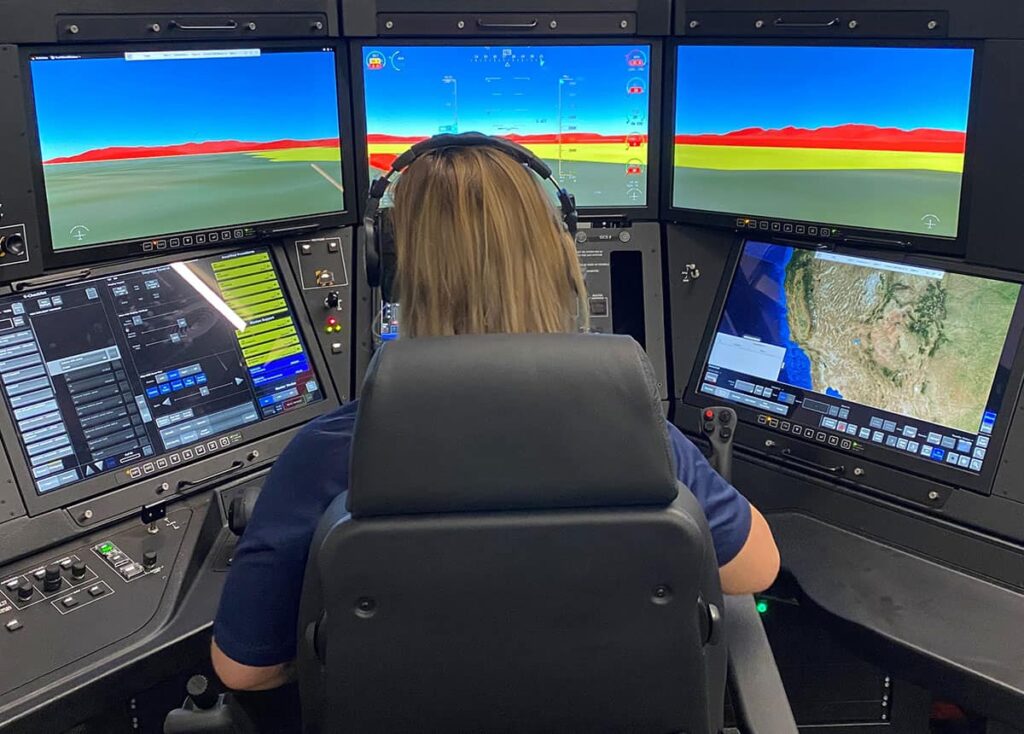
The SeaGuardian model is attracting attention as well for its maritime capabilities. Countries with naval requirements and long stretches of coastline are using SeaGuardian for maritime wide area search. Some of those customers include the Japan Coast Guard and Japan Maritime Self-Defense Force, as well as the U.S. Navy, which has featured SeaGuardian in exercises from the Rim of the Pacific to Northern Edge and Integrated Battle Problem to Group Sail. The FTTC’s MQ-9B Mission Trainer Simulator was used to prep for these exercises.
MQ-9B aircraft are also on order by the U.S. Air Force Special Operations Command.
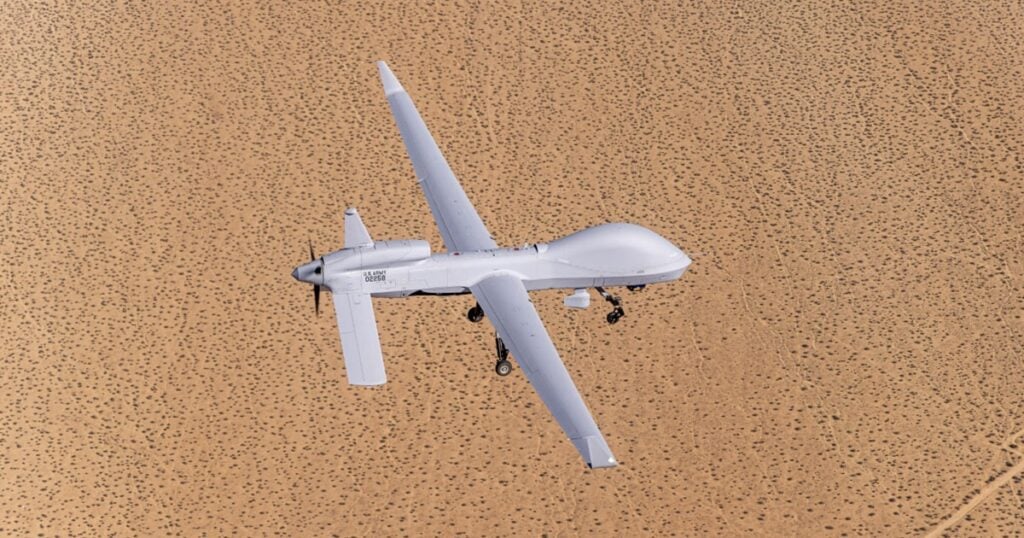
Then, there is the ubiquitous MQ-9A Reaper model, primarily flown by the U.S. Air Force, but also operated by these international customers: the Italian Air Force, the U.K. Royal Air Force, the French Air Force, the Spanish Air Force, the Royal Netherlands Air Force, and the Polish Air Force, among others.
Leaning into its facilities that feature simulators and classrooms, GA-ASI has provided flight and payload operator training for more than 550 students per year.
Putting the “Test” in FTTC
In addition to the expansive training that GA-ASI has been able to provide for international partners at the FTTC, the company has also grown the business in other ways.
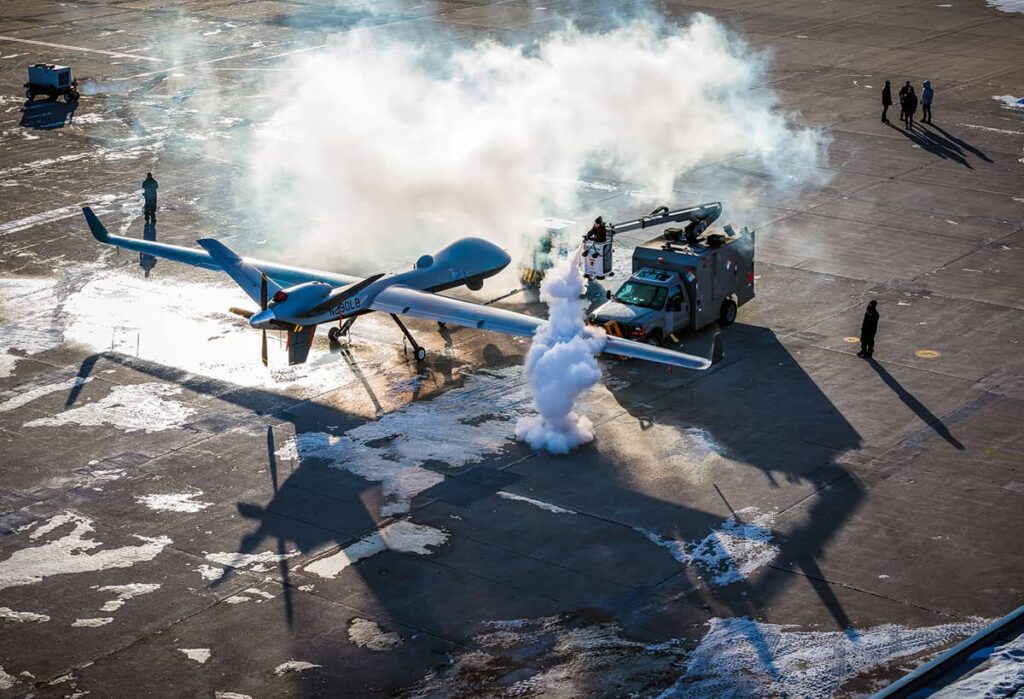
In early 2023, GA-ASI took advantage of the unique climate of the North Dakota winter to conduct a cold-weather validation test on MQ-9B. GA-ASI used the low temperatures to test and prove the MQ-9B’s ability to fly in extreme cold.
To prepare, an MQ-9B SkyGuardian was put in a “cold soak” that kept the aircraft at a temperature well below -21°C/-5°F for 12 hours, then prepared for ground maneuvers and flight through a de-icing process using de-icing and anti-icing fluids. In a second scenario, SkyGuardian transitioned from a climate-controlled hangar to engine start and system checks under basic cold conditions (temperature below -21°C/-5°F ambient air). Finally, for the actual flight test, the outside temperature was below -21°C/-5°F.
“You can’t replicate that kind of cold at our flight operations center in Southern California,” Alexander said. “Using the natural cold of a North Dakota winter, we were able to validate our aircraft’s ability to operate in extreme cold. That was critical for the work we planned to do with the Royal Canadian Air Force. As a result of the successful test, Canada has committed to purchasing 11 MQ-9Bs. So, our work in North Dakota helped us land that new business.”
Prior to the cold test, GA-ASI used the FTTC in 2021 as the base for a high-latitude flight test. An MQ-9A took off and flew north, deep into Canada, up to about 78 degrees north latitude. It then came back and landed the next day. The total flight time was over 25 hours and about 4,500 miles, one of the longest flights ever for the company, and MQ-9A and GA-ASI could not have done it without having the FTTC as a base.
When GA-ASI’s made its historic transatlantic flight of an MQ-9B SkyGuardian, becoming the first medium-altitude, long-endurance UAS to ever fly nonstop from the U.S. mainland and land at RAF Fairford in Gloucestershire, U.K. on July 11, 2018, the FTTC was the launch point.
The FTTC has also hosted a number of validation flights toward achieving GA-ASI’s goal of enabling its UAS to fly in uncontrolled airspace. Working closely with the FAA and other international airspace authorities, GA-ASI has led the industry toward enabling large UAS to operate just like commercial flights, where an operator can simply “file and fly,” as opposed to being restricted to only flying on pre-coordinated routes with special arrangements for UAS. To reach this goal, GA-ASI has equipped MQ-9B with components such as a Detect and Avoid system.
Embraced by the Community
Another reason GA-ASI has continued to invest in the FTTC is the overwhelming support it’s seen from the Grand Forks community. GA-ASI has built a solid relationship with the University of North Dakota and many other critically important local businesses.
GA-ASI has been supported by political leadership at all levels – local, state, and federal – and the residents of North Dakota and Grand Forks have embraced this important work that builds on the security and defense of the U.S., as well as allied nations, for the betterment of the world.
“The people here really understand and embrace their role in this mission, and they’ve made us feel very at home in Grand Forks,” said Alexander.
“We’ve invested more than $50 million into the area since 2015. We think this is an area where we can continue to build over time, so we look forward to increasing our business here as our customers’ needs keep growing.”