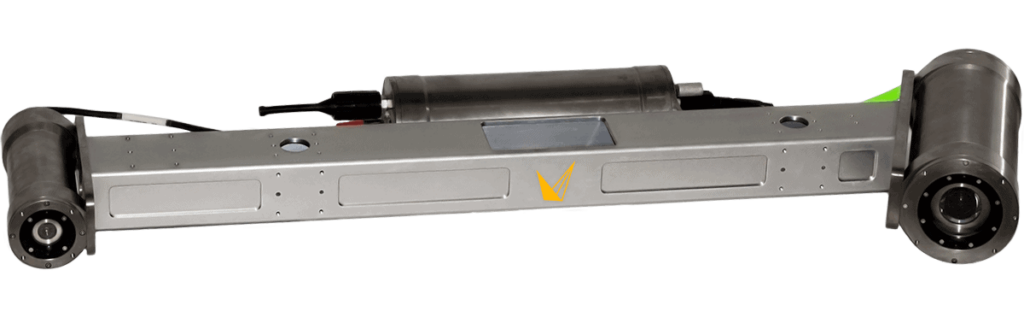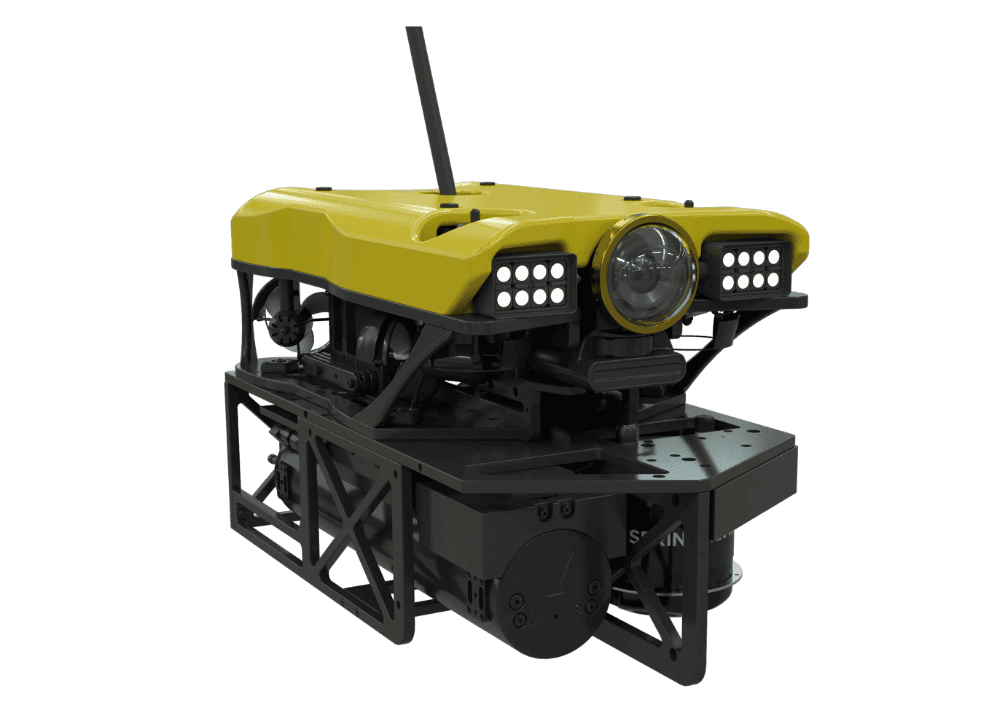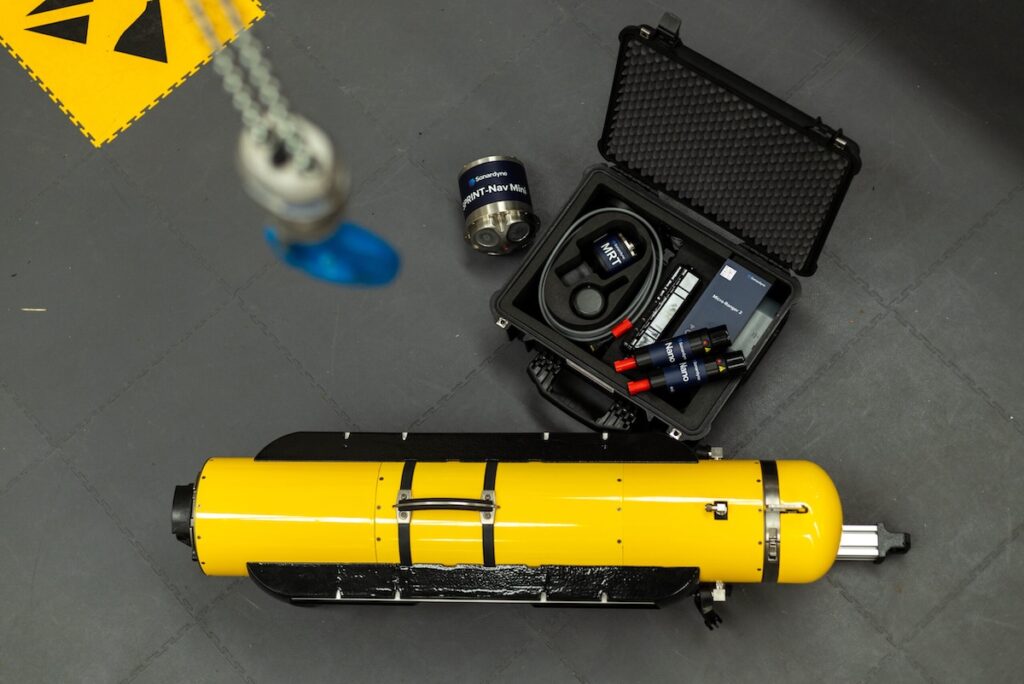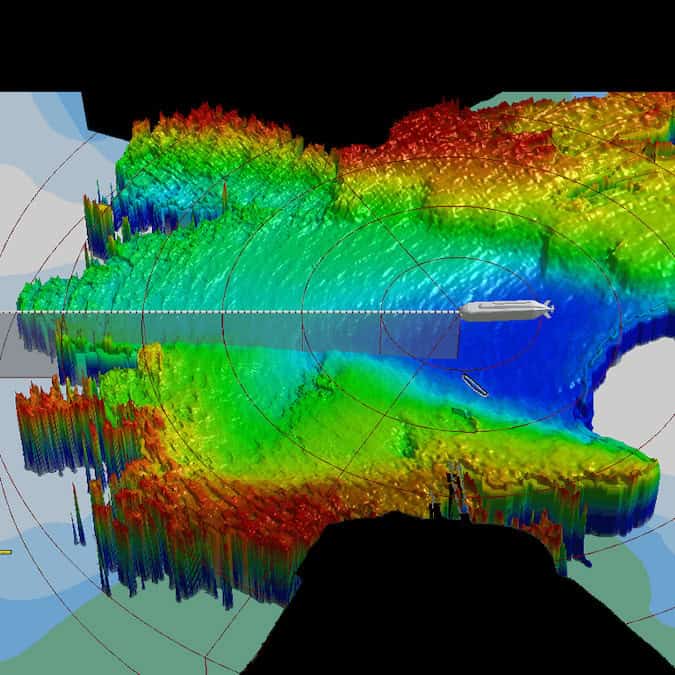
Forcys’ Vigilant FLS 600 is designed to provide XLUUVs with forward-looking sonar capabilities for underwater perception, including long-range obstacle detection, real-time 3D bathymetric mapping and passive acoustic sensing. Read more >>
Extra-large uncrewed underwater vehicles (XLUUVs) are being developed by navies worldwide to extend maritime reach, conduct persistent underwater missions across vast distances and provide autonomous capabilities without placing crewed platforms in unnecessary danger.
However, operating without onboard personnel requires these vehicles to maintain awareness of their surroundings and respond to changing underwater conditions without continuous input from a remote operator.
This requirement becomes increasingly challenging as XLUUVs transition from open-water environments into shallow and congested coastal areas. In these conditions, vehicles may encounter limited hydrographic information, uneven seabed terrain, submerged infrastructure, other vessels and potential hazards. Forward-looking sonar provides a key source of environmental information to help address these challenges.
Long-Range Detection for Autonomous Manoeuvring
For underwater vehicles operating autonomously, detecting hazards with sufficient time to respond is essential. A vehicle navigating unfamiliar waters must be able to identify obstacles ahead and adjust its trajectory before they present a risk.
Vigilant FLS 600 provides active obstacle detection through the water column at ranges of up to 1,000 metres. This allows an XLUUV’s command and control system to detect potential obstructions, assess collision risks and execute appropriate avoidance manoeuvres.
By providing information at extended ranges, the system allows for progressive course adjustments rather than abrupt changes that could interrupt mission objectives. This supports controlled manoeuvring while helping maintain platform safety and mission continuity.
Real-Time Seabed Mapping for Littoral Environments
When operating in coastal areas, XLUUVs may encounter conditions where existing hydrographic data is incomplete, outdated or insufficiently detailed. Changes caused by sediment movement, seabed activity or man-made objects can further affect the accuracy of stored survey information.
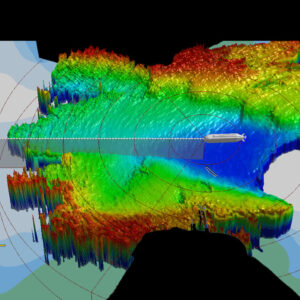
Vigilant FLS 600’s 600-metre 3D bathymetric mode generates a high-resolution, real-time representation of the seabed ahead of the vehicle. This enables an XLUUV to assess bottom clearance, identify variations in seabed gradients and plan routes through shallow or constrained areas.
Rather than relying solely on stored hydrographic data, the vehicle can update its understanding of the surrounding environment as the mission progresses.
Passive Acoustic Sensing for Reduced Emissions
Vigilant FLS 600 also provides passive acoustic capability for missions where minimising acoustic emissions is a priority.
In passive mode, the system captures and processes broadband acoustic signatures generated by vessels, machinery and other sound-producing contacts. This information can support the detection, tracking and classification of nearby contacts without requiring transmission of an active sonar signal.
The combination of active and passive sensing provides operational flexibility. Active sonar provides information about the surrounding physical environment, while passive sensing contributes additional awareness when reducing acoustic emissions is required.
Supporting XLUUV Autonomous Perception
An XLUUV must do more than follow a predetermined route. To operate independently, it requires the ability to perceive its surroundings, identify developing hazards and adapt its behaviour without continuous human intervention.
Vigilant FLS 600 provides the perception capabilities required to support this approach, including:
- long-range obstacle detection through the water column;
- high-resolution, real-time 3D bathymetric mapping;
- passive broadband acoustic sensing; and
- early warning information to support controlled autonomous manoeuvring.
By combining environmental mapping and acoustic awareness within a forward-looking sonar system, Vigilant FLS 600 provides XLUUV operators with the sensing capabilities needed to support autonomous navigation in both open-water and complex littoral environments.