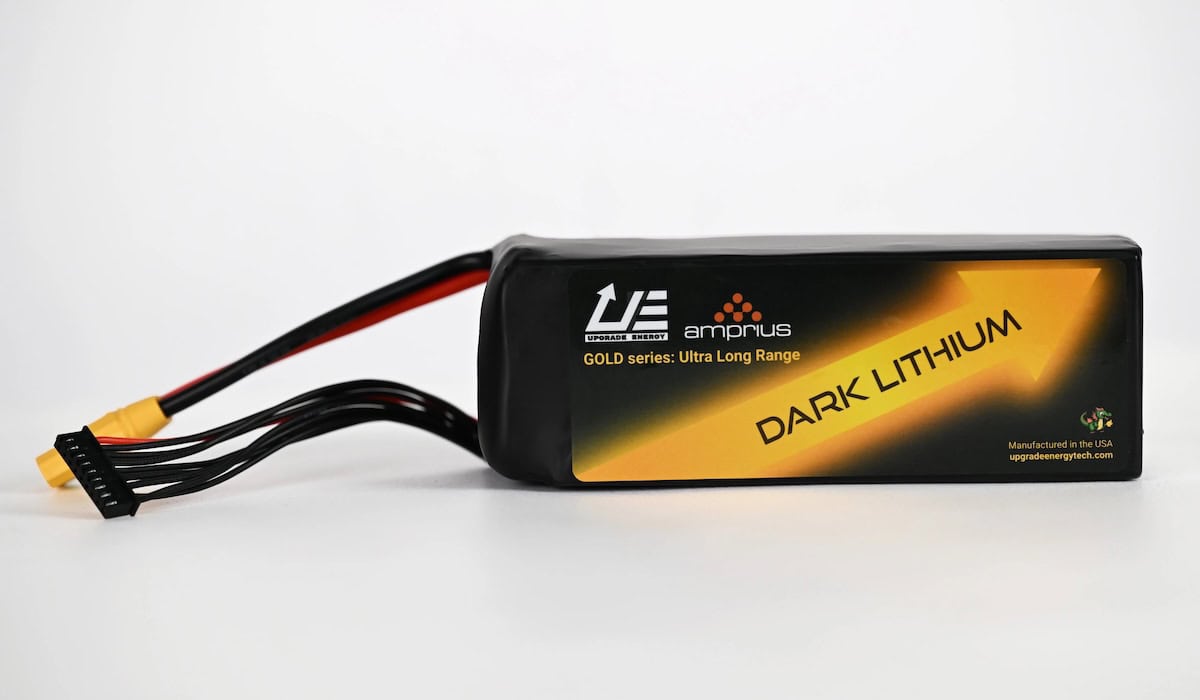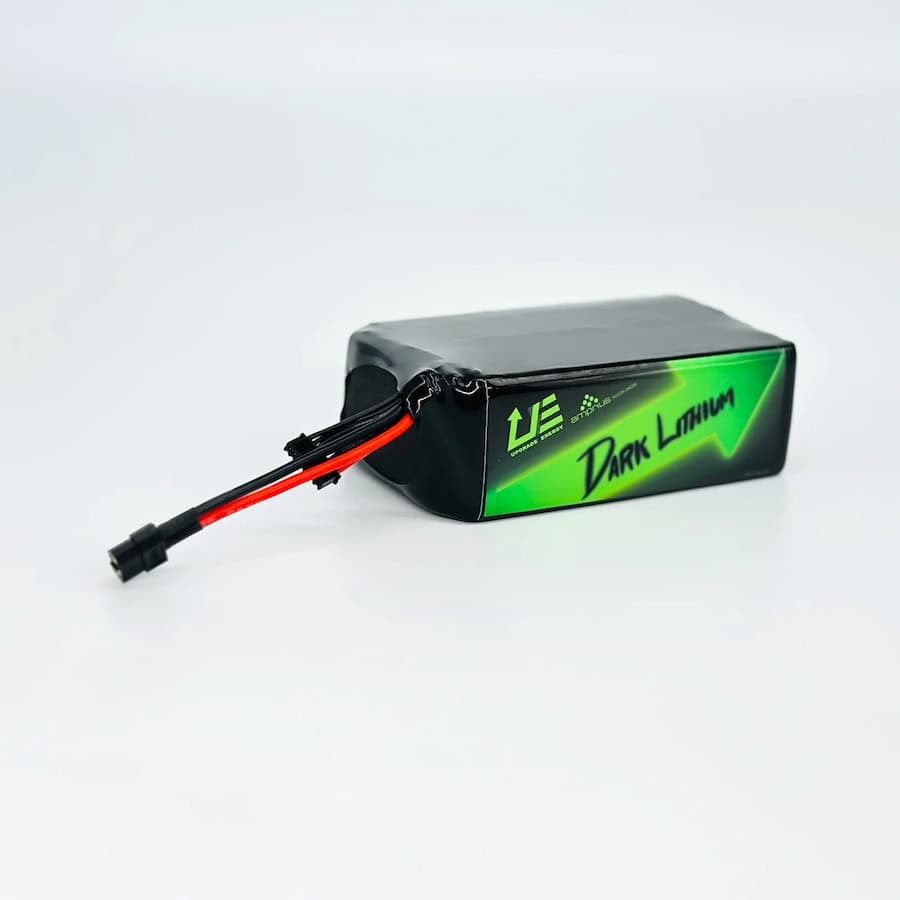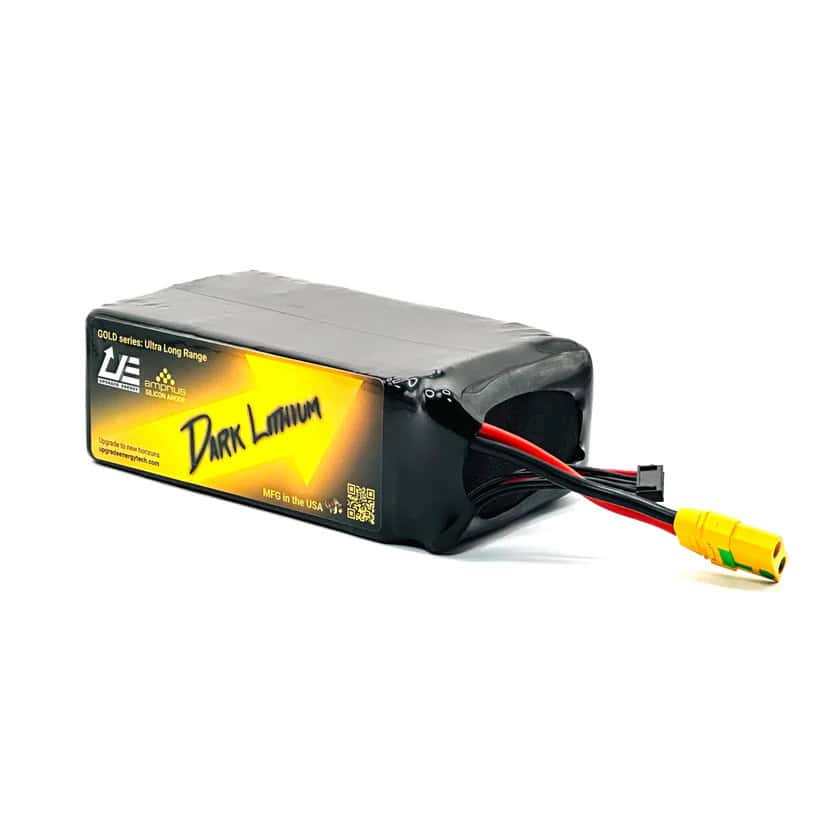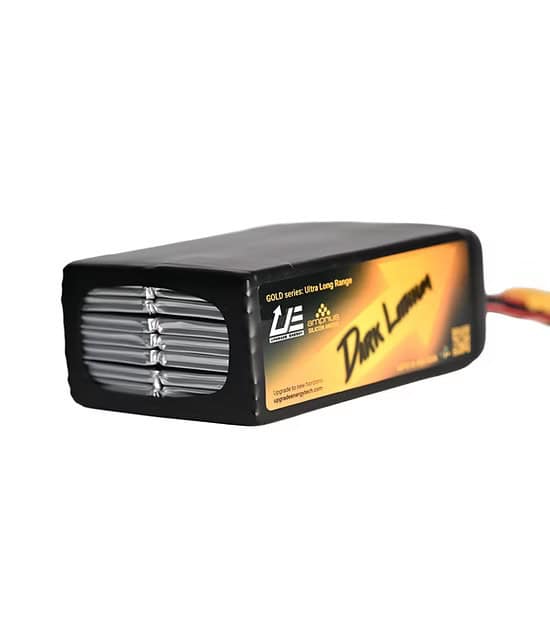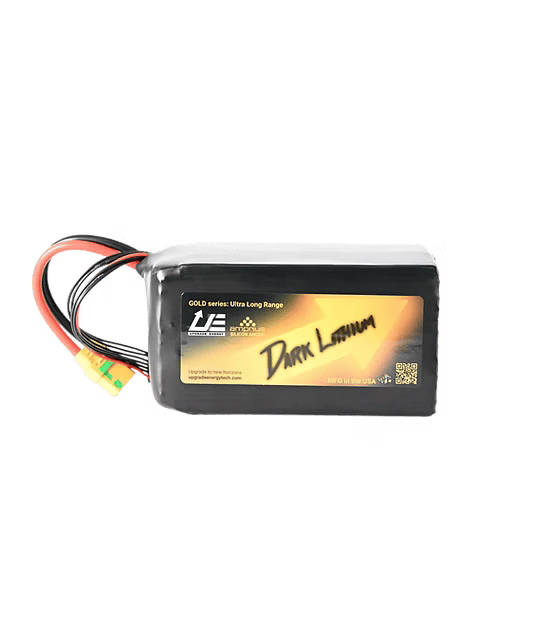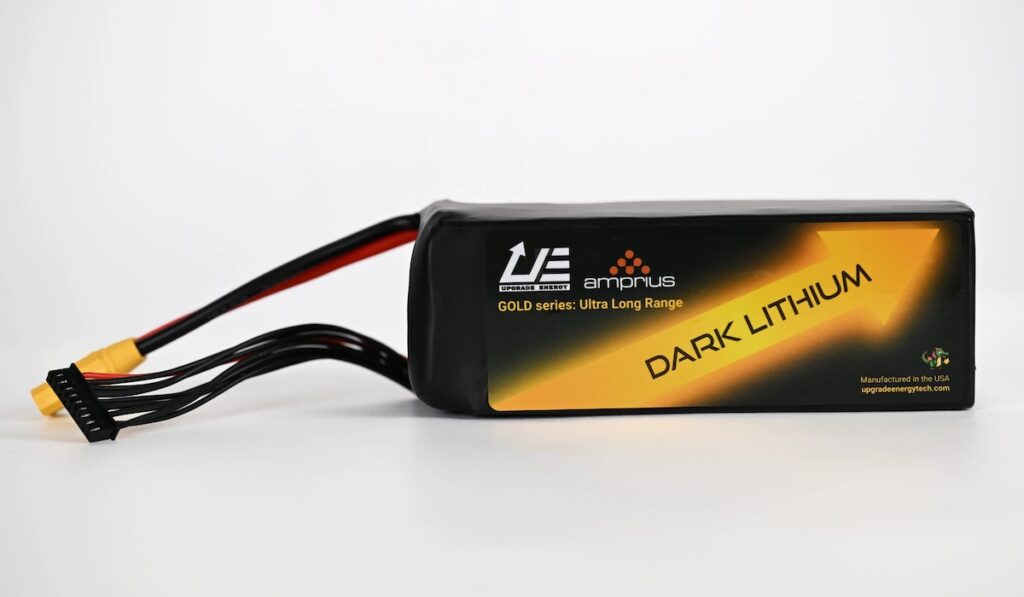
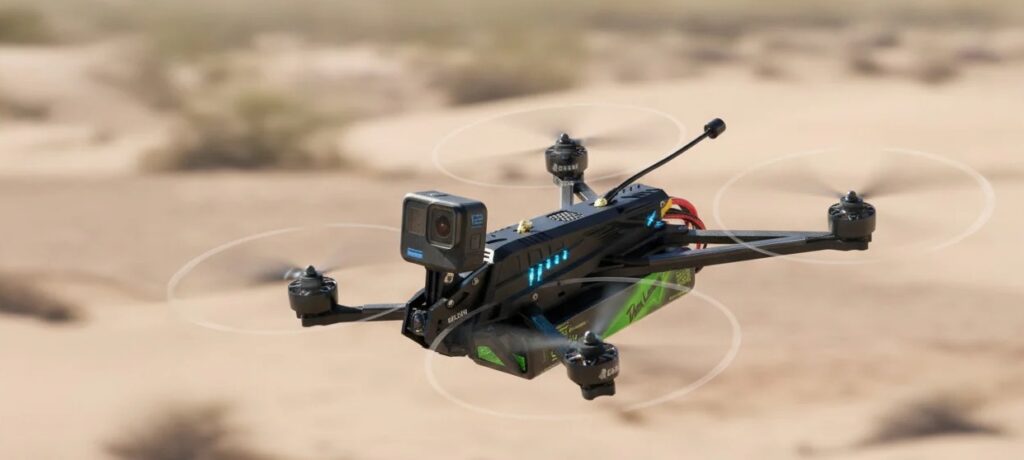
Upgrade Energy discusses custom battery development for unmanned systems, including silicon-anode technology, intelligent monitoring, prototype validation, and repeatable production.
How does Upgrade Energy balance energy density, power output, weight and thermal performance when engineering batteries for different unmanned-system mission profiles?
We begin by understanding the aircraft’s actual mission profile rather than optimizing around a single headline specification. Flight duration, payload, peak and continuous power demand, environmental conditions, available volume, charging requirements and expected cycle life all influence the ideal battery architecture.
Because unmanned-system requirements can evolve rapidly, we prioritize fast, cost-effective iteration and maintain a tight feedback loop with the customer throughout development. We evaluate candidate designs using engineering simulations and then validate them through physical testing under representative operating conditions.
This iterative approach allows us to find the most effective balance between energy density, power capability, weight, thermal performance and service life for each platform, rather than forcing customers to design around a generic battery.
What practical performance gains can silicon-anode cells offer UAV developers, and what trade-offs must be considered when integrating them into an aircraft?
Silicon-anode cells can provide substantially higher specific energy than conventional graphite-anode lithium-ion cells. For UAV developers, this can translate into longer flight time, increased payload capacity or a smaller and lighter battery for the same mission.
The improvement comes from silicon’s ability to store significantly more lithium than graphite. However, silicon also expands during charging, which can create cell swelling and introduce additional mechanical and thermal design challenges.
Depending on the cell chemistry and operating conditions, other trade-offs may include reduced cycle life, greater sensitivity to charging parameters and limitations on sustained power output. Silicon-anode technology can be extremely valuable, but it must be matched carefully to the aircraft, duty cycle and mission profile. It is particularly compelling for applications in which flight duration or weight reduction is more important than maximum cycle life.
How does Upgrade Energy integrate battery monitoring, protection and communications such as DroneCAN, and what operational benefits can these capabilities provide to unmanned platforms?
Upgrade Energy develops its own battery management systems and companion battery-monitoring products. These systems are currently undergoing extensive validation, including testing under abnormal and edge-case operating conditions, before being introduced as commercial off-the-shelf products.
Our battery-management architecture incorporates protections such as overvoltage, undervoltage, overtemperature, undertemperature, overcurrent and short-circuit detection, as well as cell balancing and detailed battery-health monitoring.
The system also provides state-of-charge and state-of-health estimation. State of charge helps operators understand the battery’s remaining usable energy during a mission, while state of health provides insight into capacity degradation, internal resistance growth and the battery’s overall condition relative to when it was new.
DroneCAN communications are integrated into the platform, allowing the battery to connect directly to compatible commercial flight computers, such as the Cube Orange+. This gives the aircraft access to real-time information including voltage, current, temperature, state of charge, state of health, fault conditions and other diagnostic data.
These capabilities can improve operational safety, provide more accurate remaining-flight-time estimates, simplify system integration and enable predictive maintenance. Our objective is to provide a plug-and-play intelligent battery that communicates directly with the aircraft rather than operating as an isolated power source.
What does Upgrade Energy’s custom development process involve, from the initial assessment of a platform’s mission and power requirements through prototype testing and validation?
Our development process begins with an assessment of the platform’s mission profile, electrical requirements, mechanical constraints, operating environment and commercial objectives.
We then proceed through the following stages:
- Cell selection: We review available cell technologies and identify candidates based on energy density, power capability, voltage, dimensions, weight, cycle life, availability and cost.
- Cell qualification: Candidate cells are tested under realistic discharge rates and environmental conditions. We validate usable capacity, voltage drop, thermal behavior, power capability and other performance characteristics rather than relying exclusively on datasheet values.
- Pack prototyping: Because we perform both battery design and manufacturing in-house, we can quickly convert a proposed design into a functional prototype.
- Prototype testing and iteration: We test prototypes against the platform’s requirements and refine the electrical, mechanical and thermal design as necessary.
- Design for manufacturing: Engineering and production teams review the assembly process to reduce cost, simplify manufacturing, improve quality and eliminate unnecessary production complexity.
- Pack qualification: The finalized design is tested at the complete-pack level to verify electrical, thermal, mechanical and safety performance. We can perform many certification-related tests internally before submitting the product to an accredited third-party laboratory.
- Pilot build: We manufacture a small initial batch, often fewer than ten batteries, to validate the design and assembly process.
- Production readiness: We create the drawings, work instructions, inspection requirements, bills of materials, part numbers and quality documentation required to manufacture the product repeatedly without continuous engineering involvement.
- Initial production run: The first production build is typically fewer than 100 batteries and is closely monitored to confirm process capability and product consistency.
- Continuous improvement: Once production begins, we continue refining the design and manufacturing process to improve quality, increase throughput and reduce cost over time.
How does Upgrade Energy maintain consistency, safety and reliability when moving a validated battery design into repeatable production?
Consistency begins with designing the battery for repeatable manufacturing, not simply proving that a single prototype can work. Before production release, we define controlled materials, assembly procedures, process parameters, inspection criteria and acceptance-test requirements.
Upgrade Energy maintains a tight feedback loop between production personnel and the engineering team. Issues identified during assembly or testing are communicated quickly, investigated and incorporated into updated designs, tooling or work instructions when appropriate.
We are also developing computer-vision capabilities to help identify assembly inconsistencies and potential quality or safety issues during production. These systems are intended to supplement trained operators and established quality controls by providing additional traceability and repeatable inspection.
By combining documented processes, in-process inspections, end-of-line testing, manufacturing traceability and continuous engineering support, we can move a validated battery design into production while maintaining its intended safety, performance and reliability.