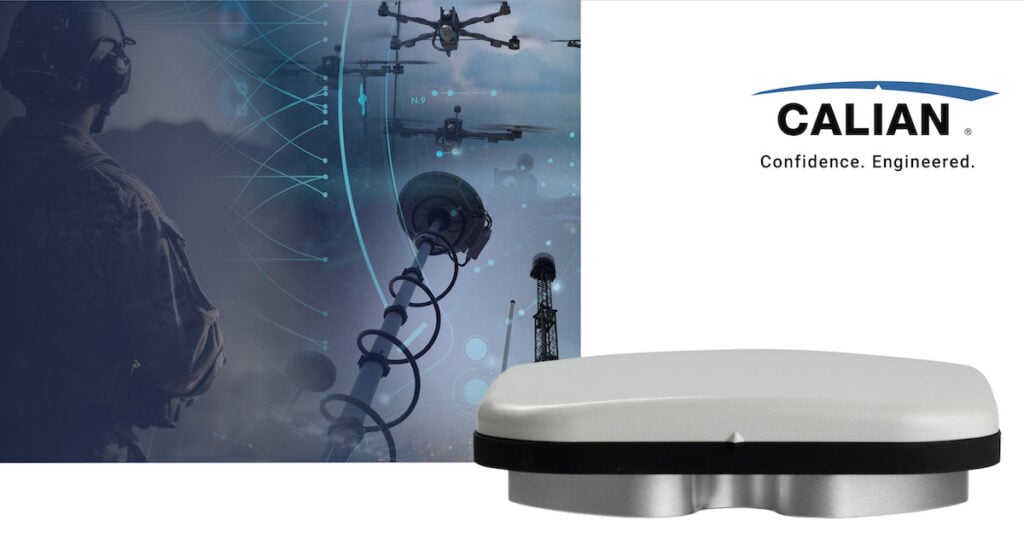
Calian explores how Controlled Reception Pattern Antenna (CRPA) technology can improve GNSS resilience for uncrewed platforms operating in contested or interference-prone RF environments.

Global Navigation Satellite System (GNSS) supports Positioning, Navigation and Timing (PNT) relied on by military and civilian systems, but GNSS signals are inherently weak and vulnerable to jamming, spoofing and interference. These threats can degrade mission effectiveness, compromise safety and disrupt critical infrastructure, increasing the importance of resilient PNT in denied or degraded environments.
How CRPA Technology Suppresses Interference
CRPA technology uses multiple antenna elements together with real-time null steering. By dynamically steering nulls within the radiation pattern, the technology suppresses interference to enhance reliable PNT in challenging RF environments. It also improves GNSS availability in contested environments through adaptive null forming and interference suppression.
The systems can provide situational awareness through proprietary NMEA messages over RS232 or RS422, reporting jamming state, jammer direction and power level.
Low-SWaP Integration for Uncrewed Platforms
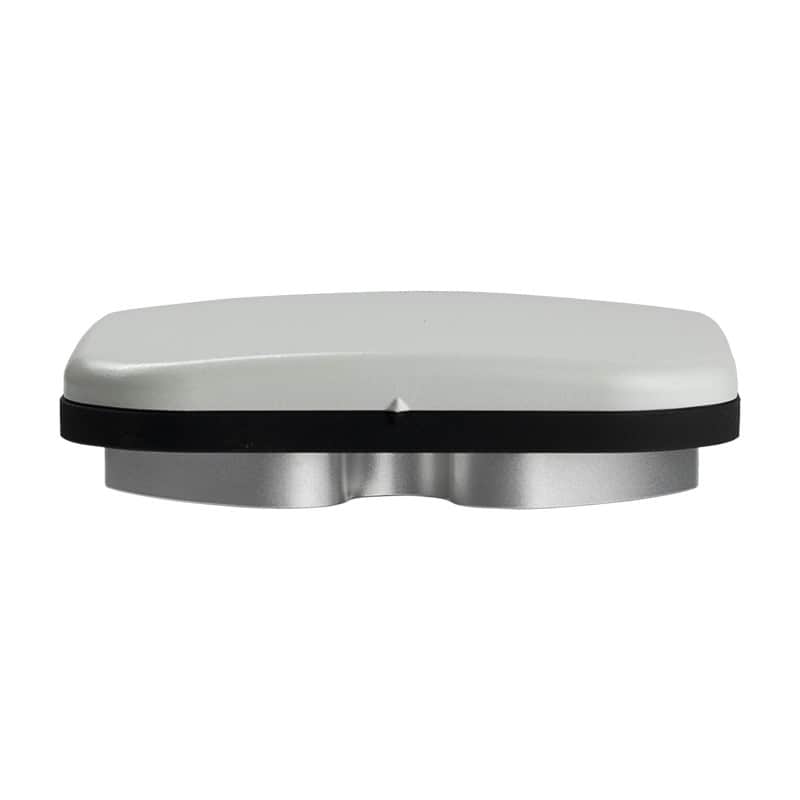
CR8894SXF+ Anti-Jamming GNSS CRPA
Calian’s CRPA technology is optimized for low size, weight and power consumption (SWaP), with a compact, lightweight package, low physical profile and small footprint. These characteristics support integration into Unmanned Aerial Vehicles (UAVs), Autonomous Ground Vehicles (AGVs) and light vehicles.
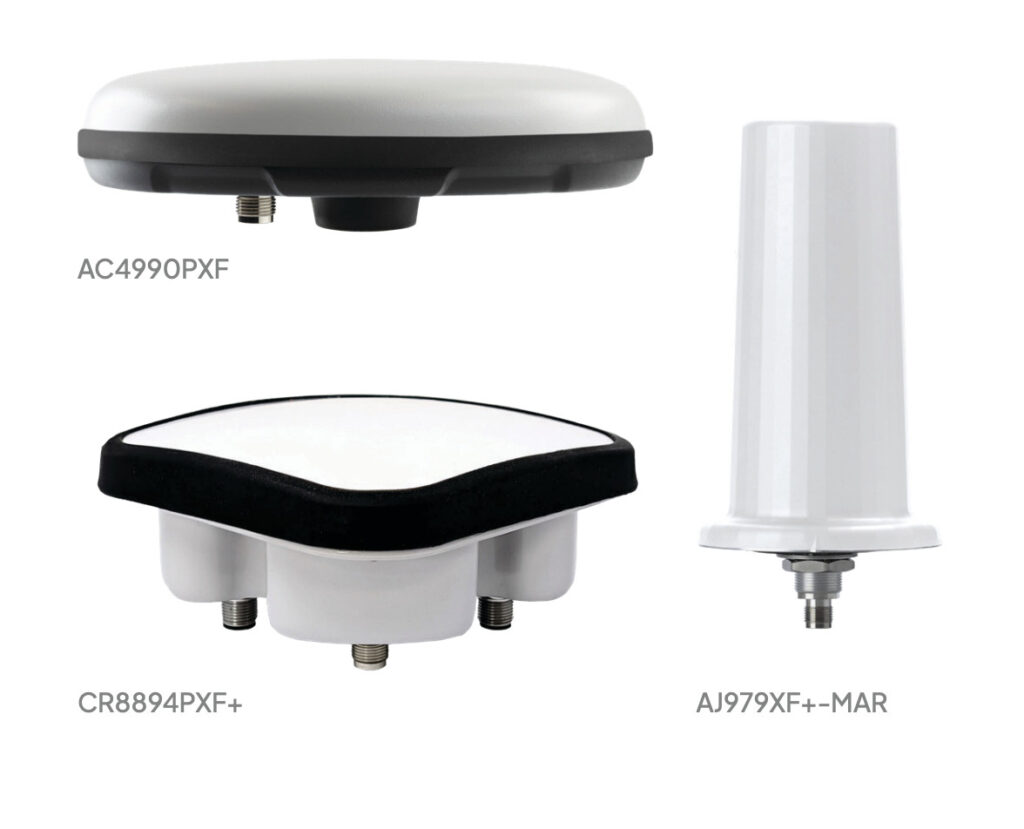
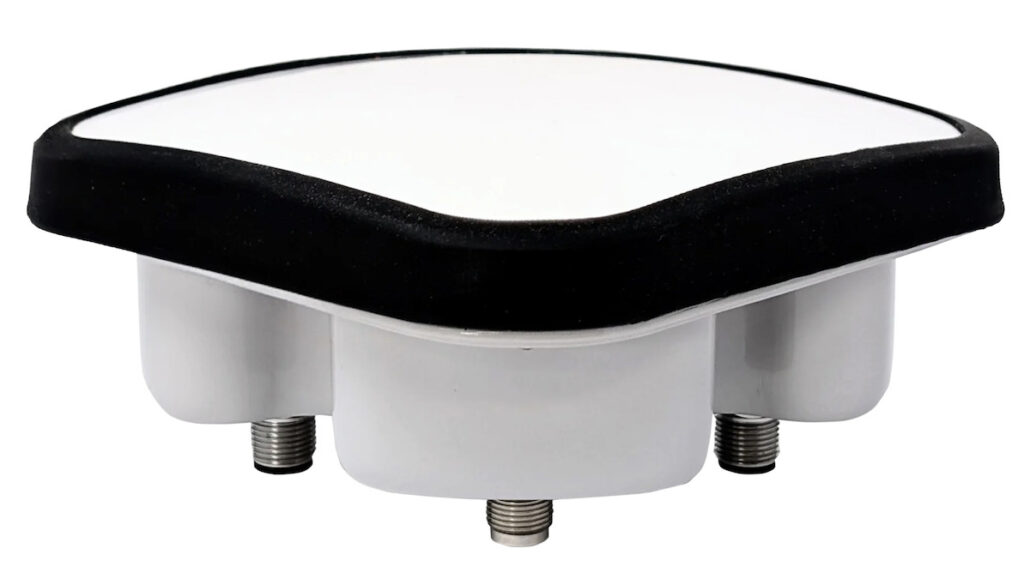
To accommodate different platform requirements, the CRPA family includes the surface-mount CR8894SXF+ and pole-mount CR8894PXF+, supporting deployment across land, air and maritime platforms.
The CR8894SXF+ and CR8894PXF+ use four antenna elements and support GPS L1/L2, including M-Code, together with Galileo E1/E5b, BeiDou B1/B2b, and Glonass G2/G3. They can mitigate up to three jammers per band, for a total of up to six, while the serial interface also provides proprietary NMEA messages indicating antenna state and the estimated direction of a jamming or interference source.
Filtering as an Additional Layer of GNSS Resilience
CR8894PXF+ Anti-Jamming GNSS CRPA
Alongside CRPA interference suppression, Calian’s XF+ filtering technology mitigates out-of-band interference. XF+ incorporates deep filtering that attenuates out-of-band signals between 400 MHz and 3000 MHz by approximately 80 dB or more.
It also supports cross-band isolation approximately 50 dB or more throughout the LNA chain; for example, if the upper band is jammed, the lower bands will continue to provide usable signals.
The CR8894SXF+ and CR8894PXF+ also incorporate filtering tailored for marine environments, providing strong rejection of Iridium and Inmarsat signals from 1616 to 1660 MHz, to further support reliable GNSS performance in challenging maritime RF environments.
Visit Calian’s website to learn more about its resilient GNSS and anti-jamming solutions.