



Reactive Drone‘s transition from agricultural Unmanned Aerial Vehicles (UAVs) to military UAVs has been shaped by practical flight experience, evolving operational requirements and an emphasis on developing critical technologies in-house.
 In an exclusive interview with Unmanned Systems Technology, Artem Kolesnyk, CTO at Reactive Drone, discussed the engineering priorities behind the Kazhan 620 and 630 UAVs, the integration of communications and reconnaissance capabilities, and the company’s future development plans.
From Agricultural UAVs to Military Platforms
Reactive Drone began as a family business in the winter of 2018–2019, initially working with agricultural UAVs. According to Kolesnyk, before Russia’s full-scale invasion of Ukraine in 2022, the company had accumulated hundreds of thousands of flight hours, gaining practical experience in UAV performance, maintenance, common points of failure and operation across different weather conditions.
This experience provided the foundation for developing military platforms that combine advanced technical capabilities with straightforward operation and maintenance.
Kolesnyk explained, “Our background in agriculture gave us experience before we started to create a military platform. […] We already understand how to make the product user-friendly.”
With military personnel possessing varying levels of technical experience, Reactive Drone prioritises systems that operators can learn to use and repair following relatively short periods of training.
Designing UAVs for Repeated Missions
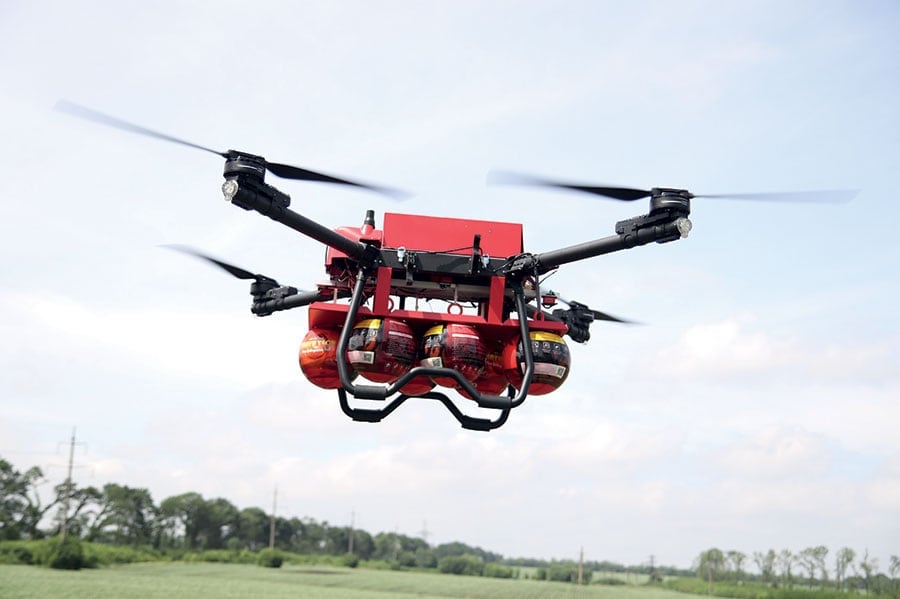
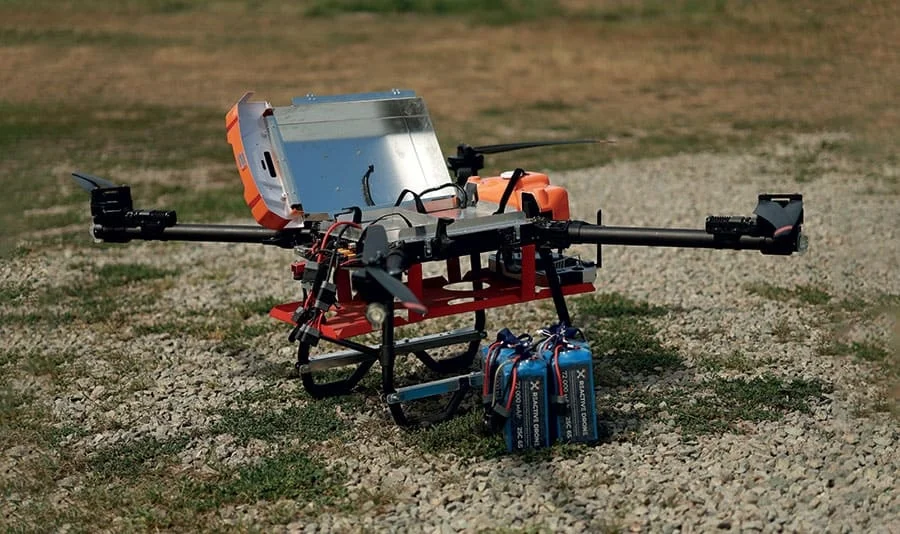
The Kazhan 620 and 630 UAVs have been developed with an emphasis on durability, adaptability and repeated operational use.
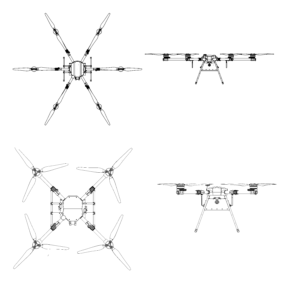 Kolesnyk explained that a central design objective is to enable the platforms to complete hundreds of missions throughout their service lives. He reported that Kazhan UAVs average approximately 100 flights in frontline operations, reflecting the importance of engineering systems for repeated use rather than single missions.
“The main design priority is to make the drone able to perform hundreds of missions during its life cycle,” Kolesnyk stated.
Supporting repeated missions requires components capable of withstanding prolonged operation, including batteries, structural elements, connectors, communication equipment and other mechanical and electrical systems. Software adaptability is equally important, allowing the platforms to be updated in response to changing operational conditions and requirements.
The overall engineering approach is intended to support continued operation over extended periods, with systems designed for long-term use and maintenance.
In-House Development and Communications Resilience
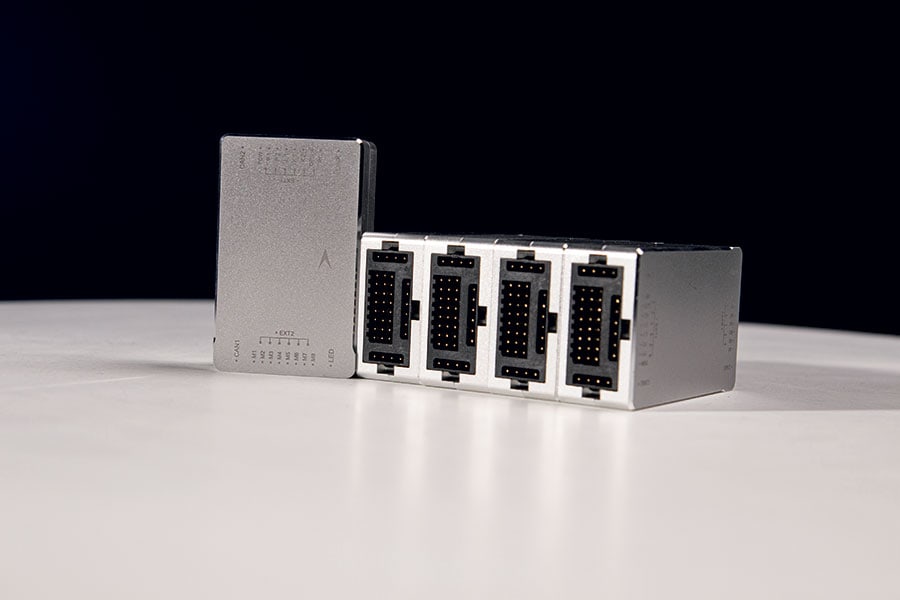
Reactive Drone develops navigation, communications and autonomous flight technologies internally, giving the company greater control over how individual systems are developed and integrated.
“We control our supply chain, we control our servers, we control the software,” Kolesnyk explained.
He identified this approach as important for system security, production oversight and understanding how the company’s technologies work together, while also supporting manufacturing and delivery requirements.
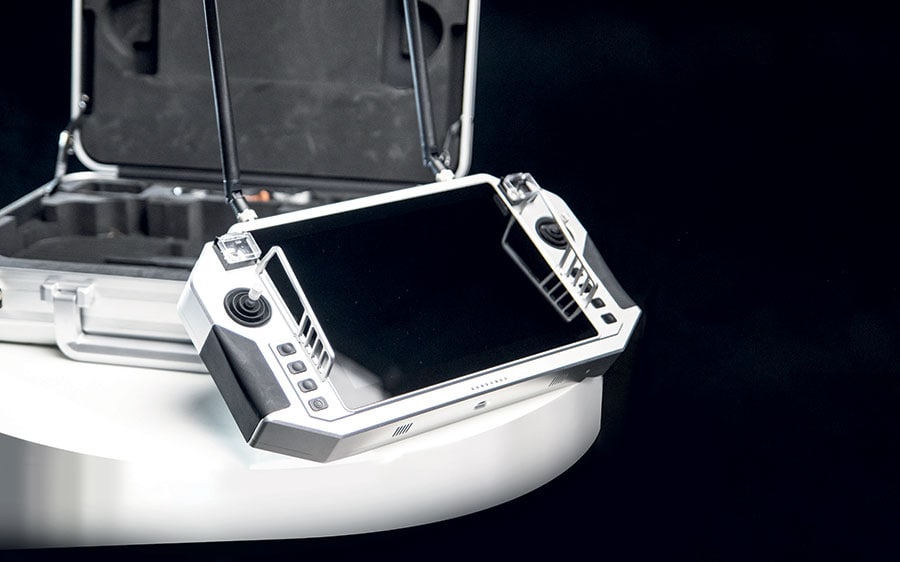
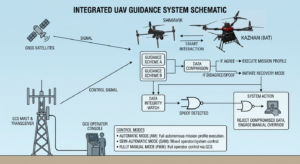
The Kazhan communications architecture combines Reactive Drone radio technology with Starlink and LTE connectivity, providing alternative communication methods to accommodate different operational conditions.
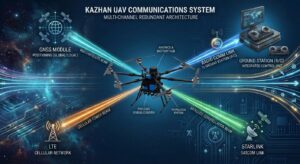
Drawing on aerospace principles of redundancy, the company aims to reduce reliance on a single connection, particularly when terrain, electronic warfare or other factors present communication challenges. While its radio technology is designed to provide stable communications across a range of environments, Starlink and LTE offer alternatives that do not depend on the same direct radio link between the UAV and ground station, allowing greater flexibility in ground station positioning.
According to Kolesnyk, each communication method has its own advantages and limitations. Their integration is intended to make use of these respective strengths while mitigating the limitations of individual systems.
Integrating Reconnaissance and Strike Operations
Reactive Drone developed the SHMAVIK reconnaissance UAV to complement the larger Kazhan strike platforms, addressing the need to gather information ahead of strike missions. Designed to be smaller, lighter, less expensive and easier to transport than Kazhan, SHMAVIK can be carried in a bag, providing a compact reconnaissance capability within the company’s UAV ecosystem.
According to Kolesnyk, SHMAVIK’s AI-enabled camera provides target coordinates, with information shared through the same operational ecosystem as the Kazhan platforms.
“It’s the same ground station, the same communication, one ecosystem,” he explained.
This integration is intended to reduce the need to manage separate maps, laptops or other devices when working with reconnaissance information, simplifying coordination between the two platforms.
Manufacturing Expansion and Engineering Development
Reactive Drone’s future priorities include establishing production facilities in Europe, developing its component manufacturing capabilities and introducing its UAV systems to NATO countries.
Kolesnyk explained that the company aims to apply experience gained in Ukraine to develop components for wider use by Ukrainian, European and American manufacturers, alongside supporting its own UAV platforms.
Reactive Drone has already established internal manufacturing capabilities, including equipment for producing electronic boards and batteries, as well as CNC machinery to support mechanical component production. The company’s approach places emphasis on developing and manufacturing technologies internally rather than relying entirely on external production partners.
Alongside manufacturing expansion, Reactive Drone is focused on developing engineering talent through recruitment, internal training and collaboration with the National Aerospace University “Kharkiv Aviation Institute” (KhAI).
The company recruits from a range of backgrounds, including experienced engineers, veterans and technical enthusiasts, with Kolesnyk emphasising the importance of building collaborative teams and developing engineering expertise over the long term. Its development programmes include internal technical training, opportunities to pursue bachelor’s and master’s degrees, and participation in academic research. Several employees are also undertaking doctoral research in collaboration with KhAI.
Together, these initiatives reflect Reactive Drone’s focus on strengthening its engineering and manufacturing capabilities while expanding the international availability of its unmanned systems.
To learn more about Reactive Drone and its UAVs, visit the company’s website.