Unmanned Helicopters
Discover cutting-edge solutions from 5 leading global suppliers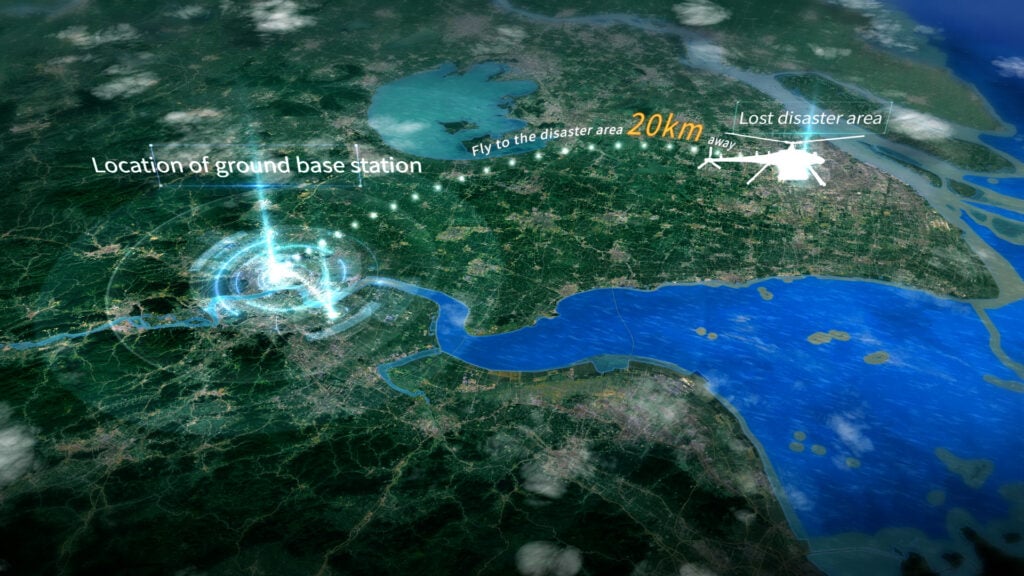
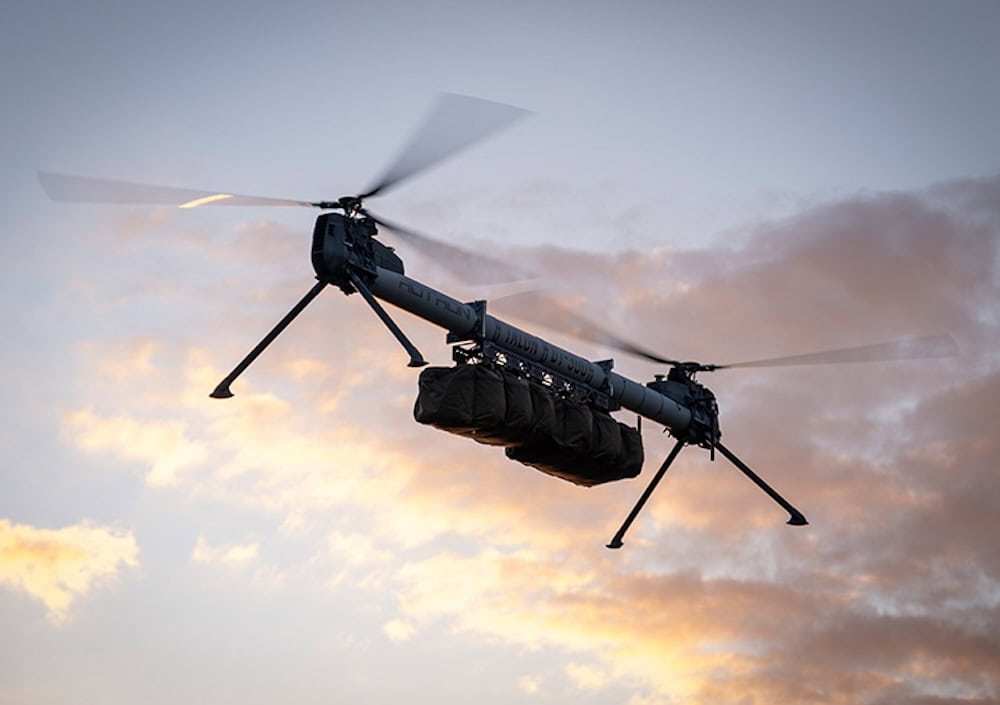
ZIYAN Tech delves into how the company’s integrated aerial-ground communication solution is combined with the Falcon 10 UAV to enhance emergency response. Together, they provide reliable communication and real-time situational awareness in disaster zones, improving rescue operations and coordination.
This solution ensures that affected areas remain connected and reachable, regardless of the circumstances.
In disaster-affected regions, reliable communication is fundamental to successful rescue operations. With technological advancements, both emergency communication and UAV systems have developed to offer safer and more effective solutions for disaster response teams.
As UAV applications continue to expand, emergency personnel no longer have to put themselves at risk to perform critical communication tasks.
The Integrated Solution
ZIYAN Tech’s Falcon 10 UAV plays a crucial role in this solution, operating with onboard communication stations, high-throughput satellite backpack stations, and ground-based communication modules. These components utilize mesh networking technology to establish seamless connectivity between aerial, ground, and satellite networks.
The Unmanned Helicopter functions through a high-throughput satellite backpack station that links to satellites, delivering 4G/5G signals. These signals are transmitted to the ground communication module and relayed to the onboard communication stations of the Falcon 10. Acting as a mobile communication hub, the UAV restores public network signals in the areas directly beneath its flight path.
With the ability to reach disaster sites within a 20 km radius, the Falcon 10 ensures 4G/5G network coverage in areas experiencing connectivity loss.
Whether supporting public communications or specialized emergency networks, the Falcon 10 facilitates immediate coordination between command centers and rescue teams, enabling real-time decision-making and efficient relief operations.
Falcon 10 UAV Surveillance Capabilities
Alongside its emergency communication role, the Falcon 10 UAV is equipped with advanced payloads, including a triple-sensor pod for beyond-visual-line-of-sight (BVLOS) reconnaissance. This feature allows the UAV to perform aerial surveillance in disaster-stricken areas, supplying crucial data to emergency command centers. By combining real-time communication with situational awareness, this dual capability enhances decision-making and disaster response effectiveness.
Fast and Reliable Emergency Communication with the Falcon 10
The Falcon 10 UAV is an optimal solution for disaster zones and remote locations, offering a dependable communication system that significantly reduces response time in emergencies. Its adaptability, high mobility, and reliability make it an essential tool for both rescuers and command units, ensuring seamless communication when it is needed most.
With ZIYAN Tech’s UAV solutions, emergency teams can operate more efficiently and safely, bridging communication gaps and accelerating disaster recovery efforts.