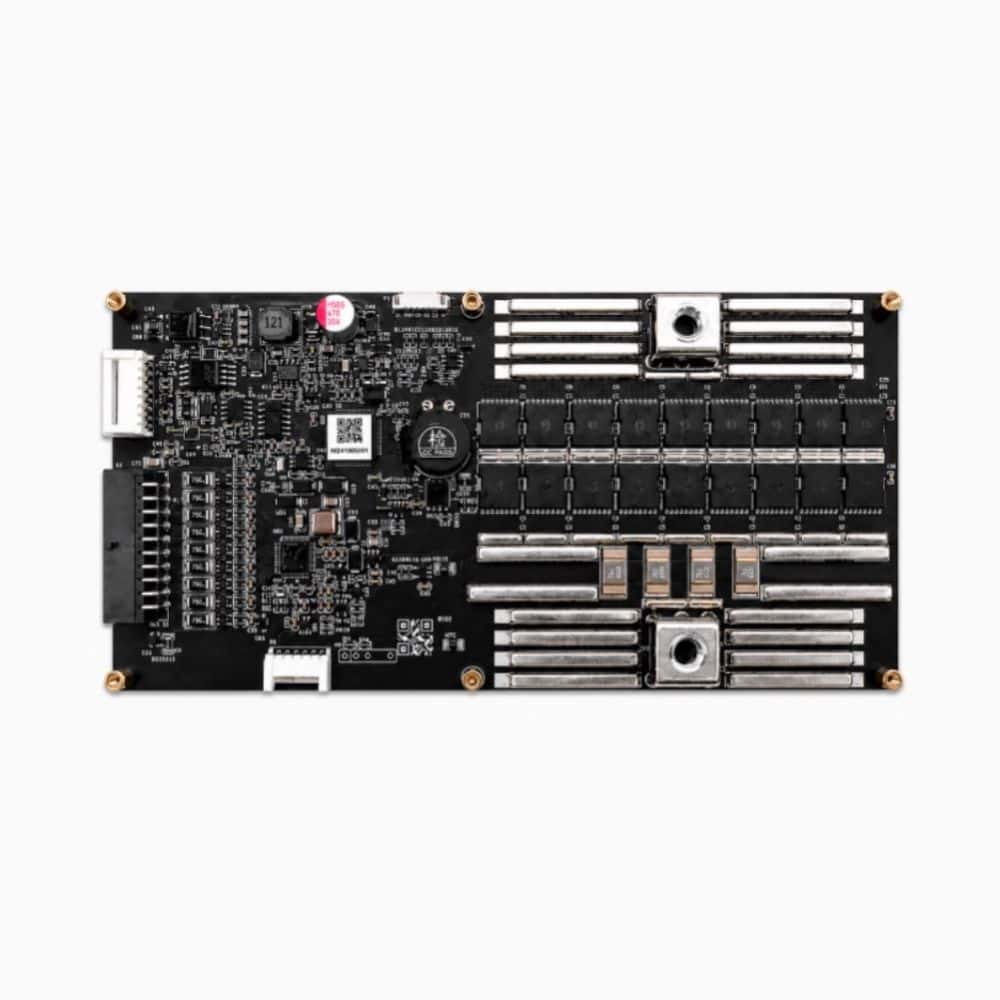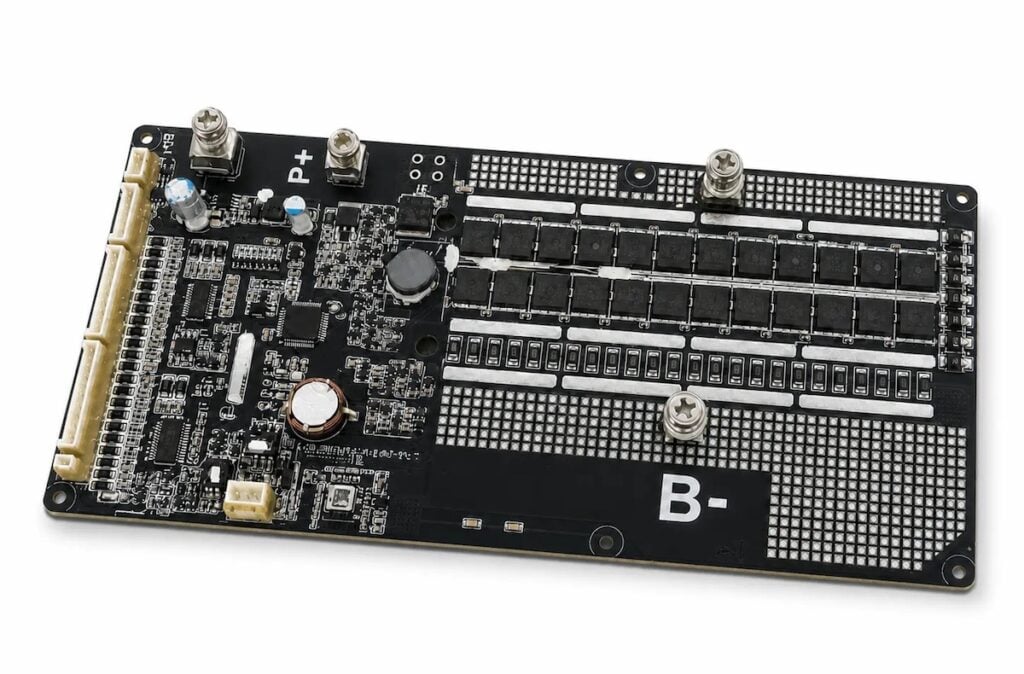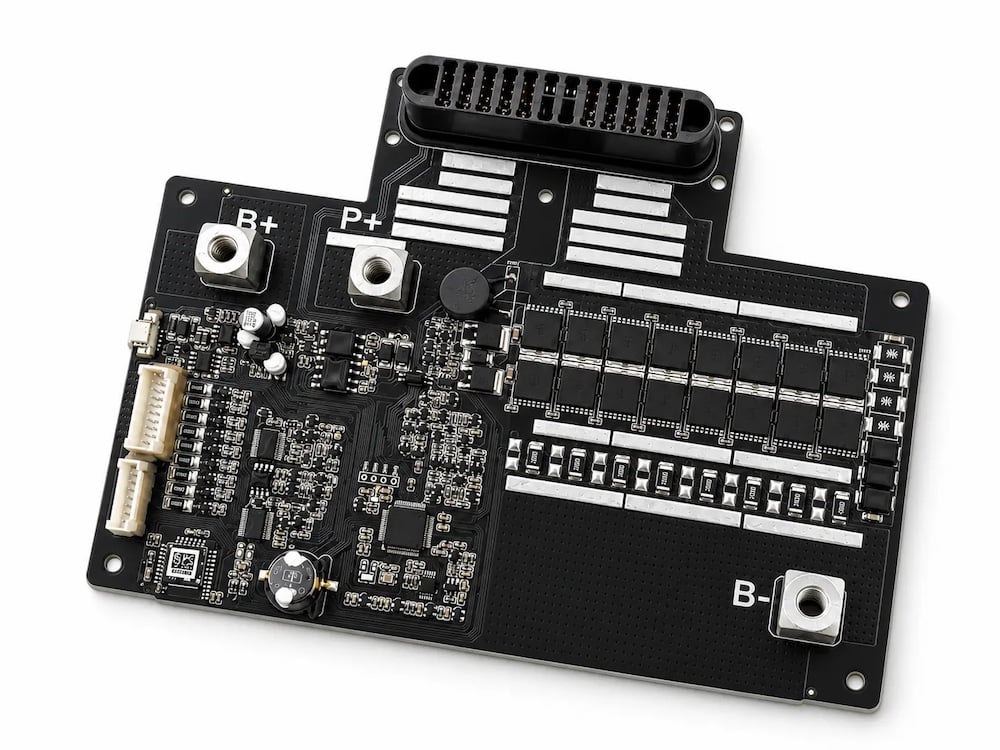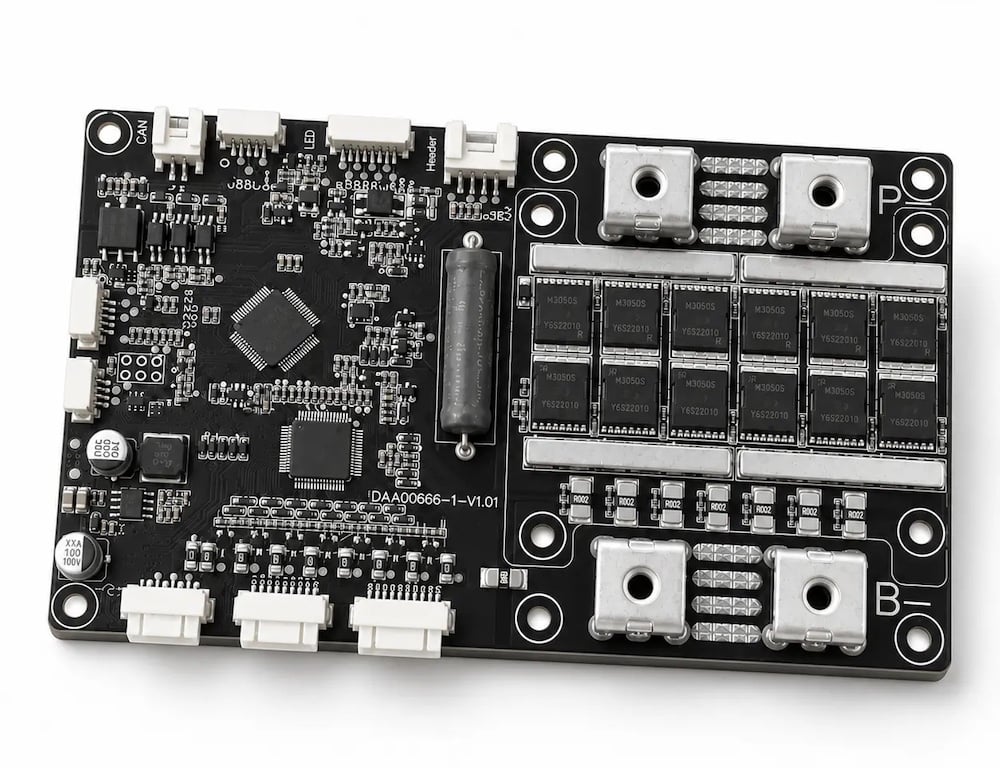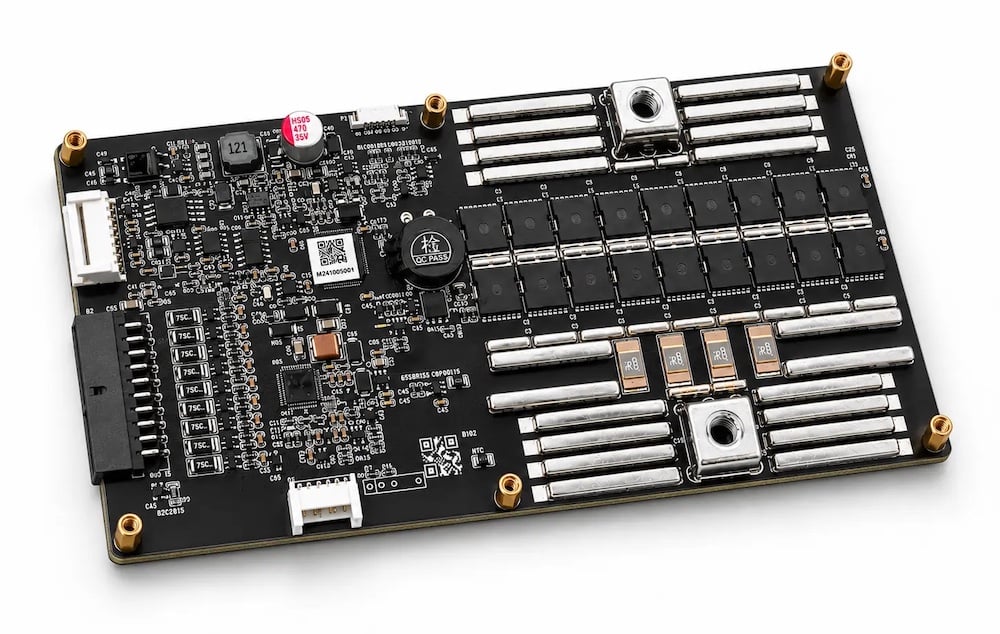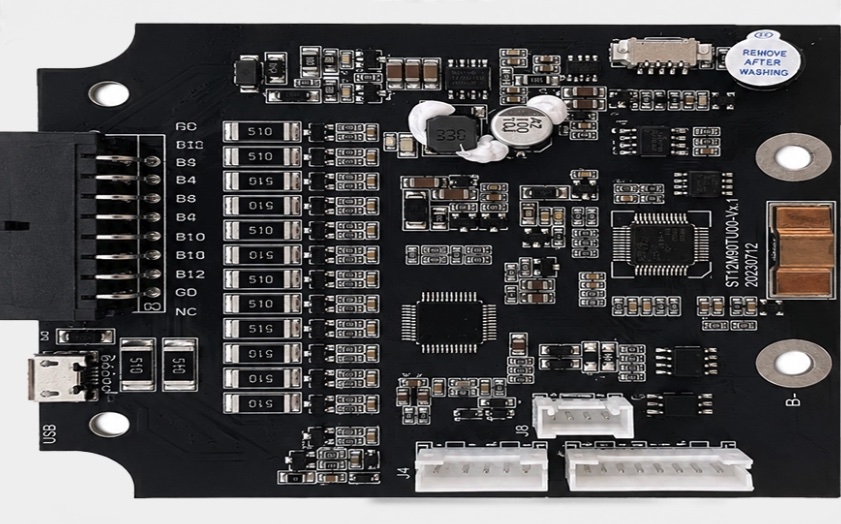
AYAATECH explores when Unmanned Aerial Vehicle (UAV) manufacturers and system integrators should consider a custom smart Battery Management System (BMS), examining battery architecture, power demands, flight-controller integration, thermal conditions and in-flight safety requirements.
A stock BMS can be an efficient choice when the battery pack, airframe and control system are already close to a proven configuration. The calculation changes when the project introduces a new pack architecture, a demanding mission profile or a flight-controller integration that has not been tested before.
For industrial UAVs, the BMS is not simply a board that stops a battery from being overcharged or over-discharged. It also provides the battery data, communication behavior and fault strategy that the rest of the aircraft relies on. A custom design is useful when those details need to be deliberately engineered rather than accepted as a fixed product setting.
Why a UAV BMS Is Different From an Ordinary Battery BMS
A drone battery sees sharper power changes than a battery in many stationary or consumer products. Takeoff, climb, acceleration, hover correction and payload operation can all change the load quickly. The pack also has to operate under vibration, space limits and a narrow weight budget.
The BMS therefore has two jobs at the same time. It must protect the pack, and it must tell the aircraft what the pack is doing. Battery voltage, current, temperature, remaining capacity and warnings have to arrive in a form that the flight controller and ground team can use. PX4, for example, publishes a BatteryStatus message with voltage, current, remaining capacity and warning-related information. See the PX4 BatteryStatus documentation for the type of battery telemetry a modern flight stack may consume.
That is why a BMS that is technically suitable on paper can still be a poor system fit. It may measure the right values, but report them in the wrong format, at the wrong rate or with a protection response that is unsuitable while the UAV is airborne.
The Decision Point: When a Custom Smart UAV BMS Is Worth It
Customization is not a default requirement. It becomes worthwhile when the engineering risk of forcing a standard BMS into the system is higher than the effort of adapting the BMS properly. The following conditions are the clearest indicators.
1. The battery architecture is not a normal, proven match
The battery may use a non-standard series count, a different cell chemistry, multiple packs in parallel, an unusual pack shape or a particular connection sequence. In these cases, the sensing harness, balancing arrangement, current path, thermal sensor positions and firmware limits all need to match the actual pack. A standard BMS can only be a safe shortcut when those details already line up.
2. The current profile is harder than the nameplate rating suggests
A continuous-current number is only part of the story. Engineers also need to consider takeoff peaks, motor inrush, payload transients, voltage sag and how long the system remains at high load. A custom smart BMS can be designed around the real duty cycle, not just the largest current printed in the requirement sheet.
3. The flight controller needs a specific communication behavior
CAN, UART, RS485 and DroneCAN are interfaces, not a guarantee that two devices will understand each other. Message mapping, identifiers, update rates, fault states and battery-status fields must be confirmed with the flight-control system. DroneCAN provides a defined set of standard data types, while the aircraft project may still need parameter or protocol adaptation. Refer to the DroneCAN standard data-type reference when discussing the communication layer with your engineering team.
4. The aircraft needs mission-aware safety logic
The safest response in a workshop is not always the safest response in the air. During flight, an abrupt battery cutoff can create a more serious failure than a controlled warning and a return decision. A UAV-specific BMS may therefore need staged alarms, flight-mode behavior, pre-charge logic, data logging and a clearly defined response to abnormal events. The exact strategy must be verified against the aircraft’s redundancy and operating procedures.
5. Thermal conditions are part of the mission
Cold launch conditions, hot-field operation, enclosed packs, repeated charging or long high-load flights can all reduce thermal margin. Custom work may involve the number and location of NTC sensors, heating behavior, temperature derating, charger interaction and the way warnings appear in telemetry. These choices are especially important for agricultural, inspection, heavy-lift and high-voltage UAV projects.
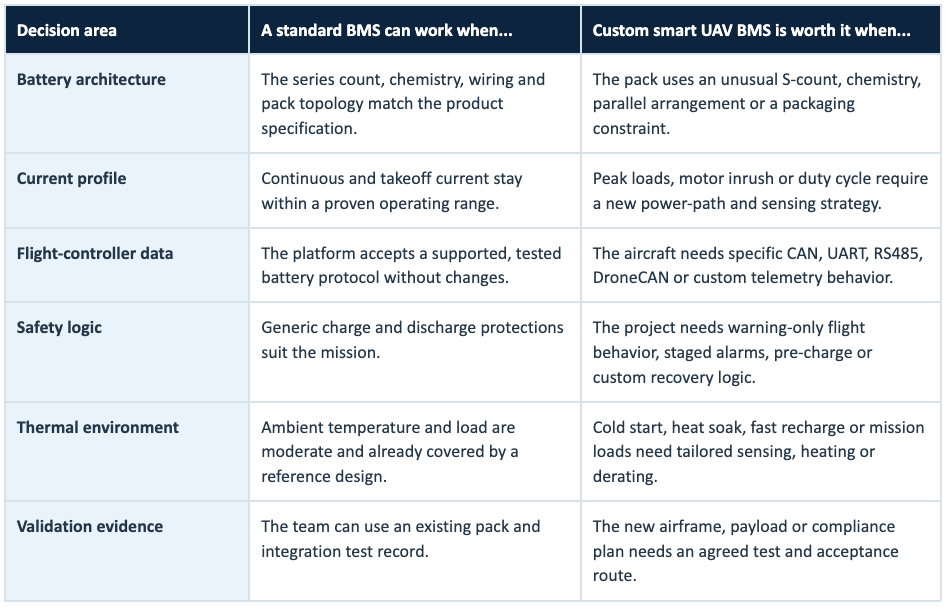
Standard vs. Custom: A Practical Comparison
Use this comparison as a decision aid. It is not a promise that every unusual feature requires a completely new board; a qualified existing platform with firmware and interface adaptation may be the better path.
What Can Be Customized in a UAV BMS?
A useful custom project starts by separating what must change from what can remain on a proven platform. The practical scope usually falls into four areas.
Hardware and pack integration
- Series count, cell chemistry and parallel-pack topology
- Continuous and peak-current platform, power-path architecture and pre-charge method
- Connector, cable, sensing-harness and enclosure constraints
- Number and position of temperature sensors
- Balancing method, display, switch and service interface options
Firmware and safety parameters
- Cell-voltage, current and temperature thresholds
- State-of-charge (SOC) calculation and calibration behavior
- Warning, alarm and flight-mode response logic
- Storage mode, wake-up behavior, data logging and fault records
- Charger coordination and any project-specific operating logic
Communication and flight-controller integration
- CAN, UART, RS485 or DroneCAN interface selection
- Protocol mapping for PX4, ArduPilot, JiyiUAV, VKCAN, BOYING CAN or a project-specific system
- Battery-status fields, error flags, IDs and message update rate
- Isolated communication where the electrical architecture needs it
Thermal and environmental strategy
- Low-temperature heating logic and start conditions
- Thermal warning and derating thresholds
- Sensor placement for cells, MOSFETs and critical pack zones
- Expected ambient temperature, vibration and mission duty cycle
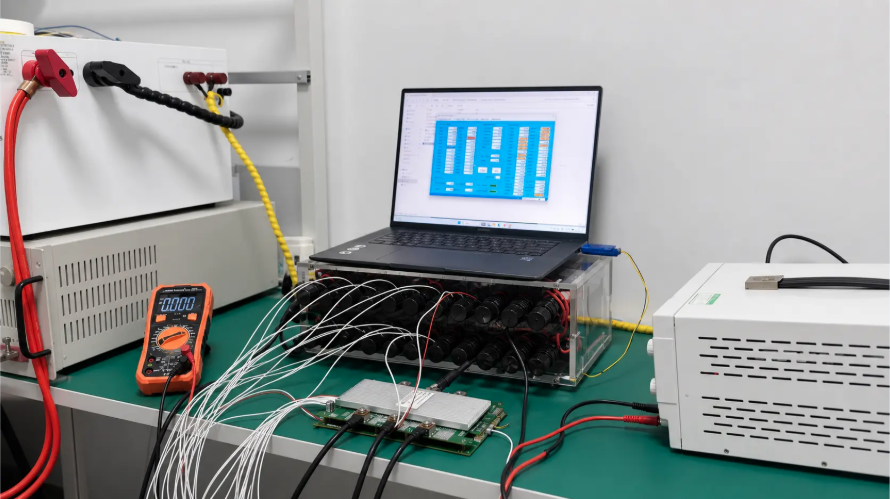
How a Custom UAV BMS Should Be Validated
A specification alone is not an engineering outcome. Before a custom BMS is released, the project should have a test route that reflects the final pack and aircraft behavior. The goal is to verify both electrical operation and the decisions made from the battery data.
1. Requirements review
Document the battery configuration, cell data, maximum continuous and peak loads, flight controller, charger, operating temperature, mechanical constraints and acceptance criteria. This is where hidden assumptions usually surface. A clear brief also makes it possible to decide whether the project needs a new design or a configured existing platform.
2. Bench and communication test
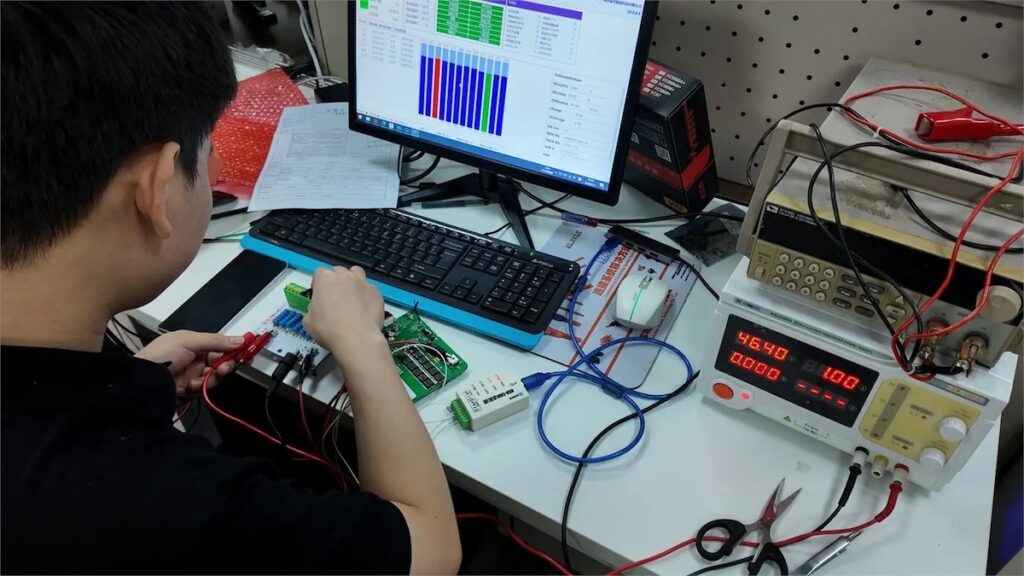
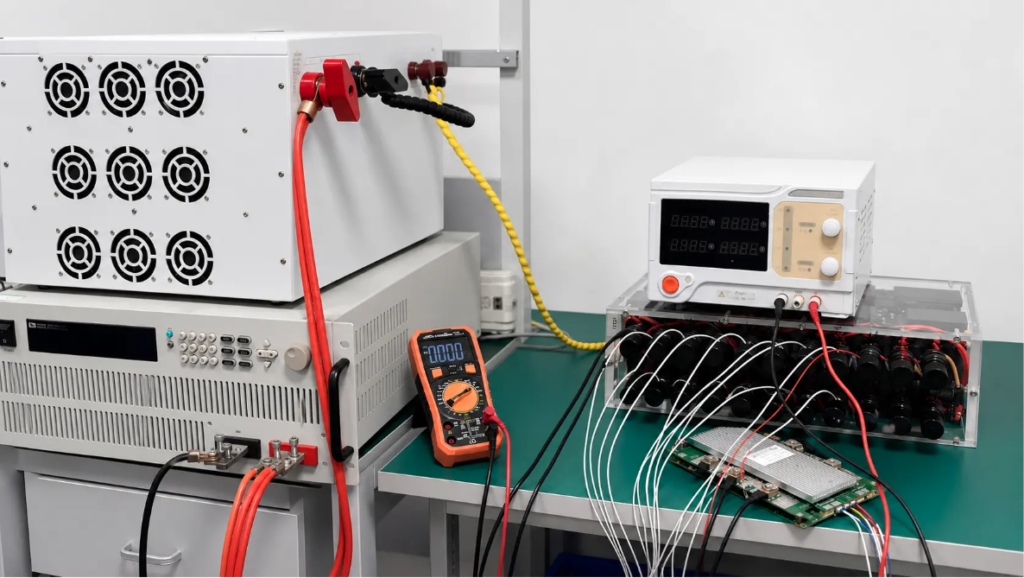
Verify sensing order, current measurement, temperature channels, charge and discharge behavior, pre-charge, protection thresholds and telemetry. The test should include the selected flight controller or a representative communication tool, not only a standalone BMS tester.
3. System and flight evaluation
Evaluate battery data and warning behavior under representative loading conditions. Confirm that the aircraft responds safely to defined events and that data remains intelligible to the operator. PX4’s safety configuration guidance is a useful reminder that battery warnings must be considered together with the flight stack’s failsafe configuration.
How This Looks in Real UAV Applications
Inspection, mapping and surveillance UAVs
These platforms often value accurate remaining-capacity data, compact integration and reliable communication more than extreme current alone. A configurable smart BMS can support dual-pack operation, selected protocol options and mission visibility for long routes or high-value sensors. AYAA’s EF-004 inspection and surveillance drone BMS is an example of an engineering platform built around this type of application.
Agricultural UAVs
Agricultural drones often combine high current, repeated fast turnaround and exposure to hot fields or cold mornings. Their BMS requirements can include temperature strategy, current measurement under dynamic loads, durable pack integration and communication with the particular agricultural flight-control ecosystem.
Heavy-lift, cargo and firefighting drones
Heavy payloads make the current profile and voltage sag more consequential. Projects may need parallel-pack coordination, higher current sensing, pre-charge, data logging and carefully defined in-flight behavior. The key question is not simply whether the BMS can pass a high-current test; it is whether it can provide dependable information and predictable fault handling throughout the mission.
From Engineering Brief to Delivery: What a Good Custom Project Needs
A custom BMS project moves faster when technical and commercial questions are handled early. At minimum, the team should provide the pack configuration, cell information, target continuous and peak current, flight controller, requested interface, charger details, operating environment, dimensions and planned volume. A reference sample or wiring drawing is particularly helpful where the physical integration is unusual.
The project also needs a shared definition of delivery and acceptance. That normally includes the approved electrical specification, protocol description, test scope, software or host-tool requirements, labelling and the documents supplied with the product. AYAA’s custom UAV BMS engineering page outlines a workflow from requirements collection and product matching to development, testing and delivery.
There is no responsible one-size-fits-all minimum order quantity for a custom design. The appropriate quantity depends on whether a proven platform can be configured, the BOM and component availability, enclosure or tooling work, firmware scope, validation needs and the agreed production inspection standard. Confirm MOQ, sample quantity, lead time and shipment acceptance during the engineering review instead of treating a generic number as a commitment.
Frequently Asked Questions
Do I need a custom UAV BMS if my drone uses a common battery voltage?
Not necessarily. A common voltage can still use a standard BMS if the current profile, communication protocol, physical integration and safety logic are already proven. Custom work becomes useful when one of those conditions changes.
Can a standard BMS be adapted without designing a new PCB?
Often, yes. A proven hardware platform may be configured through firmware, interfaces, connectors, thresholds or protocol mapping. The engineering review should determine whether that route is enough.
What information should I prepare before requesting a custom BMS?
Prepare the battery S-count and chemistry, cell model, continuous and peak current, charger, flight controller, communication protocol, temperature range, pack dimensions, wiring diagram and expected project quantity.
Why is flight-controller compatibility more than choosing CAN or UART?
The physical interface is only the starting point. The BMS and flight controller must agree on message content, IDs, update rate, data scaling, fault states and the response to missing or abnormal data.
How should a custom BMS behave during a battery fault in flight?
That decision depends on the aircraft’s safety architecture. The BMS may need staged warnings, telemetry, a controlled response or a protection action. It must be defined and verified with the flight-control and system team.
What determines the MOQ and lead time for a custom UAV BMS?
The answer depends on the degree of customization, component sourcing, firmware work, testing, documentation and required production inspection. Confirm these commercial details after the technical scope is reviewed.
Conclusion
Choose a custom smart UAV BMS when the battery cannot be treated as an isolated component. If the pack architecture, power demand, communication, thermal environment or flight behavior needs a deliberate decision, customization can reduce integration risk and make battery data more useful to the aircraft team.
The best first step is a concise engineering brief. Share the pack configuration, current profile, flight controller, communication requirement and operating conditions. That makes it possible to determine whether a proven smart BMS platform can be configured or whether the UAV project genuinely needs a new custom solution.