
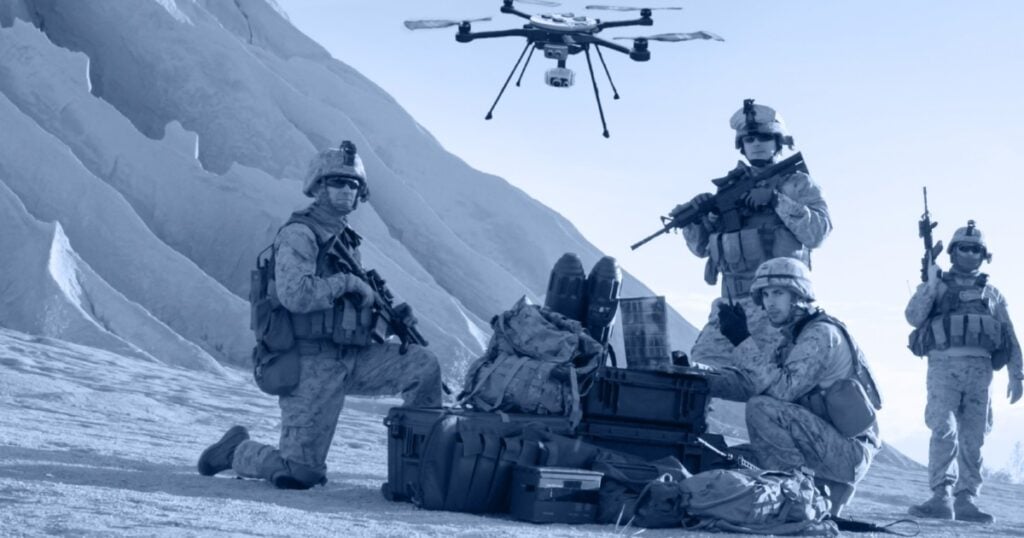
DTC, a Codan Company, examines how its unmanned communications technologies address connectivity challenges across air, land, and maritime domains, particularly in contested, congested, and GNSS-denied environments. Read more >>
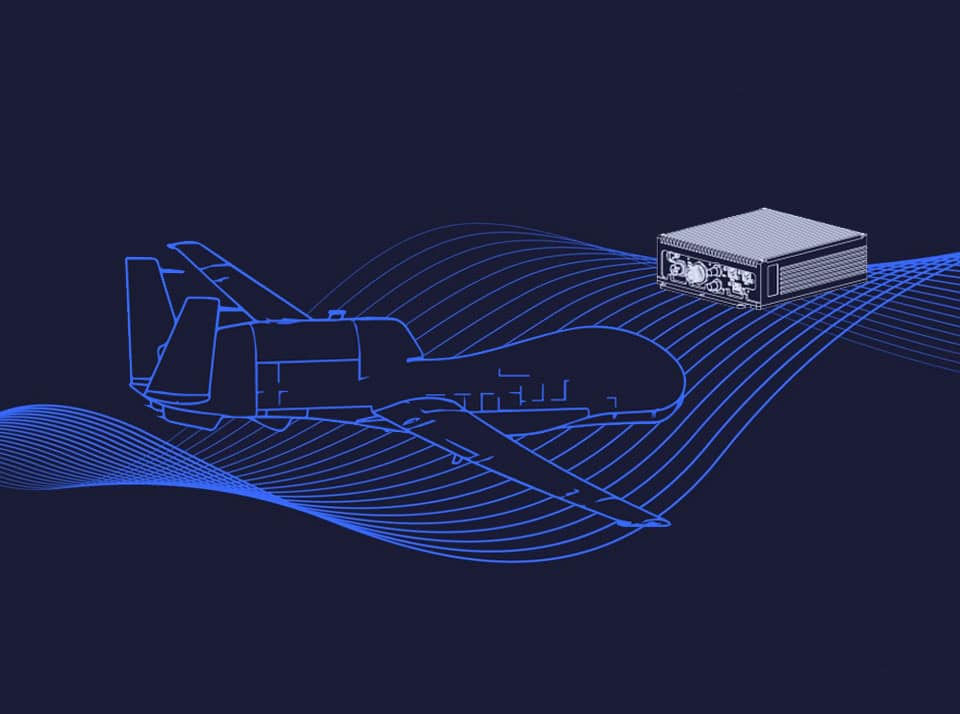
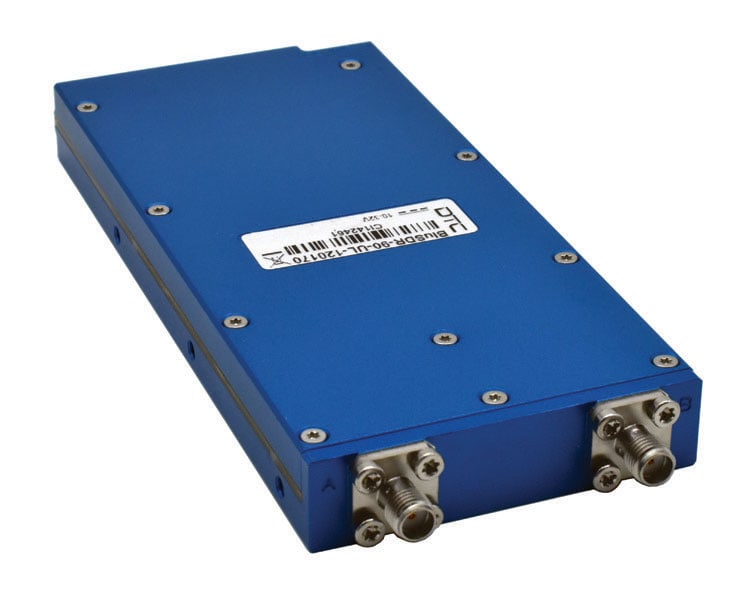
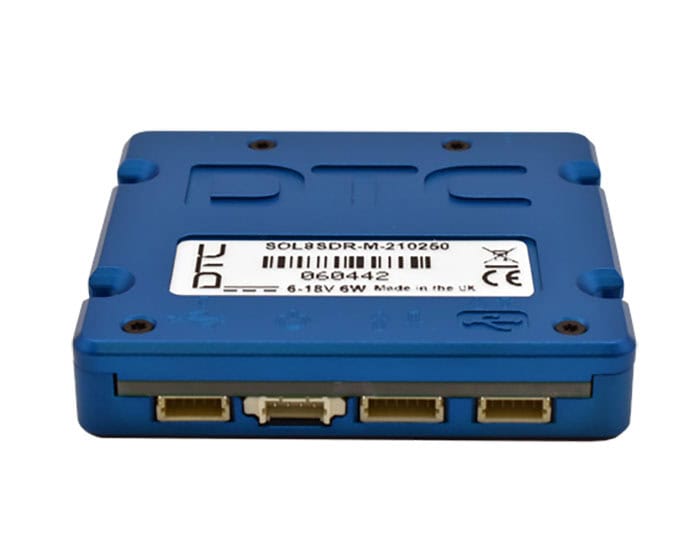
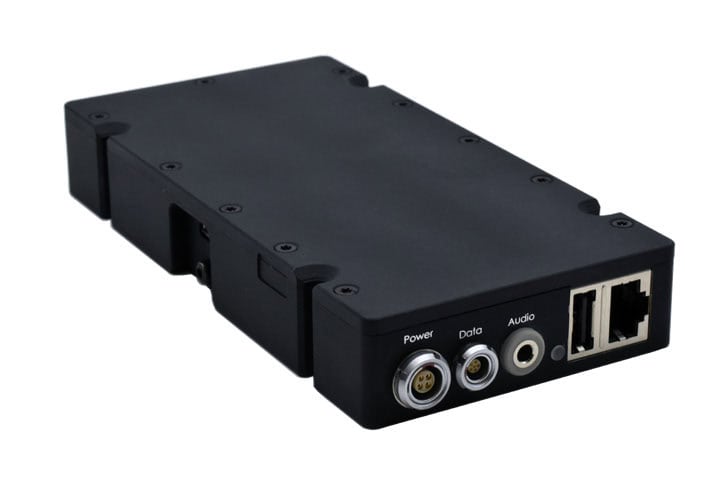
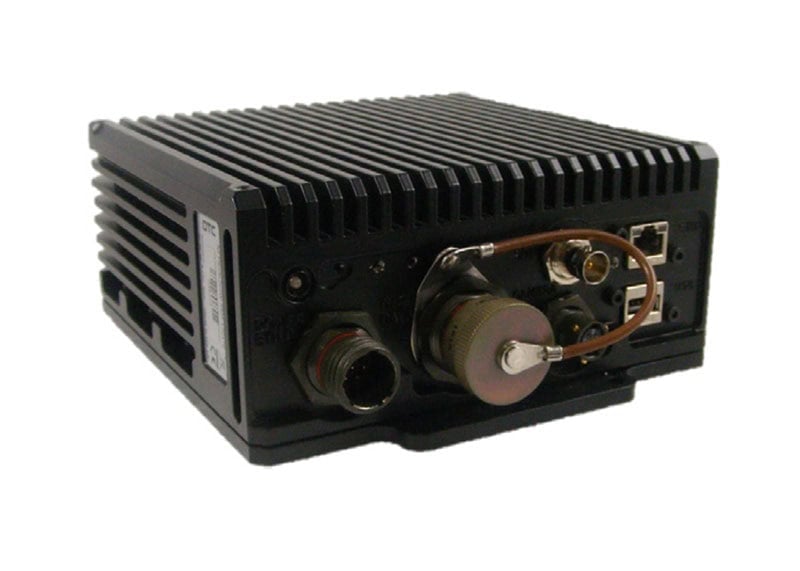
Its BluSDR™ Software Defined Radio platform was developed specifically for unmanned applications, with direct customer input and a focus on Size, Weight, and Power (SWaP) requirements. The range includes the BluSDR™-6, weighing 26g (0.9oz) and smaller than a standard credit card. DTC also has production capabilities across three continents, full NDAA compliance, and substantial investment in raw materials inventory to support manufacturing at scale and pace.
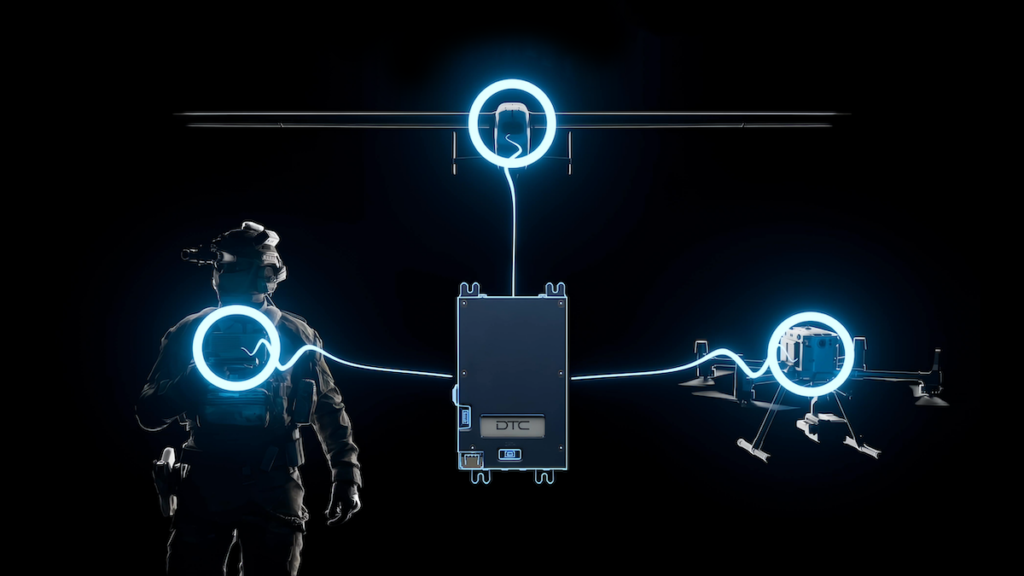
DTC’s unmanned communications offering also includes the MeshUltra™ MANET Mesh waveform, which provides self-forming, self-healing connectivity and automatically routes data through the most efficient available path. The architecture supports point-to-point links between individual drones and ground stations, multi-drone relay formations, and swarm configurations in which each platform transmits and relays data for others.
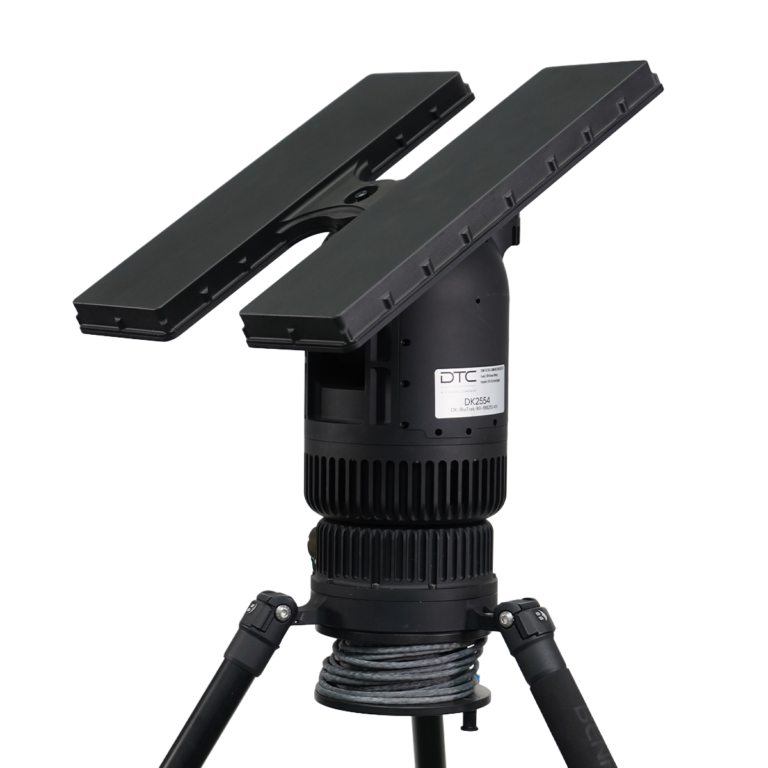
BluSDR radios are widely deployed on military unmanned aerial platforms, while BluSDR in tandem with DTC’s Sentry Mesh soldier and vehicle communications range addresses Unmanned Ground Vehicle (UGV) and human-unmanned teaming applications. For Uncrewed Surface Vessels (USVs), where sea-level operation limits line-of-sight distances, DTC uses multi-hop mesh relay architectures to extend operational reach beyond a single direct link. The company also offers an alternative Beyond Visual Line of Sight (BVLOS) datalink capability based on its experience developing High Frequency (HF) communications systems.
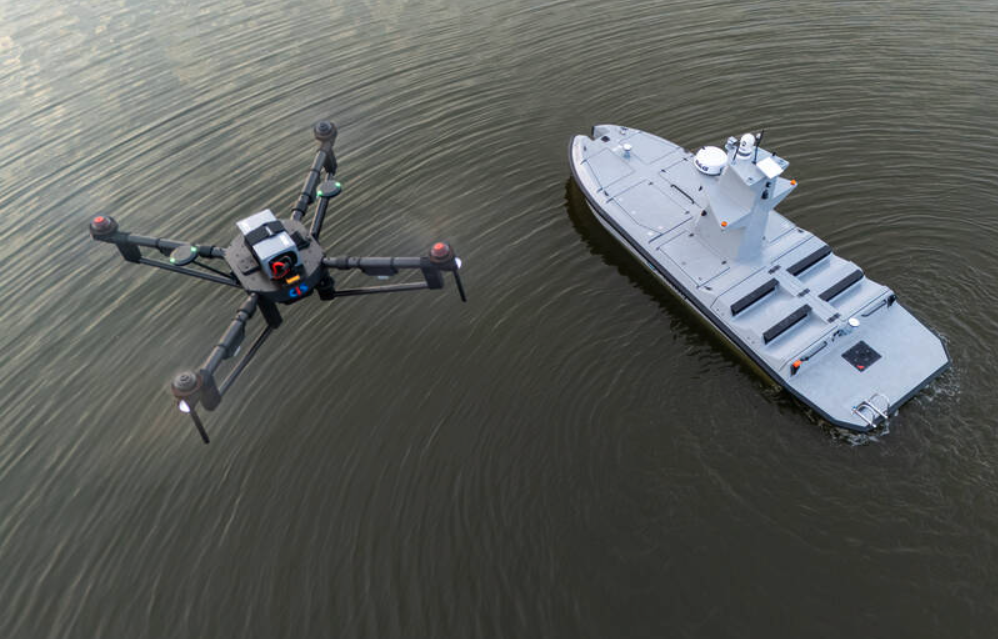
FLANQ’s Q-RECON Uncrewed Surface Vehicle and CiS’ flagship quadcopter, ORKA, provide multi-domain situational awareness through collaborative autonomy, powered by DTC’s BluSDR Mesh network.
In contested electromagnetic environments, DTC’s Cognitive Interference Avoidance System (IAS) automatically reconfigures the network in response to jamming, maintaining connectivity without operator intervention. Its Radio Frequency (RF) ranging capability provides approximate positioning through multilateration in GNSS-denied conditions, either as a standalone capability or as part of a fused alternative navigation solution combining technologies such as inertial sensing and terrain recognition.
As AI-enabled autonomous systems become more common, communications remain necessary for retasking, status reporting, operator override when needed, and delivering AI training data to support future missions. Looking ahead, AI is expected to shift mission planning and execution from predefined waypoints toward broader goal assignment, although regulatory questions surrounding accountability and the role of human judgment in lethal decisions remain unresolved.
Read ‘Contested, Jammed, Denied: DTC’s Answer to the Unmanned Communications Problem’ for more information.