


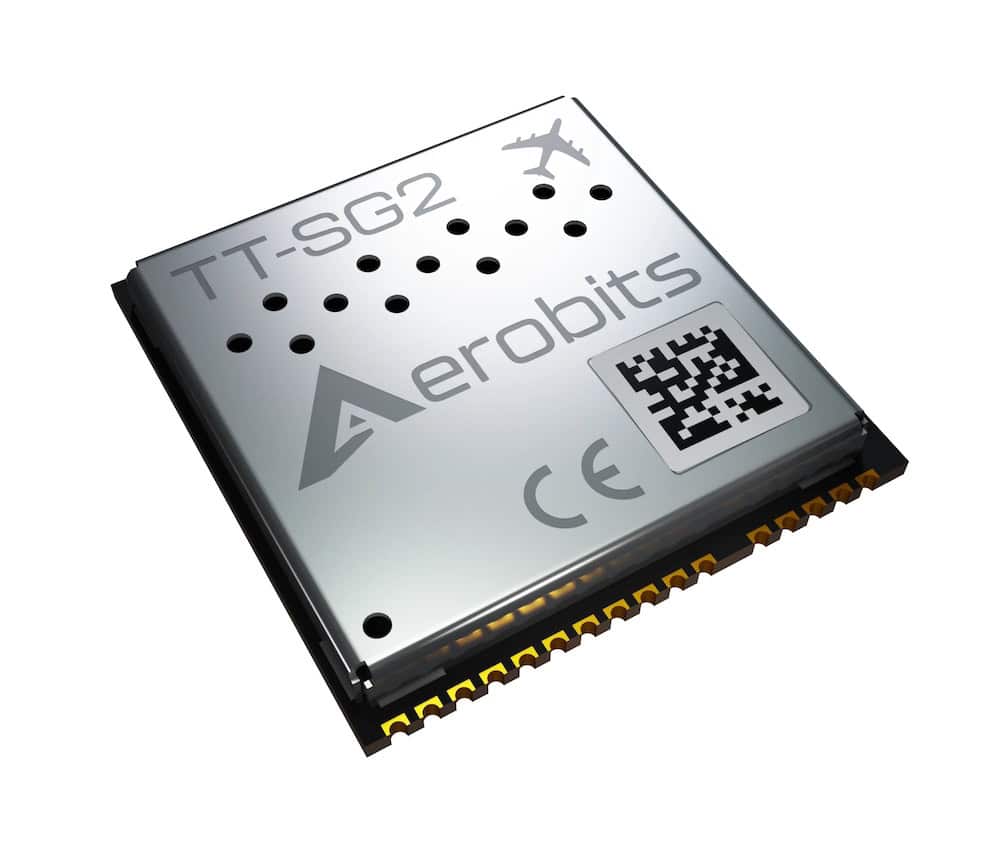
The TT-SG2 OEM ADS-B/GNSS Receiver is a compact OEM ADS-B/GNSS receiver operating at 1090 MHz, developed to provide reliable surveillance and positioning capabilities for integration into uncrewed and autonomous platforms. Designed around proven FPGA-In-The-Loop™ technology, the module combines a single-core processor with FPGA-based architecture to enable rapid RF signal handling while minimizing hardware complexity. This patented approach reduces component count, supporting a smaller form factor and cost-efficient implementation without compromising processing performance.
Its OEM design supports integration into a broad range of unmanned systems and embedded electronics applications. A high-speed UART interface and straightforward configuration through AT commands simplify system integration and deployment. The receiver also provides additional interfaces that enable firmware customization and the incorporation of application-specific functionality. Multiple communication interfaces, protocol options, and specialized features are available upon request, allowing the TT-SG2 to be adapted to unique operational requirements across professional uncrewed platforms and related technologies.
Also available in an EVAL version.
| Specification | TT-SG2 |
|---|---|
| ADS-B (IN) | ✓ |
| MODE A/C/S (IN) | ✓ |
| Precise MODE A/C/S Timestamp | ✓ |
| UAT (IN) | |
| Built-in GNSS | ✓ |
| RX Sensitivity [dBm] |
-85 (ADS-B) -167 (GNSS) |
| Transmitter Power [dBm] | |
| UART Interface [baud] | 115k / 921k / 3M |
| USB Interface | 2.0 |
| Power Supply [V] | 3.3 |
| Current Consumption [mA] | 100 |
| Weight [g] | 1.6 |
| Dimensions [mm] | 19 × 18.5 |