

Discover World-Leading Unmanned and Autonomous Technologies
Discover cutting-edge solutions from leading global suppliers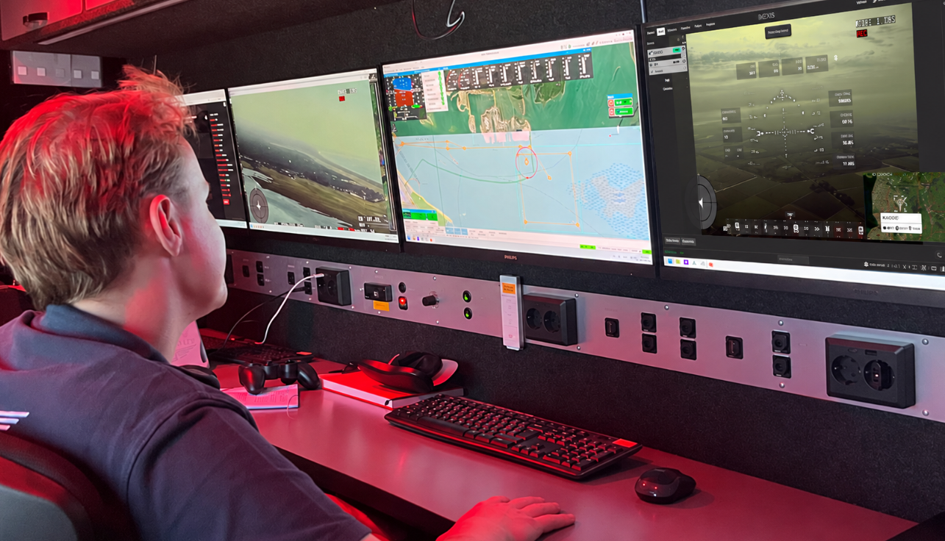
High Eye has validated the integration of Intelic’s NEXUS command-and-control software aboard its Airboxer unmanned helicopter during operational flights exceeding four hours.
Standardising the software environment addresses a frequent bottleneck in unmanned aviation, where accommodating diverse customer payloads typically demands dedicated software interfaces, modified operator displays, and redundant flight validation. By establishing a unified software layer within its Mission Control Centre, High Eye enables individual sensors, datalinks, and command elements to be exchanged or modified without requiring a comprehensive overhaul of the underlying control systems.
The integration relies on NEXUS to route data between the aircraft, operator stations, and auxiliary equipment using standard communication protocols, including MAVLink. This architecture isolates subsystem dependencies so that hardware modifications require only compliance with established electrical, operational, and interface parameters rather than custom software builds.
This modular software baseline supports a broad array of operational configurations across the Airboxer’s operational envelope. These include maritime surveillance payloads combining EO/IR cameras with Automatic Identification System receivers, infrastructure inspection setups using LiDAR for geospatial mapping and power line assessment, and search and rescue kits such as Lifeseeker mobile signal location systems. For defence, security, and communications roles, the architecture accommodates radar, magnetometers, target designators, and configurable radios from providers such as Silvus and Kongsberg, backed by cellular and satellite links.
The software validation builds directly upon the aircraft’s endurance milestones, following a September 2026 maritime trial in which an Airboxer flew for 4 hours, 30 minutes, and 30 seconds equipped with auxiliary fuel tanks, flotation provisions, and operational mission hardware. Coupling sustained airborne endurance with a modular command framework allows the platform to function effectively within broader network-centric architectures, sharing tracking and payload data with external surface and maritime assets.
High Eye’s adoption of third-party command architecture reflects a broader systems integration approach. Rather than developing every software component internally, the company pairs established external solutions with in-house aircraft and interface engineering. This strategy preserves consistent workflows for operators across varied mission profiles, accelerates the onboarding of new technologies throughout the airframe’s service life, and establishes reusable engineering baselines for future integrations.