Discover World-Leading Unmanned and Autonomous Technologies
Discover cutting-edge solutions from leading global suppliers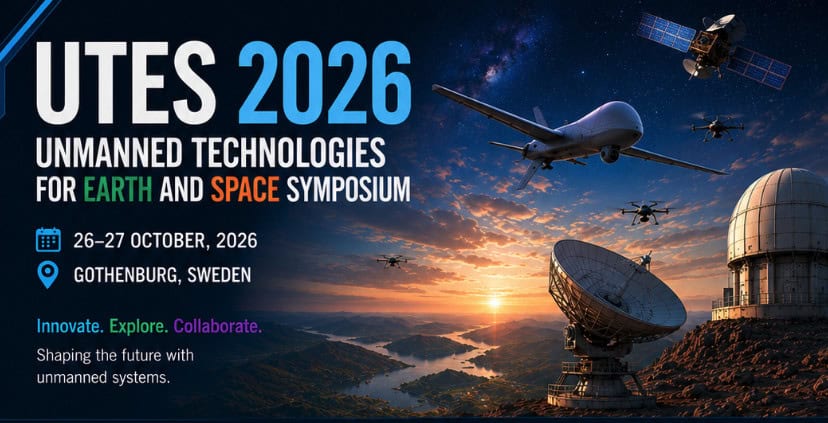
Unmanned Technologies for Earth and Space 2026 (UTES2026) will take place at Chalmers University of Technology in Gothenburg, Sweden, on 26–27 October 2026.
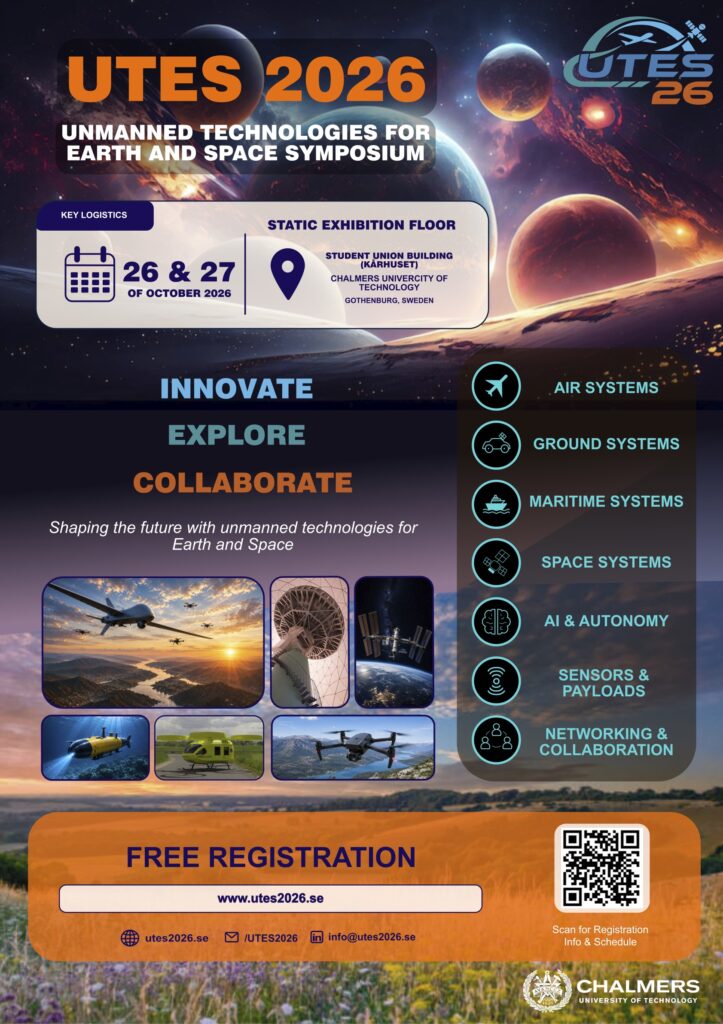
The two-day symposium will connect specialists from industry, academia, government, research and the wider innovation ecosystem to explore the growing convergence between terrestrial unmanned systems and future space technologies.
The central premise of UTES2026 is that technologies supporting uncrewed aviation, autonomous mobility and planetary exploration increasingly share common engineering requirements, from autonomous decision-making and remote operations to traffic management, safety, resilience and systems integration.
The preliminary programme is divided into two principal areas:
Day One – Earth Applications
The first day will focus on unmanned aviation, advanced air mobility and terrestrial autonomous systems. Sessions are expected to address:
- Uncrewed aviation and emerging advanced air mobility concepts.
- U-space, unmanned traffic management and airspace integration.
- Regulation, operational safety and supporting digital infrastructure.
- Applied industrial use cases, research projects and technology demonstrations.
Day Two – Space and Planetary Exploration
The second day will examine how autonomous and remotely operated technologies can support future space missions. Key themes will include:
- Satellite systems, Earth observation, remote sensing and space-enabled data services.
- Robotic systems for lunar, Martian and other planetary surface operations.
- Artificial intelligence, autonomous decision-making and remote mission control.
- Resilient operations and Europe’s future role within the space exploration ecosystem.
An accompanying exhibition will run across both days, providing companies, start-ups, SMEs and research groups with opportunities to present technologies, conduct physical demonstrations and engage directly with industry stakeholders, researchers, public authorities, investors and potential partners.
Attendance, exhibiting and speaker participation are being offered free of charge. This is intended to remove financial barriers for smaller innovators and research teams while encouraging wider participation from students, professionals and the general public.
UTES2026 is hosted by Chalmers University of Technology, with Chalmers Area of Advance Transport acting as principal sponsor. The symposium complements Chalmers’ existing work in UAV flight simulation, advanced aircraft design, sustainable materials, alternative power sources, medical logistics and emergency-response applications.
The broader ambition is to strengthen collaboration across the Swedish and European unmanned technology ecosystem, accelerate knowledge transfer between Earth and space applications, and establish a multidisciplinary meeting point for innovation, research and entrepreneurship.
Further information and free registration are available at the UTES2026 website.