Discover World-Leading Unmanned and Autonomous Technologies
Discover cutting-edge solutions from leading global suppliers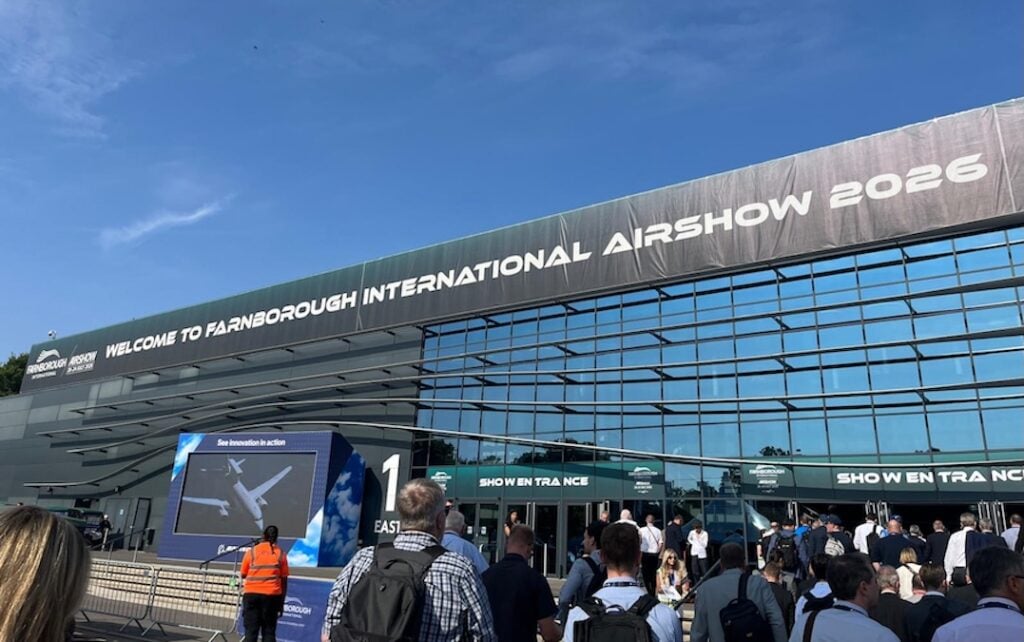
Farnborough International Airshow 2026 once again brought together the global aerospace and defense industry, with uncrewed aircraft, autonomous systems and counter-UAS technologies featuring prominently across the five-day event.
From new heavy-lift aircraft and autonomous platforms to unmanned helicopters, collaborative combat systems, and cargo drones, the show highlighted the expanding range of roles being addressed by uncrewed aviation across military and civil operations.
UST was on site at Farnborough, seeing these technologies first-hand and speaking with companies including BETA Technologies, TEKEVER, TB2 Aerospace, ASELSAN, and Vectacore. This roundup brings together some of the key announcements and uncrewed systems encountered across the show.
New Uncrewed Aircraft & Technology Announcements
Heavy-lift capability was a recurring theme at Farnborough, with several companies presenting new approaches to moving larger payloads over greater distances.
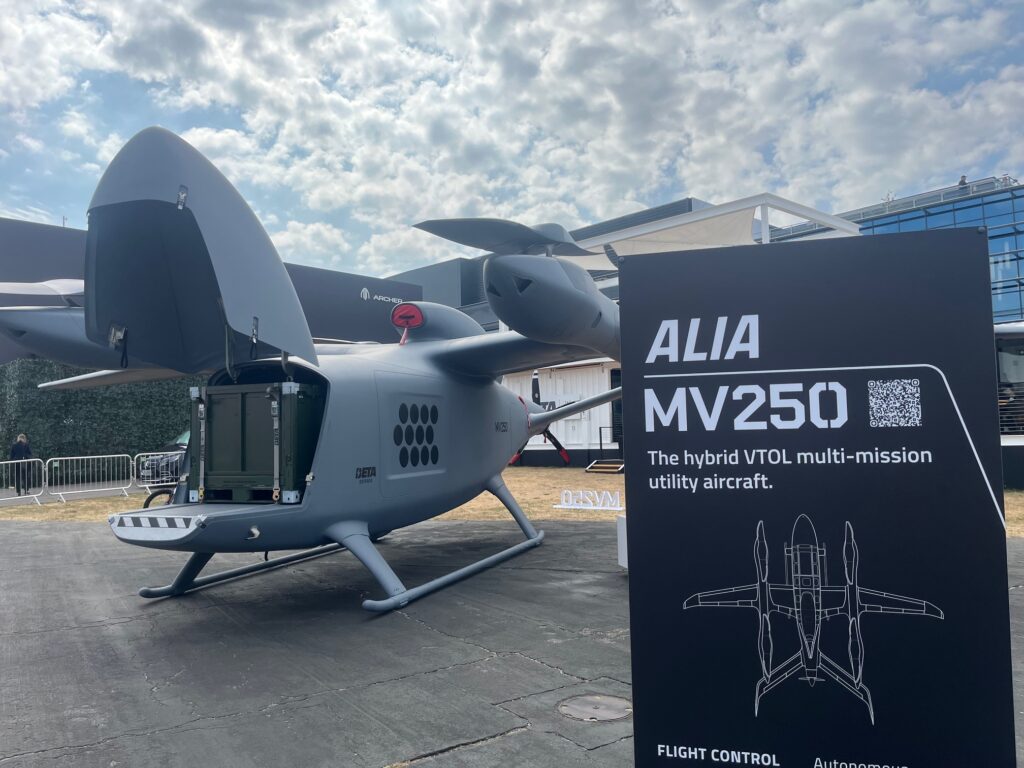
BETA Technologies introduced the ALIA MV250, a hybrid VTOL multi-mission utility aircraft. The autonomously controlled aircraft offers a maximum airspeed above 170 knots, a stated range of more than 250 nautical miles at full payload and more than 1,300 nautical miles in ferry configuration. Payload capacity is listed at 2,000 lb (907 kg).
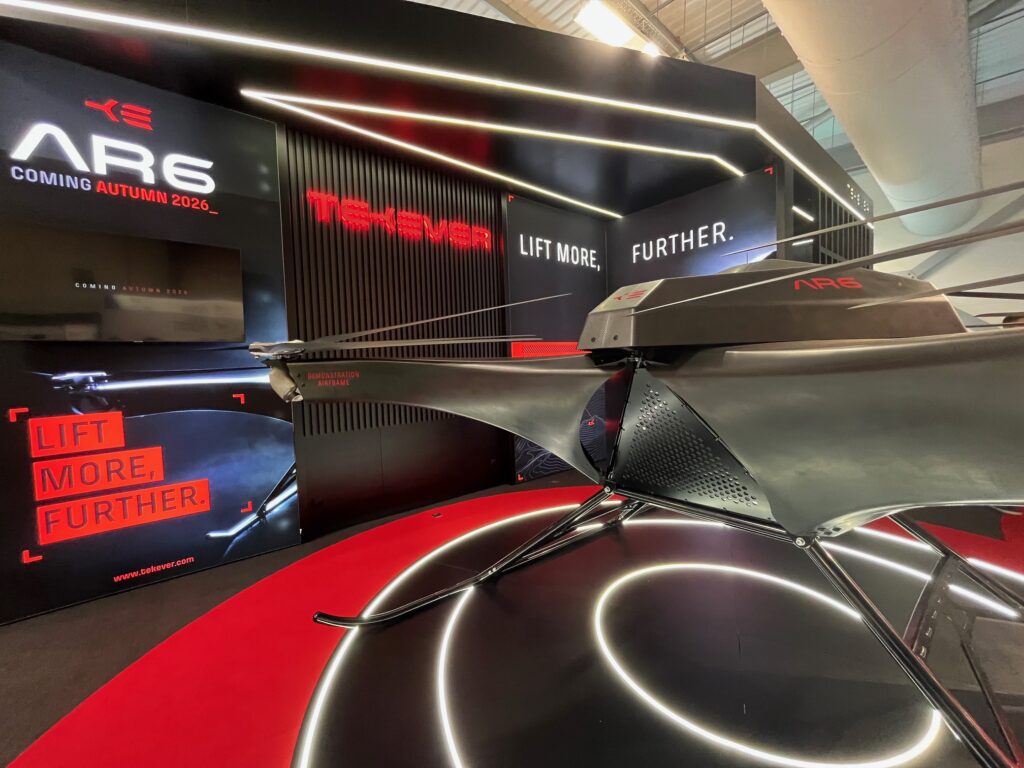
UST also spoke with TEKEVER following the unveiling of its new AR6 autonomous heavy-lift family. The UK-developed platform is designed to transport payloads of up to 200 kg across distances of up to 500 km. Civil applications span logistics, offshore operations, medical support and disaster response, alongside military roles including forward logistics and casualty evacuation. Production is scheduled to begin in Swindon by the end of 2026.
Elsewhere, TB2 Aerospace showcased its DROPS multi-mission payload system at Farnborough for the first time. Compatible with any UAS, DROPS is designed to autonomously launch, capture and recover modular payloads, while also enabling in-flight charging to extend the range of electric UAS.
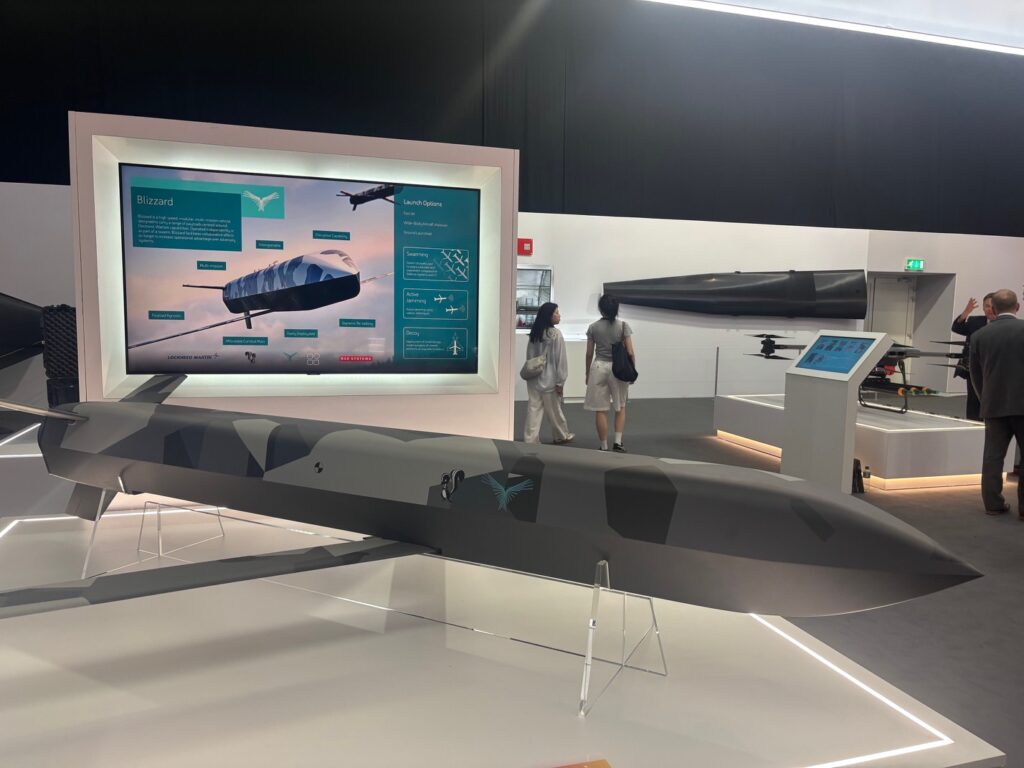
BAE Systems also revealed Blizzard™ as the name of the autonomous air vehicle being developed through FalconWorks in collaboration with Lockheed Martin’s Skunk Works. The 330 lb, 7.7-foot-long, jet-powered aircraft uses an open system architecture that allows different equipment to be integrated depending on the mission. Initial roles are focused on disrupting and defeating surface-to-air threats, including jamming and acting as a decoy, while the aircraft is also being developed for palletized launch from cargo aircraft.
Uncrewed & Autonomous Systems Across the Show
Beyond the new announcements, Farnborough provided a broad cross-section of uncrewed aircraft spanning logistics, reconnaissance, maritime operations and future combat roles.
Mitsubishi Heavy Industries’ MAV-CARGO 200 was among the cargo-focused aircraft on display, with a maximum payload of 200 kg and maximum range of 100 km. The aircraft uses a hybrid propulsion arrangement combining an engine, electrical generator and battery.
BAE Systems’ T-150, developed by Malloy Aeronautics, provided an all-electric option for heavy-lift operations. The UAS can carry up to 68 kg and uses removable batteries to support rapid turnaround between missions.
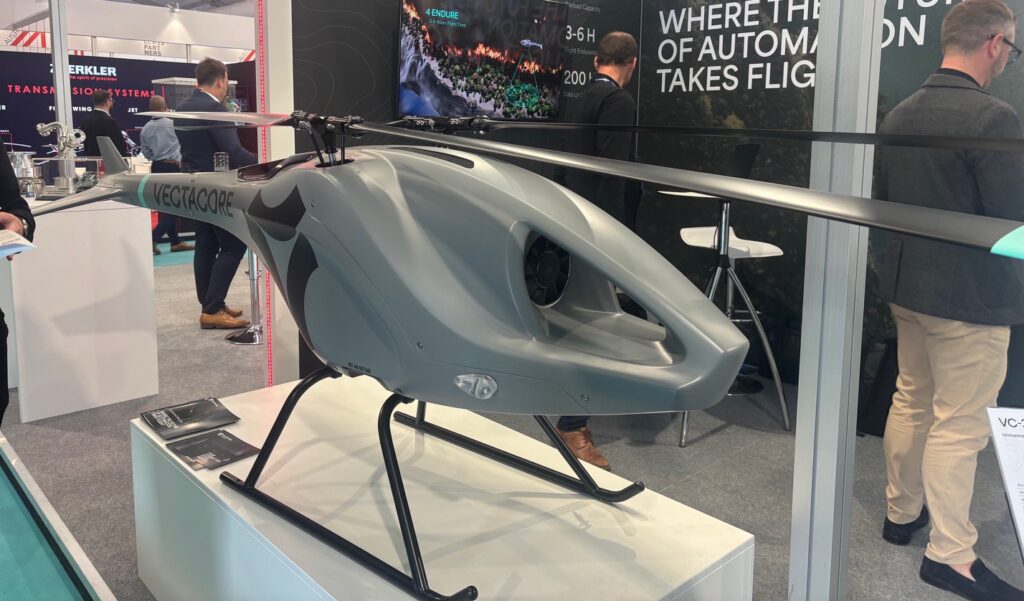
UST also spoke with Vectacore about its VC-35G unmanned helicopter, which is designed for applications including offshore cargo delivery and wildfire response. The aircraft has a maximum payload of 35 kg, gasoline fuel capacity of 6–9 liters and an S-band datalink.
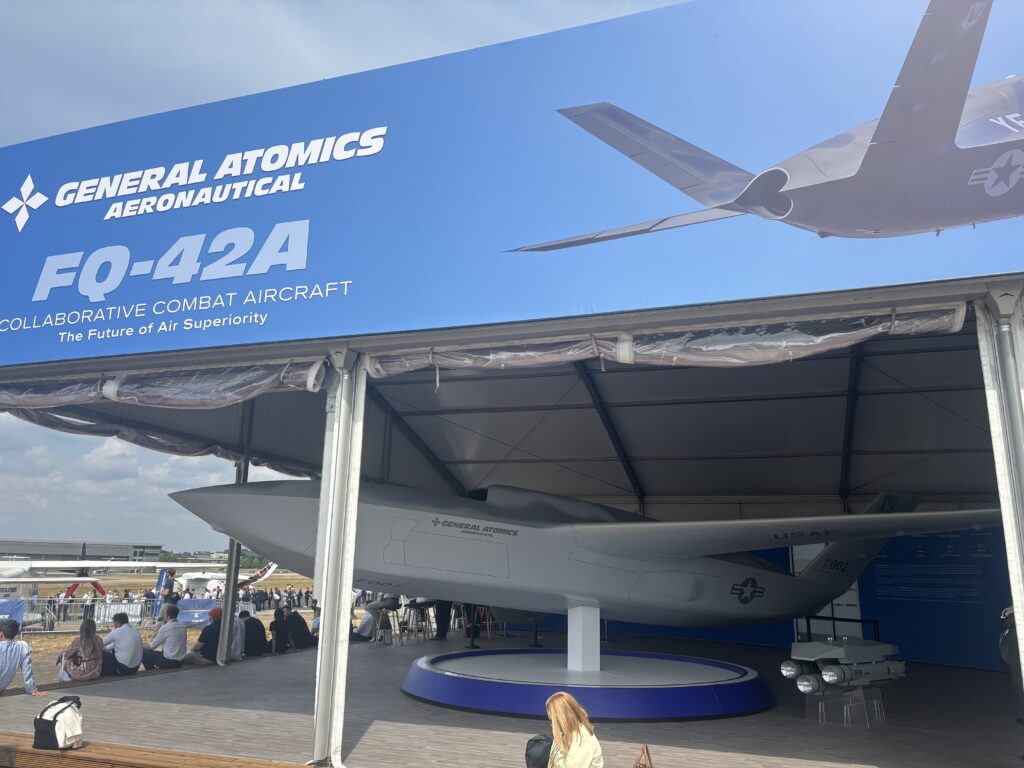
At the larger end of the military uncrewed aircraft spectrum, General Atomics Aeronautical Systems displayed the FQ-42A Collaborative Combat Aircraft, a purpose-built uncrewed fighter developed for the U.S. Air Force. Its modular design supports the integration of mission systems and mission autonomy software.
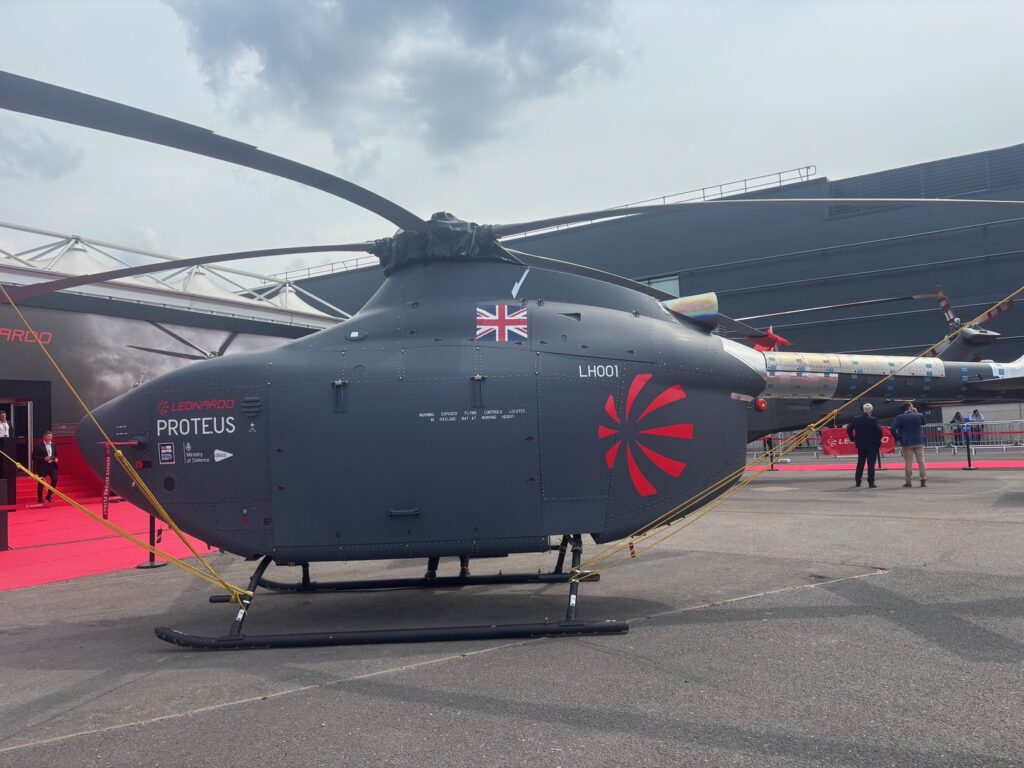
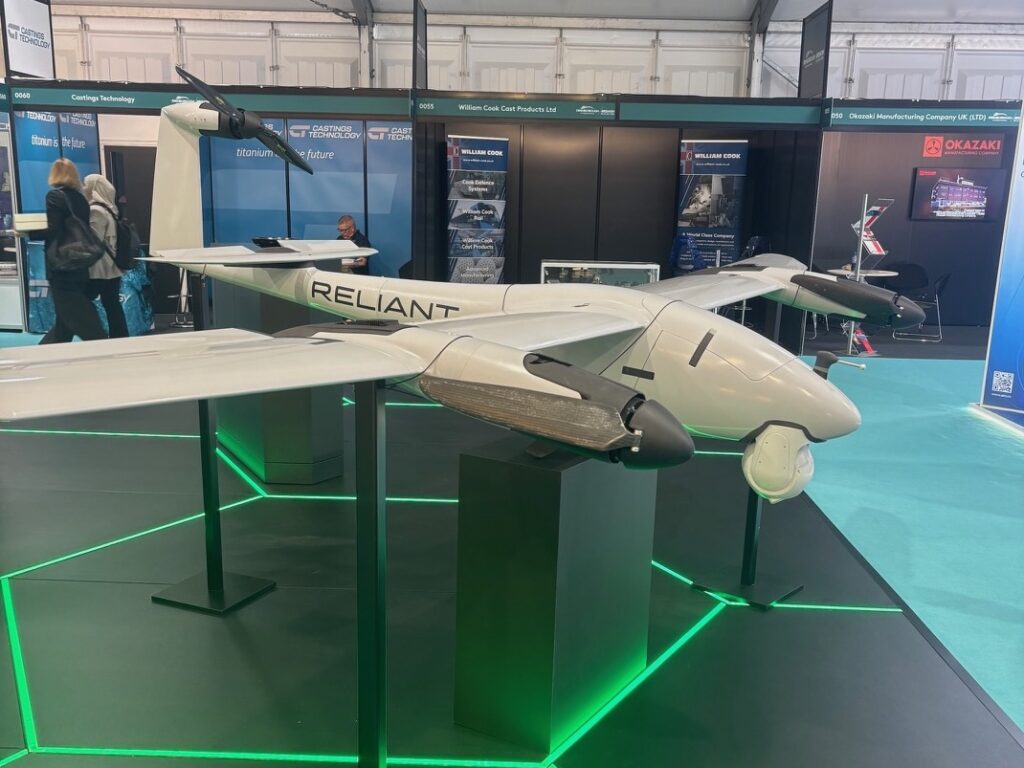
Leonardo’s Proteus rotary-wing technology demonstrator is designed to prove how a large, autonomous and modular VTOL UAS could contribute to military operations, with early flight trials validating functions required for fully autonomous rotorcraft operation. Quantum Systems displayed reconnaissance platforms including Vector AI and Reliant, covering different mission ranges and requirements.
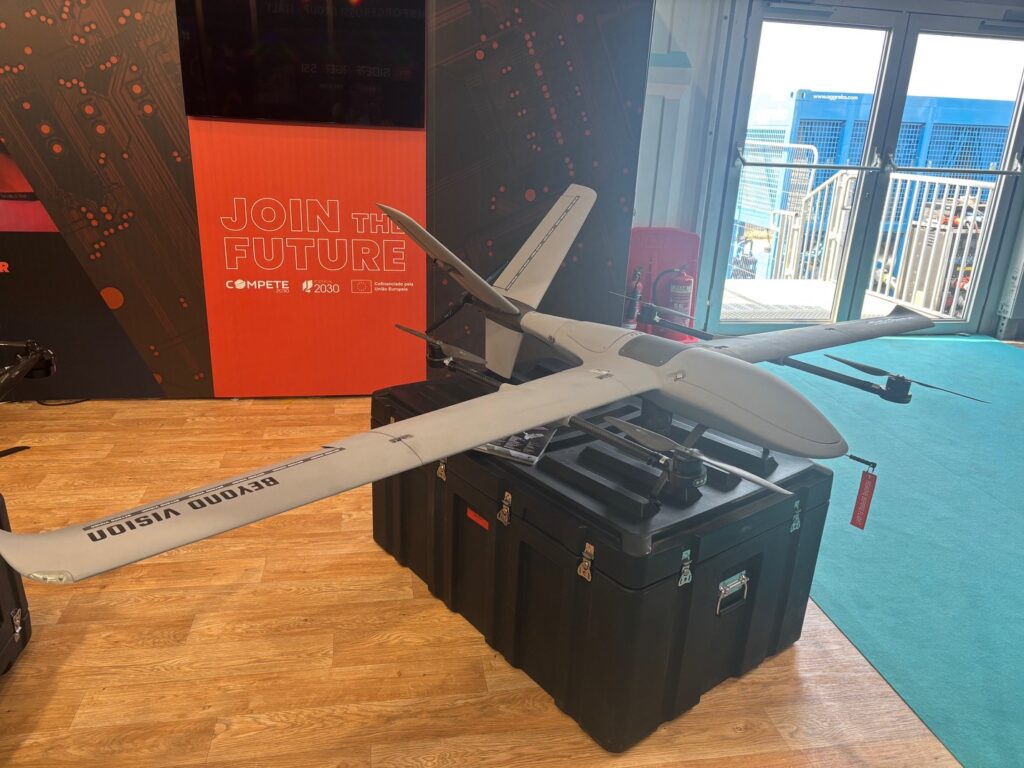
Beyond Vision also attended, demonstrating the BVT516, a Class 3 VTOL fixed-wing UAS. This combines vertical takeoff and landing with efficient forward flight, offering up to 180 minutes of flight time, a maximum speed of 120 km/h and payload capacity of up to 2 kg.
Counter-UAS capability formed another part of the uncrewed technology on show. Cambridge Aerospace showcased Skyhammer, a high-speed interceptor with a range of 30+ km, an operating altitude above 4 km and a maximum speed of 700 km/h, while BAE Systems presented its Anti-Threat System (BATS), a configurable architecture designed to bring together sensors and effectors for detecting and countering drone threats.
Beyond the aircraft and counter-drone systems on display, Farnborough also featured enabling UAV technologies, with Hirth Engines, AEE Aircraft Electronic Engineering, and Volz Servos showcasing solutions spanning propulsion, actuation and avionics.
Together, the systems exhibited at Farnborough reflected the breadth of current uncrewed aviation development, from cargo transport and reconnaissance to autonomous combat aircraft and technologies designed to counter them.