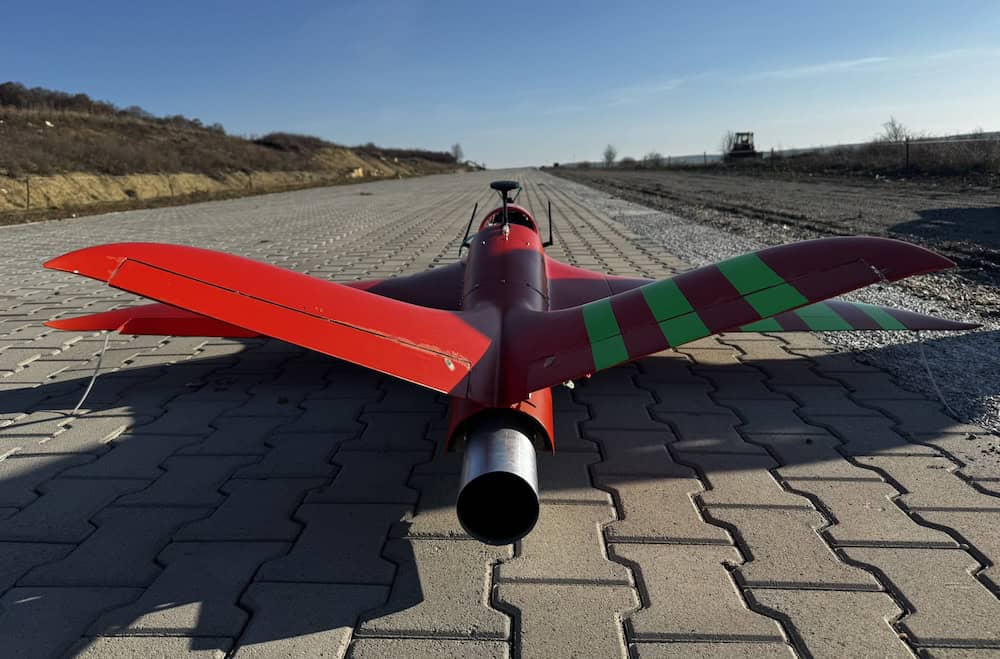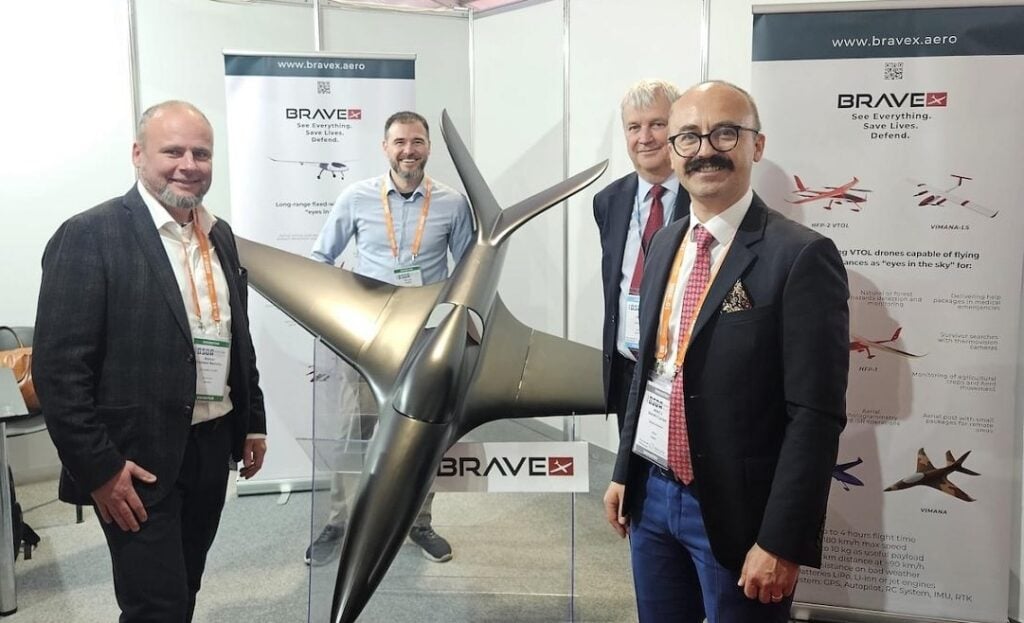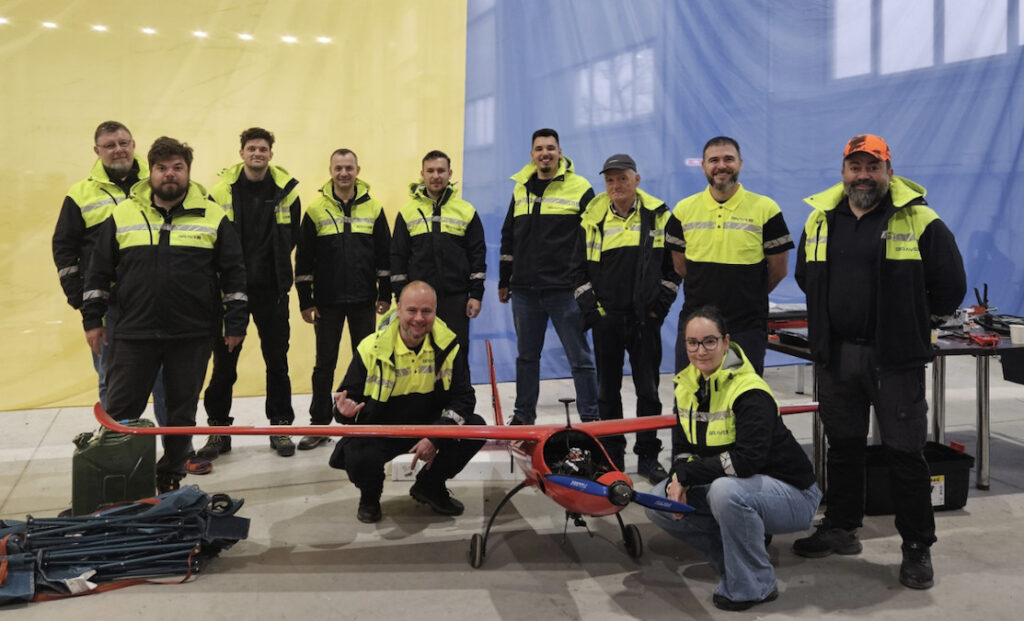
Unmanned aircraft developer BraveX Aero is conducting a €4 million funding round to accelerate development and expand its manufacturing operations through a hybrid two-tier industrial model alongside Romaero.
The capital raise, addressed to private equity investors and investment funds, will be directed toward expanding production, industrializing new platforms, and consolidating the company’s position in the European defense market. Central to this growth strategy is a new production hall scheduled to become fully operational in August 2026.
Dedicated to composite cell manufacturing, the facility establishes a clear separation from mechatronics, integration, and testing workflows, supporting an internal capacity of up to seven aircraft per month. To support this operational expansion, BraveX Aero is expanding its team from 23 members to 28 by the end of 2026, with long-term plans to employ approximately 50 people by the end of 2028.
Rareș Racoțean, CTO and founder of BraveX Aero, commented, “The new hall allows us to more efficiently integrate composite cell production with mechatronics, integration and testing activities. Together with the new equipment and the expansion of the team, this organization allows us to support a capacity of up to 7 aircraft per month, maintaining direct control over critical processes and the quality of each platform.”
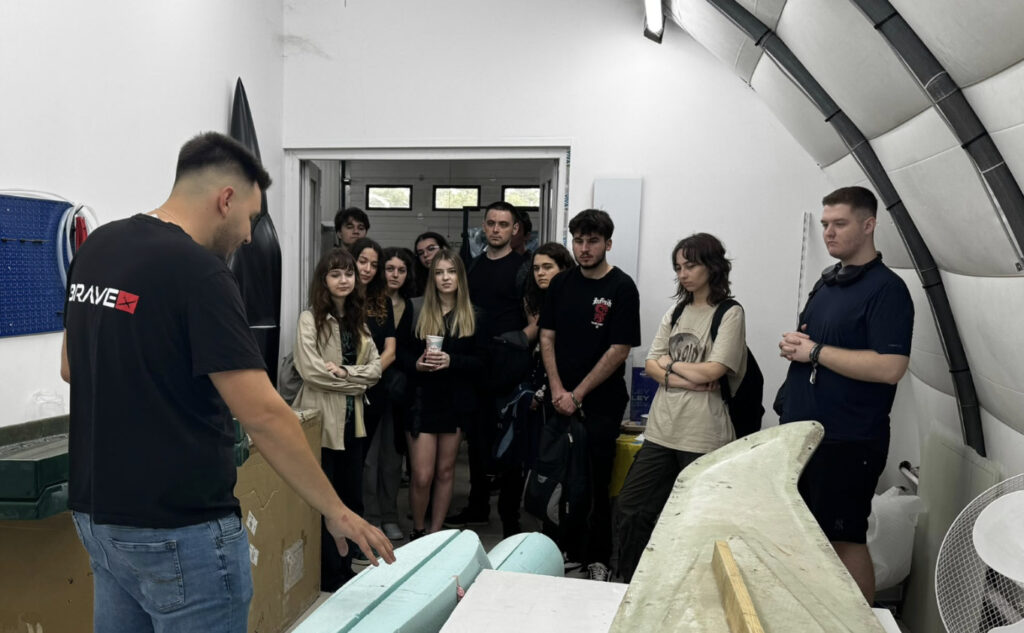
In parallel with its internal capacity, BraveX Aero is establishing an external industrial reserve with aerospace manufacturer Romaero, which is being prepared to add capacity for up to ten aircraft cells per month. Under the joint planning arrangement, molds will be available within Romaero’s infrastructure, and Romaero personnel will be trained by BraveX Aero during 2026.
Quality control and Non-Destructive Testing (NDT) will be carried out by Romaero based on agreed technical criteria and documentation. Once operational preparation is complete, this reserve capacity can be activated within a maximum of one week to respond to increased commercial demand or national security requirements.
Razvan Costea-Barlutiu, CEO of BraveX Aero, stated, “We are deliberately building a two-tier industrial model. Our own capacity gives us direct control over technology, quality and pace of development, and the collaboration with Romaero allows us to prepare a real industrial reserve in advance. In the defense and security sectors, the ability to quickly scale up production should not be improvised when the need arises; it should be designed and planned in advance.”
Speranţa Munteanu, Romaero Special Administrator, added, “The collaboration with BraveX Aero leverages Romaero’s infrastructure and skills in the production and verification of aero cells. We are preparing an additional capacity of up to ten cells per month in the first phase, supported by quality control and non-destructive testing (NDT) processes. The common objective is that this capacity can be activated quickly, based on clear industrial planning and a well-controlled technology transfer.”
The first BraveX-1 airframe produced in collaboration with Romaero is scheduled for September 2026. In Q4 2026, the two companies will also begin production preparations for BraveX-Delta, a new generation of Unmanned Aerial Vehicle (UAV) platforms developed by BraveX Aero.
These developments build on broader progress across BraveX Aero’s portfolio during 2026, including completion of the Vimana Jet validation campaign and the start of customer deliveries, development and testing of the Vimana Life Saver platform for long-duration search and rescue missions, and continued development programs for BraveX-Delta and Vertical Take-Off and Landing (VTOL) platforms.
BraveX Aero is retaining direct control over intellectual property, critical processes, product configurations, and final validation as it develops its manufacturing capacity. The expansion comes as the European Union increases investment in defense industrial capabilities through initiatives such as the Security Action for Europe (SAFE) program.
The hybrid structure is designed to allow BraveX Aero to scale output gradually without losing control of critical processes, while retaining the capacity to respond rapidly when requested volumes exceed its base production capacity.