



Edge Microwave has examined how multi-band Controlled Reception Pattern Antenna (CRPA) technology can preserve centimeter-level Real-Time Kinematics (RTK) positioning accuracy in GNSS interference environments. Read more >>
RTK is widely used in unmanned systems requiring precise positioning, but its reliance on stable carrier-phase measurements presents challenges when conventional CRPA interference mitigation introduces phase variations that can disrupt RTK solutions.
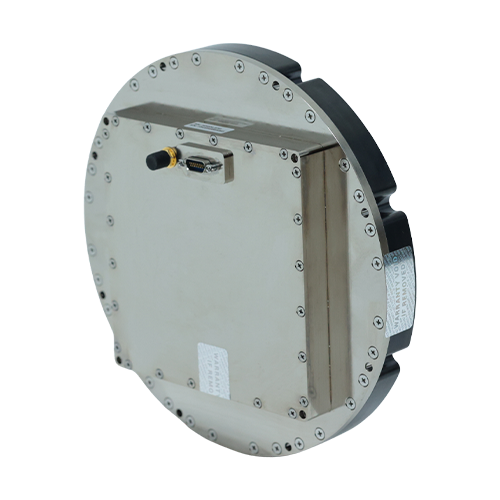
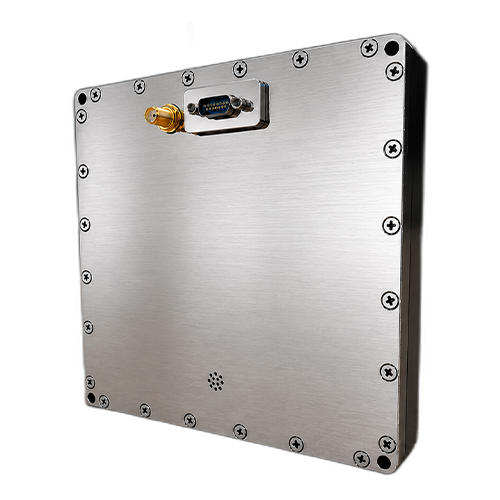
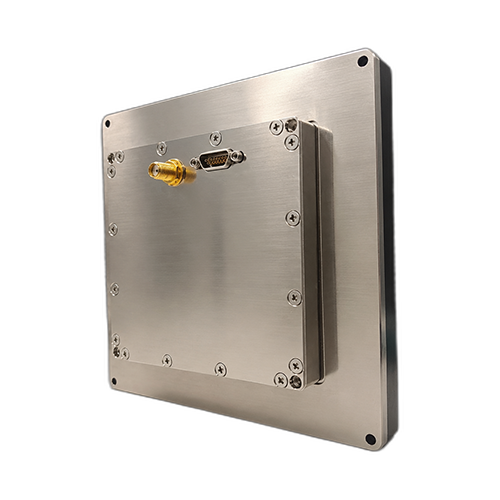
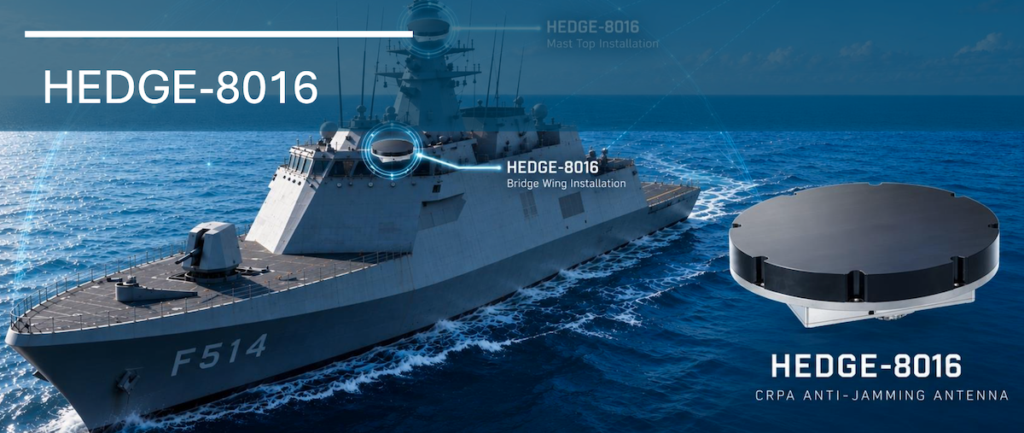
The company’s HEDGE CRPA architecture combines adaptive spatial interference suppression with proprietary phase-stabilization algorithms to preserve carrier-phase integrity during interference mitigation. Supporting GNSS reception across the L1, L2, and L5 frequency bands, the HEDGE-8016 series includes the C200 configuration, offering up to seven independent interference nulls, and the S130 configuration, supporting up to seven spatial nulls on L1 and three per band on L2 and L5.
Testing of the HEDGE-8016 evaluated positioning performance under spatially distributed interference, with received interference power ranging approximately from −32 to −58 dBm. Results demonstrated that the system maintained an RTK-FIXED solution with centimeter-level accuracy under severe dual-band L1/L5 interference. The evaluation also considered strong L1-band interference, highlighting the role of L5 reception in supporting continued positioning when L1 signals are severely affected.
The findings demonstrate the importance of preserving carrier-phase integrity alongside spatial interference suppression for high-precision GNSS positioning. This is particularly relevant to unmanned systems that rely on centimeter-level RTK accuracy, where maintaining consistent carrier-phase measurements is essential to reliable RTK positioning under interference.
Read the full Edge Microwave article for further details on the HEDGE CRPA architecture, RTK positioning principles, and experimental interference testing results.