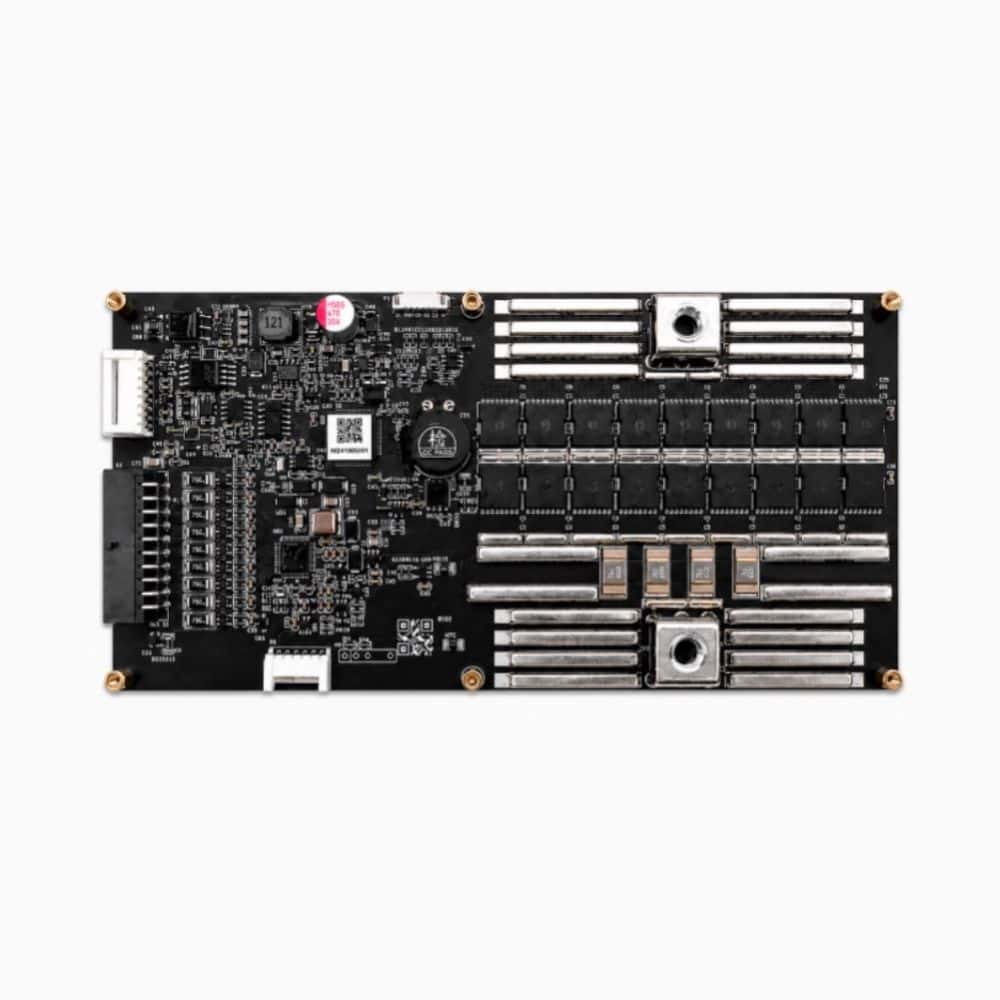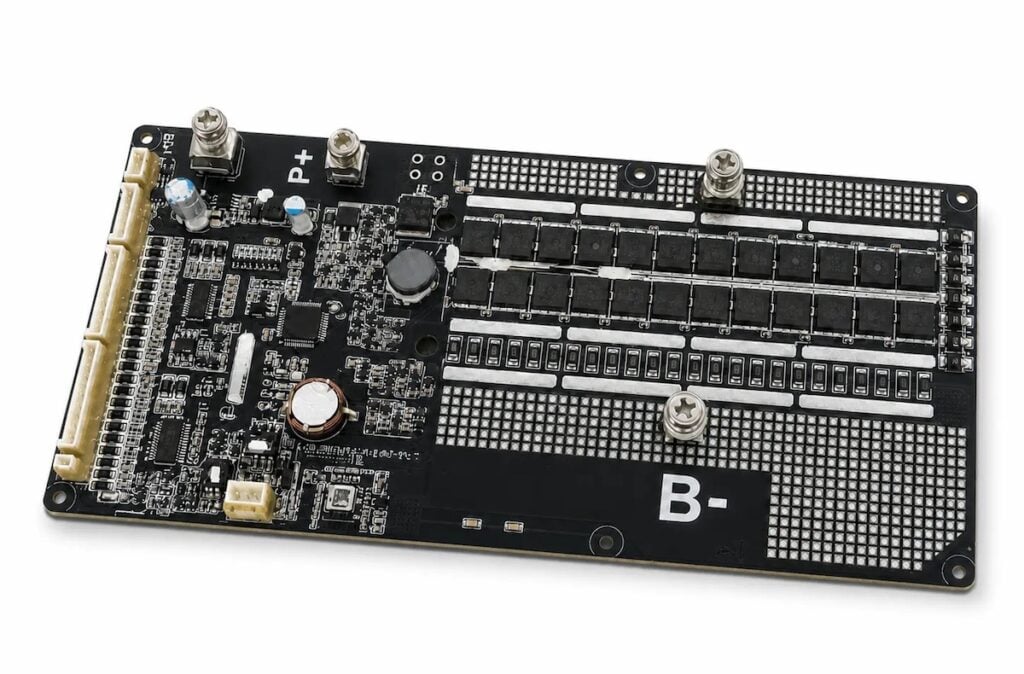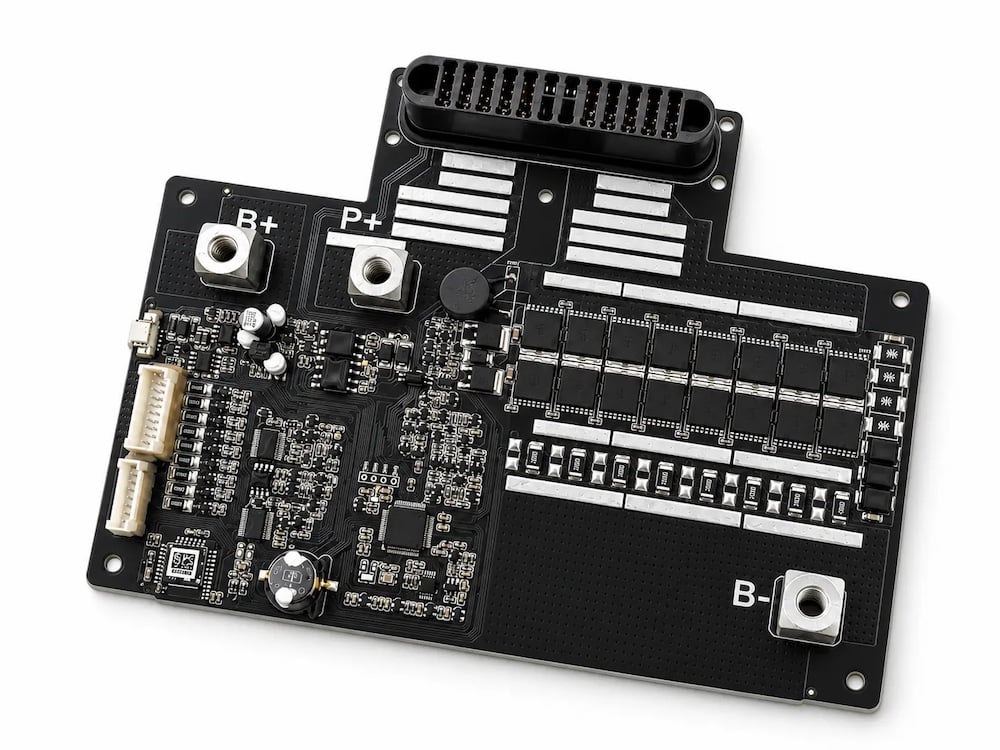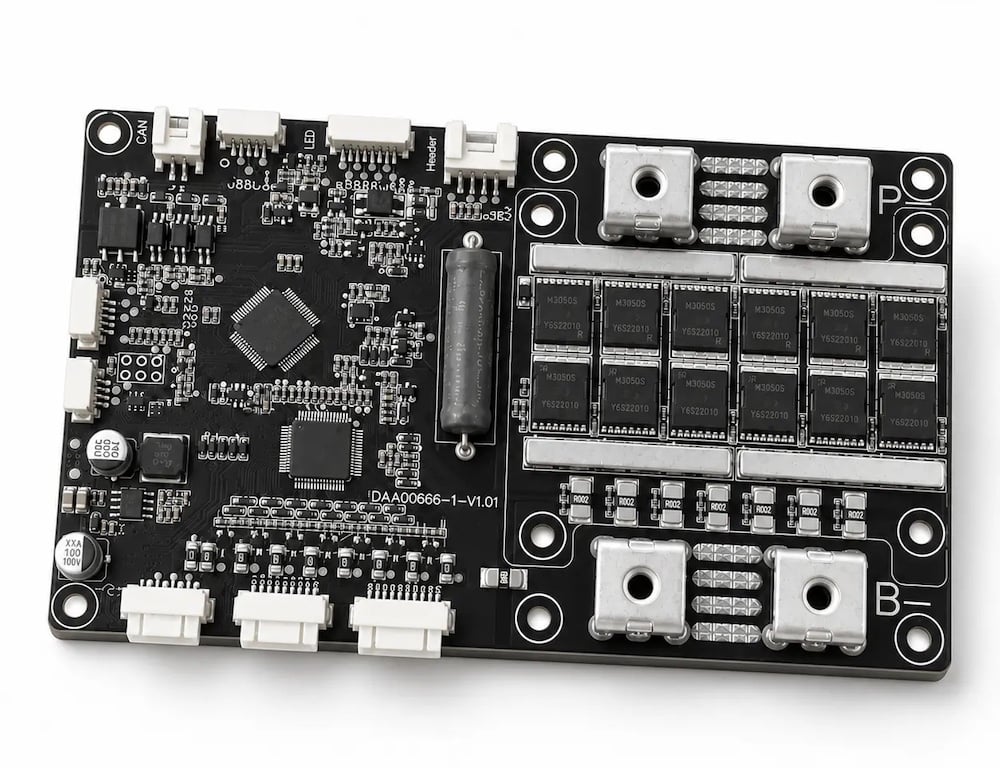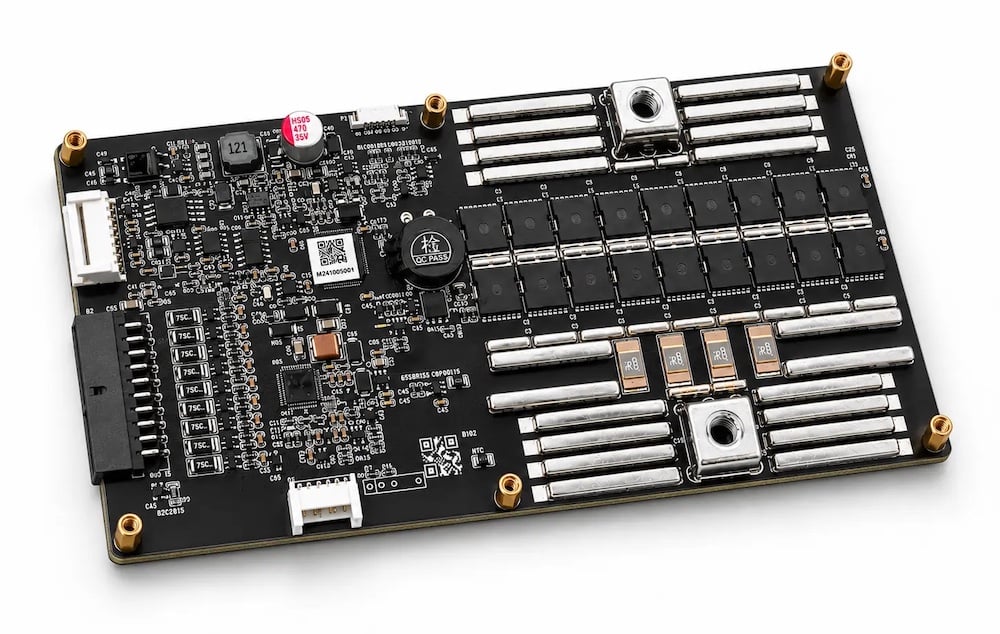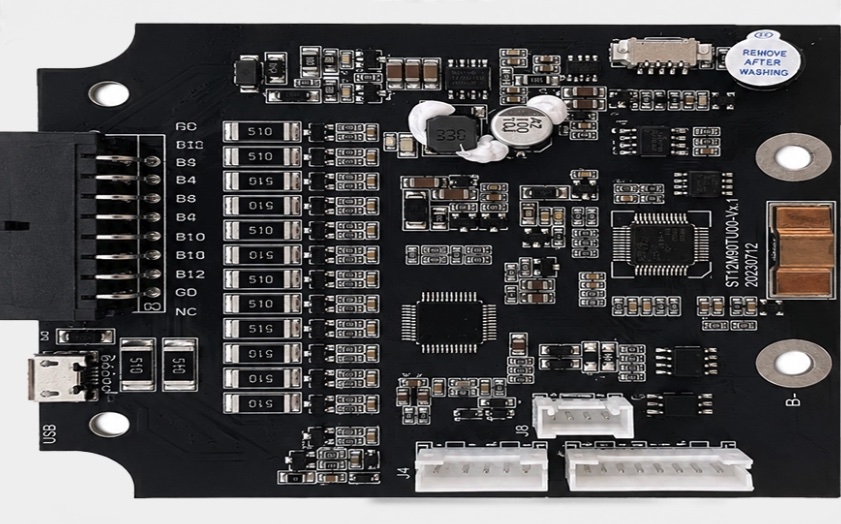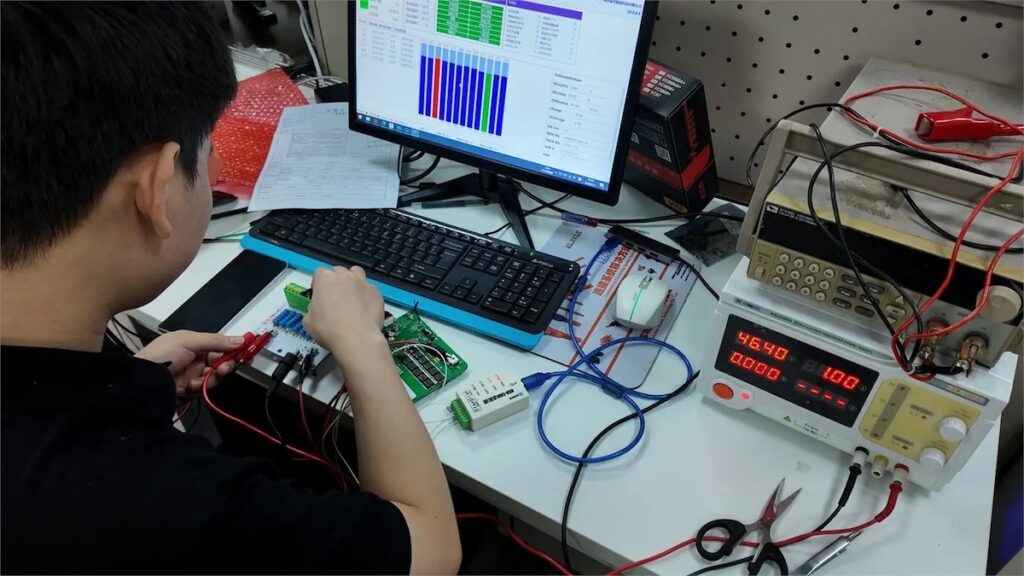

AYAATECH explains the key differences between battery monitoring boards and complete Battery Management Systems (BMS), highlighting how protection, communication, fault handling and lifecycle data can support safer, more reliable battery operation across mission-critical unmanned platforms.
A battery monitoring board measures and reports battery conditions, while a complete Battery Management System, or BMS, combines monitoring with protection, control, communication and fault-response functions. For unmanned aerial vehicles, eVTOL platforms, autonomous robots and other mission-critical systems, this difference directly affects operational reliability and battery safety.
A monitoring board may be sufficient when another controller already manages protection and power switching. A complete BMS is generally more suitable when the battery must independently manage electrical faults, charging, thermal conditions, flight-controller communication and lifecycle data.
What Is a Battery Monitoring Board?
A battery monitoring board is designed primarily to collect battery data. Depending on its configuration, it may measure individual cell voltages, total pack voltage, charge and discharge current, temperature, state of charge and cycle information.
However, detecting an abnormal condition does not automatically mean the board can control it. A monitoring board may report that a cell is approaching its minimum voltage, but another controller must decide whether to limit the load, trigger a warning, command a return-to-home procedure or disconnect the battery. The overall protection capability therefore depends on the complete vehicle architecture rather than on the monitoring board alone.
What Is a Complete BMS?
A complete BMS includes the sensing functions of a monitoring board but adds protection logic, power-path control, battery-state estimation, balancing, communication and diagnostic functions.
A complete UAV BMS can evaluate voltage, current and temperature data in real time and determine how the battery should respond. Its possible actions include issuing an alarm, limiting charge or discharge, controlling a charger, balancing cells, recording a fault or opening the power path when operating conditions allow.
This does not mean every UAV BMS should immediately disconnect power when it detects a fault. During flight, an unexpected battery cutoff may create a more serious hazard than continued limited operation. A flight-oriented BMS may therefore use different protection strategies on the ground and in the air.
1. Monitoring Visibility vs Active Protection
For example, both systems may detect an abnormally low cell voltage. A monitoring board can send an alert to the flight controller. A complete BMS can also log the event, estimate remaining usable energy, communicate the fault severity and apply protection logic according to whether the aircraft is charging, waiting on the ground or flying. This closed-loop capability is the main reason a complete BMS offers stronger standalone protection.
2. Reliability Under Real UAV Loads
UAV batteries operate under conditions that differ from many conventional energy-storage applications. Propulsion systems can create high current peaks, rapid load changes, regenerative transients, electrical noise and significant voltage sag.
A monitoring board can measure these conditions, but battery reliability still depends on external switching devices, wiring, software and control logic. A correctly specified BMS coordinates sensing, power switching and communication within one battery architecture.
However, the label “complete BMS” does not guarantee reliability by itself. Engineers should still verify current ratings, peak-current duration, thermal design, voltage-measurement accuracy, electromagnetic compatibility, component derating and fault behavior. Validation under representative propulsion loads is more meaningful than relying only on nominal specifications.
3. Protection Coverage
A monitoring board commonly supports cell-voltage, pack-voltage, current and temperature measurements. It may also provide configurable warning thresholds. A complete BMS can build additional protection functions around those measurements, including:
– Cell and pack overvoltage or undervoltage management
– Overcurrent, short-circuit and temperature protection
– Cell-imbalance detection and balancing
– Pre-charge, charger and power-path control
– Fault and event recording
The exact functions vary by product architecture. Procurement teams should request a protection matrix showing each fault condition, trigger threshold, delay time, recovery condition and resulting action.
4. Flight-State-Aware Fault Handling
Fault handling is especially important in unmanned aircraft because protection decisions must consider flight safety. In a ground vehicle or stationary system, opening the battery power path may be an acceptable response to a severe fault. In an aircraft, an immediate cutoff can result in loss of propulsion.
A properly integrated UAV BMS may use alarm-only behavior during flight while retaining stronger cutoff protection during charging, storage or ground operation. It can report critical conditions to the flight controller so that the aircraft can reduce load, return home, land or terminate the mission according to the vehicle’s safety strategy.
5. Flight-Controller Communication
Basic telemetry may include pack voltage, current, temperature and state of charge. A complete BMS can provide a richer data set, such as individual cell voltages, fault levels, cycle count, state of health, remaining capacity and charging status.
Protocol compatibility must be checked at the message level. Two devices may both support CAN but still be unable to exchange useful data because their message definitions, identifiers, update rates or fault codes differ.
For engineering teams that require a tailored series count, current capacity, communication protocol or flight-state protection strategy, AYAATECH custom UAV BMS solutions provide configurable battery-management architectures for industrial UAVs, autonomous aircraft, heavy-lift drones and other mission-critical unmanned systems.
6. SOC, SOH and Maintenance Data
A monitoring board may provide a basic state-of-charge estimate based on voltage or current integration. A complete BMS can combine current measurement, voltage behavior, temperature compensation, calibration data and operating history to produce a more useful estimate.
State-of-health information is equally important for fleet operations. Cycle count, capacity change, cell imbalance, fault history and temperature exposure can help maintenance teams identify weak batteries before they affect a mission. A monitoring board can collect some of this information, but a complete BMS usually provides more consistent lifecycle management and diagnostic logic.
7. Weight, Complexity and Cost
A complete BMS requires more components, software and integration work. High-current switching devices and thermal management may also increase size and weight. The engineering decision should therefore be based on system responsibility. If the battery is expected only to provide data, a monitoring board may be sufficient. If it must operate as an independently protected and intelligent subsystem, a complete BMS is generally the stronger option.
When Is a Monitoring Board Sufficient?
A monitoring board may be appropriate when:
– The aircraft has independent and validated power-path protection.
– The flight controller manages alarms, landing decisions and load reduction.
– Battery telemetry is the primary requirement.
– Weight and installation space are highly constrained.
– The complete system has been tested for sensor, communication and controller failures.
In these cases, the monitoring board is one part of a distributed battery-safety architecture.
When Should an Unmanned System Use a Complete BMS?
A complete BMS is usually preferable when:
– The battery must provide standalone electrical protection.
– The aircraft operates at high current or high voltage.
– Multiple battery packs operate in parallel.
– Flight-controller integration requires detailed alarms and battery status.
– Charging and storage functions must be managed automatically.
– Fleet operators require fault history, SOC, SOH and lifecycle records.
The higher the consequence of a battery fault, the stronger the case for integrated battery management and system-level validation.