EDGE Microwave outlines an approach to real-time pre-correlation GNSS interference classification using lightweight learned algorithms for resource-constrained embedded platforms.
Radio-Frequency Interference (RFI) remains a significant threat to GNSS in safety-critical applications. As no single mitigation method is effective against all interferers, reliable classification is required to enable the selection of appropriate countermeasures during operation. To prevent loss of lock, classification must run in real time on embedded platforms, requiring lightweight algorithms.
Previous approaches have implemented simple rule-based algorithms to detect and characterize certain types of interferers. However, this approach does not scale to the broad space of possible RFI techniques, with data-driven learned algorithms providing a more suitable alternative.
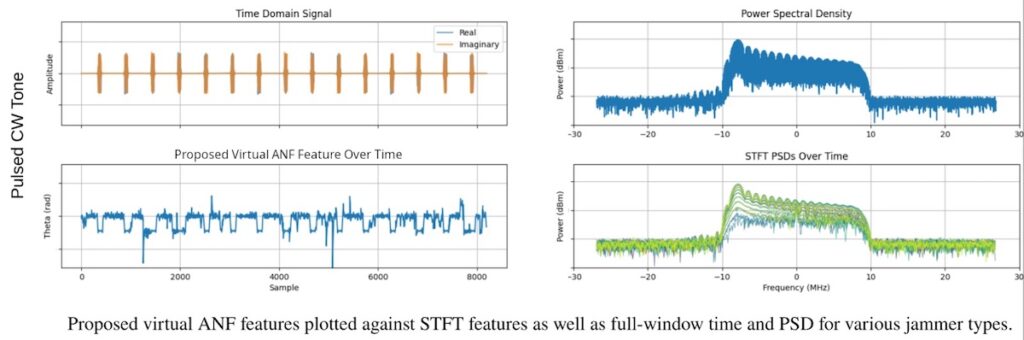
This work focuses on pre-correlation RFI classification, with an emphasis on compact algorithms that maintain high accuracy. A new set of lightweight input features is introduced, derived from instantaneous frequency predictions generated by a virtual Adaptive Notch Filter (ANF). These features are combined with established spectral features from prior literature, including those based on Short-Time Fourier Transform (STFT) analysis.
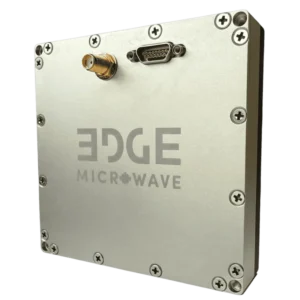
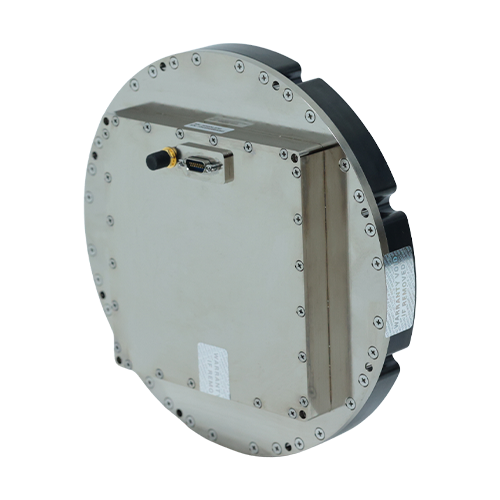
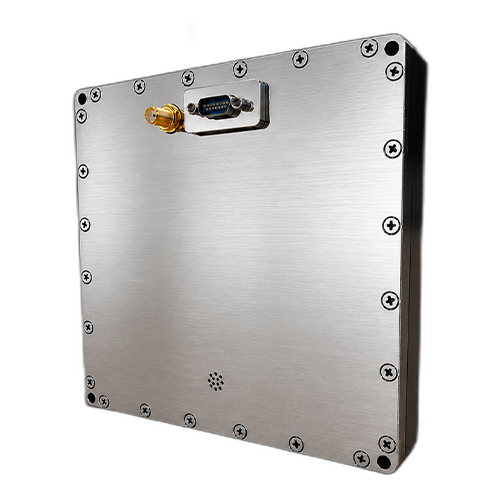
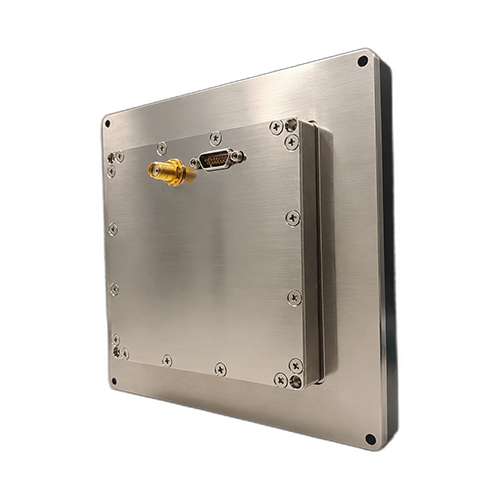
EDGE Microwave HEDGE-8008.
The combined feature set demonstrates improved classification accuracy for both narrowband and broadband non-stationary RFI. Virtual ANF-based features are particularly effective in detecting pulsed interferers, complementing existing classification approaches.
Compact learned classifiers, including gradient-boosted decision trees, are evaluated for accurate prediction under tight compute and memory budgets. Performance is assessed across a wide range of simulated and recorded RFI events, including publicly available datasets from recent studies.
Resource utilization is also measured for the proposed models and representative methods from the literature, with testing conducted on a compact Controlled Reception Pattern Antenna (CRPA) platform, the EDGE Microwave HEDGE-8008.
Virtual ANF-based expert features complement conventional spectral features, enabling lightweight pre-correlation interference classification. In addition, tuning of virtual ANF hyperparameters has minimal impact on classification performance, supporting robust deployment.
Explore how lightweight learned algorithms are advancing real-time GNSS interference classification on the EDGE Microwave website.