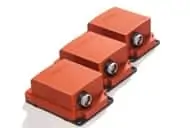
Vertical Reference Units (VRU) for Uncrewed Marine Systems
A vertical reference unit is a precision motion sensor providing critical roll, pitch, and heave data for stabilized platform control and hydrographic accuracy. These sensors serve as the primary truth source for maintaining vehicle stability in dynamic sea states.
This category details leading providers and manufacturers of VRU sensor solutions, including MEMS and FOG-based units. The following guide explores the technical considerations for specifying a vertical reference unit within unmanned maritime applications.
If you design, build or supply Vertical Reference Units VRU, create a profile to showcase your capabilities and connect with visitors who have an active requirement for your solutions.
Vertical Reference Units (VRU) for Uncrewed Marine Systems
Overview by
Sarah Simpson
Updated:
The integration of high-performance inertial sensors is a prerequisite for the operational viability of modern uncrewed systems. A vertical reference unit functions as the stabilizing heart of the navigation stack, transforming raw acceleration and angular rate data into actionable orientation metrics. For engineers managing SWaP-C (Size, Weight, Power, and Cost) constraints, the choice of a vru sensor often dictates the limits of payload performance. This ranges from the precision of a multibeam echosounder to the pointing accuracy of a SATCOM antenna.
Modern systems have seen a significant shift in technology. Micro-electro-mechanical systems (MEMS) have effectively bridged the performance gap with traditional Fiber Optic Gyros (FOG), offering high-end bias stability in compact form factors suitable for the smallest uncrewed platforms. Establishing “Technical Heft” in your specification requires moving beyond static accuracy to understand how these sensors behave under the specific dynamic stresses of the marine environment.
Platform-Specific Integration Challenges
VRUs for USVs: The Air-Sea Interface
Uncrewed Surface Vessels (USVs) experience aggressive, short-period motion due to wave-induced vertical acceleration. In these applications, the vru sensor is the backbone for antenna pointing, stabilized EO/IR, and wave-compensated control logic.
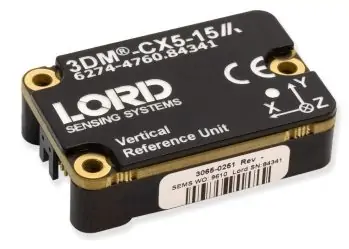
3DM-CX5-15 VRU High Performance Tilt : Vertical Reference Sensor by Parker Hannifin
Integration success on a USV depends on managing environmental noise. Power conversion interference and high-current propulsion wiring can degrade signal integrity. Buyers must prioritize low latency and deterministic timing over raw static accuracy. A unit with lower latency will produce superior pointing results compared to a highly accurate unit that suffers from data jitter. Mounting should occur near the center of rotation to minimize lever-arm-induced apparent motion.
VRUs for ROVs: Vibration and Subsea Pressure
Remotely Operated Vehicles (ROVs) introduce continuous vibration from thrusters and transient torque disturbances. The primary role of the VRU here is providing a stable reference for sonar pointing and station-keeping.
The mechanical hurdle involves mounting the unit on a frame stiff enough to avoid resonance. For subsea operations, “subsea-ready” claims must be verified against specific pressure ratings and connector standards. If the unit is housed internally, thermal dissipation and condensation management become critical. Furthermore, ROVs frequently fuse VRU data with Doppler Velocity Logs (DVL). Ensuring the sensor supports the specific reference frames of your navigation stack is essential for mission success.
VRUs for AUVs: Autonomy and Long-Term Stability
Autonomous Underwater Vehicles (AUVs) are unforgiving. Without a human operator to compensate for sensor drift, the vertical reference unit must remain stable across long missions and temperature gradients.
When sourcing for AUVs, engineers must be explicit regarding power behaviors such as startup time and configuration retention. High-fidelity survey sonars are extremely sensitive to heave errors that accumulate into bathymetric uncertainty. Because AUVs rely on mission logs for post-processing, look for units that support robust time synchronization, such as PPS (Pulse Per Second) input or protocol-level timestamps.
Sector-Specific Technical Deep-Dive
Real-Time vs. Delayed Heave Accuracy
In marine robotics, heave is an estimation problem. A critical distinction exists between real-time heave, necessary for active USV/ROV control, and delayed heave, which is the standard for hydrographic survey post-processing. Real-time heave depends on filter responsiveness and bandwidth. If a solution is too heavily smoothed, lagging output will undermine stabilized payloads. Conversely, delayed heave algorithms utilize forward and backward filtering to eliminate phase shift, providing the “gold standard” for bathymetric data.
Magnetic Flux and Electromagnetic Interference
Marine platforms are saturated with EMI from thrusters, battery buses, and radios. While a VRU primarily utilizes accelerometers and gyroscopes, magnetic flux from high-current lines can induce galvanometer effects or eddy currents in the internal shielding of the sensor. This can manifest as subtle timing jitter or data noise. A procurement-ready spec should mandate evidence of compliance with standards like MIL-STD-461 or Def Stan 59-411.
Underwater Integrity and Corrosion
Physical survivability is paramount. Corrosion is a persistent threat, driven by mixed metals and marine exposure. Sourcing due diligence must include a review of galvanic isolation strategies and material selection for housings. Ingress protection (IP) ratings should be tied to explicit test methods rather than marketing generalizations.
Shock, Vibration, and Mechanical Aliasing
High-frequency vibration from propulsion systems can alias into inertial sensors, elevating the noise floor. Structural resonance creates motion that the sensor faithfully reports but does not represent the vehicle’s rigid-body motion. Engineers should prioritize stiff, flat mounting surfaces and request test evidence of how accuracy changes under specific vibration profiles.
Selecting a Vertical Reference Unit Supplier
This category features leading suppliers of Vertical Reference Units (VRU) suitable for USV applications, along with their individual VRU sensor solutions. It serves as the primary resource for qualifying vendors against specific mission requirements. When evaluating VRU suppliers, prioritize those who provide comprehensive Interface Control Documents (ICD) and evidence of environmental qualification to MIL-STD or commercial marine standards. Selecting a partner with proven experience in unmanned maritime dynamics will significantly reduce integration risk and total cost of ownership.
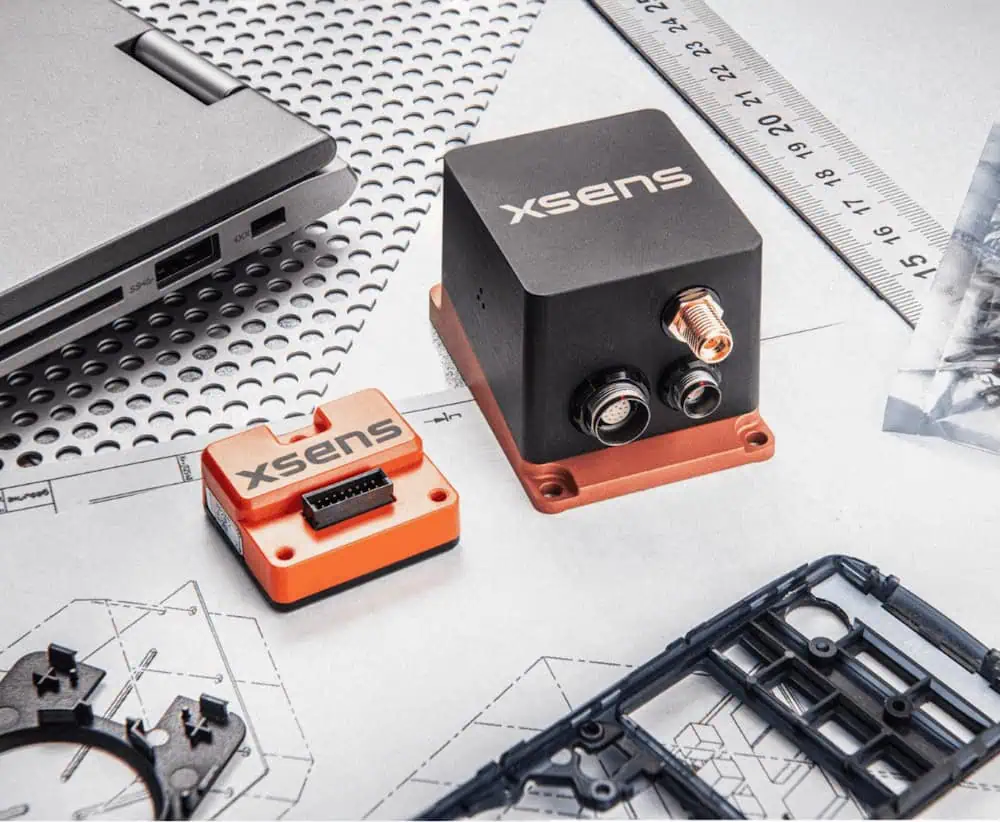
Xsens will display its range of next generation MTi® technology for the first time at Ocean Business in Southampton. The...
Apr 01, 2013
Advancing Unmanned Systems Through Strategic Collaboration
UST works with major OEMs to foster collaboration and increase engagement with SMEs, to accelerate innovation and drive unmanned systems capabilities forward.