Showcase your capabilities
If you design, build or supply Air Data Probes, create a profile to showcase your capabilities and connect with visitors who have an active requirement for your solutions.




Air data probes such as pitot tubes and static ports provide the raw inputs for air data systems, delivering critical flight data such as airspeed, altitude, and atmospheric pressure. These sensors ensure accurate navigation and flight control across various aerospace applications.
Read the Technology Overview
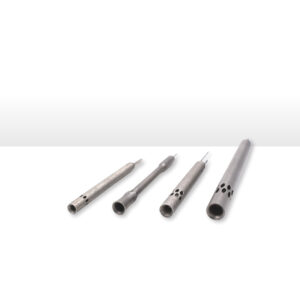
Flow Measurement Technologies & Air Data Systems for Unmanned Aerial Vehicles

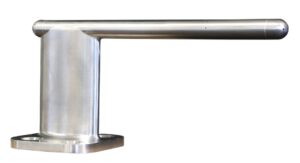
Cutting-Edge Air Data & Flow Measurement Solutions for Unmanned & Autonomous Systems


Professional UAV Components & Sensors: Drone Flight Controllers, GNSS Modules, Telemetry Solutions

If you design, build or supply Air Data Probes, create a profile to showcase your capabilities and connect with visitors who have an active requirement for your solutions.

Air data probes supply the raw environmental inputs to calculate key flight metrics. In unmanned aircraft systems (UAS), these probes are indispensable, supporting navigation, stability, flight performance, and system safety. Designed to operate in various conditions, from low-altitude tactical drones to high-altitude reconnaissance platforms, air data probes measure parameters such as total and static pressure, temperature, and airflow direction. These inputs enable Air Data Systems (ADS) to compute airspeed, Mach number, and altitude, among others.
With the growing demand for autonomy and precision in UAVs, especially in defense, scientific, and industrial applications, air data probes have evolved into highly compact, rugged, and accurate components that integrate into modern avionics suites.
In UAVs and drones, air data probes are critical for achieving stable, autonomous flight. These platforms lack a human pilot to respond to changing environmental conditions, making real-time, sensor-driven feedback essential. Key applications in unmanned systems include:
For manned platforms, air data probes provide flight-critical information directly to cockpit instruments and flight control systems. They are standard in commercial jets, general aviation aircraft, rotorcraft, and military jets. In these settings, redundancy and fault tolerance are essential, often involving multiple independent probes and failover logic.
Various air data probes serve different functions depending on the aircraft type, mission profile, and environmental conditions. Common probe categories include:
Pitot tubes measure total (or stagnation) pressure and are the primary input for calculating indicated airspeed. They are installed facing forward in the airstream and are particularly common on the noses or leading edges of wings. Heated pitot tubes are used in high-altitude or icing-prone environments to prevent blockage from ice formation.
Static ports capture ambient atmospheric pressure and are used to determine altitude and vertical speed. They are often mounted flush to the aircraft fuselage or boom to minimize disturbance from the surrounding airflow.
Combined pitot-static probes integrate pitot and static pressure measurements in a single housing. These are favored in UAVs and smaller aircraft where size and weight savings are critical. High-quality pitot-static probes are designed to minimize cross-coupling errors caused by angle-of-attack variations or sideslip.
AoA sensors measure the angle between the airflow and a reference line on the aircraft fuselage. Accurate AoA data enhances flight safety and control, especially during takeoff, landing, and maneuvering. These sensors can be vane-type mechanical devices or pressure-based differential probes.
TAT probes provide the measured air temperature, including kinetic heating due to the aircraft’s movement. This value is corrected to static air temperature and used in performance calculations and atmospheric modeling.
Boom structures, such as wing booms or nose booms, mount air data probes away from the aircraft body to ensure clean airflow and minimize aerodynamic interference. These assemblies often include pitot tubes, static ports, AoA sensors, and TAT probes. Boom-mounted systems are standard on research UAVs and test aircraft.
Certain applications require air data probes with environmental protections such as IP67 sealing, EMI shielding, and vibration resistance. Some include integrated pressure transducers or digital interfaces for direct data output.
While air data probes are passive sensors, their integration into onboard air data systems is critical to delivering reliable and accurate flight data. The process involves several components:
A successful integration balances accuracy, latency, weight, power consumption, and ease of maintenance, especially important in unmanned systems where in-flight access is impossible.
Air data probes used in aerospace platforms must comply with established industry standards that ensure safety, performance, and environmental durability. Key references include:
Aerospace-grade standards for corrosion resistance, conductivity, and weight also govern material selection. Titanium, stainless steel, and high-performance polymers are often used in probe housings, especially where thermal cycling and icing are concerns.
Innovation in air data probe technology is driven by evolving requirements in unmanned and optionally piloted systems. Key trends include:
These advances enable more flexible, resilient, and capable unmanned systems, particularly important for BVLOS (Beyond Visual Line of Sight) operations, swarming drones, and autonomous air mobility platforms.


 Searching Companies & Products


 Subscribe to the Weekly eBrief
The latest engineering and technical developments straight to your inbox - join thousands of engineers who receive it.
Subscribe to the Weekly eBrief
The latest engineering and technical developments straight to your inbox - join thousands of engineers who receive it.