



CSU Parliamentary Group Leader Klaus Holetschek visited Vectoflow’s headquarters in Gilching to discuss high-precision air data solutions for Unmanned Aerial Vehicle (UAV) and aerospace applications, with a focus on safety- and defense-critical platforms.
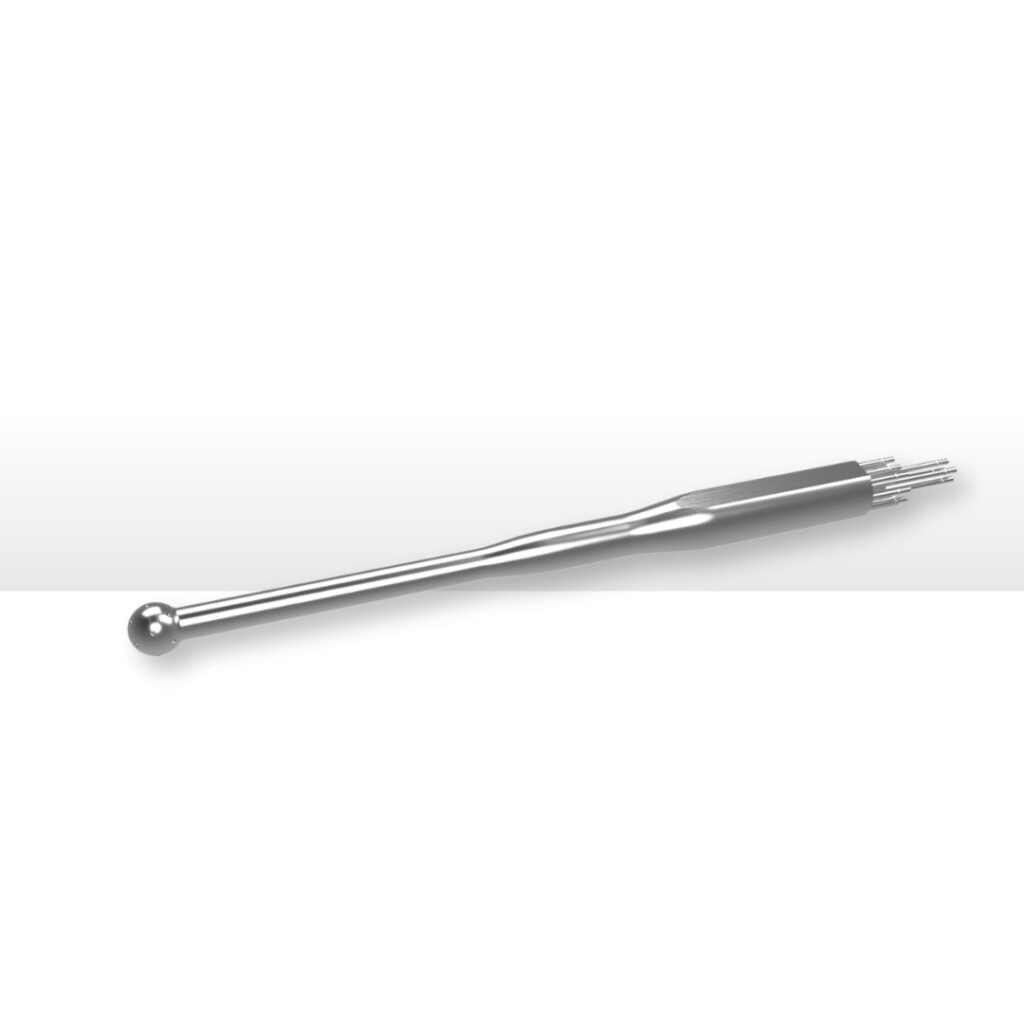
The visit highlighted Vectoflow’s aerospace portfolio, including the iProbe Wing flow measurement probe, designed for modern UAV applications with a compact, lightweight form factor and fully integrated electronics.
As drone platforms continue to advance, requirements for onboard sensing technologies are becoming increasingly complex. Vectoflow demonstrated how additive manufacturing enables rapid prototyping, testing, and iteration, while supporting a seamless transition into serial production. The approach also allows complex geometries to be produced in a single manufacturing step, improving efficiency in high-precision flow measurement applications.
Vectoflow’s probes are manufactured entirely in Germany and supported by a fully European supply chain. This aligns with the EU’s “Buy European” approach and supports European industrial independence. The discussion also addressed how non-EU suppliers can face limitations in participating in European procurement programmes.
Klaus Holetschek commented, “Especially when it comes to key technologies for safety-critical applications, it is essential that we continue to build and secure industrial capabilities within Europe. That is why we are investing in our own technologies, our own production, and our own expertise. Our goal is clear: Bavaria should become a leading hub for drone and modern defense technologies in Germany and Europe. And ideally, the value creation should remain here as well. Companies like Vectoflow demonstrate the innovation potential of SMEs and their contribution to technological sovereignty.”
Stefanie Hach, Co-CEO of Vectoflow, commented, “For safety-critical applications, reliability, availability and technological control are key. Our clear ambition is to establish Vectoflow as the European standard for safety-critical flow measurement.”
The visit also included discussions on strengthening European value creation in the defense sector. Germany currently invests a smaller share of its defense spending domestically compared to other NATO partners such as the United States. There was broad agreement that mid-sized technology companies play a central role in supporting supply security and advancing technological capabilities in defense.