

Defense Drones
Discover cutting-edge solutions from 6 leading global suppliers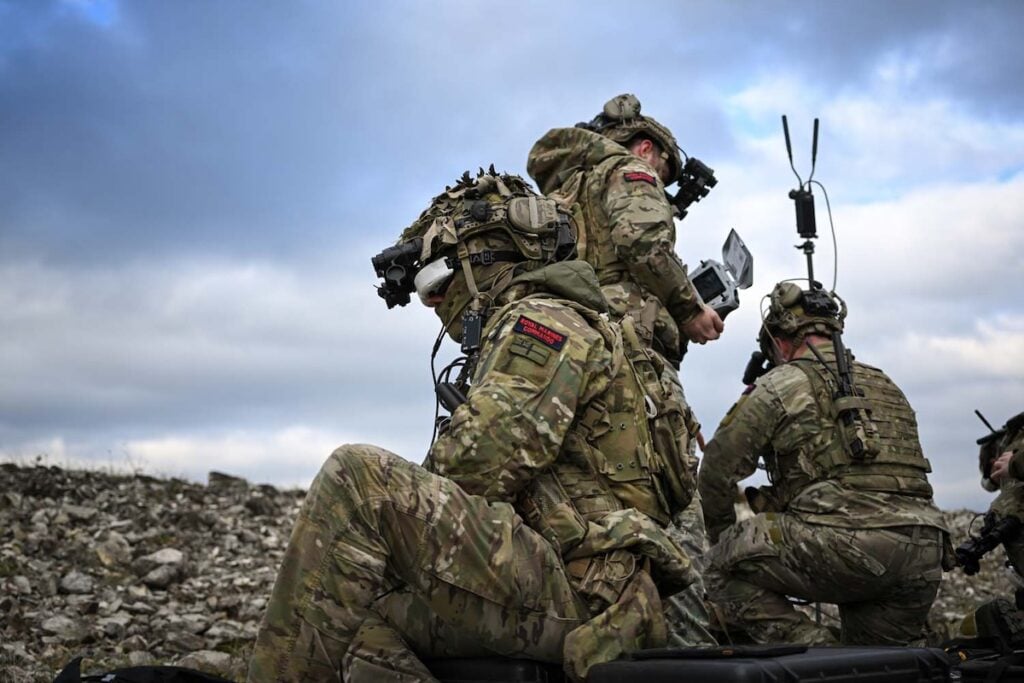
A five-strong Royal Marines team from Taunton-based 40 Commando has won the inaugural Drone Crucible competition in Germany, outperforming allied Special Operations Forces teams across 400 uncrewed combat sorties.
Hosted by the US National Drone Association at the Grafenwöhr Training Area in Bavaria, the three-day event brought together operators from the UK, the US, Germany, Latvia and Ukraine. Although a different nation won each individual stage, the UK team secured the overall championship for its consistent performance across the challenges, earning commendation from the hosts for its “outstanding performance, professionalism and dedication”.
The competition tested uncrewed systems across complex tactical scenarios, including attacks on vehicles and personnel. It opened with a long-range engagement requiring operators to locate a target more than two kilometres away, confirm positive identification using a surveillance drone, execute a strike and conduct a battle damage assessment. Teams then moved to close-quarters reconnaissance, piloting drones into and through two-storey buildings and narrow spaces, before concluding with an urban site clearance that required concentrating three drones onto a single target in rapid, sequential order.
Major William Docherty, Officer in Command of the Information Warfare Company at 40 Commando, said, “What impressed me most was how quickly the 40 Commando Information Warfare (IW) Company team adapted. With minimal preparation time as a team, Marines from different specialisations learned at pace and performed exceptionally well against experienced pilots from the Special Operations community.”
“IW Company brings together sensors, communicators and strike options to solve operational problems; so when a new capability like FPV (First Person View) strike emerges, our Marines are perfectly placed to understand how it can be employed and integrated,” Docherty added. Alongside supporting the UK Commando Force in building an operational First-Person View strike capability, the event allowed industry partners to demonstrate new equipment and gather direct battlefield user requirements.
The win in Germany follows separate uncrewed logistics trials conducted by Malloy Flight, Delta Squadron, of Devon-based 48 Commando (Support Group) Royal Marines. Over a five-day deployment at the Spadeadam Training Area in Cumbria, the unit developed new procedures to rapidly train inexperienced troops to operate its Malloy quadcopter, which can carry a payload of up to 63kg.
Under the revised procedures, a newly trained team can prepare and launch the logistics drone within three minutes during daylight hours and five minutes at night. By compressing pre-launch setup times, the Royal Marines aim to increase crew survivability and mirror lessons from modern conflicts such as Ukraine, enabling operators to launch aircraft before adversaries can detect them electro-magnetically or by other means.