

Discover World-Leading Unmanned and Autonomous Technologies
Discover cutting-edge solutions from leading global suppliers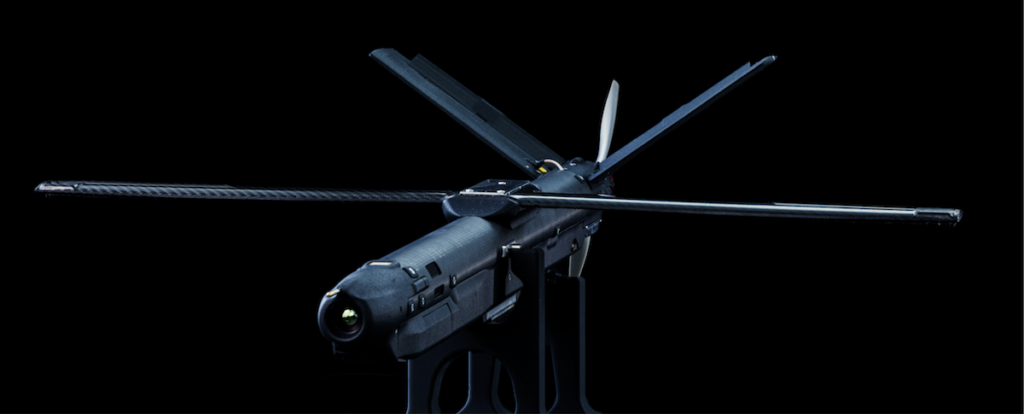
Nordic Air Defence has unveiled the K200, an autonomous drone interceptor engineered in Stockholm to counter high-speed, one-way attack drones and now deploying to Ukraine for test and evaluation.
Long-range strike drones, including jet-powered models such as Russia’s Geran-3, are increasingly launched in large numbers against cities, critical infrastructure, and military sites across multiple regions. Defending against high-volume, high-speed, and increasingly accurate drone waves with conventional air defence missiles creates steep cost imbalances for armed forces.
Designed as the successor to the Kreuger 100XR, the K200 increases speed and carries a 500g warhead while aiming to keep interception costs well below those of traditional air defence missiles. The airframe pairs a single-propeller, fixed-wing layout with autonomous guidance. External radars and electro-optical/infrared (EO/IR) cameras guide the interceptor toward a target before it switches to terminal guidance using its onboard infrared camera for the final approach. If an engagement misses, the system can automatically execute a go-around to re-engage.
The interceptor supports tail-chase, head-on, and crossing engagement profiles and connects with existing layered air defence architectures via data links and associated radars. A family of launchers allows deployment from vehicles, fixed installations, and vessels.
To support higher-volume manufacturing, Nordic Air Defence uses shared avionics, propulsion, and seeker components across its interceptor lineup. The company has opened a staffed office in Ukraine, where field trials will guide further refinement of the K200 ahead of broader rollout across additional markets.
Karl Rosander, CEO and Co-founder of Nordic Air Defence, says, “Defenders cannot keep using expensive missiles against drones that cost a fraction of the price. As those drones become faster and attacks grow larger, Europe needs interceptors that can keep pace and be produced in volume. The K200 is our next step in meeting that need. Testing in Ukraine will help us improve the system against real threats and bring those lessons to customers across multiple markets.”