Deep Trekker SPECTRA
HP MJF for Unmanned Systems
General Atomics Aeronautical Systems, Inc

US Navy & GA-ASI Advance Autonomous Drone Swarm Mission Planning

GA-ASI and the US Navy have successfully integrated mission autonomy software with live aircraft to demonstrate real-time, autonomous fleet coordination and mission planning aligned with commander intent By Olivia Hannam / 07 Oct 2026
Follow UST

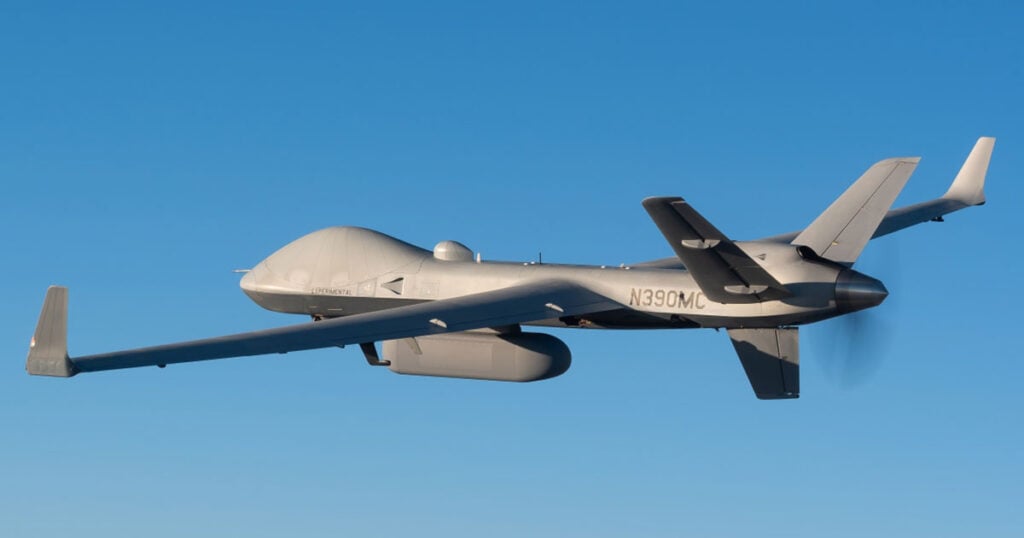
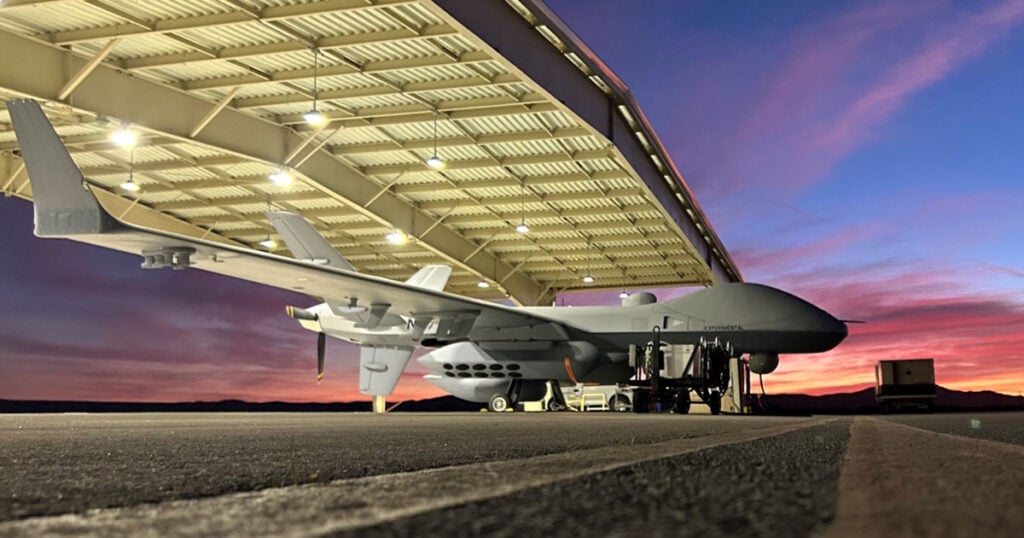
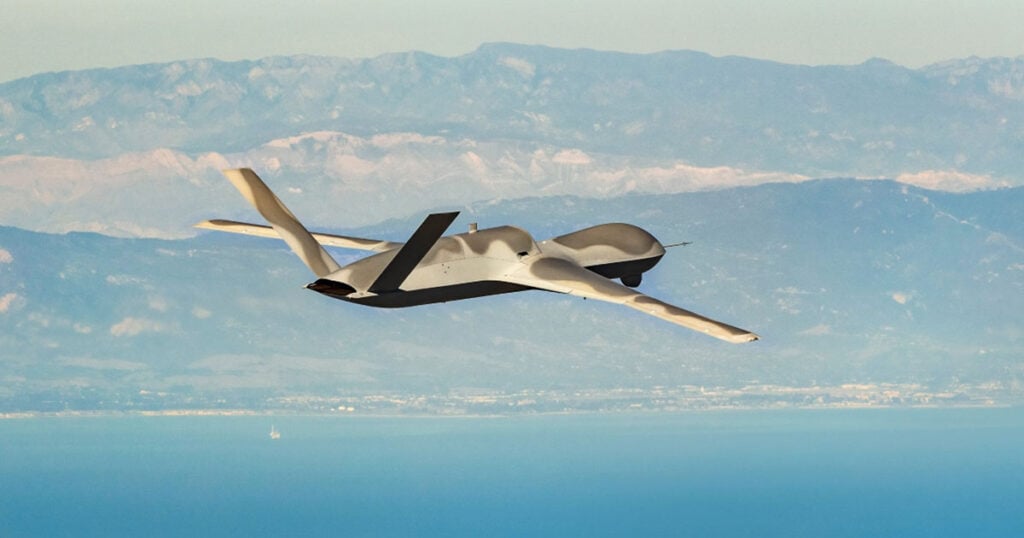
General Atomics Aeronautical Systems, Inc. (GA-ASI) and the U.S. Navy’s Strike Planning and Execution Systems program office (PMX-281) collaborated on a demonstration of collaborative autonomous mission planning using GA-ASI’s MQ-20 Avenger® Autonomous Collaborative Platform (ACP) test aircraft on September 10 from GA-ASI’s Gray Butte Flight Operations Facility near Palmdale, California, and the Mission Operations Center located in Poway, California.

The team extended the Navy’s planning systems with Autonomy Government Reference Architecture (A‑GRA)-compliant mission context. This allows mission autonomy software to understand a human commander’s intent, then exercise autonomous judgment and autonomously coordinate a diverse team of Group 5 uncrewed aircraft with human-crewed teammates against land, air, and maritime threats. The system proved it could understand its human boss’s instructions and then carry them out with the team.

The demonstration highlighted how mission autonomy software can work across the full kill chain using passive sensors, autonomy, and coordinated operations among live, virtual, and constructive participants. The MQ-20 Avenger aircraft used GA-ASI’s Tactical Autonomy Ecosystem (TacACE®) software and platform information that provided an environment for integrated human-machine mission planning, command and control, autonomy configuration, simulation, and post-mission analysis.

In an exercise called Gray Flag 2026, the Navy’s baseline mission planner was augmented with A‑GRA-compliant data products that exposed mission objectives, constraints, and threat context to the autonomy layer. This allowed TacACE to reason over the plan and adapt it in real time as the scenario evolved. The system supported planning and coordination of missions involving multiple aircraft and other mission participants, enabling operators to define objectives, tasks, priorities, and coordination rules across the force.

The demonstration also incorporated a Live, Virtual, and Constructive (LVC) framework to support scalable mission rehearsal and operational evaluation. LVC environments connect physical aircraft with simulated platforms and constructive entities, allowing teams to evaluate multi-ship coordination, autonomy behaviors, mission timelines, and operator interactions in representative scenarios. The event showed a practical path for inserting mission autonomy into current Navy planning workflows.

Michael Roberts, Advanced Programs Emerging Technology Director at GA-ASI, commented, “By taking the Navy’s practices, adding A‑GRA-compliant mission context, and connecting it to TacACE, we showed that autonomy can understand commander’s intent, coordinate a heterogeneous team of uncrewed aircraft, and adapt the plan using its judgment in real time alongside human pilots. Working together, we can get the Navy to the next level.”

The Gray Flag demonstration is part of GA-ASI’s ongoing campaign of increasingly complex, operationally representative flight tests. The campaign combines live aircraft, mission systems, sensors, communications, autonomy software, high-fidelity digital twin models, and LVC capabilities to advance collaborative unmanned operations and inform the development of mission-ready ACP capabilities. The flight marks another milestone in warfighter adoption of ACP and advances the operational readiness and production maturity of autonomy-enabled, AMS GRA-compliant aircraft.

To learn more, visit the General Atomics Aeronautical Systems, Inc Partner Hub: Innovation Partner Hub
Posted by Olivia Hannam Olivia is an Editor and Copywriter at Unmanned Systems Technology. She graduated with First-Class Honours in History from the University of Exeter, where she developed a passion for research and clear communication. Since joining UST in 2025, Olivia’s focus lies in creating well-crafted content that highlights the latest innovations and technologies shaping the unmanned sector. Connect

More from General Atomics Aeronautical Systems, Inc

Airborne Network Pod Tested on MQ-9B RPA for Emergency Response

GA-ASI and SoftBank have successfully flight-tested an innovative aerial communications payload on an MQ-9B drone to deliver vital mobile connectivity in emergency zones during disaster response operations

Oct 05, 2026
U.S. Navy Evaluates SeaGuardian UAS at NAS Whidbey Island

General Atomics Aeronautical Systems showcases the maritime MQ-9B SeaGuardian to naval leaders at NAS Whidbey Island, highlighting its role as a force multiplier alongside the P-8A Poseidon for fleet operations

Oct 02, 2026
USAF Takes Delivery of FQ-42 Vengeance Combat Jet at Creech AFB

General Atomics Aeronautical Systems, Inc. delivers another FQ-42 Vengeance uncrewed fighter to Creech Air Force Base, advancing autonomous flight testing and operational experimentation for the U.S. Air Force Collaborative Combat Aircraft program

Sep 23, 2026
GA-ASI & Hanwha Aerospace Prove Uncrewed Battlefield Short Field Capabilities

General Atomics Aeronautical Systems and Hanwha Aerospace successfully demonstrate the Mojave STOL uncrewed aircraft performing landing and takeoff operations under simulated live-fire combat conditions at a South Korean maneuver trail

Sep 18, 2026
GA-ASI & Tactical Air Support Demonstrate Advanced Human-Machine Teaming in Live Exercise

General Atomics Aeronautical Systems, Inc. and Tactical Air Support, Inc. successfully execute live flight testing of multi-ship infrared passive sensing and open architecture software to close tactical kill chains against airborne threats

Sep 17, 2026
GA-ASI to Open 22,000-Square-Foot UAS Innovation Hub in Ohio

General Atomics Aeronautical Systems is expanding its presence in Dayton, Ohio, with a new 22,000-square-foot innovation hub focused on hardware, software, autonomy, rapid prototyping, integration, and testing of next-generation UAS capabilities for U.S. Air Force programs

Sep 16, 2026

THE WEEKLY eBRIEF

The latest unmanned systems news, straight to your inbox.

Get our weekly roundup of technology developments, new products and industry news.

By subscribing, you agree to receive the weekly UST eBrief newsletter from EchoBlue Ltd. Unsubscribe at any time using the link in every email. See our Privacy Notice.

Advancing Unmanned Systems Through Strategic Collaboration UST works with major OEMs to foster collaboration and increase engagement with SMEs, to accelerate innovation and drive unmanned systems capabilities forward.