Batteries
Discover cutting-edge solutions from 16 leading global suppliersThe Pegasus long-endurance drone has completed a test flight programme in Queensland, culminating in an endurance flight of almost two hours powered by a single lithium sulfur battery pack from Li-S Energy, Halocell Energy, and V-TOL Aerospace.
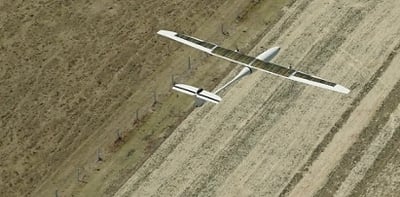
Developed under the Australian Commonwealth Government’s Emerging Aviation Technology Partnership (EATP) programme, the twin-motor uncrewed aircraft features a five-metre wingspan and was engineered from the ground up through a collaboration between V-TOL Aerospace, Li-S Energy, and Halocell Energy. The project was supported by a matched grant of just over $1.35 million awarded in June 2024 to create a family of long-endurance surveillance drones powered by lithium sulfur technology.
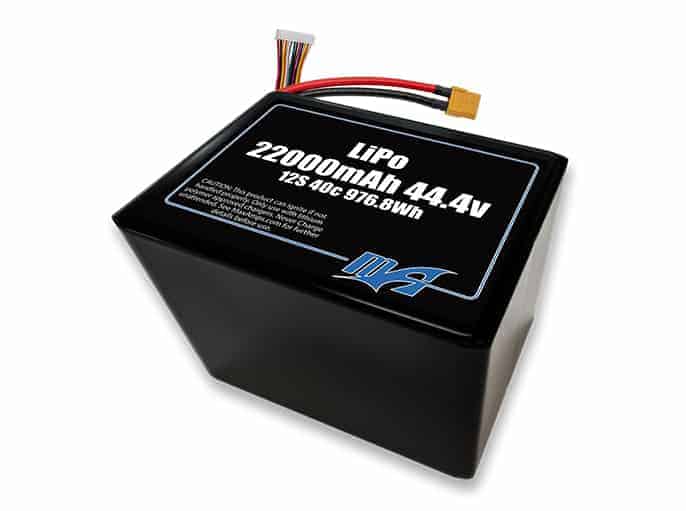
During flight trials, the single 382 Wh lithium sulfur battery pack enabled sustained cruise flight exceeding 75 kilometres. Power distribution was governed by Li-S Energy’s proprietary battery management system integrated alongside V-TOL Aerospace’s power management architecture, regulating energy delivery to the twin motors and flight control systems while simultaneously managing feed-in from Halocell Energy’s perovskite solar cell array. Throughout the flight, the aircraft met expected performance benchmarks and landed safely with reserve battery capacity remaining.
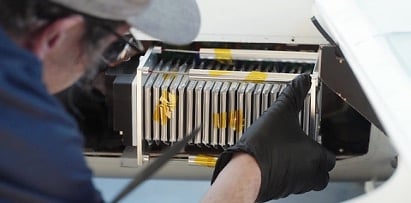
To protect technical developments made during the collaboration, Li-S Energy has filed two patent applications covering aspects of the battery pack design and the battery management system. The Pegasus platform was designed to accommodate two battery packs, and engineers project that incorporating further improvements from Halocell’s solar cell developments could extend operational missions to between five and eight hours over distances up to 250 kilometres. Such capability targets agricultural, utilities, environmental monitoring, and surveillance missions across commercial and defence sectors.
Dr Lee Finniear, Chief Executive Officer and Managing Director of Li-S Energy, said, “With the exponential growth of drones and uncrewed systems in both commercial and military applications, flight endurance and sovereign capability are critical to Australia’s future in this sector. Today, with our partners, we have shown what Australian innovation and collaboration is capable of. The EATP Pegasus drone is the result of two years of work by the teams from V-TOL Aerospace, Halocell and Li-S Energy, proving that Australia has the sovereign capability and the unique technology to be leaders in this field.”
Mark Xavier, Managing Director and Chief Executive Officer of V-TOL Aerospace, commented, “The Pegasus flew exactly as our team designed it to. Our airframe and power systems performed faultlessly throughout the flight, and pairing them with Li-S Energy’s new lightweight pouch cell battery system gives the platform an endurance advantage operators will immediately recognise. I am proud of what our engineers have delivered, and our focus now turns to the pathway from successful trials to commercial platform sales.”
Paul Moonie, Founder and Chief Executive Officer of Halocell Energy, added, “Seeing our ultra-lightweight perovskite cells take to the air on the Pegasus is a proud moment for the Halocell Energy team, whose skill in fabricating flexible solar modules for such a demanding application has been outstanding. Each flight builds the data and experience we need as we continue to develop higher output modules for aerospace applications, and we are delighted to stand alongside Li-S Energy and V-TOL Aerospace in an all-Australian collaboration delivering this platform.”
With the completion of physical flight trials marking the culmination of the EATP project, the partner companies are analysing flight data to characterise platform performance and evaluate commercial development pathways.