SBG Systems Stellar-40
General Atomics Aeronautical Systems, Inc

GA-ASI & Tactical Air Support Demonstrate Advanced Human-Machine Teaming in Live Exercise

General Atomics Aeronautical Systems, Inc. and Tactical Air Support, Inc. successfully execute live flight testing of multi-ship infrared passive sensing and open architecture software to close tactical kill chains against airborne threats By Olivia Hannam / 17 Sep 2026
Follow UST

On July 21, General Atomics Aeronautical Systems, Inc. (GA-ASI) and Tactical Air Support, Inc. collaborated on a flight test during a large force exercise that demonstrated Infrared Search and Track (IRST) Multi-Ship Ranging (MSR).

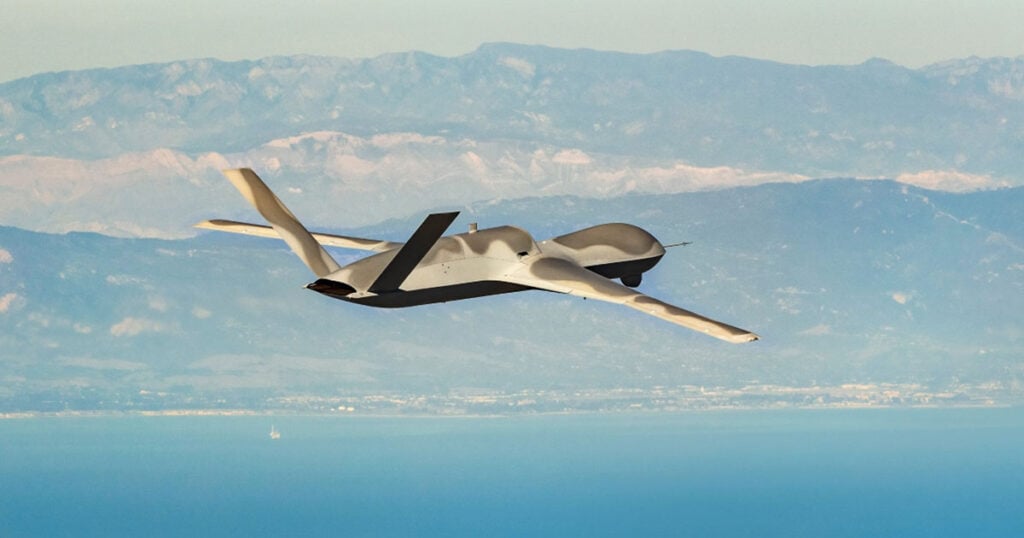
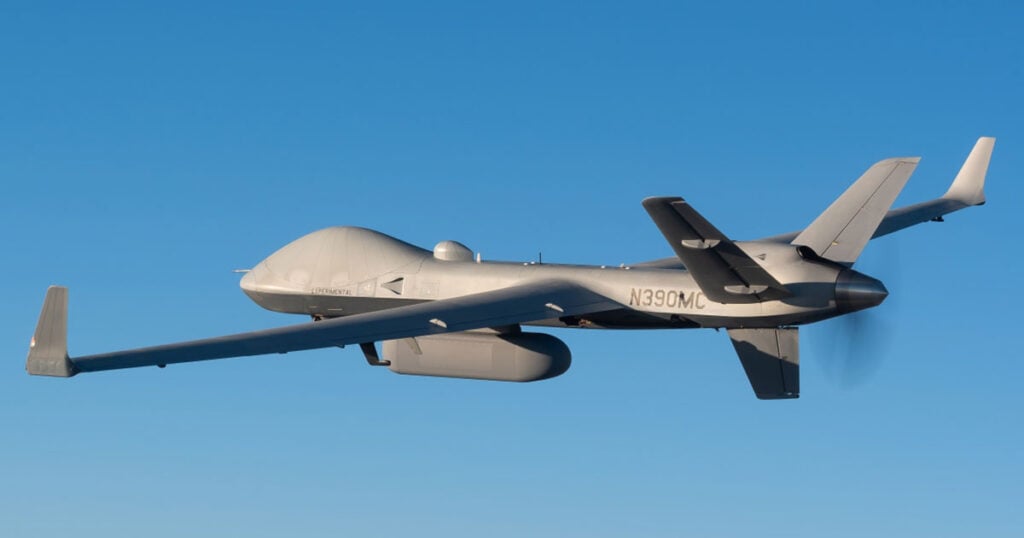
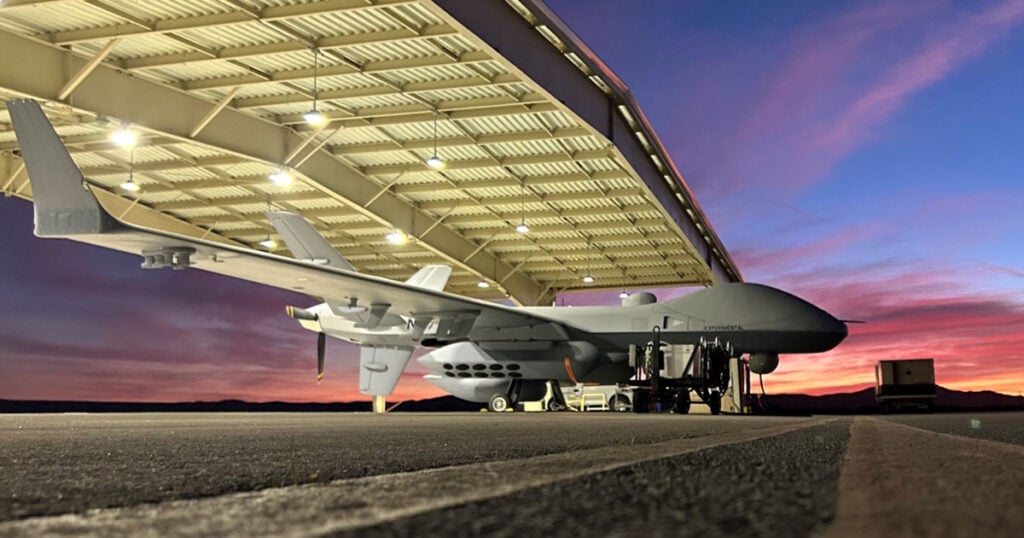
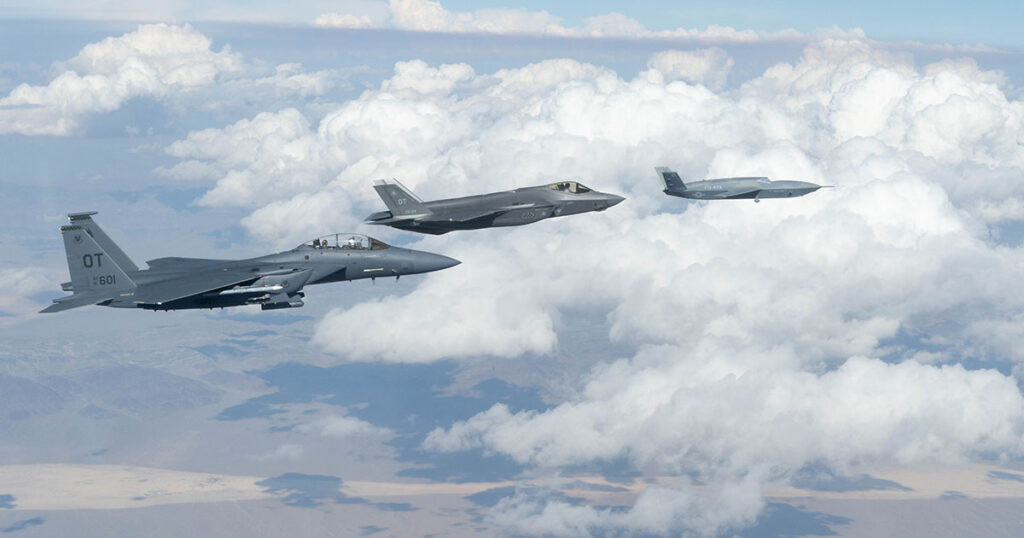
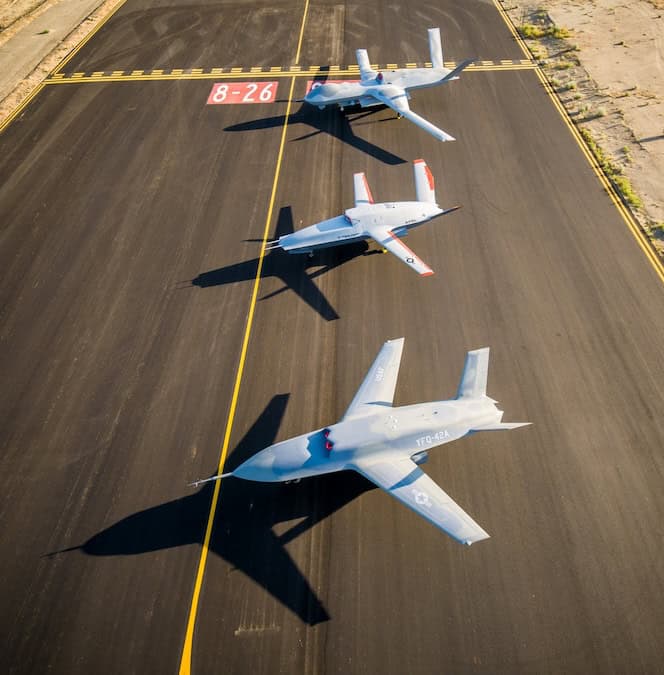
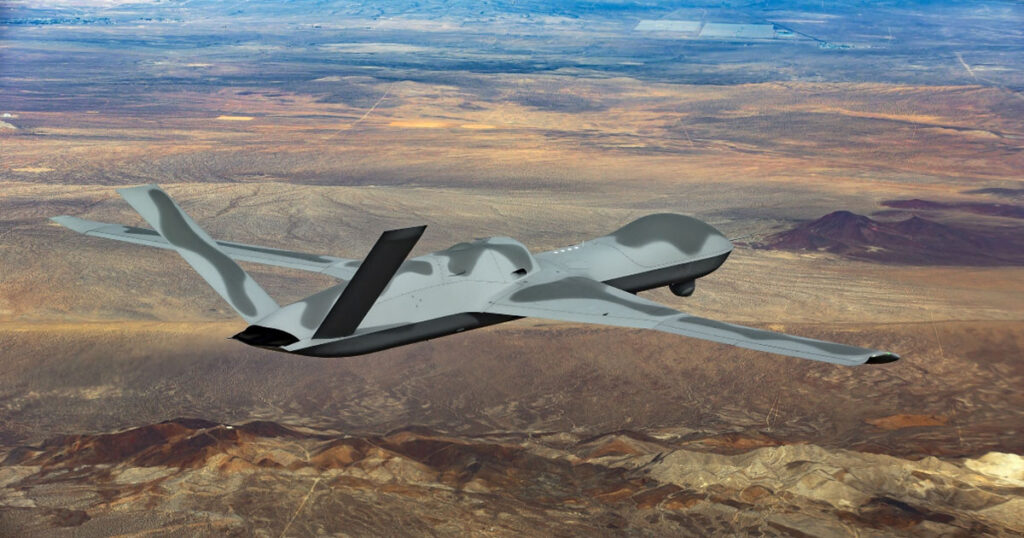
The test paired a manned Tactical Air Support F-5 Advanced Tiger with an unmanned GA-ASI Collaborative Combat Aircraft (CCA) test aircraft, highlighting how Human-Machine Teaming closes the kill chain using passive sensors and autonomy.

Both the CCA test aircraft and the F-5 were equipped with GA-ASI’s TacACE® (Tactical Autonomy Ecosystem) software, which is based on the latest Autonomy Government Reference Architecture (A-GRA), the Agile Mission Suite (AMS-GRA). Each aircraft also carried an infrared search-and-track sensor. The live exercise proved that a CCA and a manned fighter can collaborate to fuse sensor data from AMS-GRA-compliant sensors to track, engage, and eliminate an airborne target while using a Beyond Line of Sight (BLOS) data link to accomplish seamless coordination between the two aircraft.

The demonstration utilized BLOS communication between the CCA and the airborne F-5, enabling the Advanced Tiger to send data about targets from an AMS-GRA-compatible system. These commands were relayed to the CCA’s TacACE system. This flight showed that many companies’ platforms can interoperate using the plug-and-play government reference architectures ecosystem. The U.S. Air Force isn’t locked into using a single vendor or system.

The CCA test mission with the F-5 Advanced Tiger is part of GA-ASI’s ongoing, coordinated campaign of flight tests that are building the foundation for operational human-machine teaming. Rather than a one-time demonstration, GA-ASI is executing a series of increasingly complex, operationally representative missions that combine live aircraft, live sensors, and mission autonomy. As a result, GA-ASI continues developing and testing the most capable and mission-ready autonomy-enabled and AMS-GRA-compliant CCAs in the world by showcasing real mission concepts of operations.

Michael Roberts, Advanced Programs Emerging Technology Director at GA-ASI, said, “With this flight, we moved beyond simply flying an autonomous jet and showed how a manned fighter and an autonomous CCA can work together to find, track, and engage a target using passive sensors and shared autonomy. This is the kind of operationally relevant mission that will allow autonomous CCAs to deploy alongside manned aircraft and deliver real combat capability for the warfighter. The flight test marks another milestone in warfighter adoption of the CCA solution and confirms its readiness for production.”

Human-Machine Teaming — the pairing of human-flown warplanes with large numbers of highly autonomous wingmen — is the future of airpower. Recent F-35, F-22, and F-5 Advanced Tiger demonstrations validated the hardware, autonomy software, mission systems, networks, and other capabilities needed for this new chapter in combat.

To learn more, visit the General Atomics Aeronautical Systems, Inc Partner Hub: Innovation Partner Hub
Posted by Olivia Hannam Olivia is an Editor and Copywriter at Unmanned Systems Technology. She graduated with First-Class Honours in History from the University of Exeter, where she developed a passion for research and clear communication. Since joining UST in 2025, Olivia’s focus lies in creating well-crafted content that highlights the latest innovations and technologies shaping the unmanned sector. Connect

More from General Atomics Aeronautical Systems, Inc

GA-ASI to Open 22,000-Square-Foot UAS Innovation Hub in Ohio

General Atomics Aeronautical Systems is expanding its presence in Dayton, Ohio, with a new 22,000-square-foot innovation hub focused on hardware, software, autonomy, rapid prototyping, integration, and testing of next-generation UAS capabilities for U.S. Air Force programs

Sep 16, 2026
GA-ASI Unveils Wildfire UAS for High-Capability & Cost-Conscious Ops

General Atomics Aeronautical Systems launches its groundbreaking Wildfire UAS, combining exceptional endurance, massive payload capacity, and high autonomy to deliver cost-effective mass for defense and commercial roles

Sep 11, 2026
GA-ASI to Expand Italian Air Force Fleet with Two Additional Reapers

General Atomics Aeronautical Systems will deliver two new MQ-9A Block 5 Reapers to the Italian Air Force, boosting long-endurance surveillance capabilities across domestic, Mediterranean, and NATO operational spheres

Sep 10, 2026
GA-ASI & Fujitsu Partner on MQ-9B UAS Support in Japan

General Atomics Aeronautical Systems and Fujitsu signed an MOU to establish local maintenance, training, and operational capabilities for Japan’s planned fleet of 23 MQ-9B maritime surveillance aircraft

Sep 01, 2026
GA-ASI Partners with Belgian Defense Leaders on MQ-9B ISR Technology

GA-ASI, Thales, Octave, and dotOcean sign a landmark MoU to integrate advanced C4ISR software, geospatial visualization, and AI sensor processing into MQ-9B SkyGuardian and SeaGuardian platforms for European defense operations

Jul 30, 2026
GA-ASI Enters Partnership to Integrate SPEAR Missiles on MQ-9B & Gambit 6

General Atomics Aeronautical Systems and MBDA have committed to integrate SPEAR precision strike missiles onto the MQ-9B and Gambit 6 uncrewed aircraft to deliver advanced long range combat capabilities worldwide

Jul 28, 2026
Advancing Unmanned Systems Through Strategic Collaboration UST works with major OEMs to foster collaboration and increase engagement with SMEs, to accelerate innovation and drive unmanned systems capabilities forward.