Discover World-Leading Unmanned and Autonomous Technologies
Discover cutting-edge solutions from leading global suppliers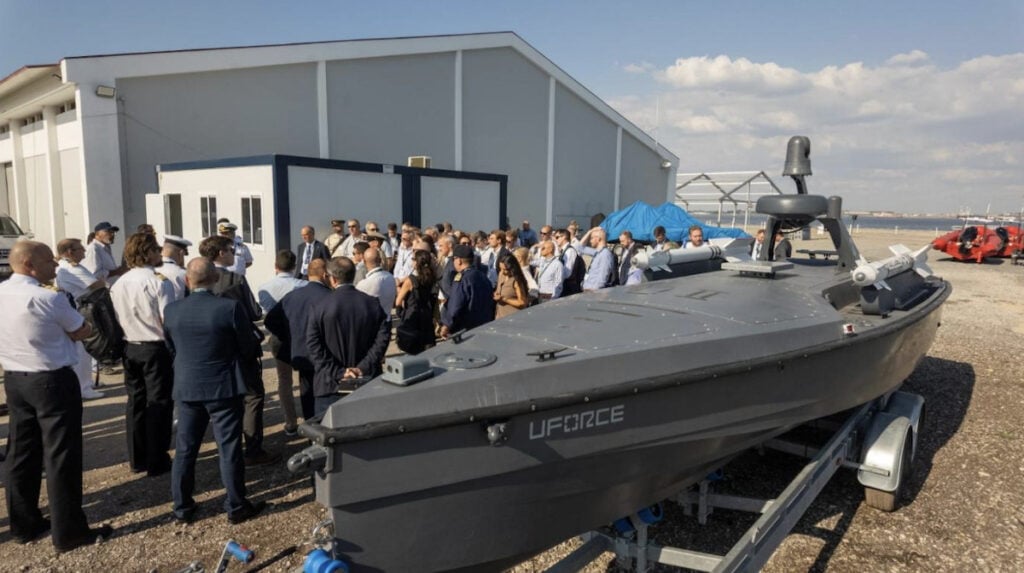
Maritime ISR 2026 will examine how naval forces are integrating autonomous systems, AI-enabled analytics, and multi-domain sensor networks to strengthen intelligence, surveillance, and reconnaissance across increasingly complex maritime environments.
Taking place on 13–14 October 2026 in Tróia, Portugal, the conference will bring together naval commanders, coast guard organisations, government agencies, programme managers, and technology providers to discuss the operational use of emerging maritime ISR capabilities.
The event comes as growing grey zone activity, increasingly capable autonomous vessels, and the challenge of tracking non-cooperative or “dark” vessels place greater demands on traditional surveillance methods. Naval forces are also seeking more persistent ways to protect critical undersea infrastructure, monitor strategic waterways, detect anomalous vessel behaviour, and support maritime border security across contested waters.
These requirements are accelerating the adoption of shipborne Uncrewed Aerial Systems (UAS), Uncrewed Surface Vessels (USVs), Autonomous Underwater Vehicles (AUVs), AI-enabled data processing, and interoperable command networks. Shipborne UAS can extend surveillance beyond the horizon, while USVs can provide persistent coverage across large maritime areas and AUVs and other Uncrewed Underwater Vehicles (UUVs) can support intelligence gathering and seabed monitoring in environments that are difficult or hazardous for crewed platforms to access.
Combined with AI, data fusion, and networked command-and-control systems, these technologies can help operators process information more quickly and develop a more complete operational picture while reducing the burden on limited resources. As autonomous maritime technologies mature, however, the focus is increasingly moving beyond the acquisition of individual platforms towards their integration into operational fleets, multinational task groups, and future naval doctrine.
These operational and integration challenges will form the basis of discussions at Maritime ISR 2026, which has been developed to examine how allied nations are strengthening maritime surveillance capabilities in response to evolving threats and changing requirements.
Delegates will receive programme updates and operational perspectives from representatives of the Royal Navy and United States Navy, alongside contributions from Baltic and Northern European naval forces, including the Polish Navy, German Navy, and Norwegian Navy. Operating across strategically important NATO maritime regions, these organisations will provide perspectives on current capability gaps, operational lessons, and future ISR requirements.
The programme will explore how allied forces are operationalising autonomous maritime ISR and integrating scalable uncrewed systems into naval operations. Sessions will also address AI-enabled intelligence fusion, space-based maritime surveillance, multi-domain information sharing, and the detection and monitoring of grey zone activity across contested maritime environments.
Maritime ISR 2026 will be held in association with REPMUS26, an operational experimentation exercise focused on autonomous maritime systems. This connection is intended to ensure that conference discussions are informed by technologies, operational concepts, and lessons emerging from practical maritime experimentation.
The conference will also be co-located with Surface Warships, Seabed Security, and Uncrewed Naval Systems. A single delegate pass will provide access to all four events, bringing together stakeholders working across surface warfare, subsea operations, autonomous systems, and maritime ISR in a format intended to support cross-domain collaboration and knowledge sharing.
A further element of the programme is a pre-conference visit to the Portuguese Navy Operational Experimentation Centre, known as CEOM. Taking place following REPMUS26, the visit will provide attendees with access to live operational demonstrations involving UUVs, USVs, and UAS operating in realistic maritime scenarios.
Representatives from the Portuguese Navy will present lessons emerging from REPMUS26, including work involving autonomous-system integration, ISR technologies, AI-enabled capabilities, and multi-domain experimentation. Organisations developing uncrewed platforms, sensors, payloads, communications equipment, and maritime ISR technologies will also have an opportunity to observe emerging capabilities and engage with the operational community evaluating and employing them.
As maritime threats and surveillance requirements continue to evolve, cooperation between naval forces, coast guards, government organisations, and industry will remain central to improving maritime awareness and maintaining operational advantage. Maritime ISR 2026 has been structured to support discussions between the operational organisations defining future requirements and the technology providers developing the systems intended to meet them.
Further information, including the event agenda and details on attendance, speaking, exhibition, and partnership opportunities, is available from the Defence iQ team at [email protected].
Maritime ISR 2026 forms part of Defence iQ’s four co-located maritime conferences, delivered in association with REPMUS26, with access to Maritime ISR, Surface Warships, Seabed Security, and Uncrewed Naval Systems available through a single delegate pass.