Discover World-Leading Unmanned and Autonomous Technologies
Discover cutting-edge solutions from leading global suppliers
Engineering teams from 14 U.S. and international companies, several of them direct competitors, completed 7 working integrations of MAVLink-Military (MAVLink-M), the open interoperability standard for military uncrewed systems, during a two-day hackathon that demonstrated industry consensus behind the new dialect.
The event was hosted by the Dronecode Foundation at Auterion’s Manassas, Virginia manufacturing facility and had 38 attendees representing industry and government.
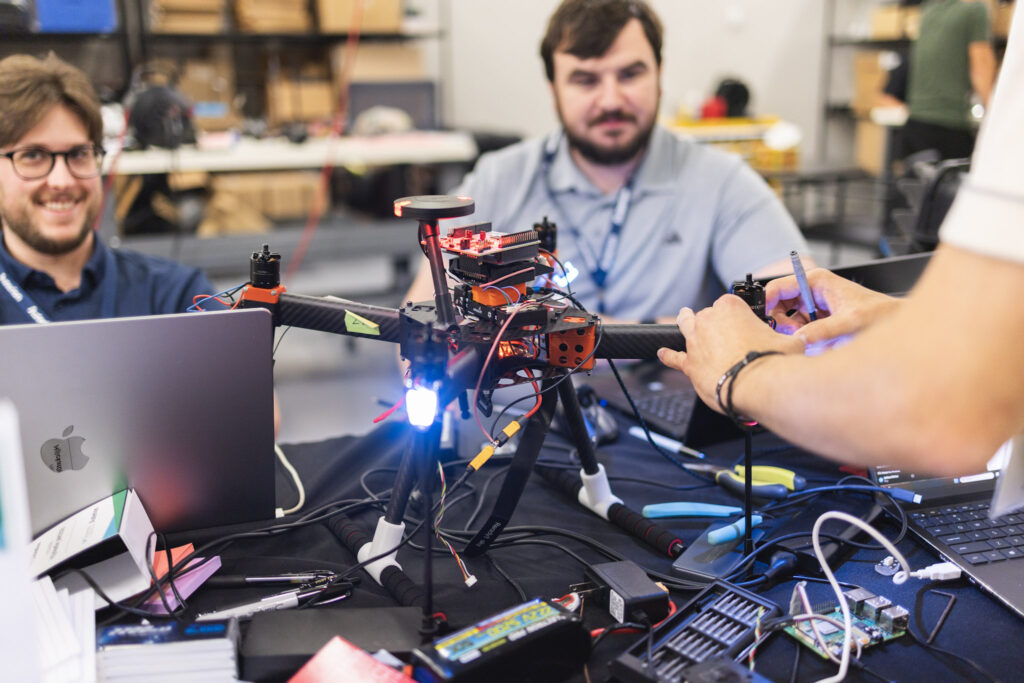
Auterion supported the event as sponsor and host, reflecting its long-standing role in the open-source autonomy ecosystem. Auterion CEO Lorenz Meier created MAVLink, PX4, QGroundControl, and Pixhawk — foundational technologies stewarded through the Dronecode community and used across the global drone industry.
The results mark a decisive step for a sector at risk of fragmenting. As requirements for uncrewed systems coverage across government and industry programs have grown worldwide, warfighters are looking for trusted solutions that scale at the speed of war. MAVLink-M offers a future with one open specification, neutrally governed, where interoperability between payloads and aircraft is the norm. This week, that future ran on real hardware.
Participants spanned the full stack, from airframe and payload makers to communications and software providers:
- Applied Aeronautics
- Ascend Engineering
- Artificer Group
- Auterion
- Carlson Software / Camflite / Viter Systems
- DeltaQuad
- Firestorm Labs
- IS4S
- Neros Technologies
- Production Systems Automation
- ORQA
- Rajant
- RIIS
- UVIFY
The event also drew support from the Drone Dominance Program, which backs industry-led efforts to solve interoperability, represented by Dr. Erin Cherry, Senior Advisor at the Test Resource Management Center.
MAVLink-M is an open MAVLink 2 dialect that gives command systems, aircraft and payloads from any vendor a common language. Its deepest coverage today is payload command and control, and because the dialect lives in a reserved ID block, it remains fully compatible with the civilian MAVLink protocol already proven on more than 1 million vehicles.
“In less than 48 hours, members of the Dronecode community integrated their drone platforms, proving that competing vendors can solve interoperability problems faster in the open than any of them can alone. With MAVLink-M we are building toward a future where cross-vendor plug-and-play payloads are the default, not a custom integration project,” said Ramón Roche, Executive Director of Dronecode Foundation, part of The Linux Foundation.
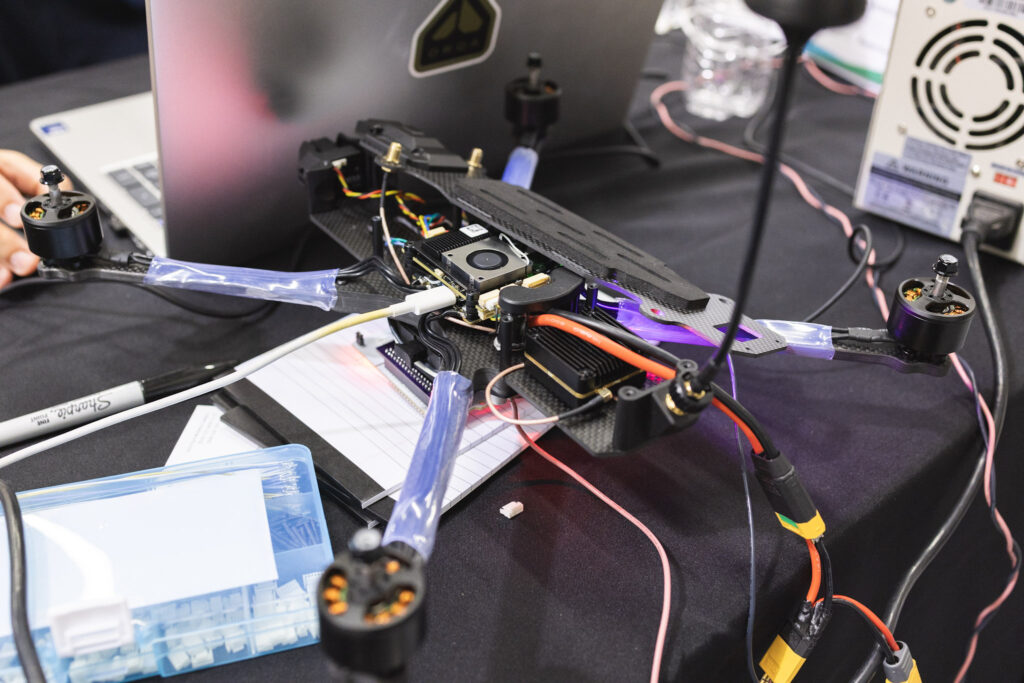
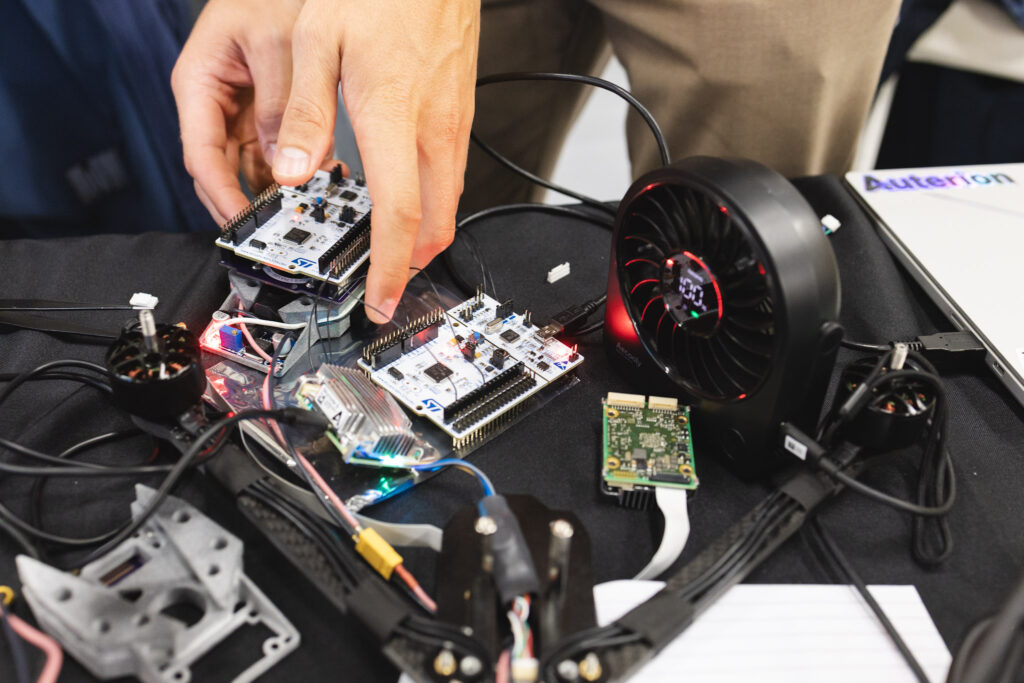
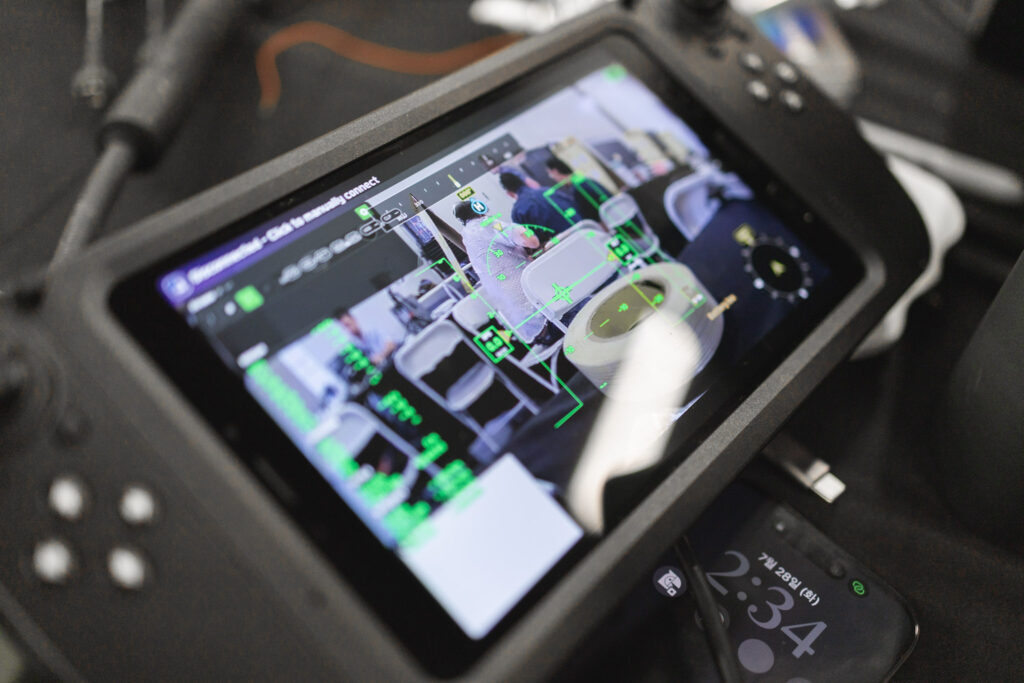
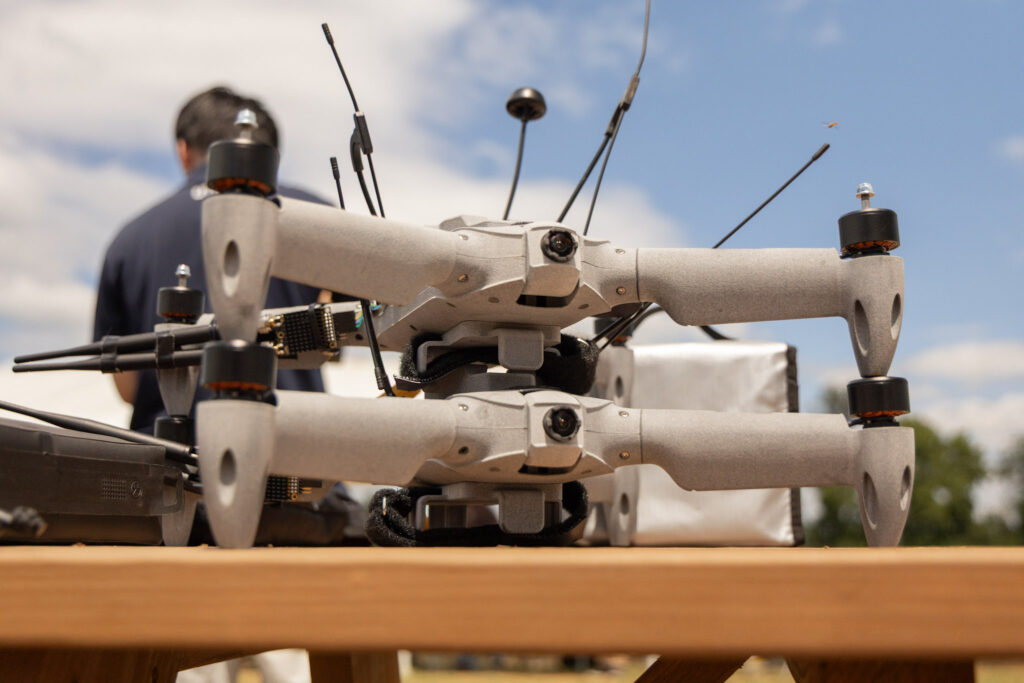
The hackathon was the second in-person event after the official launch of the MAVLink-Military working group in May. Over two days of hacking and one day of field demonstrations, participants integrated the latest draft of the standard across flight controllers, payloads, and ground control stations with a neutral test payload verifying every implementation end-to-end. This multi-organization effort proves MAVLink-M will provide the foundation for vendors to build once impossible capabilities on boundary pushing platforms.
Dronecode Platinum members shared their perspectives on the decisive win for the ecosystem:
“MAVLink was created to give robotic systems a common language that builders could rely on. MAVLink-M brings that same foundation to defense, where every integration delay slows down capability for the operator. Payload interoperability has to move at mission speed, giving warfighters trusted capabilities they can integrate, validate, and field faster,” said Lorenz Meier, CEO and Founder of Auterion.
“Defence organisations need systems that work together from day one. At DeltaQuad, we believe open standards are essential to making that possible, which is why we actively contribute to MAVLink-M together with the Dronecode community. By enabling platforms, payloads, AI and ground control systems to work together seamlessly, each company can focus on what it does best while giving operators greater flexibility and faster access to integrated capabilities,” said Sander Smeets, CEO of DeltaQuad.
Dronecode members and executives from participating organizations underscored what the results mean for the industry:
“As a Northern European and Finnish company, our geographic and strategic reality demands uncompromising resilience and interoperability,” said Taneli Poranen, Founder and CTO of Artificer Group. “We guard and arm the eastern border of NATO, meaning our uncrewed systems and dual-use products must operate flawlessly alongside allied forces from day one. By adopting open standards like MAVLink-M, we ensure that our technologies seamlessly integrate into a unified defense ecosystem, allowing us to deliver rapid, interoperable capabilities that strengthen the entire alliance.”
“Firestorm is committed to open ecosystems to foster innovation, events like this MAVLink-M hackathon allow companies to come together and collaborate openly to rapidly accelerate the advancement of critical industry standards,” said Ian Muceus, Firestorm Co-Founder and CTO.
“Today, every new payload means custom tooling, custom engineering, and weeks of integration work, repeated for every platform it touches. A modular architecture built on a common, low-cost electromechanical components and simple, standard FPV first protocol changes that equation. That’s why we built APEX. When drones and payloads conform to one open interface, integration becomes a repeatable process instead of a bespoke project. APEX’s device classes, support for analog video formats common in FPV, and its ability to encapsulate protocols like MAVLink are a couple of the reasons it delivers on this, all in service of the ultimate goal: getting operators more options, faster,” said Olaf Hichwa, Founder and CTO of Neros Technologies.
“Modern defence depends on systems from many different suppliers working together seamlessly. Seeing so many companies collaborate to validate MAVLink-M in such a short space of time shows that our industry is committed to open interoperability as the fastest path to delivering capability for operators. Orqa is proud to support that effort and help build an ecosystem where innovation, competition and compatibility can all thrive together,” said Srdjan Kovacevic, Co-Founder and CEO of Orqa.
“Mission success depends on resilient communications and interoperability. Rajant is proud to support the Dronecode Foundation and initiatives like MAVLink-M that advance open standards across the autonomous systems industry. Our work in swarm communications and distributed edge intelligence is built on the belief that open ecosystems accelerate innovation and enable more capable, mission-ready solutions,” said Robert J. Schena, CEO, Rajant Corporation.
“The MAVLink-M Hackathon demonstrated what can happen when industry, government, and the open-source community come together to solve real operational challenges. We learned a great deal from the technical work and, just as importantly, from the exchange of ideas among the participants. MAVLink-M has the potential to provide a common, interoperable foundation that can accelerate innovation, reduce fragmentation, and help move advanced autonomous systems from development into real-world deployment,” said Robert Cheek, Chief Operating Officer and Board Member, UVIFY, and Board Member, Dronecode Foundation.
The working group intends to lock the current draft of the standard soon. Then they will work on defining a neutral method for validating cross-vendor implementations between the flight controller and payload. Future events are being planned to demonstrate the full capabilities of the dialect.