Discover World-Leading Unmanned and Autonomous Technologies
Discover cutting-edge solutions from leading global suppliers
The second edition of the Counter UAS Technology Middle East & Africa conference is set to convene in Jordan, bringing together regional and global counter-drone leaders to address the increasing need for sophisticated technologies and strategies.

The news of this pivotal event comes as Jordan’s armed forces have intercepted and shot down a series of remotely guided balloons carrying narcotics in the east of the country, demonstrating a trend of criminal networks turning to improvised aerial delivery methods to evade border controls in the Middle East. Such incidents highlight the need to continue expanding and developing the discussion around the evolution of these threats.
According to a statement made by the military on Sunday, 10 attempts to smuggle drugs using remotely-guided balloons were thwarted. The balloons “were launched simultaneously to confuse border guard units and evade detection,” a statement carried by state news agency Petra said.
It added that “Border guard units successfully intercepted all the attempts in co-ordination with military security agencies and the Anti-Narcotics Department.”
“The balloons and their cargo were intercepted and brought down within Jordanian territory, and the seized narcotics were handed over to the relevant authorities for further action.”

The incident is the latest in a longstanding effort to secure Jordan’s border with Syria, where drug trafficking networks have commonly adopted low-cost aerial methods. Earlier this month, Syrian authorities said they seized a cannon, 75 hot-air balloons and more than two million Captagon pills from a group planning to smuggle narcotics into Jordan.
Jordan has previously escalated its response. In December, the military launched air strikes against drug-smuggling networks in southern Syria, saying it targeted “factories and workshops used by arms and drug dealers.”
Why It Matters for Counter-UAS in the Region
The use of Unmanned Aerial Systems (UAS), including drones and balloons, presents a challenge for security forces across the Middle East and Africa. Adversaries are testing borders with inexpensive, adaptable tools, necessitating wide-coverage of counter-UAS defenses to secure lengthy borders.
Identifying slow-moving, low-signature aerial objects, distinguishing them from legitimate traffic and responding in a legally compliant manner presents key operational challenges. These themes are expected to feature prominently at the upcoming Counter-UAS Technology Middle East & Africa conference, taking place June 30 – July 1. The event will bring together military leaders, policymakers, industry experts and law enforcement officials to address evolving aerial threats across the region.
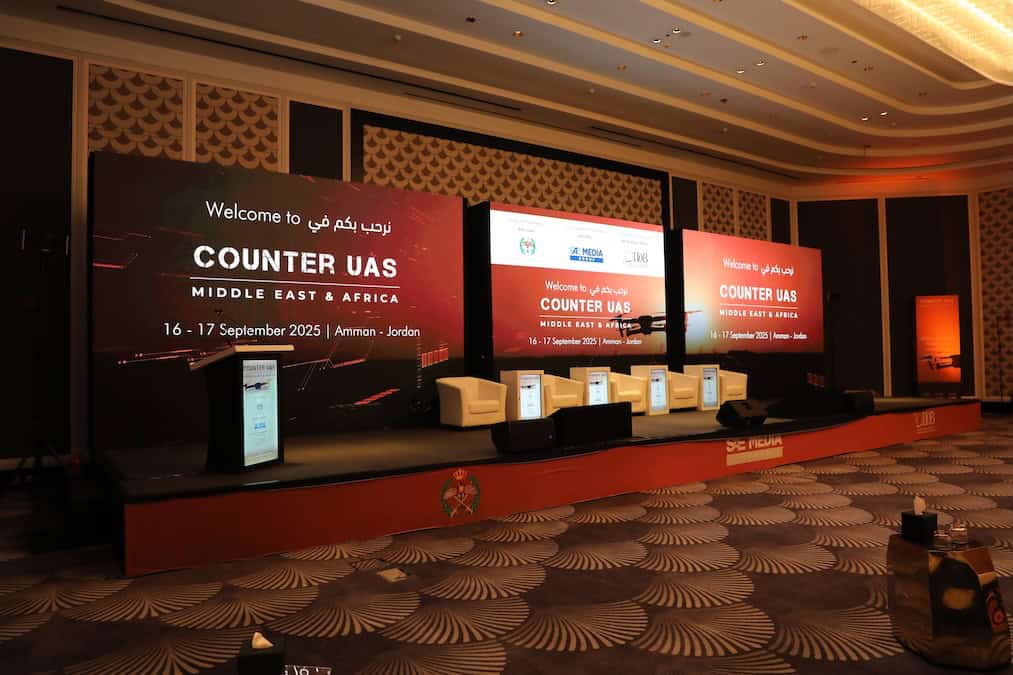
With cross-border smuggling networks employing everything from drones to balloon-based delivery systems, the conference comes at a time when regional states are reassessing detection capabilities and counter-UAS coordination between nations and agencies. Discussions are set to cover emerging technologies, operational lessons learned and the integration of counter-UAS systems into layered border and critical infrastructure defense.
Jordan’s latest interdictions serve as a reminder that the counter-drone conversation is heating up in the Middle East. Regional and global leaders will gather to build on the success of last year’s inaugural conference in September, developing and expanding the conversation.