Maritime Drones
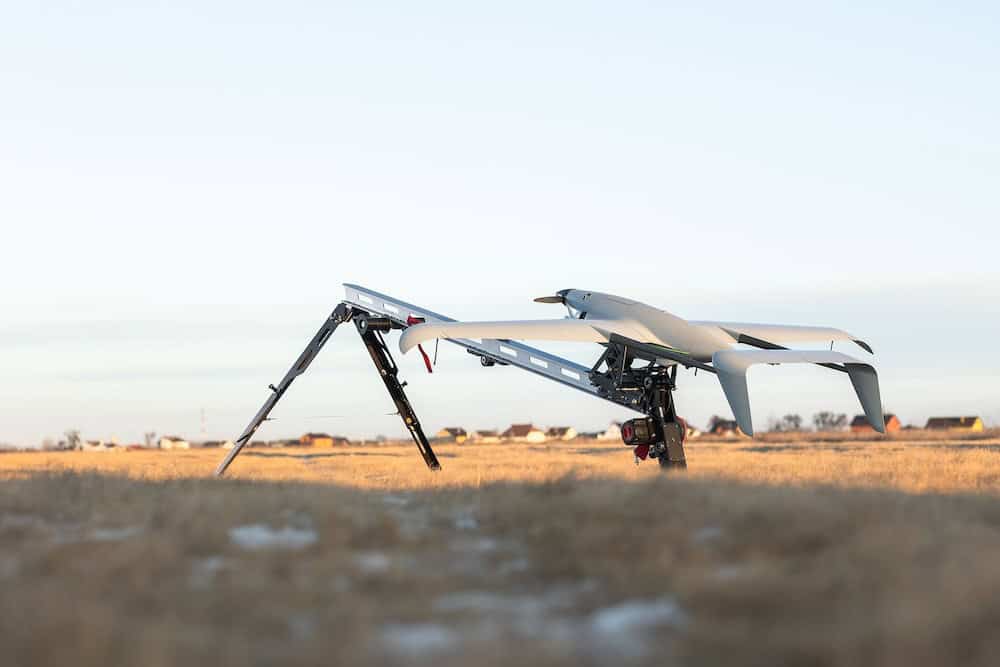
Discover cutting-edge solutions from 11 leading global suppliersMeteomatics, a weather intelligence company has collaborated with the U.S. Navy to trial automated weather drones, known as Meteodrones, for collecting atmospheric data vital in maritime operations.

The trial, conducted as part of the Advanced Naval Technology Exercise (ANTX) near Gulfport in the Mississippi Sound, marks a significant step toward enhancing operational readiness and safety for naval missions.
Naval operations require precise, localized weather intelligence, but gathering this information on ships has been historically challenging. Traditional weather balloons are difficult to launch and track reliably from moving vessels, and the vertical resolution needed for tactical decisions is often absent in broad satellite coverage. This results in a critical blind spot in the lower levels of the atmosphere, the exact area where weather conditions most affect flight operations, radar performance, and mission safety.
To address this deficiency, the Navy’s demonstration focused on testing the Meteodrone’s ability to launch and recover from a moving ship at speeds between 1.5 knots and 16 knots. Operating under FAA regulations, the shipboard Meteodrones gathered complete vertical atmospheric profiles, including temperature, humidity, pressure, dew point, and wind. The system proved its stable and autonomous performance in a maritime environment, with the drones returning safely for recovery across multiple runs.
Kevin Lacroix, Weather Services Technology Lead, Naval Meteorology and Oceanography Command, stated, “For the last decade, U.S. military weather services have sought to consistently and reliably measure the atmosphere over the open ocean to improve forecast accuracy and identify atmospheric anomalies. Products with the capability to collect-high resolution, real-time atmospheric data, repeatedly, in environments of interest are valuable to military weather services for sensing the maritime boundary layer of the atmosphere.”
The real-time observations provided by the Meteodrones will allow the Navy to enhance mission safety by reducing risks for aircraft takeoffs, landings, and in-flight operations. The data can also strengthen operational readiness and improve awareness of how the environment may extend or degrade radar and communication ranges.
LaCroix added, “Beyond the weather forecasting improvements the real-time information gathered by the Meteodrone give us, we have an opportunity to feed critical information into our electromagnetic tactical decision aids, making the safety and security of the ship and the battlegroup more effective by optimizing our radar performance. Ship captains will have the confidence to make rapid decisions knowing that the METOC team has given them every advantage possible.”
Brad Guay, Head of Government & Defense Solutions at Meteomatics, also commented on the success of the trial, stating “This demonstration underscored not just the technical success of our Meteodrones, but also the practical value of capturing critical weather data at sea. By proving that launches and recoveries can be achieved from moving vessels, we’ve shown how Meteomatics can help the Navy bridge one of the most significant gaps in operational forecasting.”