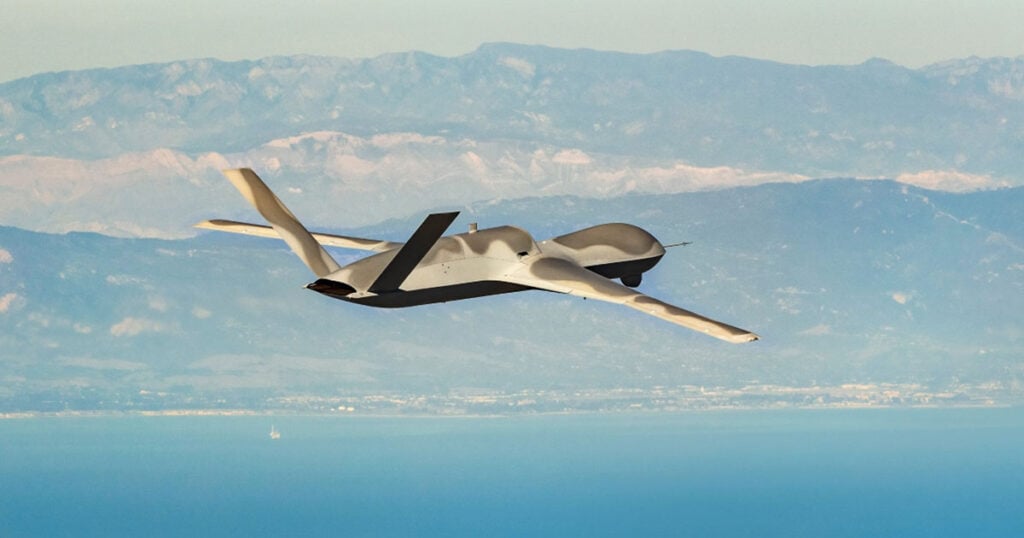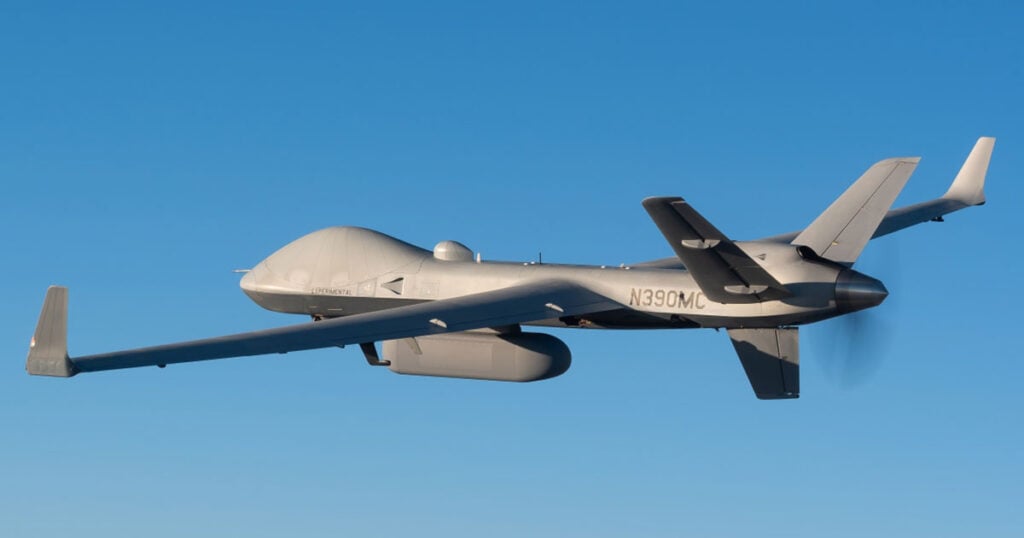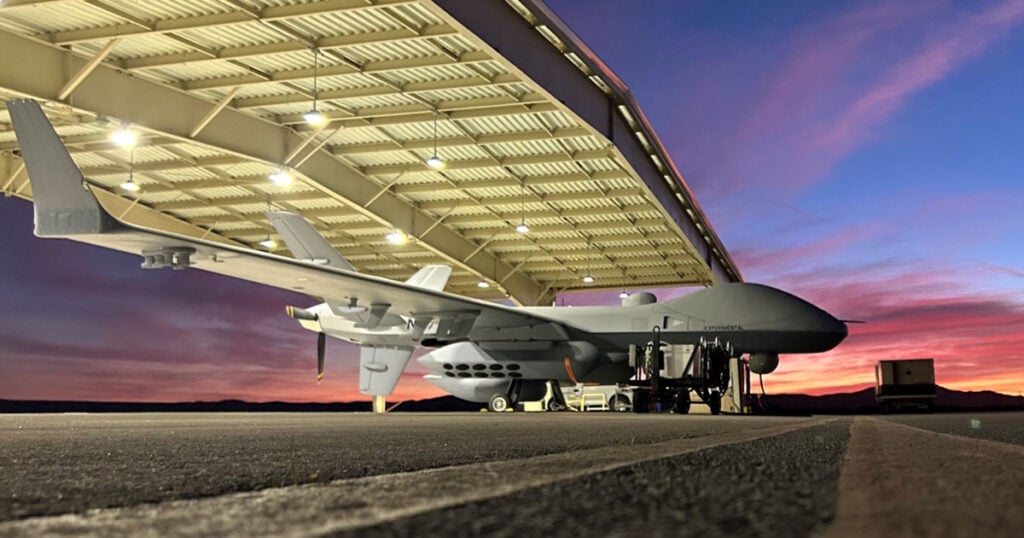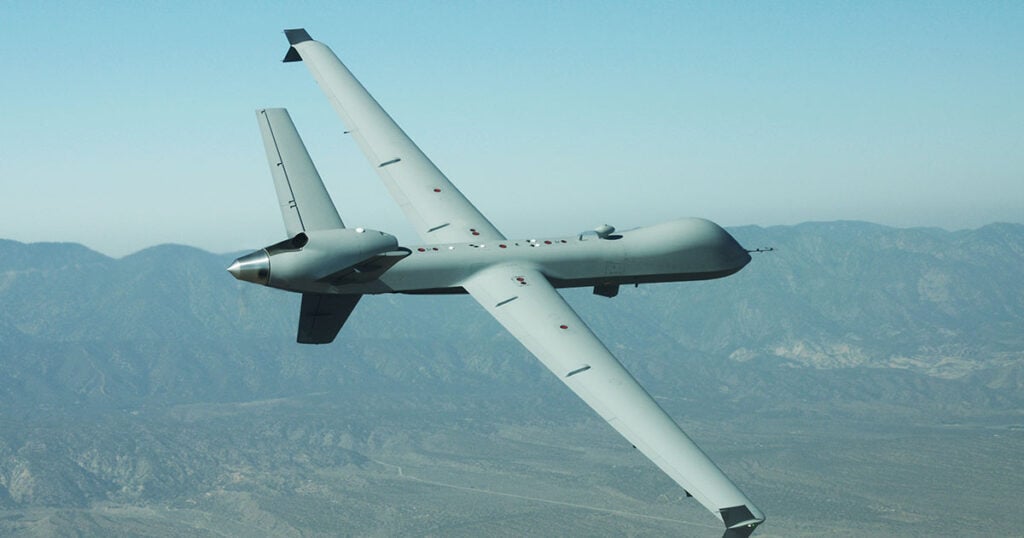
General Atomics Aeronautical Systems, Inc. (GA-ASI), in collaboration with the U.S. Marine Corps, has completed more than 1,000 flight hours with the MQ-9A unmanned aircraft.
These flights support service-level training exercises and weapons and tactics instructor courses.
This accomplishment involved a combined aircrew of Marines and GA-ASI personnel, highlighting the MQ-9A platform’s integration within the Marine Air-Ground Task Force (MAGTF) and the MAGTF Unmanned Expeditionary (MUX) Program.
These exercises demonstrated the capabilities of the MQ-9A by integrating advanced technologies such as the SkyTower networking support pod, Automatic Identification System, latest-generation Lynx® multi-mode radar and various other tactical networks and capabilities. The joint teams successfully conducted satellite launch and recovery activities operating out of a strategic expeditionary landing field near Marine Corps Air Ground Combat Center Twentynine Palms, Calif., providing opportunities to validate targeting and reconnaissance operations.
Previously, an uncrewed aircraft required a crew positioned at the airfield where it was operating to fly it for takeoff via direct line-of-site radio link. Then a mission crew could take over the aircraft from anywhere via satellite. Today, satellite launch and recovery means the main Marine mission crew, which can be sited anywhere, flies the aircraft from takeoff via the satellite link. This capability, validated in the Marine Corps operations, enables flexibility and expands the locations from which units can operate.
A key element of these exercises also included not only live-fire training but also comprehensive mission planning, networked communications, and multi-domain coordination. These events provided invaluable experience in integrating the MQ-9A into complex, distributed combat scenarios across the full range of Marine Air-Ground Task Force operations. From supporting maneuver elements with real-time intelligence, surveillance and reconnaissance to validating command and control networks, The MQ-9A was employed across a range of missions, demonstrating flexibility across operational scenarios.
The successful integration of the MQ-9A platform across recent operations represents a milestone in aligning capability with the MAGTF construct. These events showcased the MQ-9A’s ability to support distributed operations, extend sensor coverage, and provide persistent intelligence, surveillance and reconnaissance in support of dynamic mission sets. The coordinated efforts demonstrated interoperability in expeditionary operations.
GA-ASI President David R. Alexander, stated, “Reaching 1,000 flight hours for these rigorous training exercises alongside our Marine Corps and Air Force partners is a testament to the reliability and adaptability of the MQ-9A platform. This achievement highlights the power of collaboration and the critical role the MQ-9A can play in supporting the MAGTF’s mission readiness.”
To date, GA-ASI has delivered 17 MQ-9A UAS to USMC. The USMC awaits delivery of three additional aircraft by the end of this year.