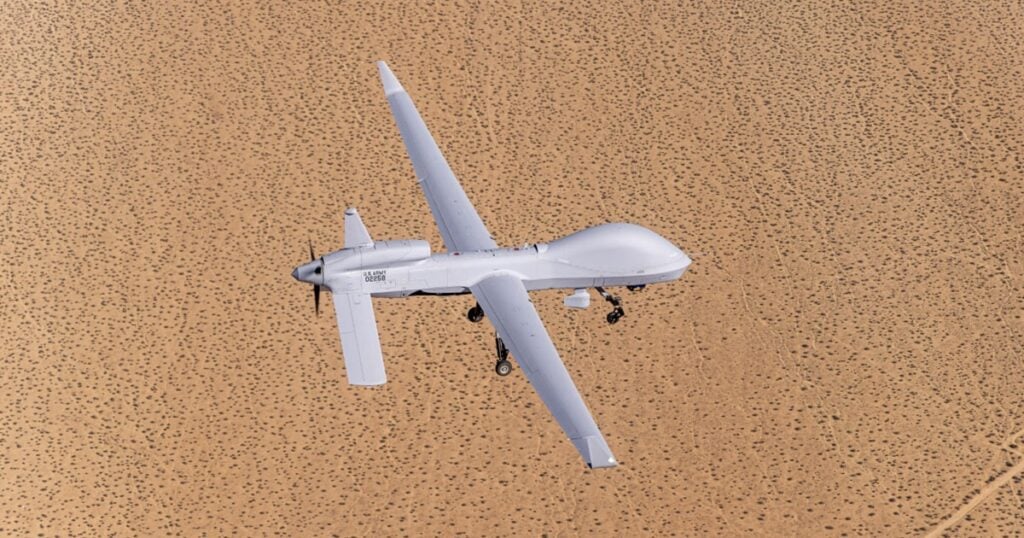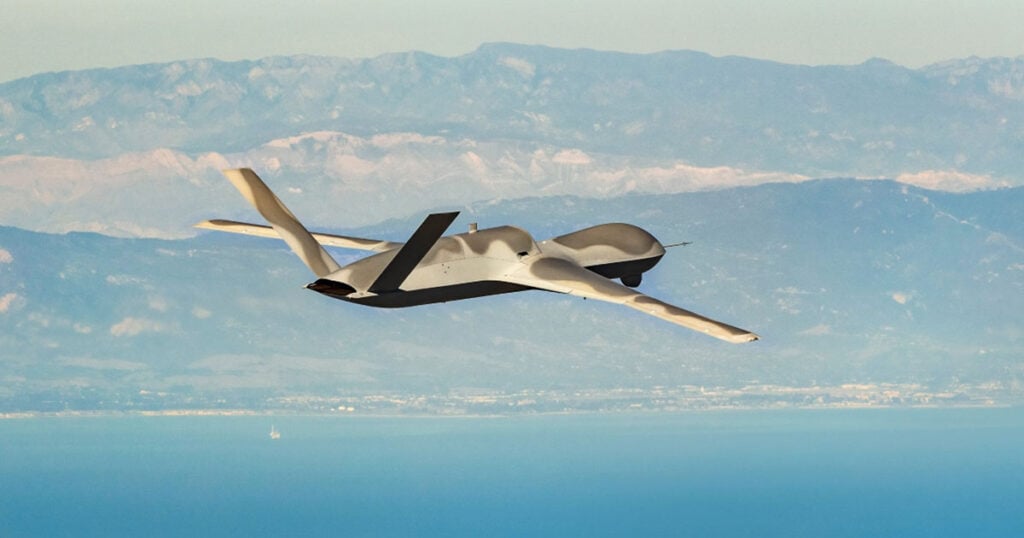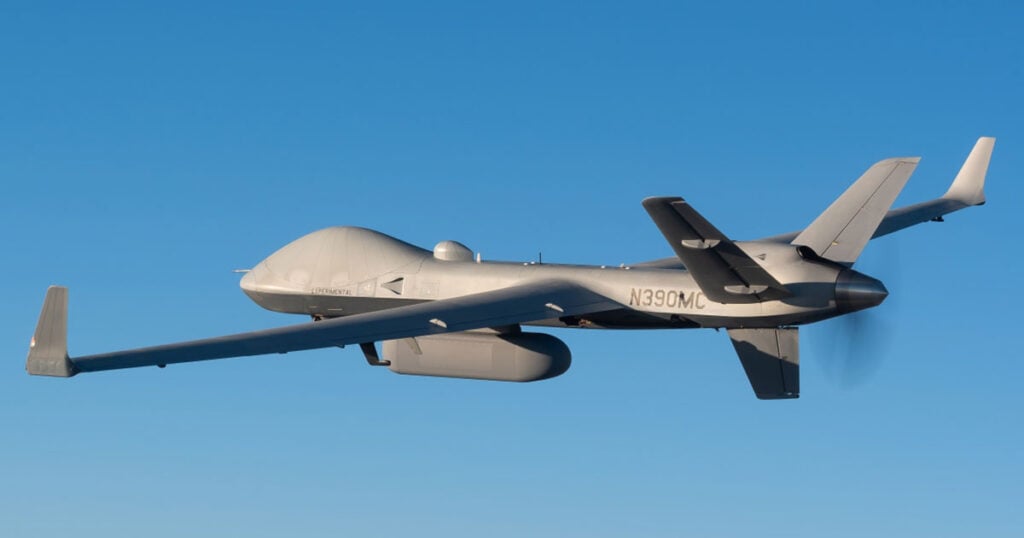
General Atomics Aeronautical Systems (GA-ASI) has advanced its ability to operationalize the Unmanned Combat Air Vehicle (UCAV) ecosystem by combining advanced autonomy and government-provided human-machine interface (HMI) hardware.
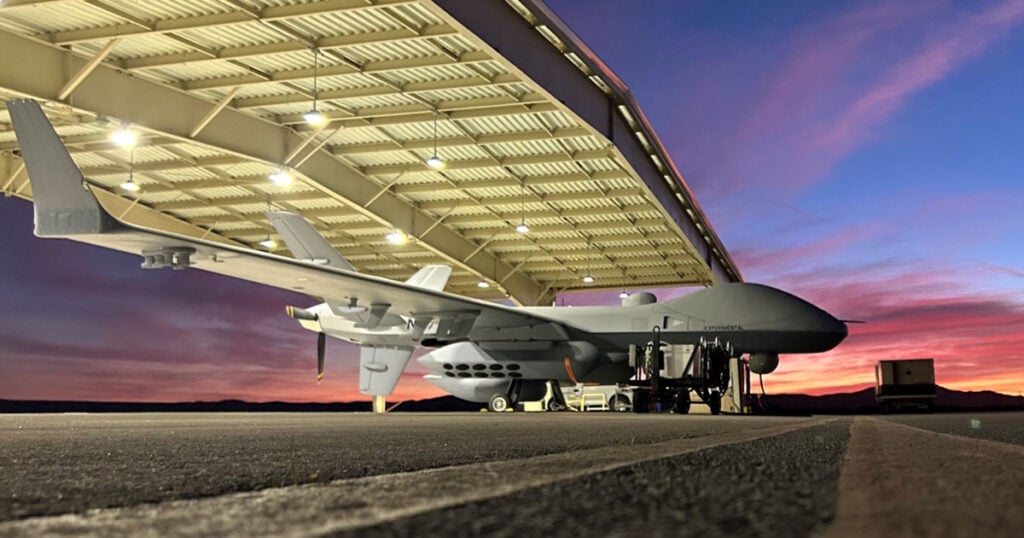
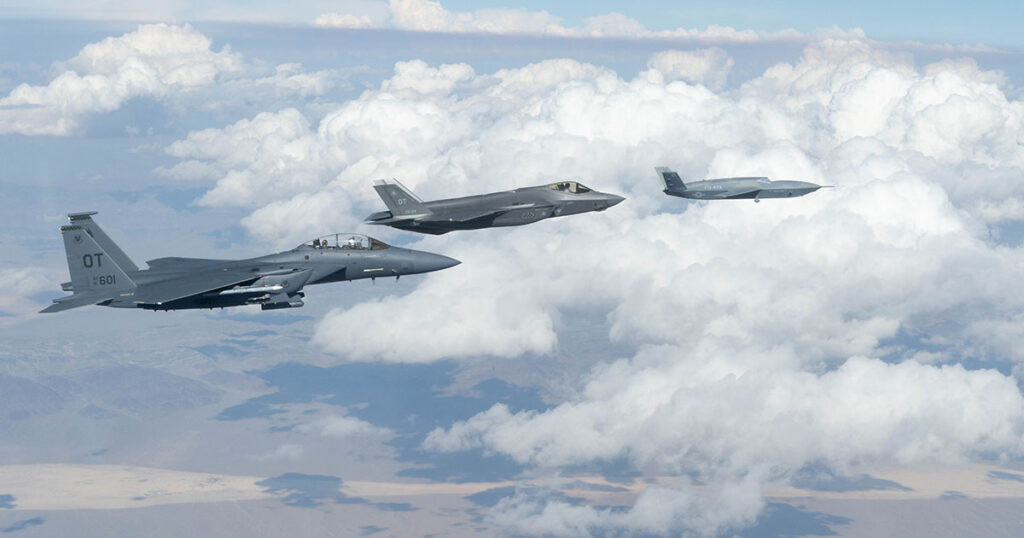
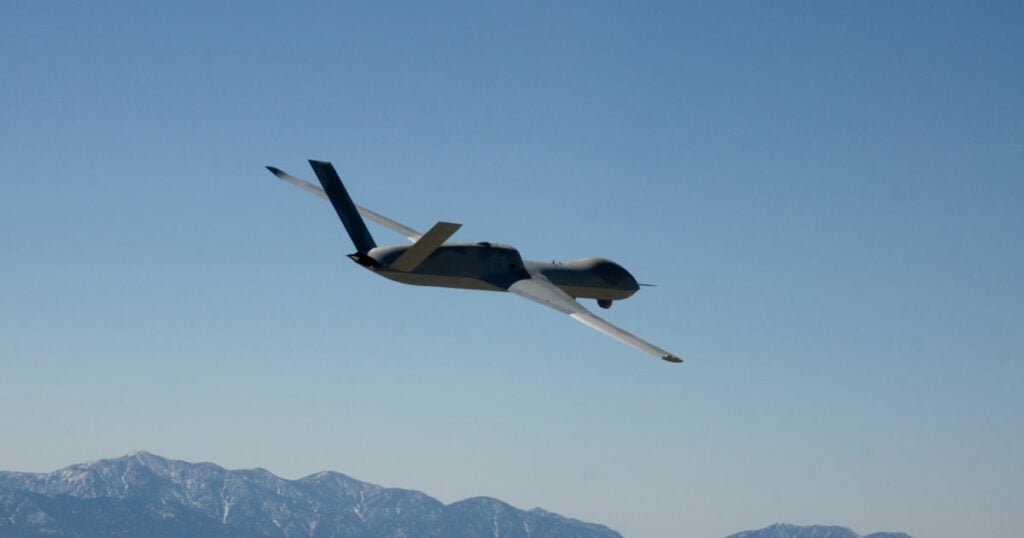
A GA-ASI-owned Avenger Unmanned Aircraft System (UAS) was paired with “digital twin” aircraft to autonomously conduct Live, Virtual, and Constructive (LVC) multi-objective collaborative combat missions.
The flights, which took place on July 13th, 2023, from GA-ASI’s Desert Horizon Flight Operations Facility in El Mirage, Calif., demonstrate the company’s commitment to maturing its UCAV ecosystem for Autonomous Collaborative Platforms (ACP). The ecosystem’s goal is to rapidly integrate best-of-breed capabilities in areas such as Artificial Intelligence (AI), mission-relevant interfaces, and other capabilities from third-party providers at the speed of relevance for 21st century conflicts.
The team demonstrated Manned-Unmanned Teaming (MUM-T) using the U.S. Air Force’s Project FoX system, which included a touchscreen tablet for fighter cockpits. The tablet provided control and monitoring of advanced autonomy while it conducted a multi-objective combat mission consisting of LVC entities. Mission autonomy capabilities focused on optimized search and signature management. Search optimization autonomy behaviors were provided by Scientific Systems Company, Inc. (SSCI). These skills were integrated into and orchestrated by government-furnished equipment (GFE) autonomy core architecture enhanced by GA-ASI. The flexibility of the GFE autonomy core software stack enabled rapid, seamless integration of one of SSCI’s multi-UAS behaviors. Autonomous trajectories were calculated by SSCI algorithms and subsequently communicated to GA-ASI’s autonomy core for translation to vehicle routes. SSCI provided an array of behaviors using its Collaborative Mission Autonomy suite where the software adapts to mission contingencies such as system failures, connectivity dropout, and combat losses to ensure successful tactical execution.
The signature management skill, based on deep reinforcement learning, was developed by GA-ASI. Skill development leveraged GA-ASI’s novel Reinforcement Learning (RL) architecture that was designed using agile software methodology and industry-standard tools such as Docker and Kubernetes. Commanded using the FoX tablet, the RL agent navigated to an operator-identified target while minimizing the radar cross section (RCS). This MUM-T, facilitated via open mission system (OMS) messages and alignment to the newest government architectures, demonstrated real-time operator tasking and supervision of an autonomous platform as it conducted its mission.
The team used a government-furnished autonomy core engine and the government-standard OMS messaging protocol to enable communication between the RL agents and the LVC system. Utilizing government standards such as OMS will make rapid integration of autonomy for UCAVs possible. In addition, GA-ASI used a General Dynamics EMC2 to run the autonomy architecture. EMC2 is an open architecture Multi-Function Processor with multi-level security infrastructure to run the autonomy architecture, demonstrating the ability to bring high-performance computing resources to UCAVs to perform quickly tailorable mission sets depending on the operational environment.
GA-ASI is demonstrating its commitment to maturing an autonomy infrastructure to enable rapid integration and validation of third-party tactical software applications from an App Store and maintaining safety of flight. This is another in an ongoing series of autonomous flights performed by GA-ASI using internal research and development funding to prove out important AI/ML concepts for UAS.
“The concepts demonstrated by these flights set the standard for operationally relevant mission systems capabilities on UCAV platforms,” said GA-ASI Senior Director of Advanced Programs Michael Atwood. “Our integration of the emerging FoX system accelerates speed to ramp for emerging collaborative air-to-air capabilities. The combination of airborne high-performance computing, sensor fusion, human-machine teaming, and AI pilots making decisions at the speed of relevance shows how quickly GA-ASI’s capabilities are maturing as we move to operationalize autonomy for UCAVs.”
Find suppliers and manufacturers of Unmanned Aerial Vehicles (UAV) > >