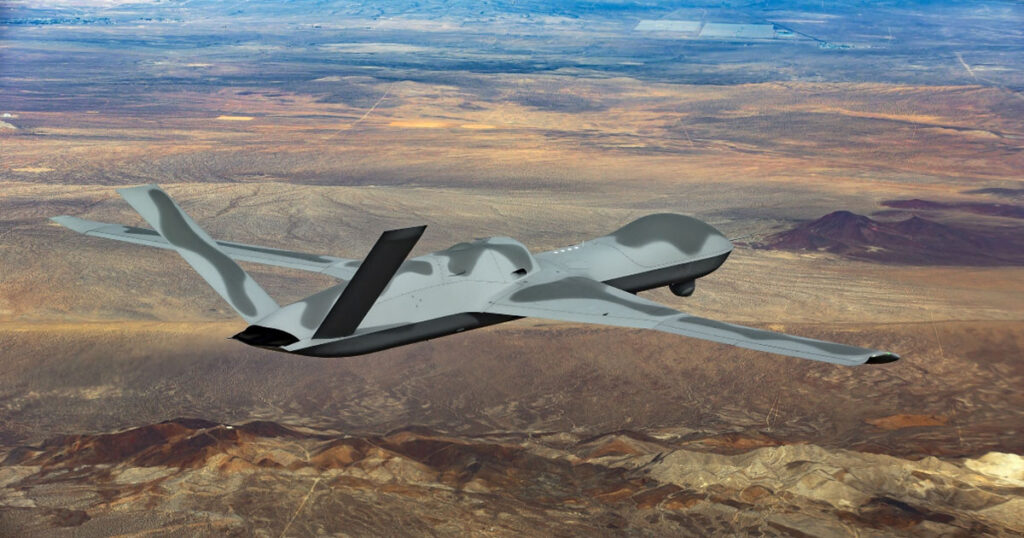
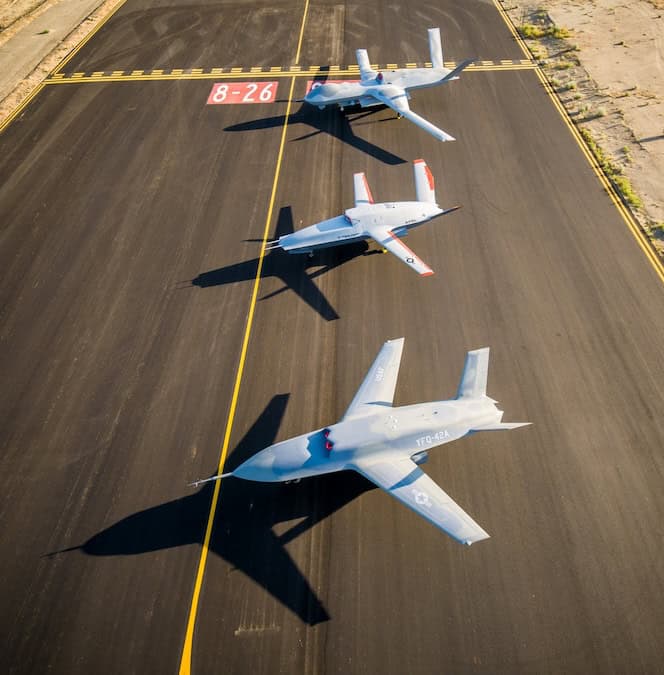
General Atomics Aeronautical Systems, Inc., a leading manufacturer of Remotely Piloted Aircraft (RPA), tactical reconnaissance radars, and electro-optic surveillance systems, and Northrop Grumman Corporation, a leading global security company, today announced the second successful demonstration of Predator® B/MQ-9 Reaper’s Electronic Attack capability featuring Northrop Grumman’s new Pandora Electronic Warfare (EW) system at the U.S. Marine Corps’ (USMC) Weapons and Tactics Instructor (WTI) course held at Marine Corps Air Station (MCAS) Yuma on October 22.
“Our collaboration with the Marine Corps and Northrop Grumman demonstrates the operational flexibility of the Predator B from being primarily a counter-insurgency aircraft to a platform that can address a broader spectrum of operational requirements,” said Frank W. Pace, president, Aircraft Systems, GA-ASI. “We believe this will be important especially in a declining budget environment as our customers will be seeking greater warfighting value using less expensive solutions.”
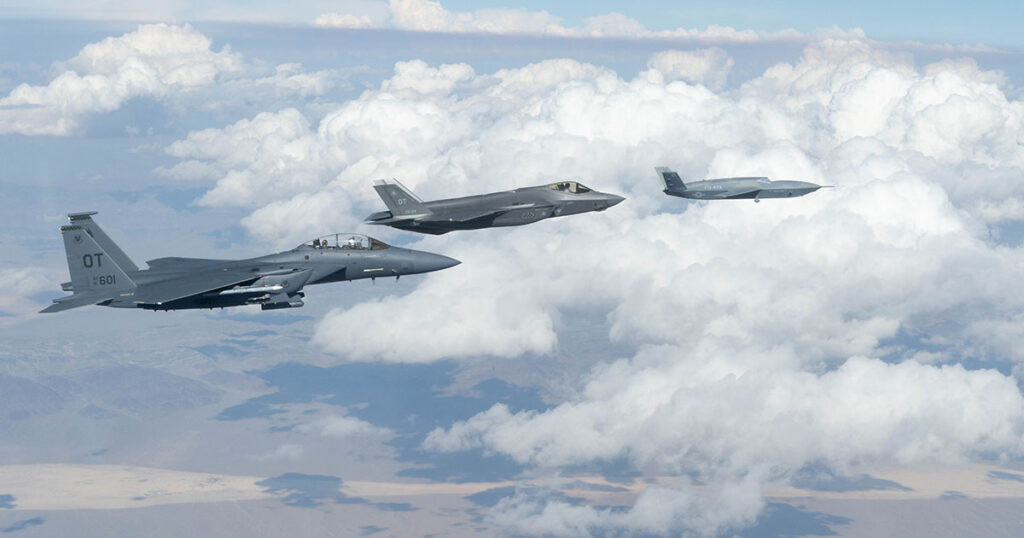
The purpose of this second demonstration was to evaluate the capability of a RPA to conduct electronic warfare missions in concert with other unmanned aircraft systems and EA-6B Prowlers in a multi-node approach against a more capable Integrated Air Defense System (IADS). The event expanded upon GA-ASI and Northrop Grumman’s successes in last April’s WTI exercise and focused on delivering a more integrated and networked EW capability.
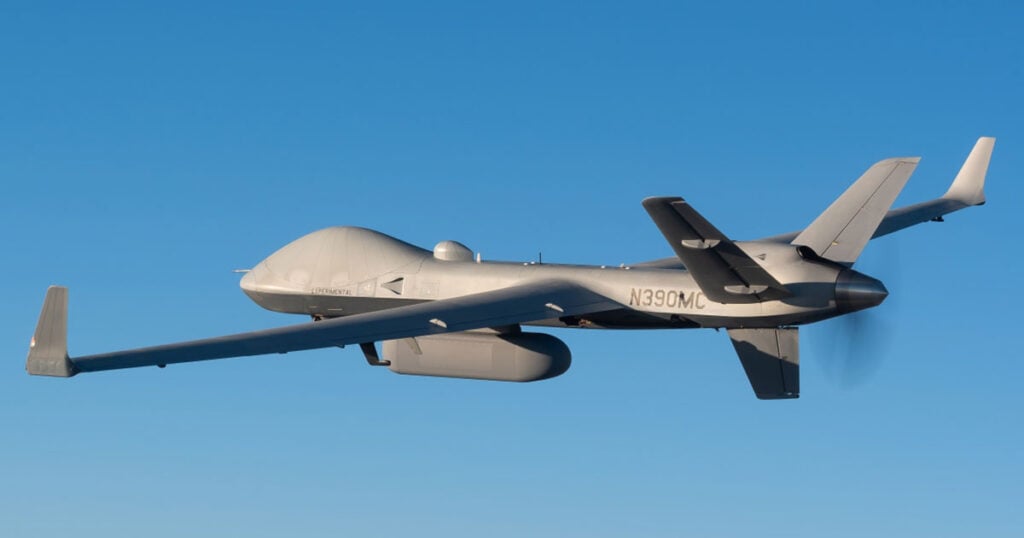
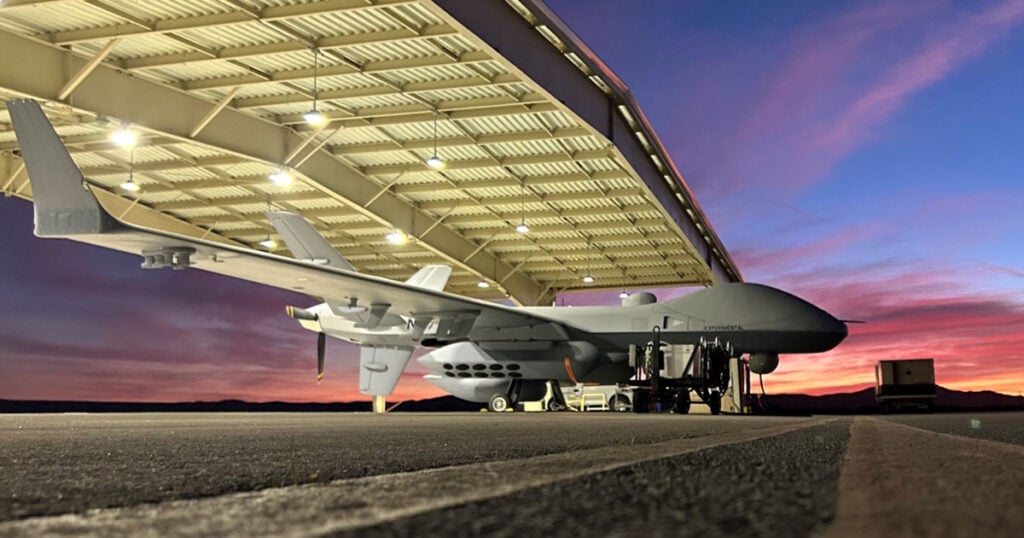
GA-ASI participated in the demonstration with a company-owned Predator B RPA equipped with a company-produced jamming pod containing Northrop Grumman’s Pandora EW System and controlled by a GA-ASI Ground Control Station (GCS). The Northrop Grumman payload proved to be very effective and was integrated seamlessly with the Predator B avionics and command and control architecture.
Northrop Grumman’s Pandora is a multi-function wideband solution that provides electronic attack, support and protection. The lightweight, low-power system includes a flexible architecture to meet emerging needs and supports open interfaces to enable integration and interoperability.
 “These demonstrations show what’s now possible with our high-performance electronic warfare solution,” said Janine Nyre, vice president of radio frequency combat information systems at Northrop Grumman. “Pandora brings optimal size, weight, and power to current and future high-endurance platforms, opening up a new world of electronic attack capabilities.”  Â
The RPA was able to integrate into a Marine Command and Control (C2) network, enabling control of the aircraft’s EW payload and other assets with a higher level of coherency among the platforms to deliver effects across the Electro-magnetic Spectrum (EMS). This C2 capability was exercised from the Cyber/Electronic Warfare Coordination Cell (CEWCC) located at MCAS Yuma and supported a large aircraft strike package which addressed simulated targets located hundreds of miles north at Naval Air Weapons Station China Lake.
“We demonstrated operational concepts using a layered approach to electronic warfare with GA-ASI’s Reaper, EA-6B Prowlers, and other Group 3 Unmanned Aerial Vehicles [UAVs],” stated Brig. Gen. Matthew G. Glavy, Assistant Deputy Commandant for Marine Aviation. “By conducting multiple events with a networked, pod-based jamming system, we were able to evaluate the viability of UAVs to conduct electronic warfare missions against enemy air defenses in support of tactical strike aircraft.” Â
The focus of GA-ASI and Northrop Grumman during future demonstrations will be to examine additional capabilities beyond EW and extend the network by linking RPA to deliver effects across the EMS.
Northrop Grumman develops manned and unmanned aircraft and sensors for situational awareness and aircraft self-protection. Platforms manufactured for the U.S. military and government agencies include Triton, Global Hawk, X-47B, BAT, Fire Scout, and Hunter. The company’s advanced C4ISR systems in service now include the AN/ZPY-1 STARLite tactical radar, LR-100 electronic warfare system, and advanced navigation systems.