
 General Atomics Aeronautical Systems, Inc. (GA‑ASI), a leading manufacturer of Remotely Piloted Aircraft (RPA), tactical reconnaissance radars, and electro-optic surveillance systems, today announced its successful participation in NATO’s Unified Vision (UV12) Trial at Orland Main Air Station in Brekstad, Norway, June 18-29.
Sponsored by the NATO Joint Capability Group on Intelligence, Surveillance, and Reconnaissance (JCGISR), the Joint ISR (JISR)trial focused on the enhancing the interoperability of national ISR assets, sharing ISR data, and improving NATO JISR tactics, techniques, and procedures. UV12 was attended by over 1,200 participants from 21 NATO commands, member nations, and associated government organizations.
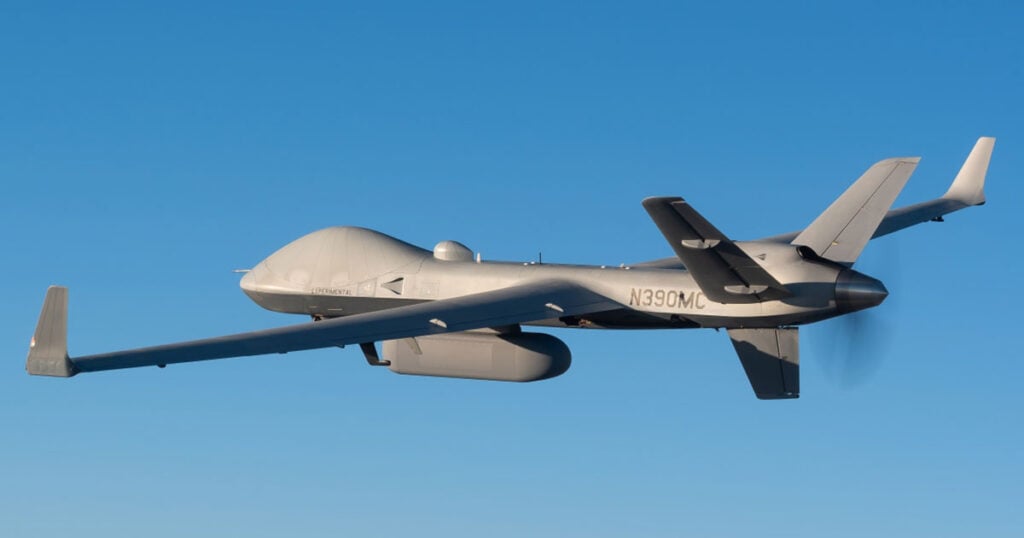
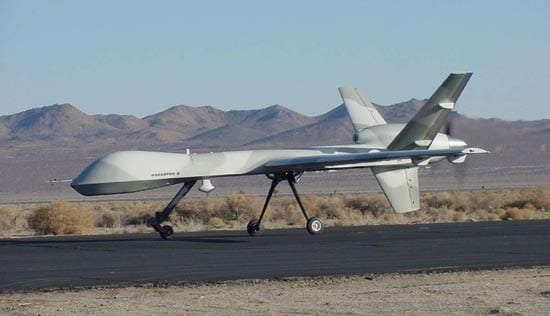
GA-ASI participated in the trial for the first time, demonstrating a Predator® B/MQ-9 Reaper surrogate (manned King Air 200) with a Block 30 Lynx® Multi-mode Radar, a FLIR Star SAFIRE 3800HD Electro-Optical/Infrared (EO/IR) sensor, and Tactical Common Data Link (TCDL), along with GA-ASI’s new System for Tactical Archival, Retrieval, and Exploitation (STARE) and Link 16 integration.
“We were honored to help fill the ISR gap for this year’s trial with a surrogate RPA and to have the opportunity to demonstrate the game-changing capabilities of our new STARE ISR data processing technology,” said Linden Blue, president, Reconnaissance Systems Group, GA-ASI. “We look forward to continuing to develop STARE to meet the needs of the customer community.”
GA-ASI’s involvement centered on ensuring that the assets were actionable to “the warfighter” and was highlighted by the effectiveness of its new STARE technology, which filled critical gaps in data distribution, archiving, and retrieval during the various trial vignettes. This was accomplished by simultaneously processing sensor feeds from multiple systems, including the Reaper surrogate, AeroVironment’s Puma Small Unmanned Aircraft System (UAS), and Lockheed Martin’s Persistent Threat Detection System (aerostat). STARE was used to collect, exploit, and disseminate Synthetic Aperture Radar (SAR) imagery, stationary and moving target information, and High-Definition (HD) video to NATO networks.
The Reaper surrogate successfully demonstrated all-weather capabilities with the Lynx radar and participated in all mission profiles, including flights during inclement weather. Onboard the aircraft, GA-ASI’s Claw® sensor control and image analysis software provided command and control of the radar and FLIR sensor and processed data through the data link. On the ground, STARE provided the exploitation and fusion of all ISR sensor data, as well as HUMan INTelligence (HUMINT) and Measurement and Signature Intelligence (MASINT) reporting. This included ingestion, exploitation, and display of Full Motion Video (FMV) and Moving Target Indicator (MTI) data from the Persistent Threat Detection System in Yuma, Ariz., along with other FMV and MTI feeds from disparate local NATO trial participants.
STARE was also utilized to rebroadcast and share Reaper and other NATO ISR data successfully via Cross-Domain Solutions to unclassified and classified NATO network partners and provide “Reaper” Link 16 tracks to all NATO air assets participating in the trial.
STARE is a GA-ASI development effort that is designed to provide a system to create timely, actionable intelligence at the tactical level. STARE addresses a gap at the tactical level for archival (storage of tactical ISR feeds and products), retrieval (dissemination of all data products to STARE and external users), and exploitation (environment to bring ISR data together for tactical exploitation). STARE can store data for 30 days, retrieve and fuse various data sources, exploit and create actionable intelligence, and connect to the Secret Internet Protocol Router Network (SIPRNet) and Distributed Common Ground System (DCGS) for data dissemination.