














Showcase your capabilities
If you design, build or supply Lithium-Ion Batteries, create a profile to showcase your capabilities and connect with visitors who have an active requirement for your solutions.




Lithium-ion (Li-ion) batteries are rechargeable energy storage systems widely used to power unmanned platforms requiring high energy density, low weight, and reliable cycling performance. In unmanned aerial, ground, and maritime systems, Li-ion batteries support propulsion, payload operation, and onboard electronics across defense, commercial, and research missions.
This page features lithium-ion drone battery suppliers and Li-ion cells for unmanned systems, available in multiple chemistries and form factors for integration into UAVs, UGVs, and USVs where endurance and power stability are critical.
Read the Technology Overview

Innovative Battery Technologies | High-Performance Battery Packs for Drones & Unmanned Systems

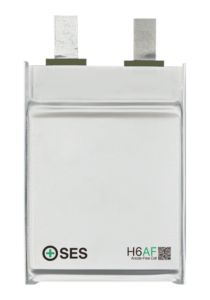
AI-Enhanced, NDAA-compliant High-Energy Density Batteries for Drones & Unmanned Systems

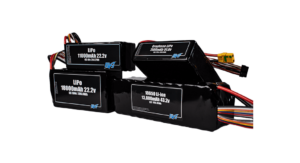
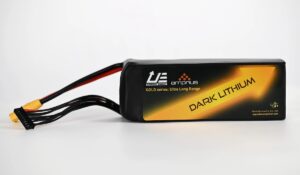
Custom Lithium Batteries for Drones & UAV - Lithium Polymer Batteries & LiPo Battery Packs

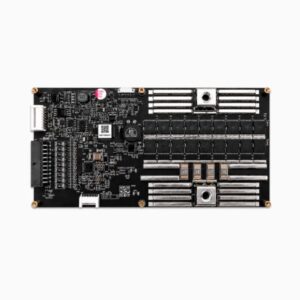
Professional Drone BMS Manufacturer Integrating R&D and Production (ISO 9001:2015)


Application-Specific Battery Packs for Drones, Robotics & Unmanned Platforms


High-Energy Density Lithium Ion Batteries for Drones & Unmanned Systems | Nanoporous Silicon Anode Technology


Innovative High-Energy Density Battery Solutions for UAVs and Unmanned Systems

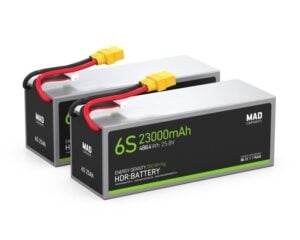
Power & Propulsion Solutions for UAVs: Drone Motors, ESCs, Batteries & Propellers

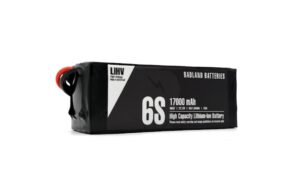
High-Performance Drone Batteries, Power Management Systems, Fleet Management Software, Solar MPPT Integration, Celular C2 & Payload Communications

If you design, build or supply Lithium-Ion Batteries, create a profile to showcase your capabilities and connect with visitors who have an active requirement for your solutions.

Lithium-ion (Li-ion) batteries are a primary energy storage solution across the unmanned systems landscape. For engineers and system integrators, selecting a Li-ion battery pack is a critical mission-enabler that dictates payload capacity, thermal management requirements, and overall platform reliability.
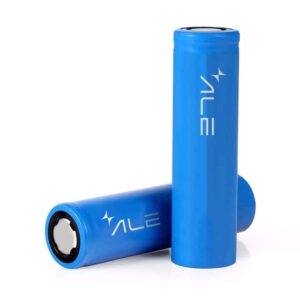
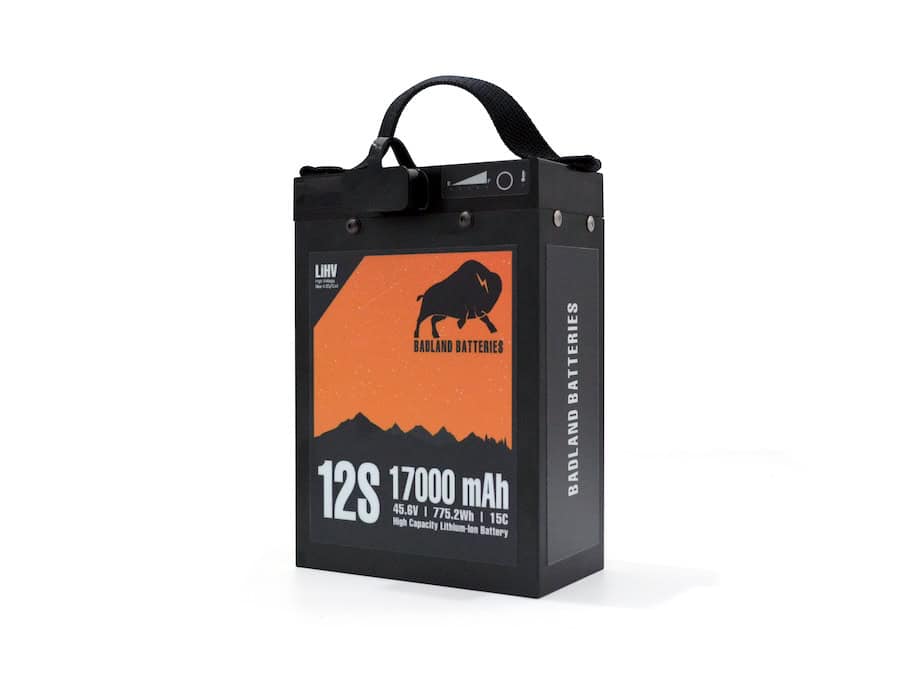
Cylindrical Li-Ion Batteries by American Lithium Energy.
At the core of every rechargeable lithium-ion battery is an intercalation-based mechanism. During discharge, lithium ions migrate from the anode to the cathode through an electrolyte, while electrons flow through an external circuit to power the system. This process is reversed during charging.
Several key metrics define the utility of Li-ion cells:
Several chemistries are commonly deployed across unmanned platforms, each with distinct strengths and limitations:
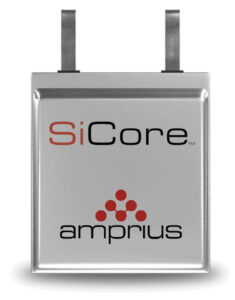
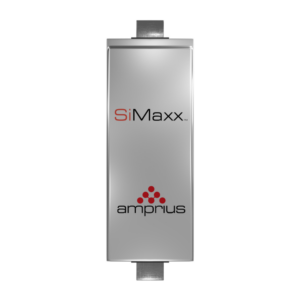
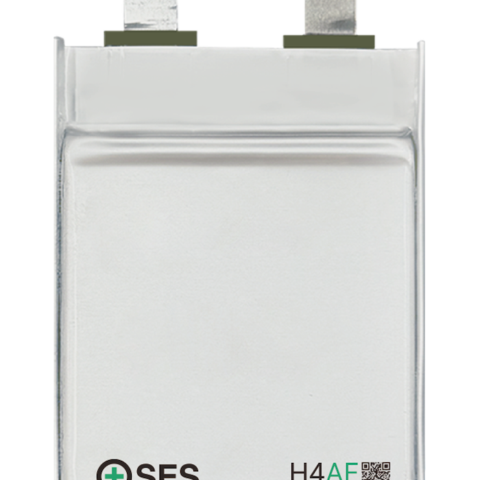
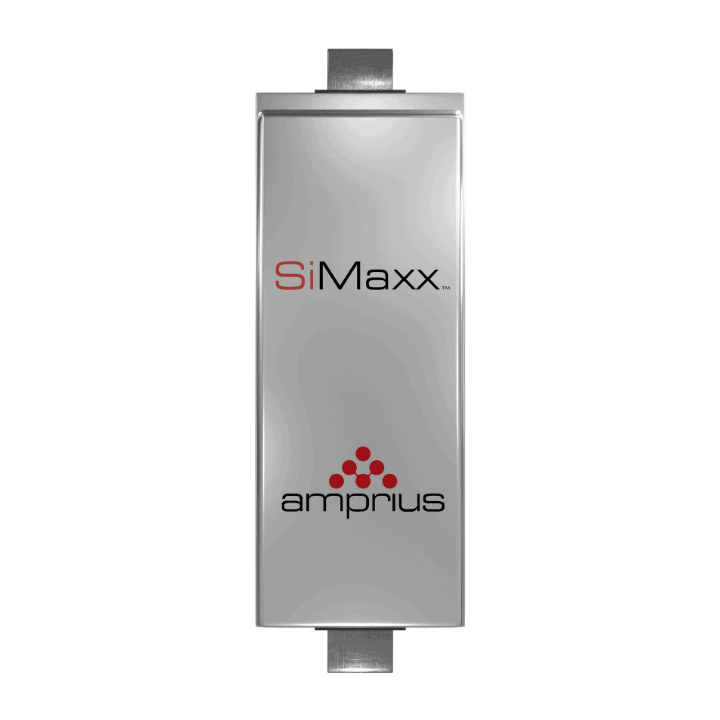
SiCore 450 Wh/kg Li-Ion battery by Amprius Technologies.
Selecting the appropriate chemistry is a system-level decision driven by mission profile, environmental exposure, safety requirements, and lifecycle cost.
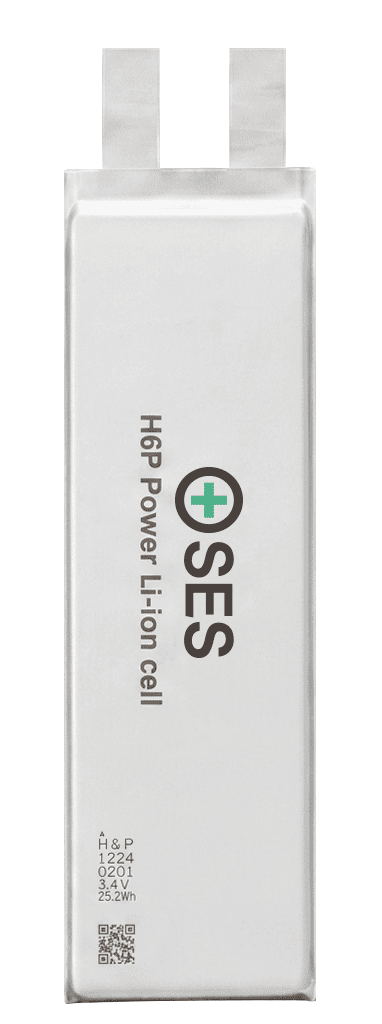
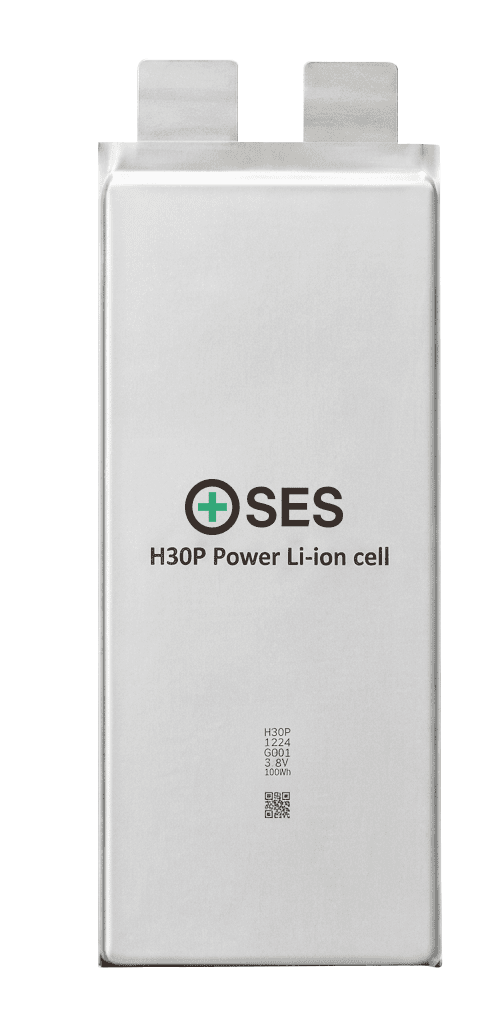
Li-ion cells are produced in cylindrical, prismatic, and pouch formats. Cylindrical cells are mechanically robust and consistent, prismatic cells simplify packaging in constrained volumes, and pouch cells offer maximum design flexibility and energy density but demand careful mechanical support and protection.
Cells are arranged in series to increase voltage and in parallel to increase capacity. Proper configuration is essential to meet system voltage requirements while maintaining redundancy and fault tolerance. Parallel group design is particularly important for managing imbalance and ensuring controlled degradation rather than sudden failure.
Battery packs must be mechanically integrated to withstand vibration, shock, and acceleration loads typical of unmanned platforms. Environmental sealing protects against dust, moisture, and salt ingress, especially in maritime applications. In many designs, the battery enclosure also contributes to structural stiffness and thermal conduction.
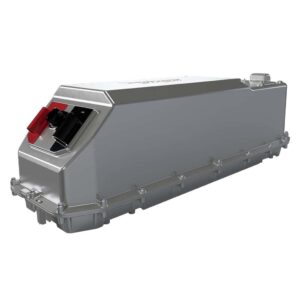
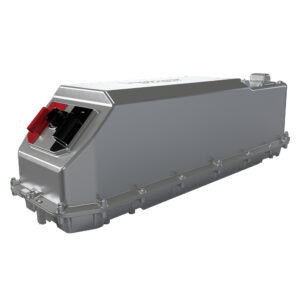
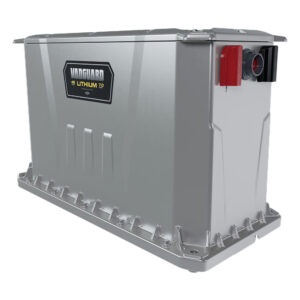
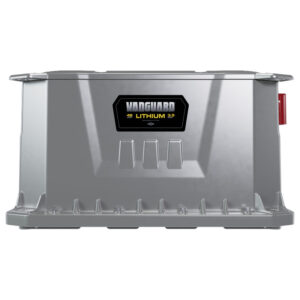
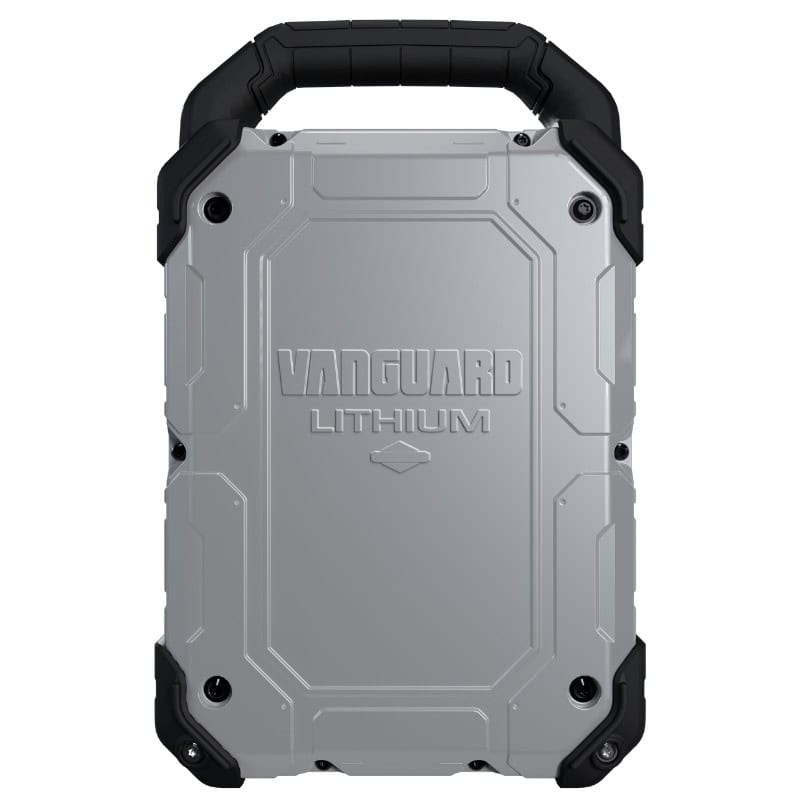
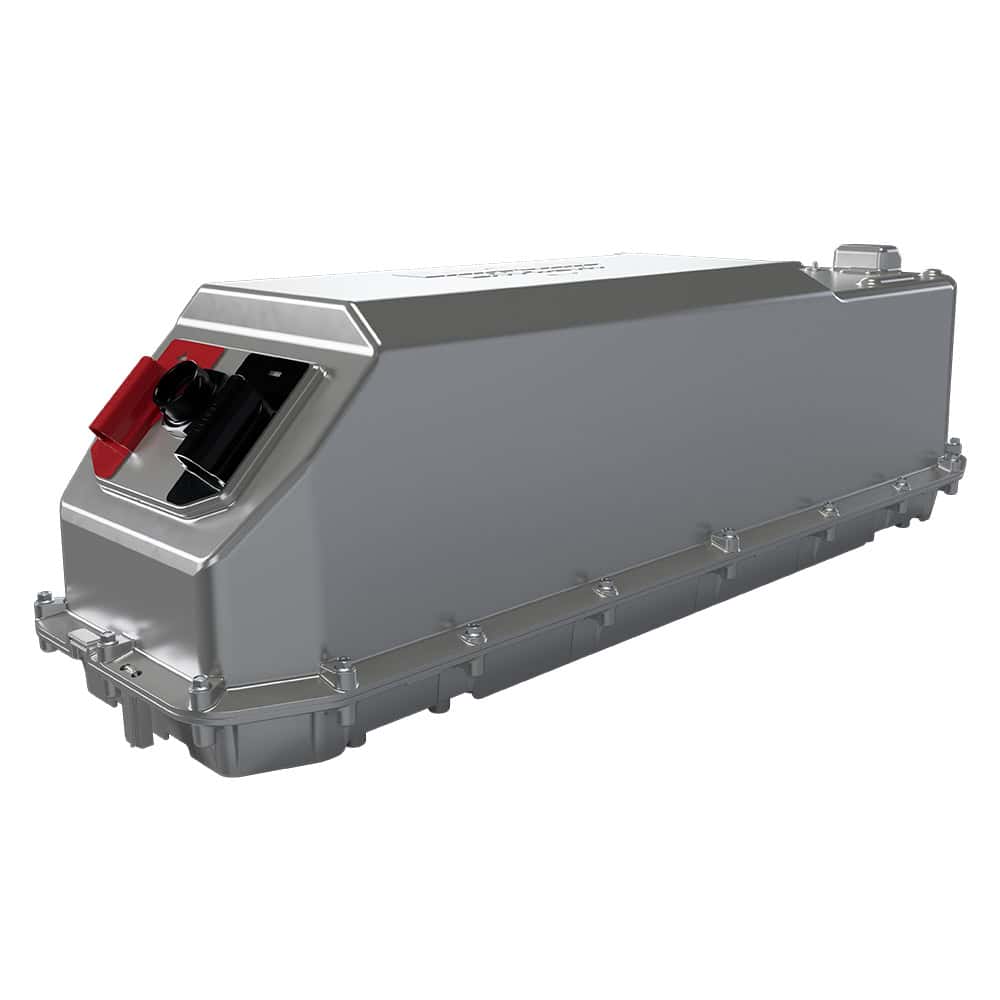
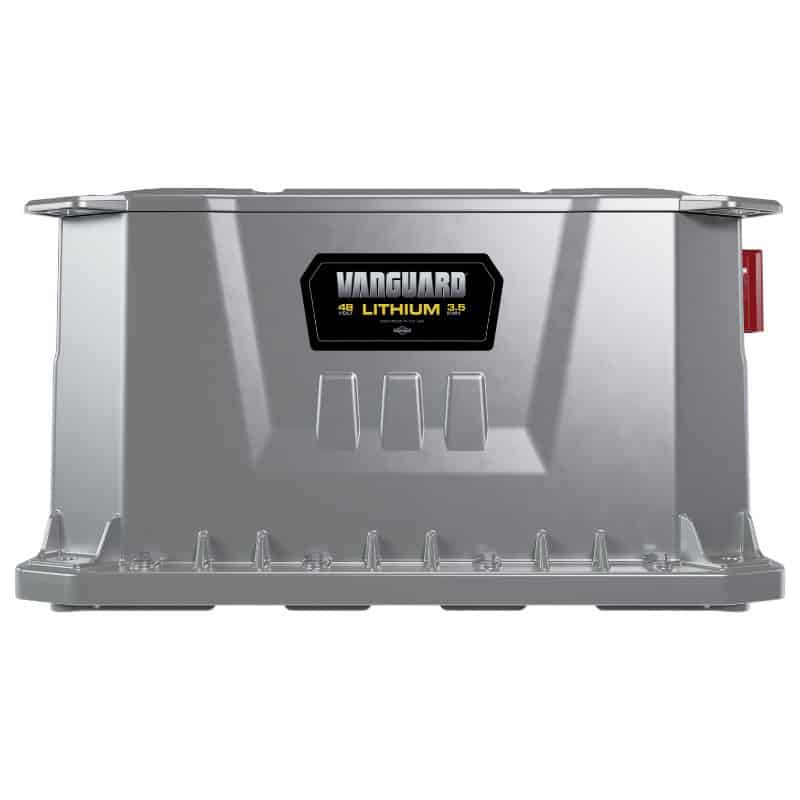
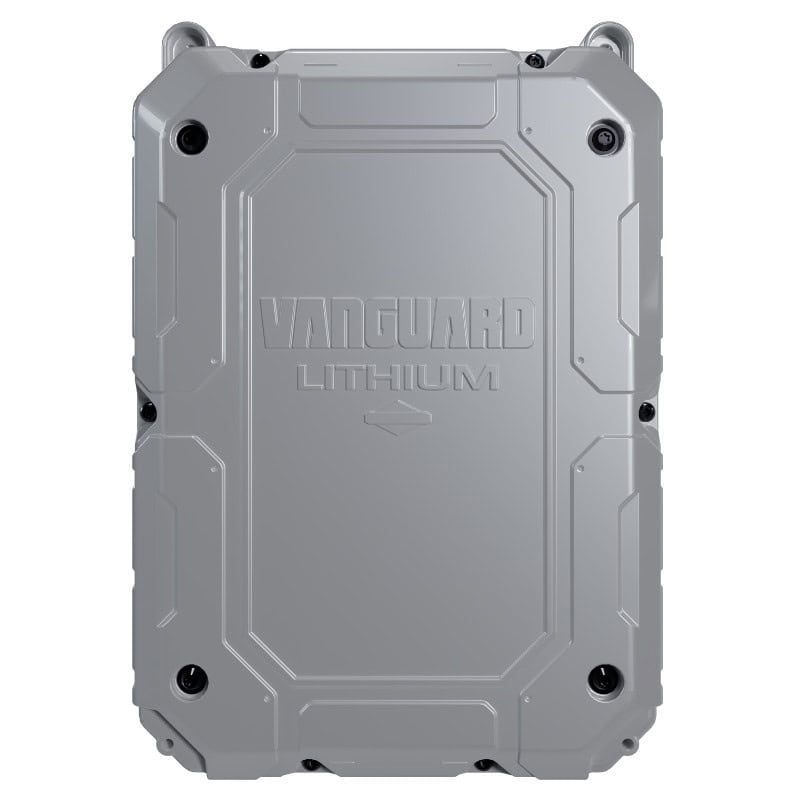
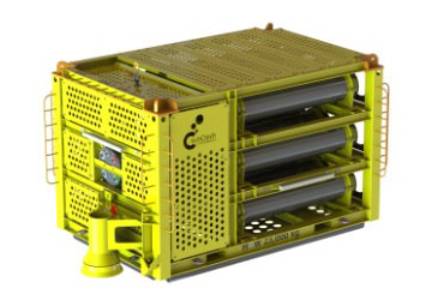
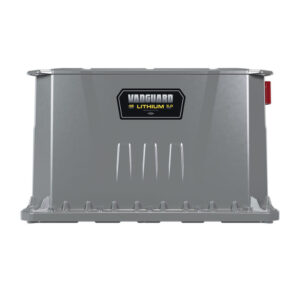
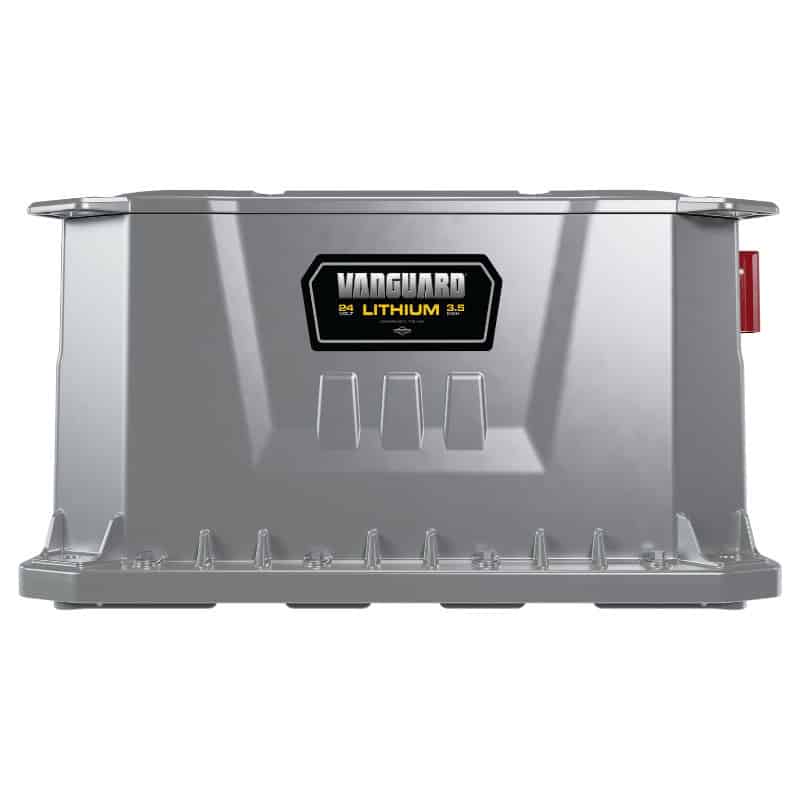
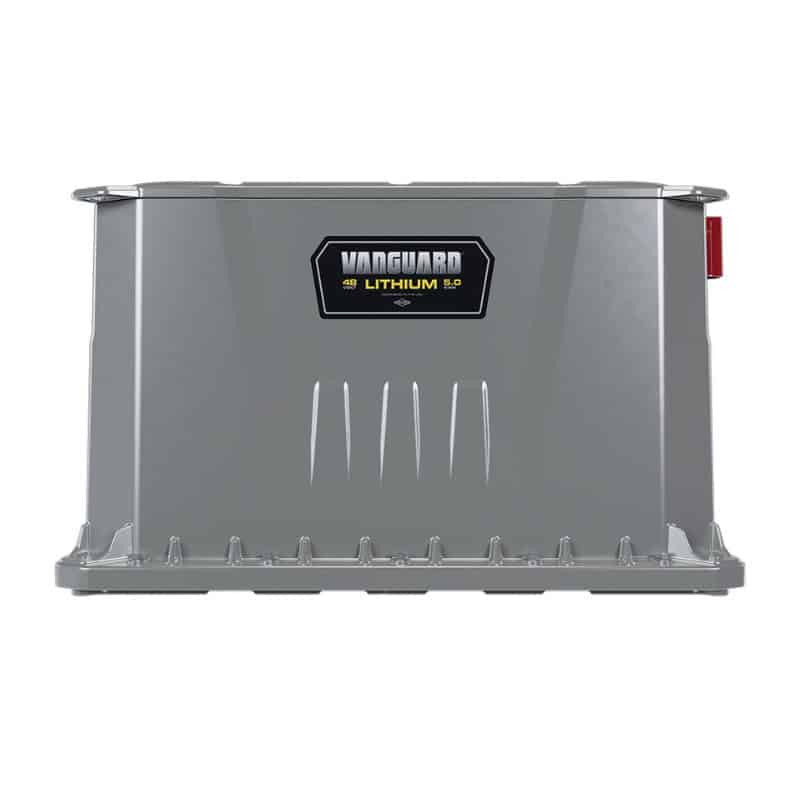
48V 7,0kWh commercial lithium-ion battery pack by Vanguard.
Thermal management directly affects both performance and safety. Passive thermal strategies, using conduction paths and material selection, are preferred for simplicity and reliability. Active cooling may be required for high-power or fast-charging systems but increases complexity. In sealed unmanned systems, conduction-based cooling to the vehicle structure is often the most effective approach.
Lithium-ion drone battery packs must deliver high peak power for take-off and maneuvering while remaining lightweight. Multirotor platforms prioritize power density and discharge capability, whereas fixed-wing UAVs focus on energy density to maximize endurance. Battery choice directly affects payload capacity and operational flexibility.
UGVs emphasize durability and sustained power delivery. Traction systems impose high current demands, while sensors, compute, and communications require stable energy over extended periods. Li-ion batteries for UGVs enable silent operation modes, allowing vehicles to power systems without running engines or generators.
Maritime platforms rely on Li-ion underwater batteries for long-duration missions in sealed enclosures. USVs require corrosion resistance and reliability, while UUVs and ROVs demand high energy density within pressure-tolerant housings. Long-term stability and thermal control are critical where maintenance access is limited.
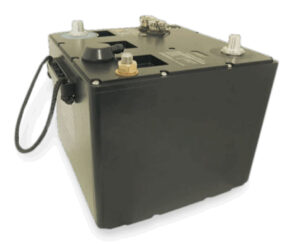
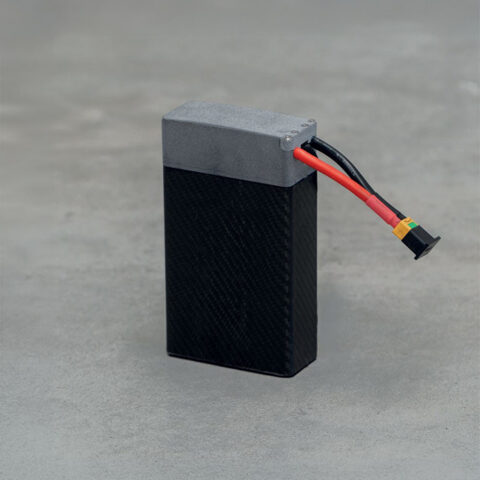
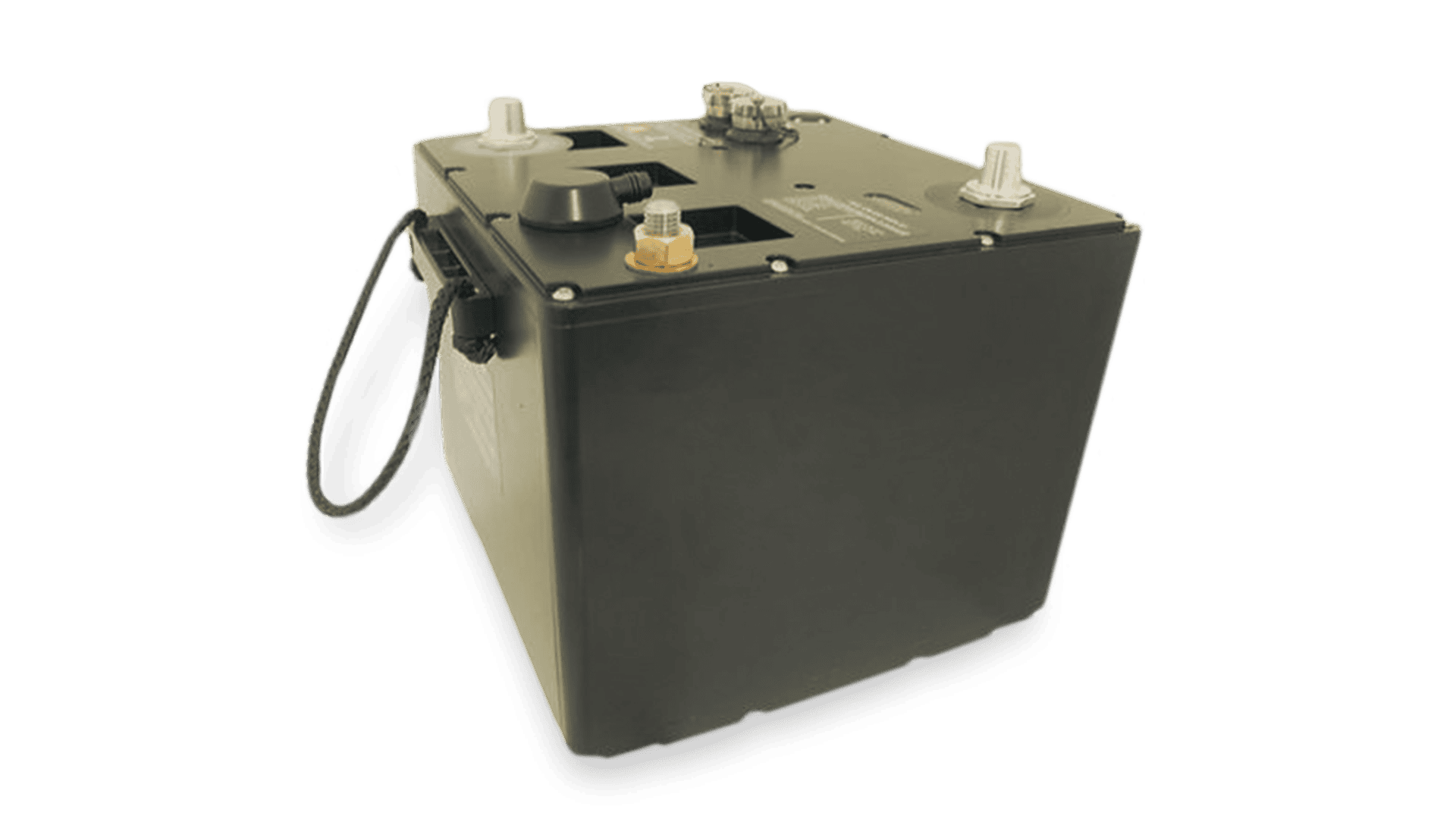
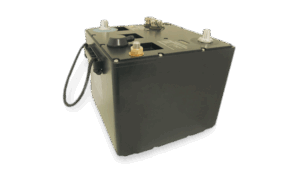
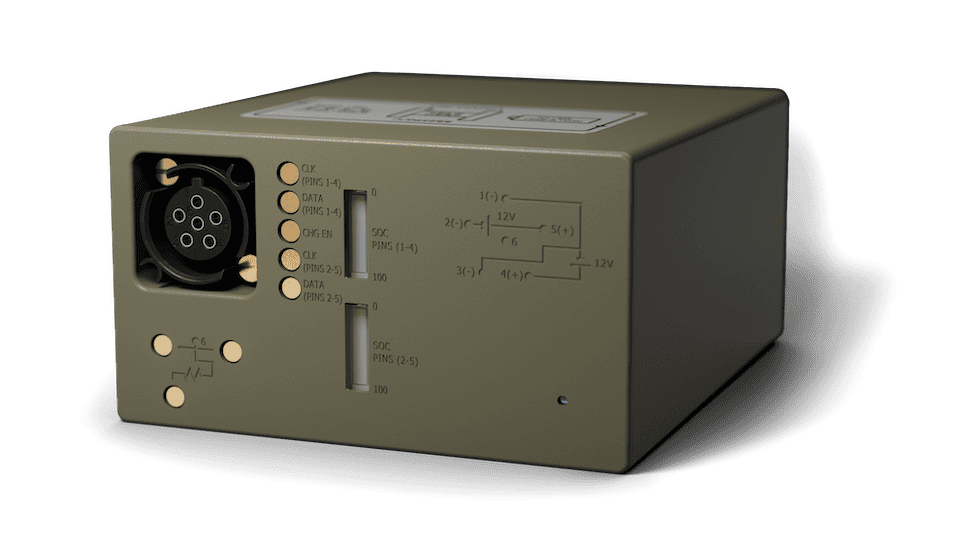
6T lithium-ion battery for UGVs by Denchi.
Charging strategy has a significant impact on safety, lifespan, and operational availability. Fast charging reduces turnaround time but increases thermal and electrochemical stress. Field charging introduces constraints related to power availability, environmental exposure, and connector robustness.
For professional drones and unmanned systems, charge profiles are carefully managed to balance speed and longevity. Rechargeable Li-ion batteries must be paired with appropriate charge control electronics to prevent over-voltage, overheating, and premature degradation.
Incremental improvements in electrode materials continue to increase energy density and cycle life, while more disruptive developments are also emerging. Solid-state lithium batteries promise improved safety and higher energy density by replacing liquid electrolytes with solid alternatives, though widespread deployment remains some distance away.
Advances in anode and cathode materials, alongside manufacturing improvements, will continue to benefit unmanned systems by enabling longer endurance, faster charging, and improved safety margins. For engineers specifying future platforms, custom lithium-ion batteries can be tailored to specific mission, endurance, and integration requirements, enabling developers to optimise form factor, voltage, capacity, thermal performance, and safety features to suit unique platform constraints.


 Searching Companies & Products