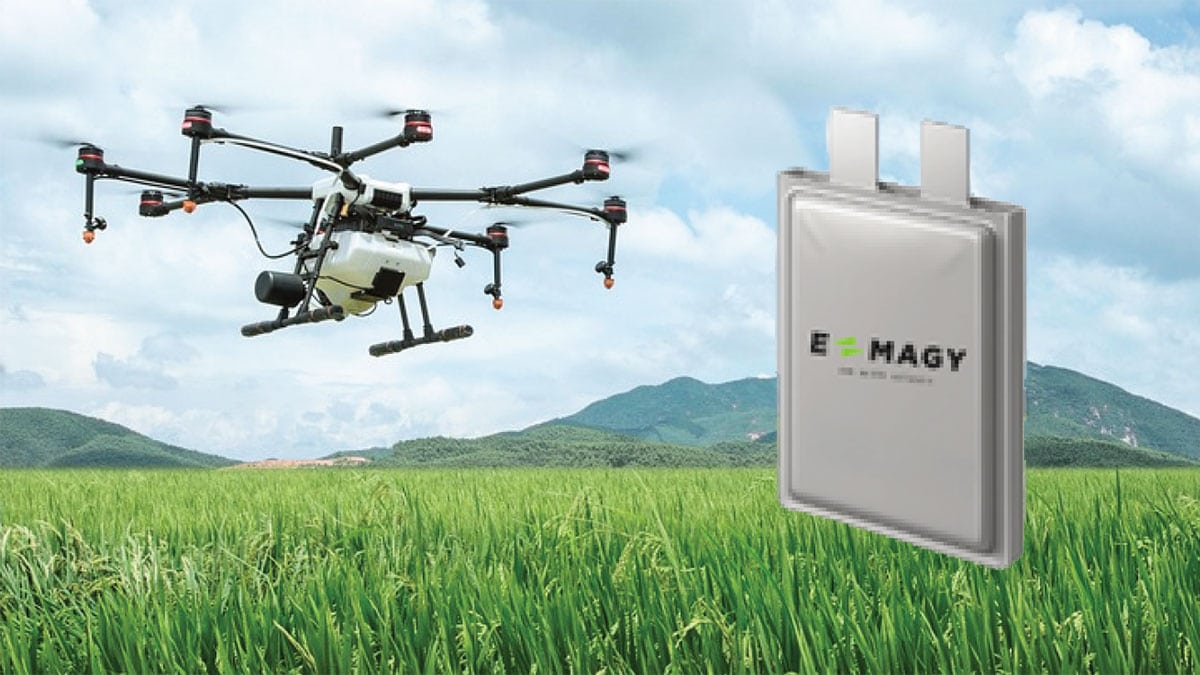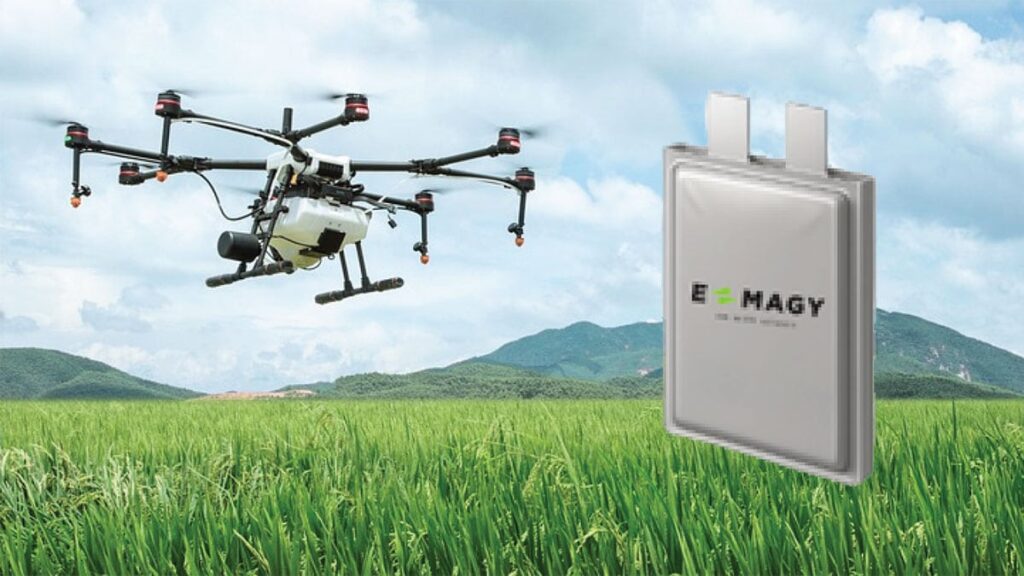



E-magy has released a webinar titled “Si-Dominant Anodes: Benefits, Adoption, and the Road Ahead,” presenting its nanoporous silicon anode material and its relevance to lithium-ion battery development for drones and unmanned aerial systems.
The session outlines how silicon-dominant anodes are being evaluated to help address key battery constraints related to endurance, payload capacity, and operational efficiency.
Energy Density Considerations for Drone Platforms
The webinar emphasizes the importance of gravimetric energy density in drone applications, where weight has a direct impact on flight duration and payload capability. Silicon-dominant anodes are described as capable of delivering up to a 34 percent increase in gravimetric energy density compared to graphite-based alternatives, supporting either extended flight times or higher payload capacity.
In addition, volumetric energy density may increase by 62 percent, enabling potential reductions in battery size and overall system weight.
Drone-Oriented Cell Development
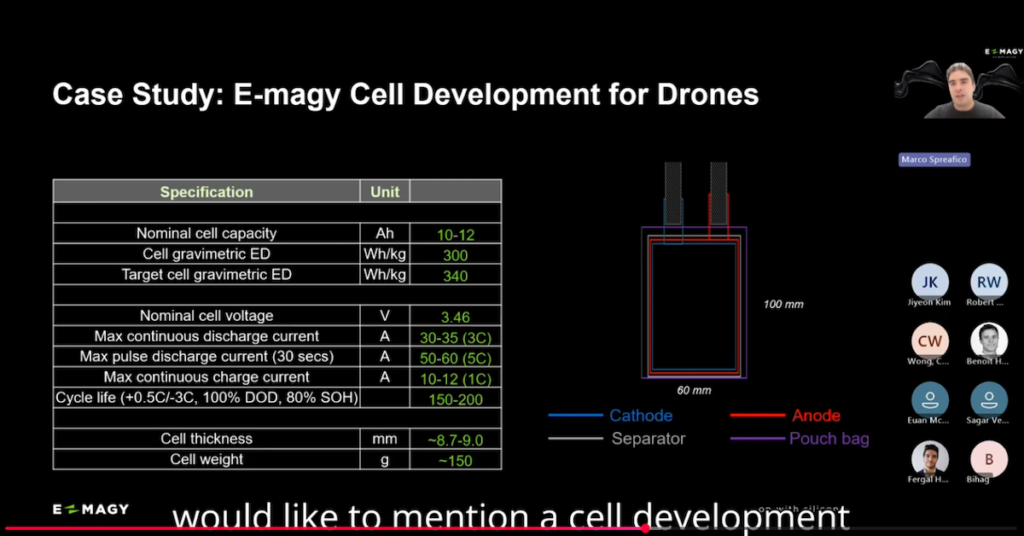
E-magy presents internal modeling and testing of a 12Ah drone cell incorporating an NMC 811 cathode. The first iteration demonstrates an energy density of 300 Wh/kg, with a stated development target of 340 Wh/kg.
Testing under drone-relevant discharge conditions indicates stable performance across 250 cycles. The evaluation includes peak discharge rates between 5C and 6C and continuous operation at 1C. The anode contains 85 percent silicon by weight, demonstrating durability at high silicon loading levels.
Managing Silicon Expansion
The webinar also addresses the challenge of silicon expansion during charge and discharge cycles, which has historically limited its use in lithium-ion batteries. E-magy’s nanoporous silicon structure is designed to contain this expansion within individual particles, reducing mechanical stress and supporting structural stability over repeated cycling.
Relevance to Drone Applications
According to the webinar, silicon-dominant anodes are showing applicability in drone systems, including commercial, industrial, and consumer platforms. Increased energy density and reduced battery weight support improvements in flight duration and payload flexibility, along with the potential for enhanced charging performance.
Ongoing development of nanoporous silicon materials is expected to further extend these characteristics as battery technologies continue to evolve.
Webinar Access
In addition to drone-focused insights, the webinar explores comparisons between silicon and graphite anodes in practical applications, as well as broader considerations for electric vehicles and consumer electronics. It also outlines expected development pathways and adoption trends for silicon-based battery technologies.