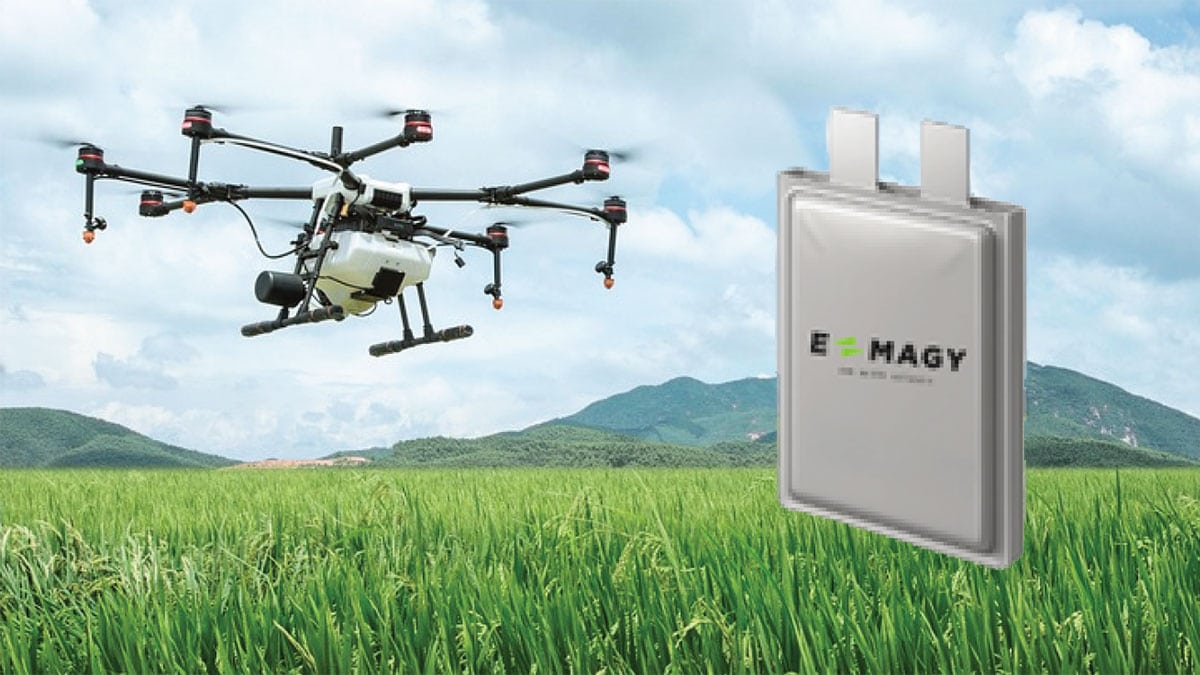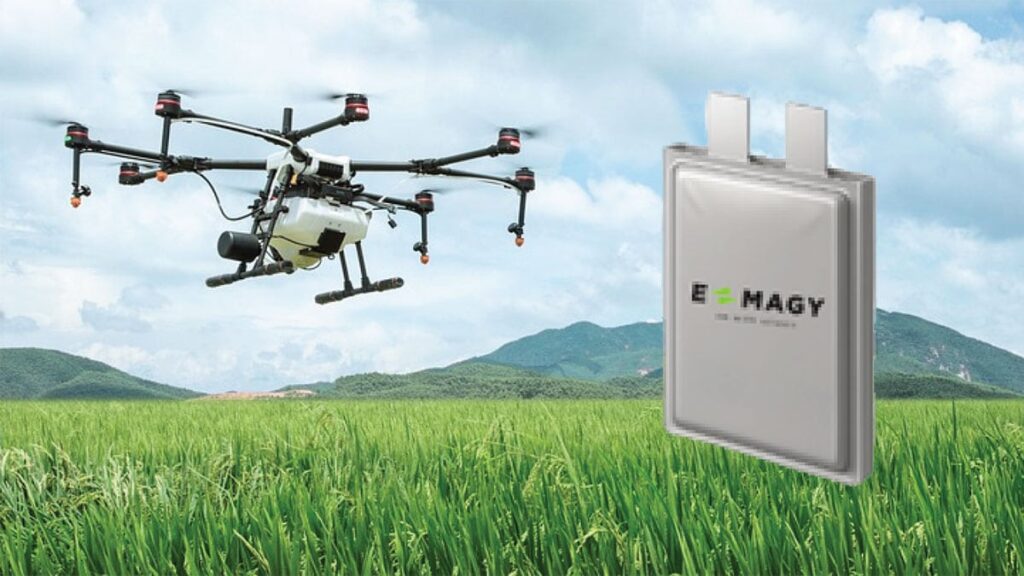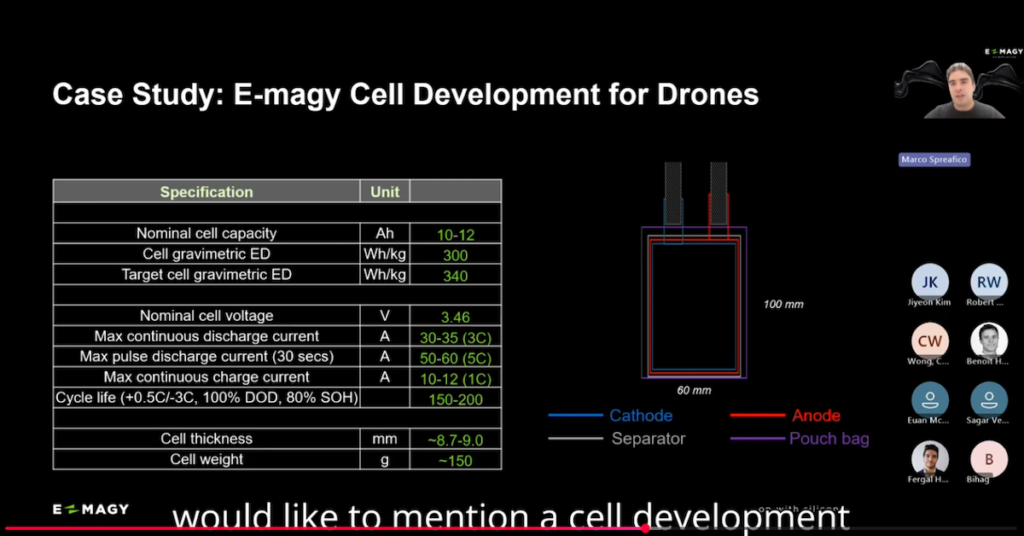

E-magy, a developer of high-energy density lithium-ion batteries, has signed a strategic Memorandum of Understanding with Tulip Tech, to co-develop high-capacity lithium-ion cells specifically engineered for drone battery packs.
The project centers on replacing conventional graphite with E-magy’s nanoporous silicon-dominant anode material to enable lithium-ion cells with higher gravimetric energy density. By maintaining design and manufacturing operations within Europe, the partnership aims to enhance the continent’s competitiveness, resilience, and technological sovereignty within the battery sector.
In collaboration with a European cell manufacturer, the technical team will design, produce, and validate prototype cells. These prototypes are being tailored to meet the rigorous performance and integration requirements of advanced, high-performance Unmanned Aerial Vehicle (UAV) systems.
Both E-magy’s anode material and Tulip’s battery packs are manufactured in the Netherlands, with this agreement finalized at CES 2026 in Las Vegas.
The collaboration represents an early step toward the commercial adoption of silicon-dominant, E-magy-enabled battery cells in UAVs. In addition to drone applications, the project is expected to generate the technical data and industry alignment needed to support adoption in other high-performance, weight-sensitive aerial mobility systems.
Casper Peeters, E-magy CEO, commented, “We are excited to partner with Tulip Tech in this innovative endeavor. By leveraging our advanced silicon-dominant anode technology, we believe this collaboration will not only enhance the performance of drone battery packs but also pave the way for a new era of high-capacity energy solutions in aerial mobility applications. Together, we can drive the evolution of sustainable, high-performance battery systems.”
Bernd Rietberg, Tulip Tech CEO, added, “Collaborating with E-magy presents a unique opportunity to push the boundaries of battery technology for drones. By integrating their cutting-edge silicon anode material, we are confident that we can achieve significant improvements in energy density and overall efficiency. This partnership will enable us to meet the rigorous demands of advanced UAV systems and enhance our competitive edge in the market.”