Unmanned Underwater Vehicles (UUV)
Discover cutting-edge solutions from 6 leading global suppliers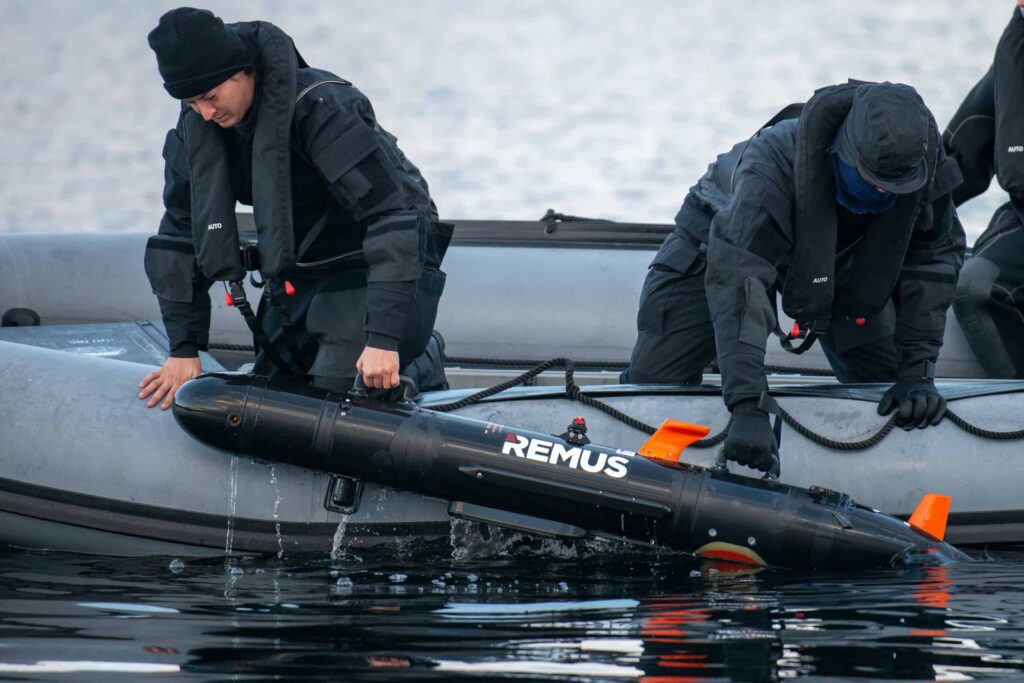
HII, a leading developer of advanced unmanned and autonomous marine systems for commercial, defense and research applications, has partnered with Unmanned Systems Technology (“UST”) to demonstrate their expertise in this field. The ‘Silver’ profile highlights how their untethered UUVs (unmanned underwater vehicles) and AUVs (autonomous underwater vehicles) can be used to gather valuable data for a wide variety of applications including marine research, hydrographic survey, MCM (mine countermeasures) and military ISR (intelligence, surveillance and reconnaissance).
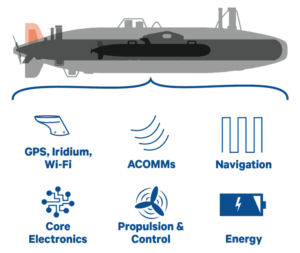 HII’s advanced next-generation UUVs are based around the REMUS Technology Platform, which features an open architecture, common operating system, and modular reconfigurable design. Providing reliable autonomy at depths down to 6000 metres, the flexible and scalable platform provides consistent high performance and a streamlined user experience.
The REMUS Technology Platform incorporates sophisticated search and navigation algorithms for robust autonomy, with advanced AI/ML enhancements. Missions are preprogrammed by the operator and the vehicle autonomously bottom tracks, avoids obstacles and communicates health status and location information.
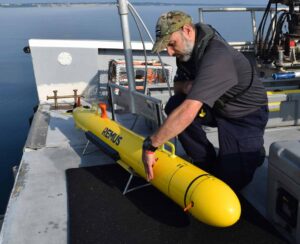 REMUS UUVs can be customised to your exact requirements, with a modular architecture that allows sensors to be exchanged for different missions. New sensors can be easily integrated without modifying the core vehicle control software, and an optional SDK is available for customer or third-party software integration. The system also features swappable batteries with flexible energy options.
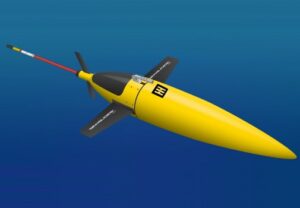 HII’s long-endurance Seaglider AUVs are rated for depths down to 1000 metres and use changes in buoyancy to move through the water column. With no propellers or external moving parts, these ocean gliders can be easily deployed for long-term missions with minimal noise and disturbance.
Ideal for collecting high-resolution temporal and spatial data, Seagliders are equipped with satellite telemetry and can be fitted with a range of payloads such as echosounders, passive acoustic measurement (PAM) instruments, and chemical and temperature sensors.
To find out more about HII and their long-endurance UUVs and AUVs, please visit their profile page: https://www.unmannedsystemstechnology.com/company/hii-unmanned-systems/