Discover World-Leading Unmanned and Autonomous Technologies
Discover cutting-edge solutions from leading global suppliers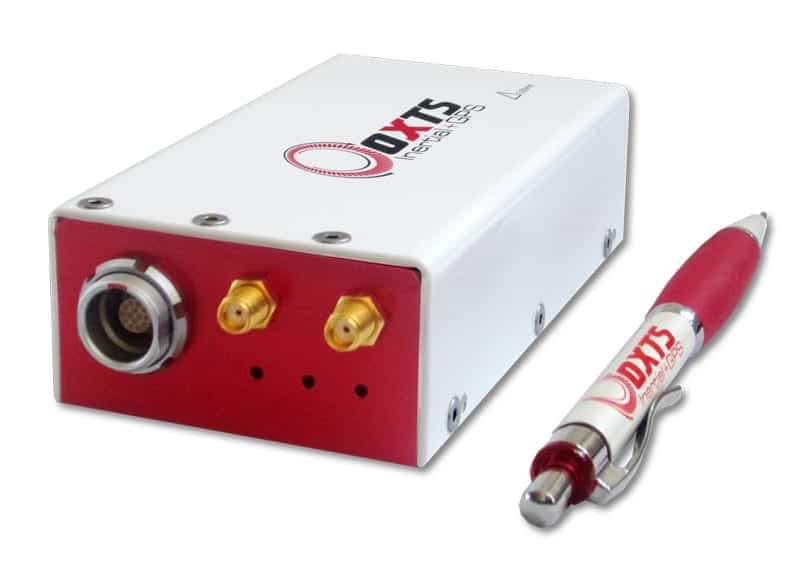
OxTS xNAV200 Inertial Navigation System
OxTS has successfully launched the new GPS-aided inertial navigation system xNAV200 at this years’ AUVSI Unmanned Systems North America conference in Las Vegas.
The newly developed xNAV200 is a very compact, small and lightweight INS, perfectly suited for all applications where size and weight as well as performance matter.
“The xNAV200 product launch at the AUVSI was a great success for us. The large amount of interest that we have received from UAV manufacturers and system integrators alike shows that there is a great demand for a lightweight yet very accurate inertial navigation system”, explains Janina Milner, Marketing Communications Manager at OxTS.
The xNAV200 is capable of providing reliable position (90cm), precise heading (0.15°) as well as highly accurate roll/pitch (0.05°) measurements at up to 100Hz. The miniature sensor offers some striking advantages: it is very small (120 x 66 x 35mm), extremely lightweight (<350g), highly reliable, easy to integrate and offers an unmatched price performance ratio.
The new xNAV200 is a very powerful solution for all size and weight constrained applications. It can be used for geo-referencing sensors and is ideal for use on unmanned aerial vehicles as well as autonomous ground vehicles.