Additive Manufacturing and 3D Printing for Drone Manufacturers
Additive manufacturing and 3D printing are becoming an everyday part of UAV and drone production, enabling lightweight structures, complex geometries, and rapid prototyping. With advanced materials like carbon fiber composites, titanium, and aerospace-grade thermoplastics, manufacturers can enhance performance while reducing weight and production time. From custom drone parts and engine components to sensor mounts and propeller blades, 3D printing allows for mass customization and low-volume production. Emerging technologies such as DMLS, SLS, and multi jet fusion are driving efficiency, making UAV manufacturing more agile, cost-effective, and sustainable.
If you design, build or supply Additive Manufacturing (3D Printing), create a profile to showcase your capabilities and connect with visitors who have an active requirement for your solutions.
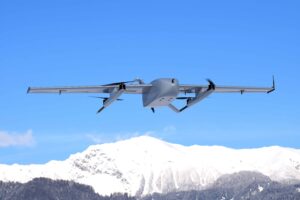
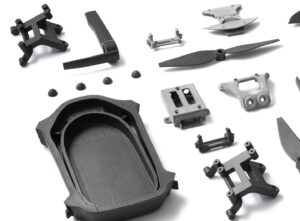
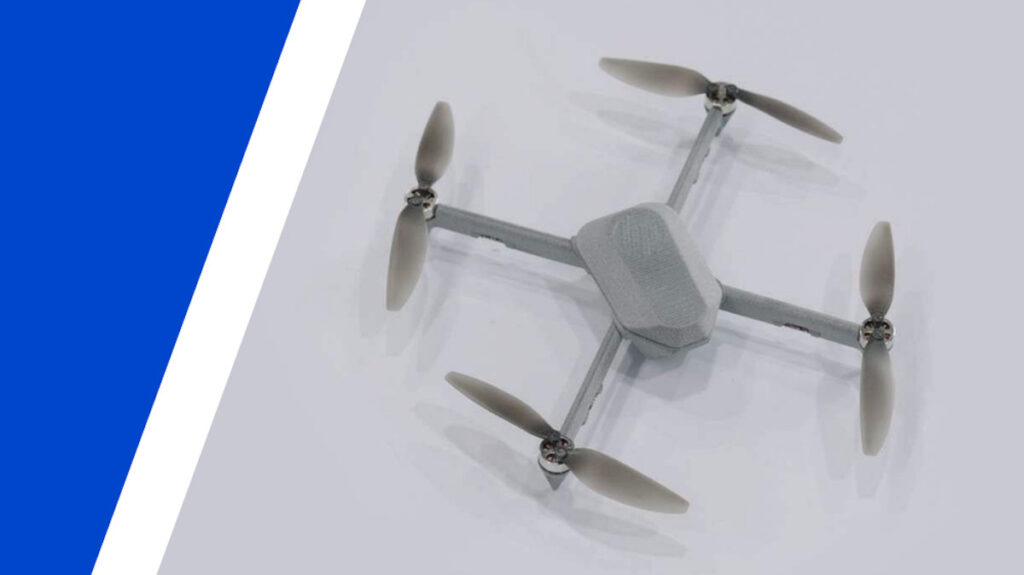
Selective laser sintering services for drone & robotics components
Selective laser sintering services for drone & robotics components
...ovide a proven additivemanufacturing solution for producing prototypes and end-use drone and... ...ays offers SLS manufacturing in materials including Nylon 12, Nylon 11, and TPU, each providing a...
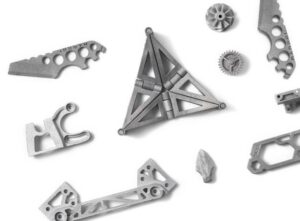
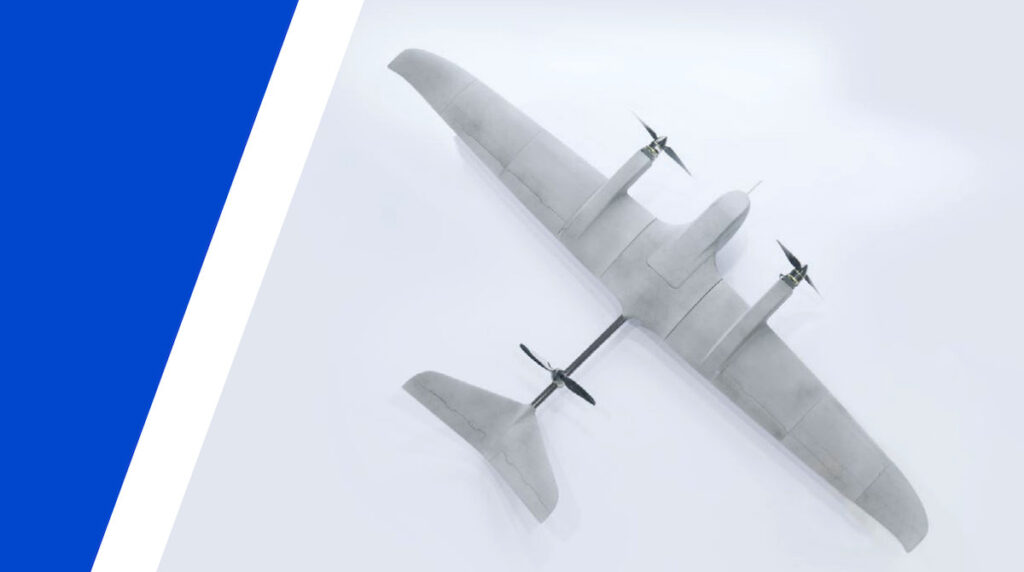
Direct Metal Laser Sintering (DMLS/SLM) for complex metal UAV components
Direct Metal Laser Sintering (DMLS/SLM) for complex metal UAV components
...rovide a metal additivemanufacturing solution for UAV developers requiring precise, lightweight,... ...tly offers SLM manufacturing in aluminum, a material valued for its combination of low weight,...
Additive Manufacturing and 3D Printing for Drone Manufacturers
Overview by
Sarah Simpson
Updated:
Additive manufacturing (AM) and 3D printing have transformed UAV and drone manufacturing, offering unparalleled design flexibility, weight reduction, and rapid prototyping capabilities.
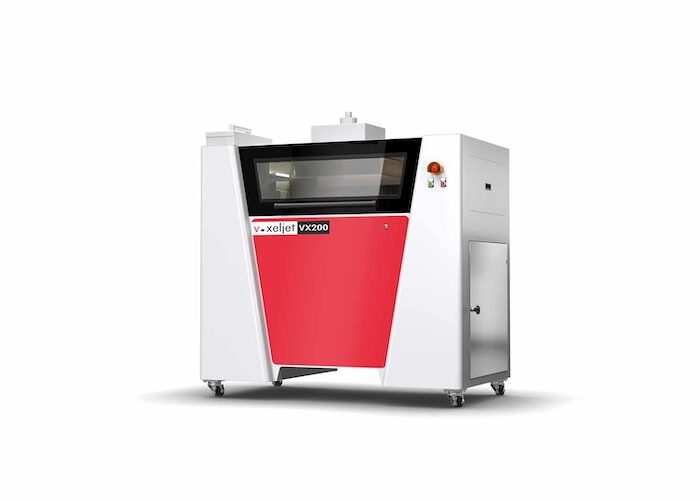
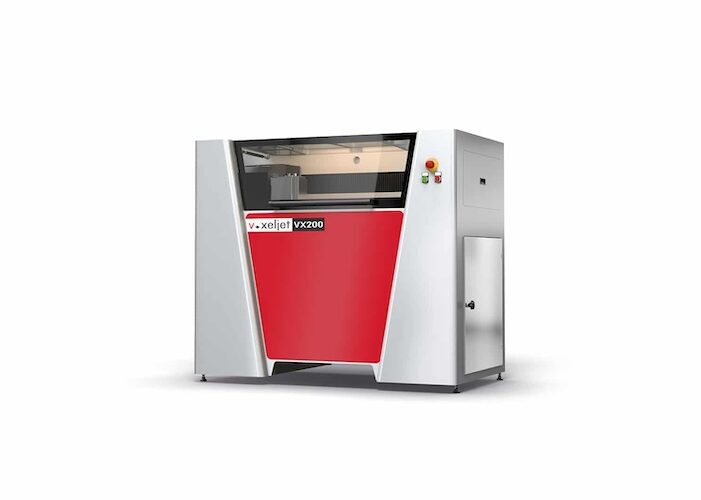
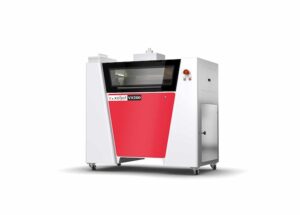
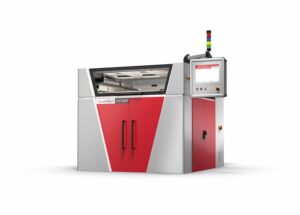
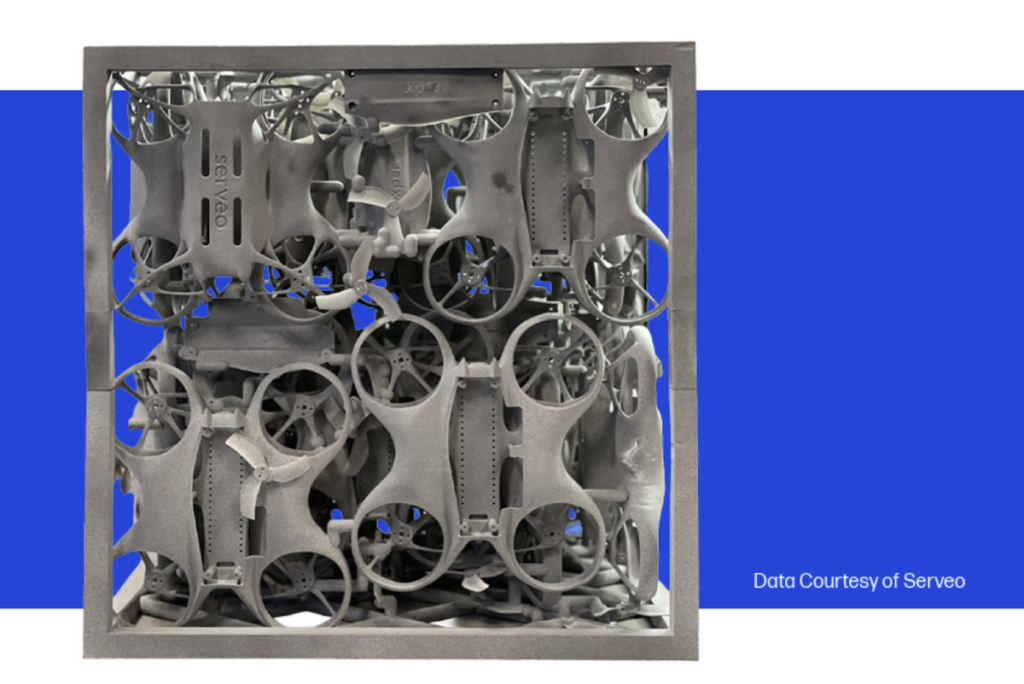
VX2000 3D Printer by Voxeljet
By utilizing advanced materials and processes, drone manufacturers can optimize aerodynamics, enhance structural integrity, and reduce production lead times. The ability to fabricate complex geometries, integrate lightweight components, and customize drone structures has positioned 3D printers as a critical technology in modern UAV development.
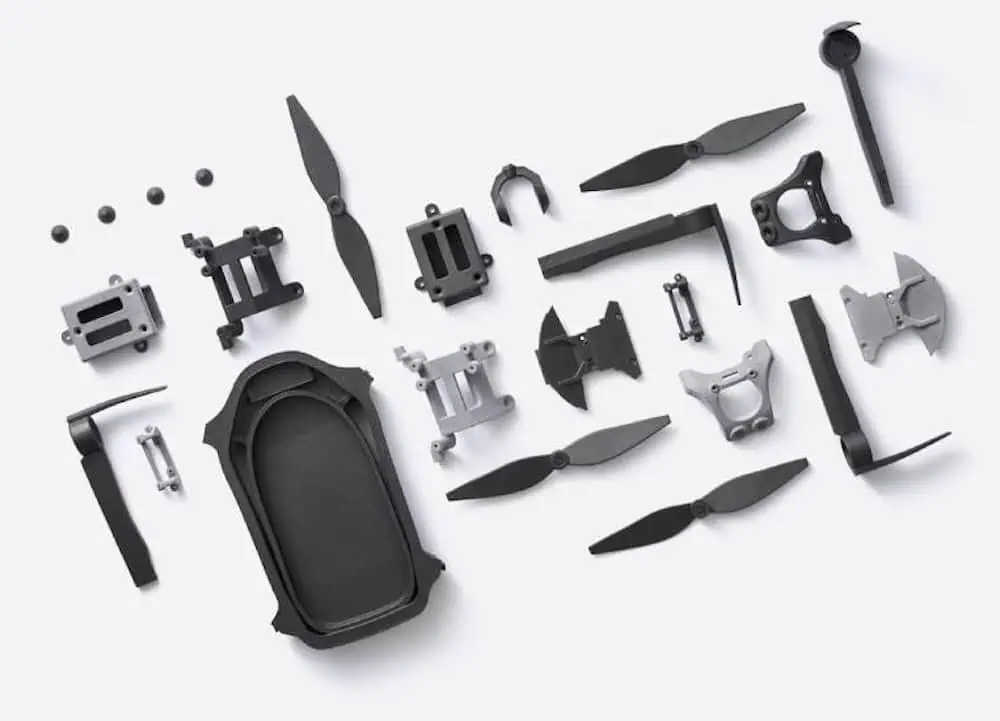
With techniques such as direct metal laser sintering (DMLS), selective laser sintering (SLS), and other 3D printing services to produce high-performance UAV parts with superior strength-to-weight ratios. From engine components and sensor mounts to propeller blades and customized connectors, additive manufacturing enables the rapid production of highly specialized drone components tailored for specific operational requirements.
Precision Engineering with Additive Manufacturing in UAVs
UAV manufacturers benefit from additive manufacturing’s ability to create complex geometries that traditional CNC machining methods struggle to achieve. Through generative design and 3D CAD software, engineers can develop aerodynamically optimized components, reducing drag and improving fuel efficiency. Technologies such as electron beam melting (EBM) and laser engineered net shaping (LENS) allow for the production of high-strength titanium, aluminum, and stainless steel parts that meet stringent aerospace standards, including ISO/ASTM 52900 and ASTM F42.
Smart manufacturing techniques integrate 3D scanning and distributed manufacturing, enabling real-time quality control and streamlined production workflows. UAV manufacturers can use multi jet fusion (MJF), laminated object manufacturing (LOM), and vat photopolymerization to achieve precise detailing and high-resolution part finishes. These advancements not only enhance structural performance but also reduce material waste, supporting sustainable manufacturing initiatives in the aerospace industry.
Material Innovations for UAV and Drone 3D Printing
Material selection plays a crucial role in UAV manufacturing, influencing durability, weight, and performance. Additive manufacturing allows for the integration of high-performance thermoplastics such as PEEK, Ultem, and nylon, which offer excellent thermal and mechanical properties. Resin 3D printing techniques, including digital light processing (DLP) and SLA 3D printing, are widely used for producing aerodynamic enclosures and lightweight drone bodies.
For structural and high-load applications, metal-based 3D printing processes such as wire arc additive manufacturing (WAAM) and electron beam additive manufacturing (EBAM) facilitate the fabrication of robust engine components, battery enclosures, and radar components. These methods ensure that UAVs meet the demands of high-stress environments, from defense and surveillance to industrial inspection.
The ability to create carbon fiber 3D printed parts further enhances UAV performance, offering high strength-to-weight ratios critical for endurance drones and high-speed aerial systems. Metal binder jetting and sand binder jetting are also utilized for producing complex drone chassis and heat-resistant components, ensuring optimal reliability in mission-critical applications.
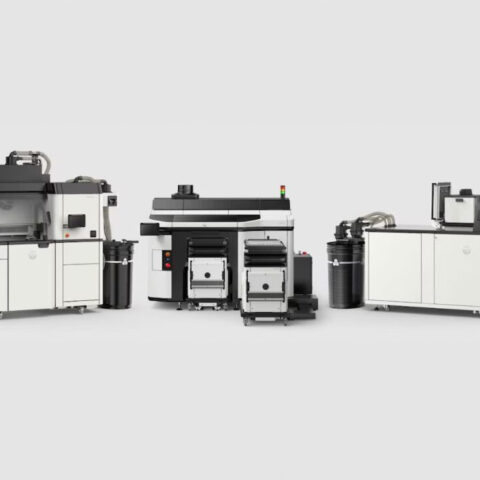
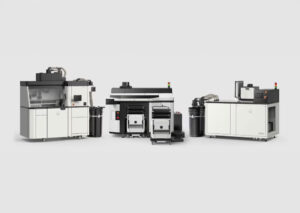
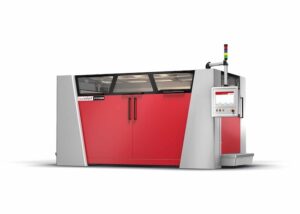
HP Jet Fusion 5600 Series by HP Additive Manufacturing Solutions
Custom UAV Manufacturing and Rapid Prototyping
The aerospace industry demands low-volume production, mass customization, and rapid prototyping, making additive manufacturing an ideal solution for UAV manufacturers. Rapid tooling and direct ink writing (DIW) allow for the quick iteration of custom drone parts, 3D printed drone frames, and propeller blades. With additive manufacturing in aerospace, UAV designers can reduce lead times while maintaining the structural integrity and aerodynamic efficiency of each prototype.
By leveraging nanoparticle jetting (NPJ) and ultrasonic additive manufacturing (UAM), manufacturers can integrate electronic components directly into drone structures, improving system miniaturization and reducing assembly complexity. 3D printed drone landing gear, camera gimbals, and disposable drones benefit from the ability to iterate designs rapidly, testing various configurations for enhanced flight performance and mission adaptability.
The Future of 3D Printing in UAV and Drone Manufacturing
As additive manufacturing in aerospace continues to evolve, UAV manufacturers are exploring cutting-edge technologies such as laser powder bed fusion (LPBF), fused filament fabrication (FFF), and direct metal laser sintering (DMLS) to enhance production efficiency and component reliability. Sustainable manufacturing efforts are driving the development of recyclable 3D printing materials, reducing waste while maintaining aerospace-grade performance.
The integration of 3D printing, CAD modeling, and AI-driven generative design is streamlining UAV development, allowing manufacturers to optimize drone aerodynamics, payload capacity, and energy efficiency. With the ongoing advancements in distributed manufacturing and smart manufacturing, additive manufacturing is set to play an even more critical role in the production of next-generation UAVs, from autonomous reconnaissance drones to high-endurance UAVs designed for extreme conditions.
By embracing the latest in 3D printing materials, rapid prototyping, and advanced fabrication techniques, UAV manufacturers can achieve greater design freedom, cost efficiency, and innovation, setting the stage for the future of unmanned aerial systems.
HP Additive Manufacturing Solutions examines HP Multi Jet Fusion for UAV component manufacturing, highlighting the lightweight characteristics of PA 12, manufacturing scalability, and cost comparisons with injection molding
Shapeways examines how additive manufacturing supports UAV rapid prototyping, from lightweight component design and iteration through flight testing to on-demand production for specialized or low-volume applications
HP Additive Manufacturing Solutions outlines how Multi Jet Fusion technology supports lightweight, durable fixed-wing UAV airframes through simplified assembly, scalable production, and accelerated design iteration
HP Additive Manufacturing Solutions demonstrated at XPONENTIAL USA 2026 Detroit how HP Multi Jet Fusion technology is enabling scalable, production-ready manufacturing for next-generation aerial, underwater, and autonomous uncrewed systems
Learn how HP MJF technology helps drone manufacturers cut weight without compromise, with insights from Segment Manager Gino Balistreri on scalable, high-precision 3D printing
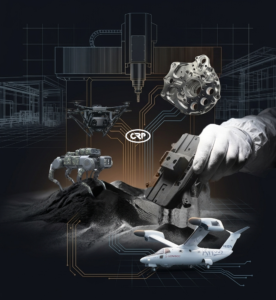
CRP USA to attend XPONENTIAL 2026 to demonstrate how 3D printed composites have evolved from motorsport origins to meet rigorous defense and aerospace standards
Red Cat's Blue Ops division is set to double its manufacturing capacity for USVs by integrating HADDY’s advanced robotic 3D printing and AI-powered microfactory technology
HP Additive Manufacturing Solutions responds to frequently asked questions on how Multi Jet Fusion supports UAV development, enabling scalable production, precise component manufacturing, and efficient workflows for lightweight, flight-ready drone systems
Apr 14, 2026
Advancing Unmanned Systems Through Strategic Collaboration
UST works with major OEMs to foster collaboration and increase engagement with SMEs, to accelerate innovation and drive unmanned systems capabilities forward.