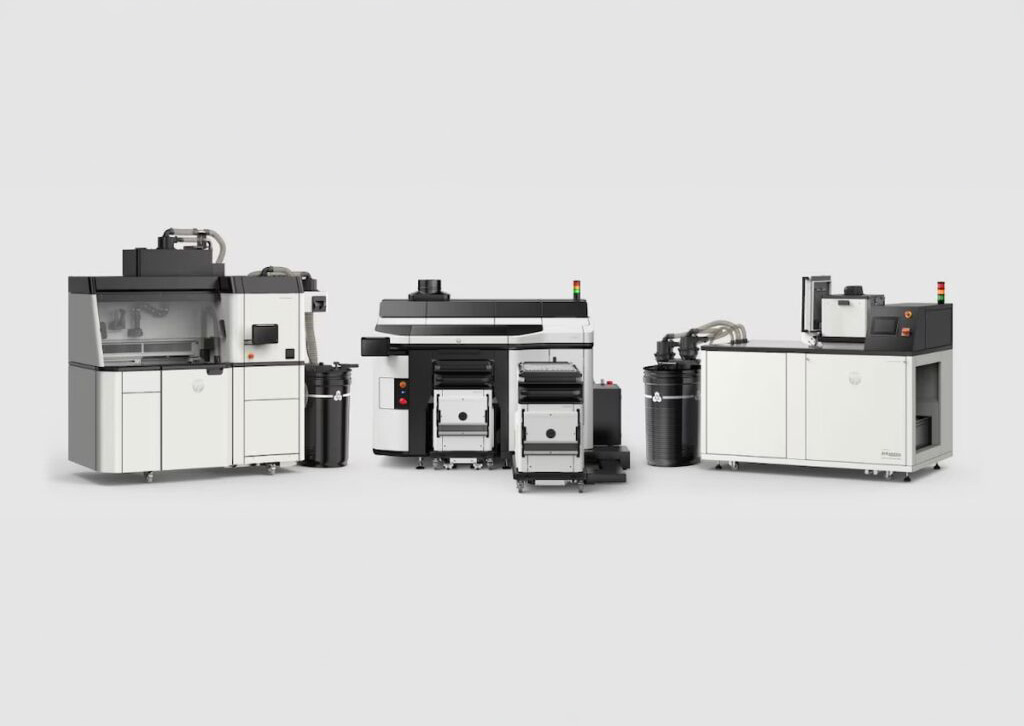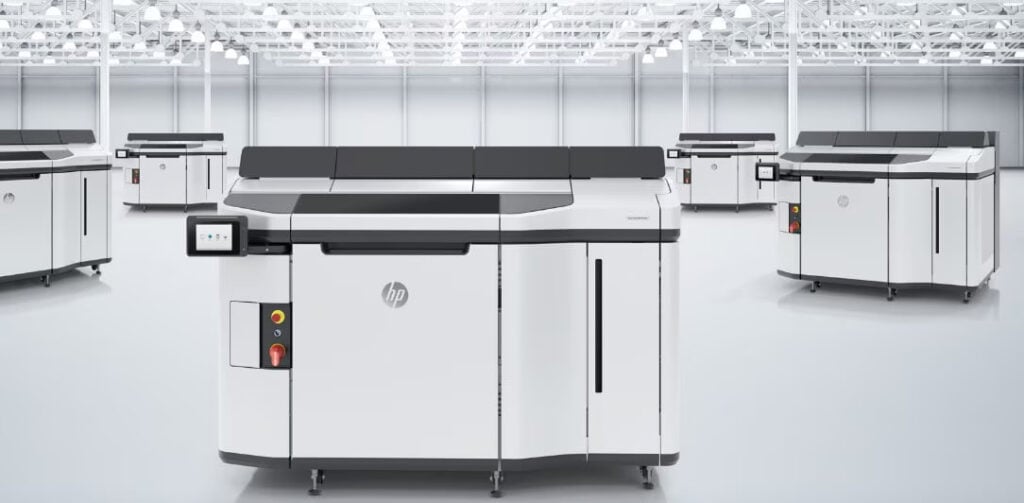
HP Additive Manufacturing Solutions provides insights into common questions surrounding how its Multi Jet Fusion (MJF) technology supports drone design, prototyping, and production.
Drawing on application expertise and experience in Unmanned Aerial Vehicle (UAV) development, the company provides detailed insight into performance, scalability, and manufacturing efficiency for aerial platforms.
Build Volume & Scalable UAV Production
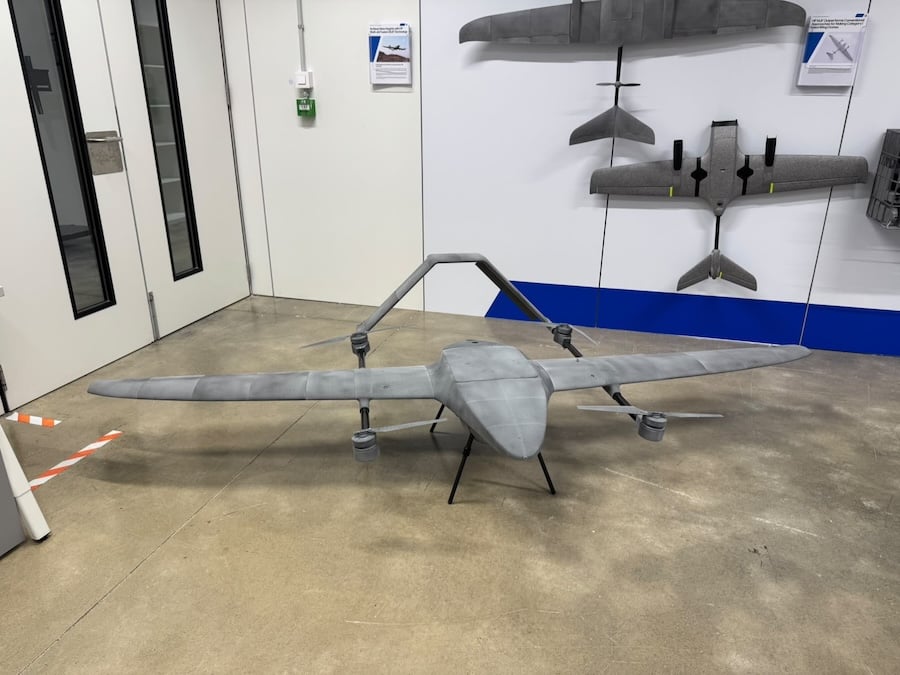
MJF supports a broad range of UAV configurations, from compact quadcopters to larger fixed-wing platforms. Its adaptable build volume accommodates many flight-critical components, while modular engineering strategies and precision joining techniques enable the production of larger assemblies when required.
This flexibility allows manufacturers to produce across varying airframe sizes without compromising structural integrity or repeatability, supporting both development and production workflows.
Precision Manufacturing for Small UAV Components
The technology is well suited to smaller drone components, delivering lightweight parts with strong mechanical performance and high dimensional accuracy. These characteristics make it appropriate for production-grade applications where both strength and precision are required.
Compared to traditional injection molding, MJF provides competitive production efficiency alongside greater flexibility in manufacturing processes. This enables faster iteration cycles and improved supply chain responsiveness.
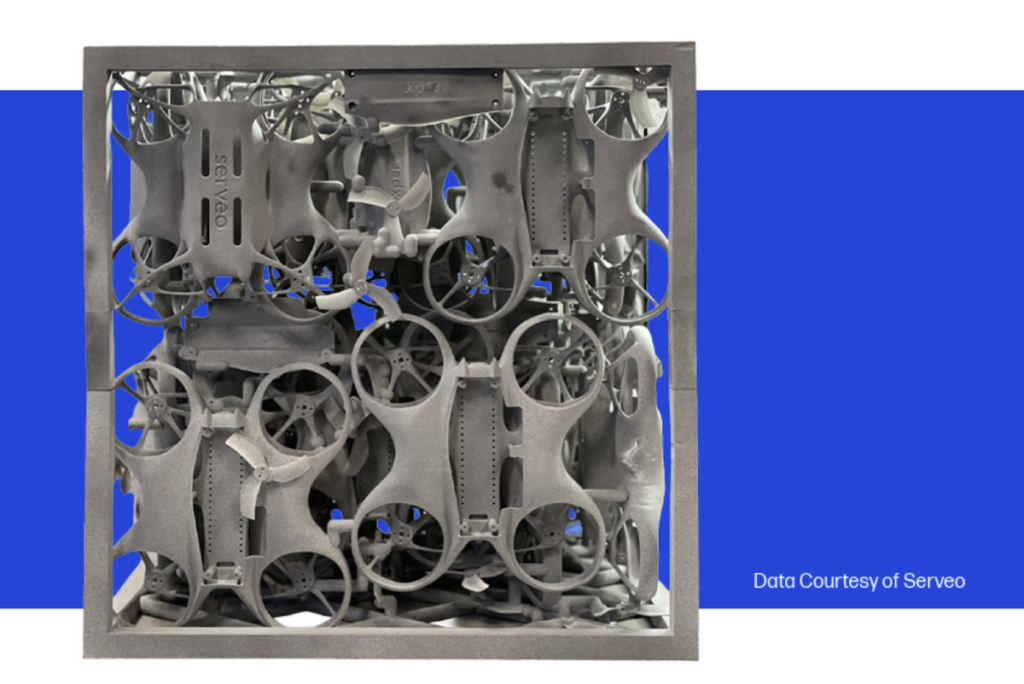
Production throughput is also a key advantage. A single build unit can accommodate up to 20 small drones, with output reaching as many as 40 units within a 24-hour period, supporting both prototyping and low- to mid-volume production.
Performance Advantages Over Traditional Additive Methods
Fused Deposition Modeling (FDM) is widely used for early-stage prototyping, but its mechanical limitations, particularly along the vertical axis, can reduce its suitability for load-bearing or flight-critical UAV components.
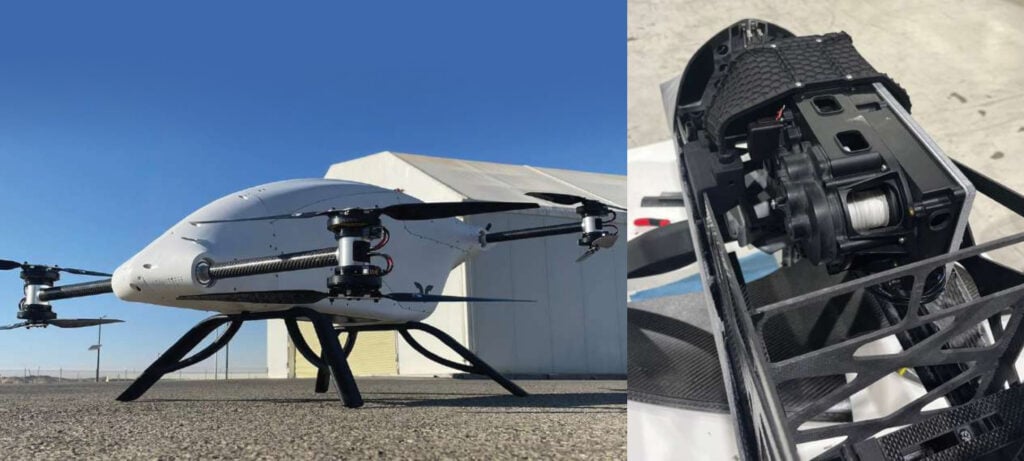
MJF delivers improved surface quality, enhanced dimensional control, and more consistent mechanical properties. Organizations such as VECROS have adopted the technology to meet the demands of structural UAV applications, where strength and reliability are essential.
Differentiation from Other Powder-Bed Technologies
Among powder-bed fusion methods, MJF offers a strong balance of strength, accuracy, and repeatability. Its thermal management approach and voxel-level control contribute to consistent material properties and fine feature resolution.
These capabilities are particularly valuable for lightweight UAV structures, where precision and mechanical reliability directly influence system performance. By reducing the compromises often associated with alternative technologies, the process supports the production of detailed, functional components with dependable results.
Engineering Support & UAV Expertise
Support for UAV manufacturers is provided through a specialized Drone Team with expertise in both additive manufacturing and aerial system requirements. This team works closely with customers to ensure effective application of MJF across a variety of drone use cases.
HP’s Professional Services team further collaborates on complex development projects from initial concept through to full-scale production. Their involvement helps address objectives such as weight reduction, structural optimization, and accelerated development timelines, enabling UAV manufacturers to achieve practical, production-ready outcomes.
To learn more, visit the HP Additive Manufacturing Solutions website >>