Drone Parts Manufacturers & Suppliers

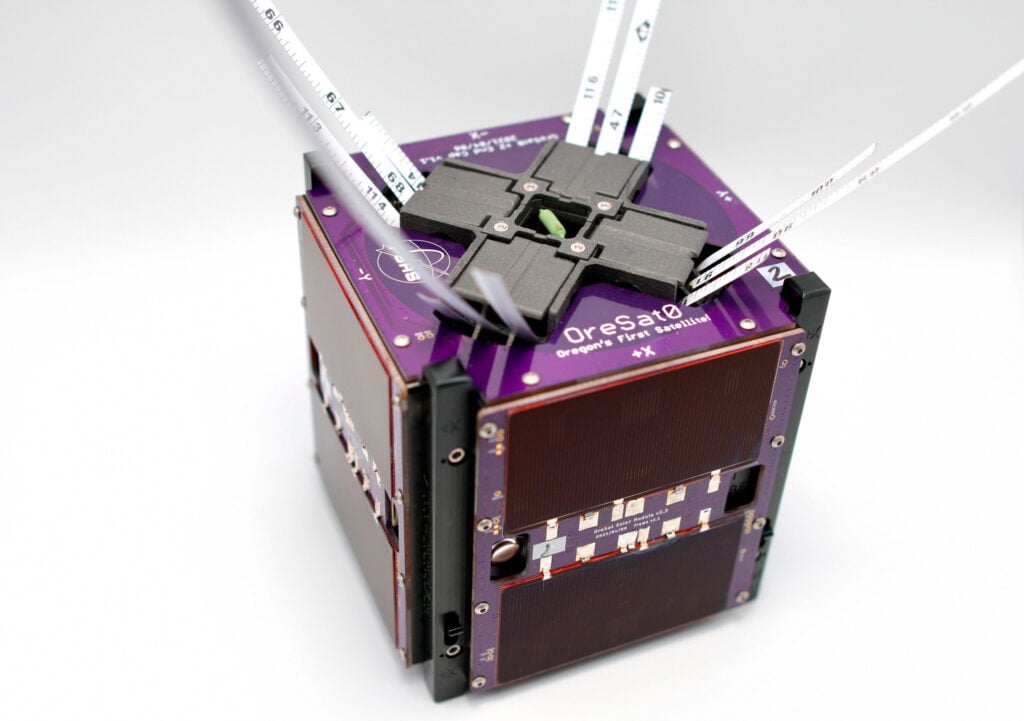
HP Additive Manufacturing Solutions

Industrial 3D Printing Solutions for UAV Components, Production, Prototyping & Scalable Drone Manufacturing

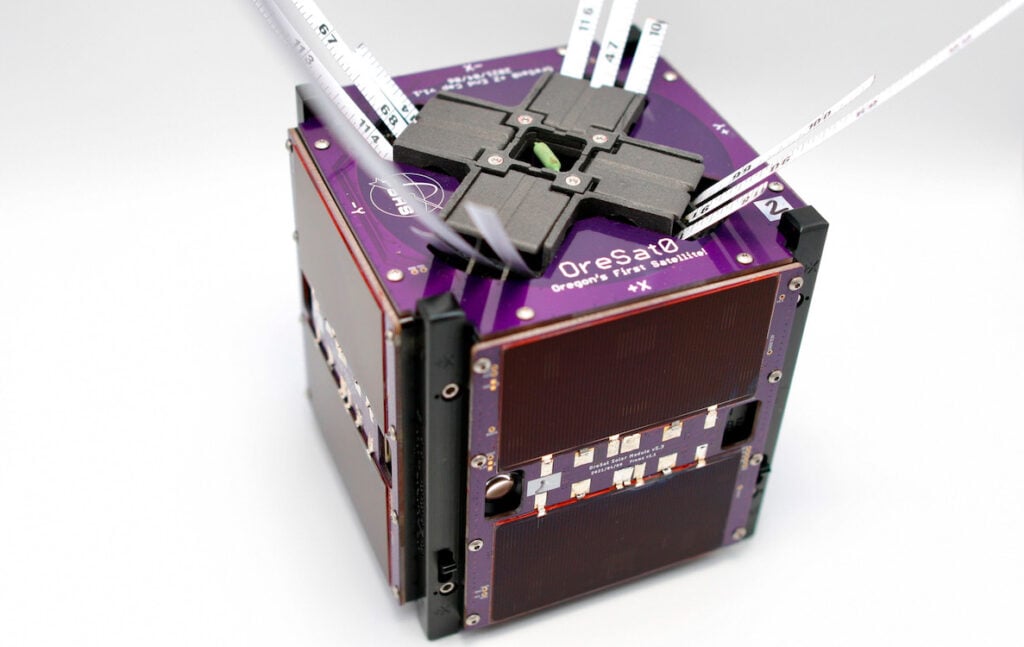
Shapeways

Advanced Manufacturing Services & 3D Print On-Demand Parts for Drones & Robotic Systems

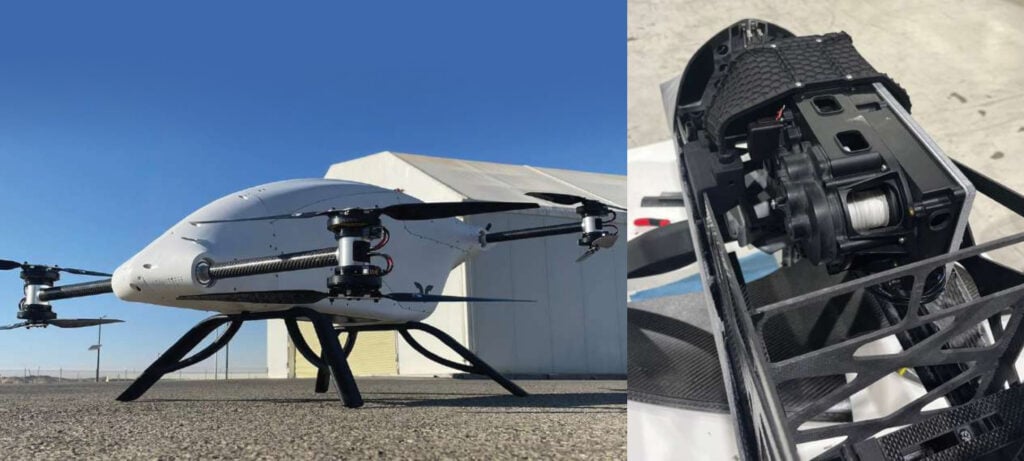
UAVOS Inc.

VTOL and Fixed Wing UAVs, Autopilots, GCS, Components and Payloads for UAS

voxeljet

Industrial 3D Printing Solutions for Drone & Robotics Components

CRP Group

Integrated, Agile Hub for DFM, CNC, Metal and Windform® Additive Manufacturing

Showcase your capabilities

If you design, build or supply 3D-Printed Drone Parts, create a profile to showcase your capabilities and connect with visitors who have an active requirement for your solutions.


Create Supplier Profile

3D-Printed Drone Parts: A Guide to Custom UAV Components Manufacturing

William Mackenzie

Updated:

Introduction to Custom & 3D-Printed Drone Parts

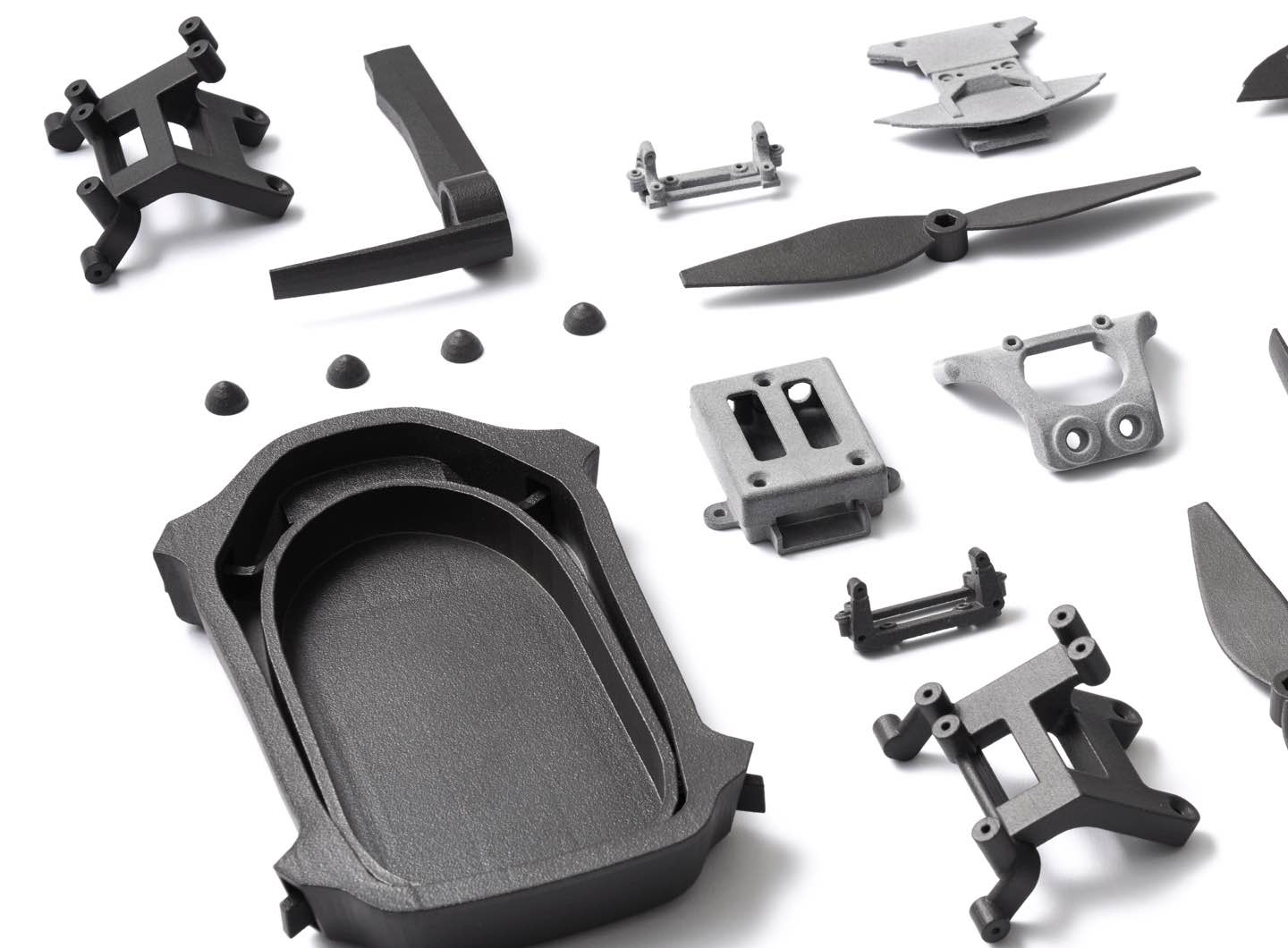
3D-printed drone parts are becoming increasingly common across commercial, industrial, and defense UAV programs as manufacturers seek faster development cycles, lower production costs, and greater design flexibility. Additive Manufacturing (AM) enables engineers to rapidly produce lightweight structural components, payload interfaces, electronics housings, and aerodynamic assemblies without relying on expensive tooling or traditional machining processes.

For unmanned systems developers, the technology offers significant advantages in rapid prototyping, low-volume production, and mission-specific customization. Modern 3D printing systems can produce highly complex geometries, integrated internal structures, and optimized lightweight components that improve UAV endurance, payload efficiency, and overall operational flexibility.

Primary 3D-Printed Drone Airframe Parts

The structural core of an unmanned aerial vehicle dictates its payload capacity, aerodynamic efficiency, and environmental resilience. Implementing 3D-printed drone parts within the primary structure requires a deep understanding of load paths, vibration isolation, and material orientation.

Fuselages

3D-printed fuselages allow UAV developers to rapidly create lightweight structural bodies optimized for specific payloads, endurance requirements, and aerodynamic profiles. Internal cable routing, mounting interfaces, cooling channels, and structural reinforcement can all be incorporated directly into the design, reducing assembly complexity and minimizing overall system weight.

The technology is especially valuable during prototype development where airframe geometry may change repeatedly during testing. Rather than redesigning tooling for every iteration, engineers can modify CAD models and quickly produce updated structures for aerodynamic validation, payload integration, or flight testing.

Fixed-Wing Airframes

Fixed-wing UAVs benefit significantly from 3D-printed drone parts because of the complex aerodynamic surfaces and internal structures involved in wing construction. Wing ribs, fairings, fuselage sections, and control surface interfaces can all be produced using lightweight printed geometries optimized for stiffness and weight reduction.

AM also supports rapid experimentation with unconventional airframe layouts and blended aerodynamic forms. This flexibility is particularly useful in tactical UAV development, long-endurance aircraft programs, and research applications where iterative aerodynamic refinement is required.

Multirotor Drone Frame Parts

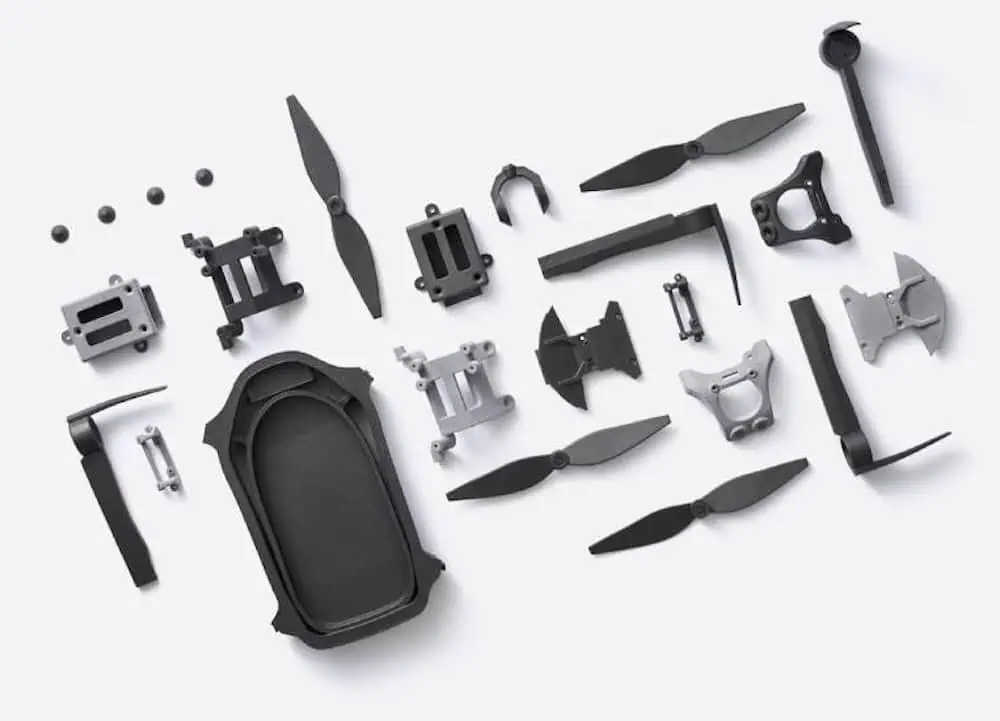
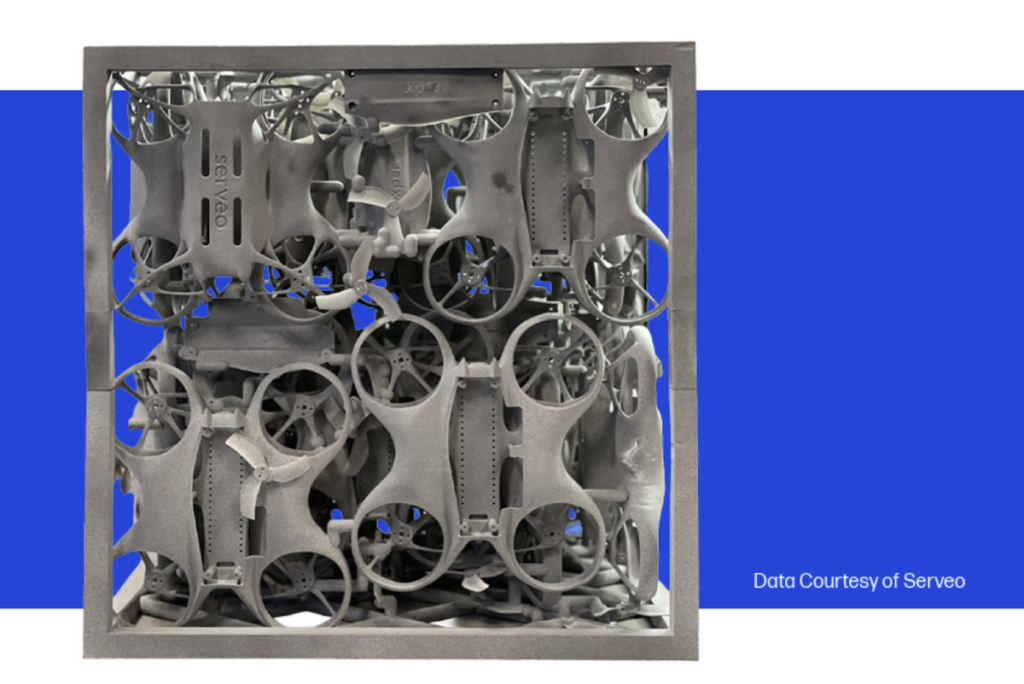
Multirotor drone frame parts are among the most common UAV structures produced using AM due to their compact geometry and modular layout. Printed frames allow engineers to integrate motor arms, electronics bays, landing structures, and payload interfaces into unified lightweight assemblies.

The ability to rapidly customize frame geometry is especially valuable for FPV systems, industrial inspection drones, ISR platforms, and experimental autonomous aircraft. Engineers can quickly modify arm spacing, propulsion layouts, or payload mounting configurations without major manufacturing delays.

Internal Structural Reinforcement

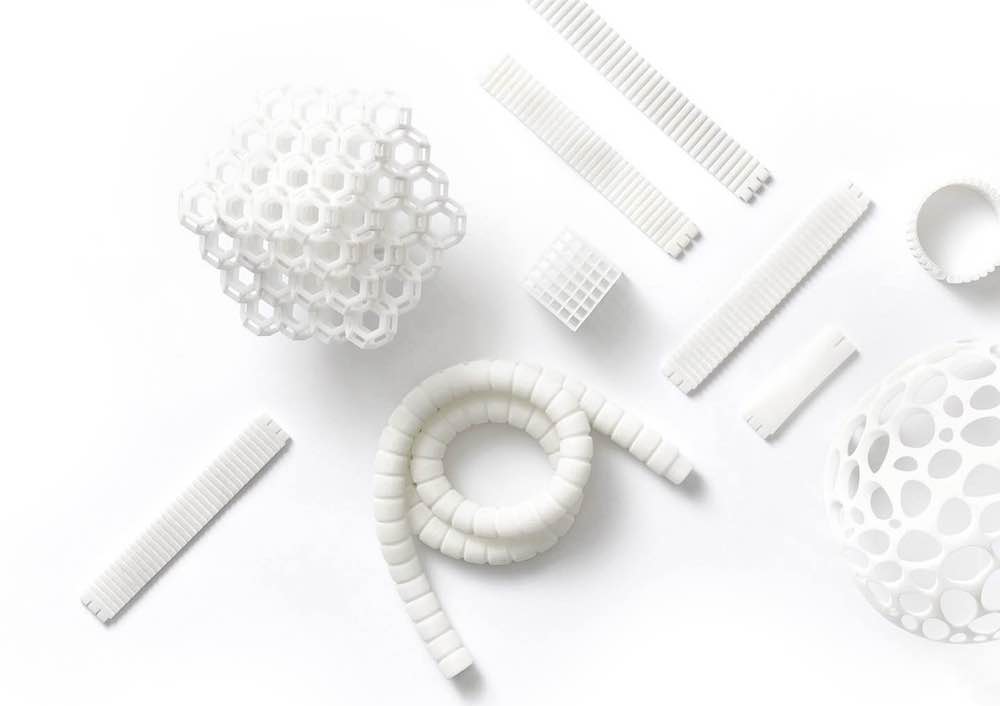
One of the major advantages of AM is the ability to create internal reinforcement structures that would be difficult or impossible to machine conventionally. Lattice geometries, honeycomb cores, and internal ribbing patterns help improve stiffness while minimizing structural mass.

These reinforcement strategies are commonly used around motor mounts, payload interfaces, and landing gear attachment points where stress concentrations are highest. Topology optimization software is increasingly used to automatically generate efficient internal structures tailored to expected loading conditions.

Propulsion & Thermal Management Parts for Drones

Propulsion systems are high-vibration, thermally demanding environments that require precise alignment and exceptional fatigue resistance.

Motor Mounts

Motor mounts must withstand vibration, thrust loading, and thermal stress while maintaining accurate propulsion alignment. The use of 3D-printed UAV parts allows for lightweight motor interfaces to be rapidly customized for different propulsion systems and airframe layouts.

Printed motor mounts often incorporate cooling features, cable routing paths, and vibration management structures directly into the component. Composite-filled materials and reinforced polymers are frequently used where additional stiffness and fatigue resistance are required.

Ducted Fan Structures

Ducted fan propulsion systems rely heavily on accurate aerodynamic shaping to maximize efficiency and reduce turbulence. AM is well suited to producing complex duct geometries, intake profiles, stator structures, and integrated propulsion housings, with surface finish depending on the process and post-processing method.

These systems are increasingly used in VTOL UAVs, loitering munitions, and compact reconnaissance platforms where propulsion efficiency and low acoustic signature are important operational requirements. Printed structures also simplify rapid testing of alternative duct geometries during development.

Propeller Development and Testing

The use of AM for custom drone parts plays an important role during UAV propeller development by allowing engineers to rapidly prototype and test different blade geometries. Pitch profiles, airfoil sections, and diameter variations can be evaluated quickly without committing to expensive production tooling.

Standard polymer prints, such as basic FDM or SLA resins, suffer from severe delamination risks and excessive blade flex under the high RPMs of operational UAV testing. To ensure safety and accuracy, functional aerodynamic propeller testing generally requires high-end composite-filled polymers or SLS nylon to withstand the intense centripetal and aerodynamic loads without catastrophic failure.

Although operational propellers are often manufactured using composite layup or injection molding processes, printed prototypes significantly reduce development time during aerodynamic and propulsion testing programs.

Cooling Components and Airflow Management

Modern UAVs contain increasingly powerful processors, payload electronics, batteries, and ESCs that generate substantial thermal loads within compact airframes. AM allows lightweight cooling ducts, airflow channels, and thermal management structures to be integrated directly into the aircraft design.

This improves cooling efficiency while minimizing additional weight and packaging complexity. Airflow optimization is particularly important for high-endurance UAVs, AI-enabled systems, and compact aircraft with limited internal ventilation space.

Payload & Sensor Integration

When 3D-printed parts are used for assembling drones with specific end-use cases in mind, the payload interface is almost always custom-engineered.

EO/IR Sensor Mounts

EO/IR payloads require rigid but lightweight mounting structures capable of minimizing vibration and maintaining sensor alignment during flight. AM enables custom mounting solutions tailored to specific payload dimensions, aircraft geometries, and stabilization requirements.

Printed sensor mounts can also incorporate cable routing, environmental protection features, and modular interfaces that simplify payload integration across multiple UAV platforms. Rapid customization is especially useful in ISR and surveillance applications where payload configurations frequently change.

Gimbals and Stabilized Payload Structures

Gimbal systems depend on lightweight but structurally stable components to maintain image quality and stabilization accuracy. AM enables highly optimized gimbal frames and support structures that reduce weight without sacrificing rigidity.

Complex curved geometries and integrated mounting features can be produced without increasing manufacturing complexity. This is particularly valuable for small UAVs where payload weight directly affects endurance, maneuverability, and flight performance.

Antenna Mounting Solutions

Communication reliability and RF performance are heavily influenced by antenna positioning and structural integration. AM enables highly customized antenna mounts optimized for aircraft geometry, antenna orientation, and electromagnetic compatibility.

Engineers can also use RF-transparent materials and carefully designed separation distances to minimize signal interference. Printed antenna structures are especially useful for BVLOS UAVs, tactical drones, and multi-link communication systems.

LiDAR and Mapping Payload Housings

LiDAR and mapping systems require protective housings capable of isolating sensitive sensors from vibration while maintaining accurate alignment and environmental protection. 3D printing processes support lightweight custom enclosures tailored to specific payload geometries and aircraft layouts.

Printed housings may also integrate cooling pathways, cable management features, and aerodynamic fairings to improve overall system efficiency. This is particularly useful in survey, inspection, and geospatial mapping UAV applications.

Avionics & Electronics Enclosures

Flight Controller Housings

Flight controller housings protect critical avionics from dust, vibration, moisture, and impact while maintaining airflow and connector accessibility. AM enables highly compact enclosure designs optimized for specific electronics layouts and UAV configurations.

Printed housings are widely used in prototype UAVs, industrial drones, and tactical systems because they can be rapidly modified during development. This flexibility simplifies electronics integration and reduces redesign time when hardware configurations change.

Mission Computer Enclosures

Mission computers generate significant heat and require ruggedized protection from vibration and mechanical shock. AM supports lightweight enclosure designs that optimize thermal dissipation while maintaining compact packaging efficiency.

As UAV onboard processing demands continue to increase, enclosure geometry plays a growing role in maintaining thermal stability and electronics reliability. Integrated airflow channels and mounting interfaces can be incorporated directly into the printed structure.

RF Shielding Considerations

Certain UAV electronics compartments require shielding to reduce electromagnetic interference and protect sensitive communication systems. By 3D printing UAV parts, manufacturers support hybrid shielding approaches using conductive coatings, metallic inserts, or composite structures.

High-attenuation, weight-optimized EMI shielding may use conductive coatings, metallic inserts, conductive fillers, electroless plating, metallized surfaces, or hybrid composite structures. At the same time, UAV designers must preserve RF transparency around antennas and wireless systems. Printed structures allow conductive and non-conductive zones to be strategically positioned throughout the aircraft to optimize electromagnetic compatibility.

Environmental Sealing and Ruggedization

Many UAVs operate in harsh conditions involving moisture, dust, vibration, thermal cycling, and salt exposure. Printed enclosures can integrate gasket channels, sealed interfaces, reinforced mounting points, and shock-absorbing features directly into the design.

This is particularly important for military, maritime, offshore, and industrial UAV operations where electronics reliability directly affects mission success and operational safety.

Landing Systems & Mobility Components

Landing Gear

Landing gear structures must absorb impact energy while remaining lightweight and durable. 3D printing enables optimized geometries that improve energy absorption without significantly increasing structural mass.

Printed landing gear is commonly used on multirotor UAVs and lightweight VTOL platforms where rapid replacement and low production cost are operational advantages.

Shock-Absorbing Structures

Shock-absorbing structures help isolate payloads and avionics from landing impacts and operational vibration. AM enables highly customized damping geometries tailored to different aircraft sizes and mission profiles.

Flexible lattice structures and compliant geometries can often replace heavier conventional damping systems while maintaining adequate mechanical protection.

Skids and Recovery Systems

Skid systems, parachute housings, and impact protection structures are well suited to 3D printing because they are typically lightweight, low-volume, and highly application-specific. Printed recovery components can be quickly adapted for different UAV sizes and operational requirements.

These systems are especially useful for expeditionary UAV programs where rapid replacement and field-level customization may be required.

VTOL Transition Mechanisms

Hybrid VTOL UAVs use specialized transition systems involving tilt rotors, actuators, aerodynamic fairings, and rotating propulsion interfaces. 3D printing allows lightweight custom parts to be developed rapidly during testing and integration programs.

The ability to quickly modify mechanical interfaces and aerodynamic transition structures is especially valuable during early-stage UAV development where repeated design changes are common.

Industrial Processes Used by Drone Parts Manufacturers

Selecting the correct 3D printing process dictates whether a component will succeed or fail in the field. Industry professionals select a printing process according to the operational requirements of the final component.

Technology Common UAV Applications Material Classes Primary Benefits
Fused Deposition Modeling (FDM) Fuselages, multirotor arms, large structural fairings, brackets. Nylon, Polycarbonate, ABS, PEEK, PEKK. Broad material selection, cost-effective for large parts.
Stereolithography (SLA) & DLP Wind tunnel models, micro-UAV components, optical mounts. UV-cured photopolymer resins. Superior dimensional accuracy and smooth surface finish.
Selective Laser Sintering (SLS) Ruggedized enclosures, complex internal ducting, prototype fuel tanks. Production-grade Nylon 11 & Nylon 12 (filled/unfilled). No support structures needed; more uniform mechanical properties than many extrusion-based processes.
Metal Additive Manufacturing Engine mounts, turbine components, high-stress structural nodes. Titanium (Ti64), Aerospace Aluminum, Inconel. High thermal resistance and structural integrity.


Materials Leveraged for 3D-Printed UAV Parts

Material selection is a critical consideration in additive UAV manufacturing because it directly influences structural strength, environmental durability, thermal performance, and operational reliability.

Thermoplastics for UAV Structures

Common UAV thermoplastics include PLA, ABS, PETG, nylon, polycarbonate, PEEK, and PEKK. Each material offers distinct characteristics in terms of printability, strength, impact resistance, thermal stability, and chemical resistance.

While lower-cost materials like PLA and ABS are typically restricted to early prototyping, operational UAV systems rely on engineering-grade polymers capable of surviving challenging environmental and mechanical conditions. PEEK and PEKK deliver metal-like mechanical performance, chemical resistance, and the flame-retardant, low-smoke, non-toxic properties required for defense and aerospace environments.

Composite Materials

Composite-filled polymers improve stiffness, dimensional stability, and structural efficiency while maintaining low weight. Carbon fiber-filled materials are utilized for UAV structures requiring high rigidity. Glass-filled and Kevlar-reinforced materials are also used where impact resistance and environmental durability are necessary operational considerations.

Metal Materials

Metal 3D printing supports the use of aerospace-grade aluminum, titanium, and stainless steel alloys for demanding UAV applications. These materials provide greater strength and thermal performance than polymer alternatives. Metal components are utilized in propulsion systems, ruggedized mounting hardware, structural reinforcement interfaces, and thermal management assemblies.

AI-Driven 3D Printing

Artificial intelligence is being utilized by drone parts manufacturers to optimize print parameters, automate structural design, and predict manufacturing defects before they occur. This can improve production consistency while reducing development time. Machine learning systems support autonomous design iteration and predictive process optimization in UAV manufacturing workflows.

Multi-Material and Embedded Electronics Printing

Emerging AM processes support simultaneous printing of structural materials, conductive traces, embedded sensors, and electronics. This reduces assembly complexity in UAV systems. Integrated smart structures support onboard health monitoring, distributed sensing, and reduced wiring requirements within unmanned aircraft.

Large-Scale Additive Manufacturing for UAVs

Large-format 3D printing systems produce major airframe sections and tooling for commercial drone parts and UAV production programs. This reduces tooling costs while supporting rapid aircraft development. The technology is utilized for low-volume defense UAVs and large autonomous aircraft where conventional tooling is prohibitively expensive.

Expeditionary and Battlefield Manufacturing

Forward-deployed AM is increasingly utilized for UAV sustainment and repair operations. Rather than shipping an inventory of physical spare parts to remote operating bases or maritime vessels, operators can maintain a secure digital twin catalog. Components can be produced closer to the point of use, reducing dependence on centralized logistics chains. For military and emergency response UAV programs, expeditionary manufacturing alters operational flexibility while supporting rapid replacement of damaged or mission-specific components.