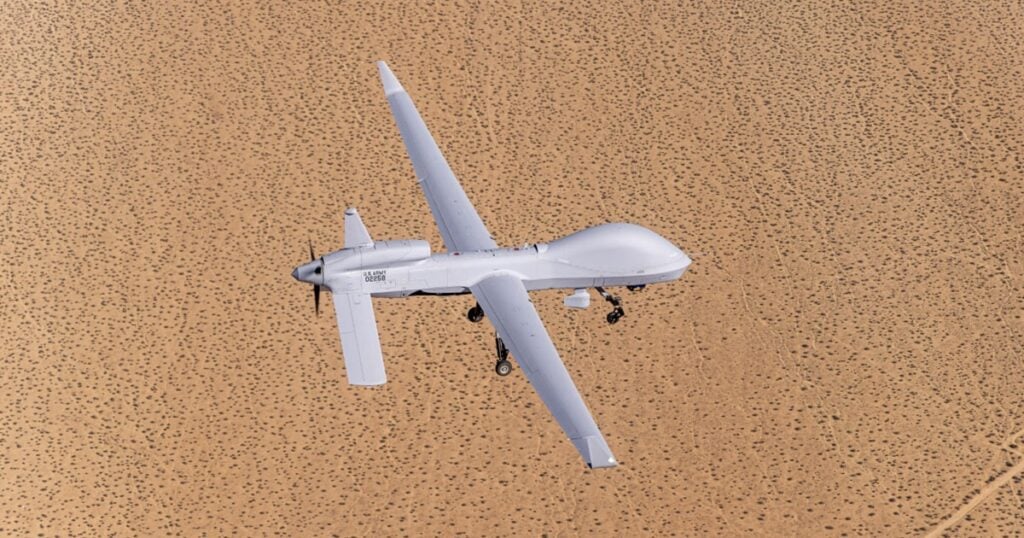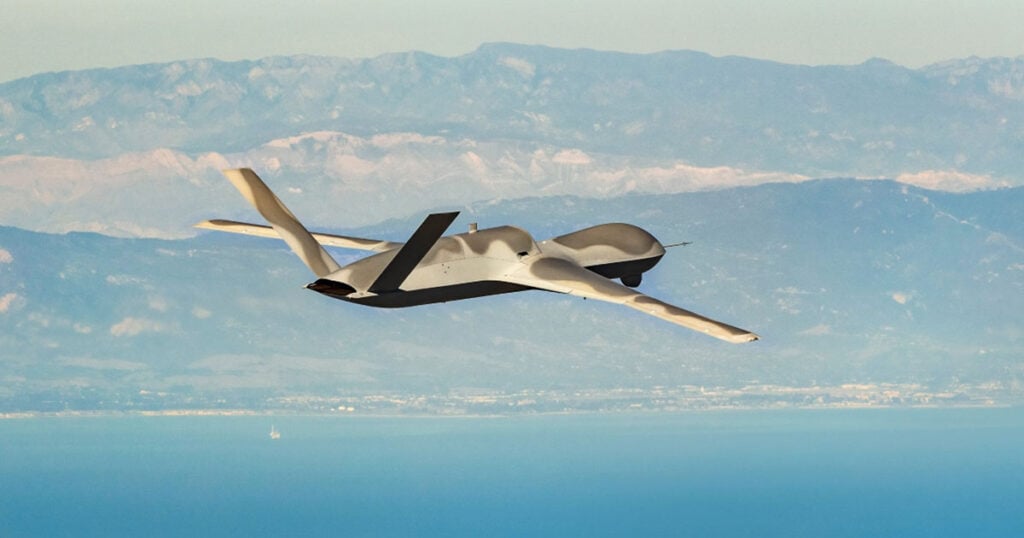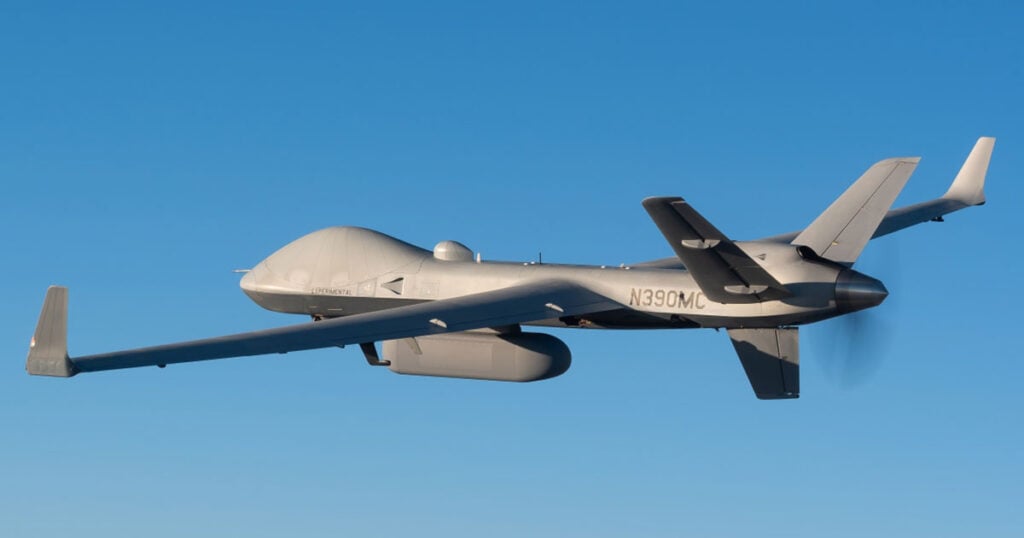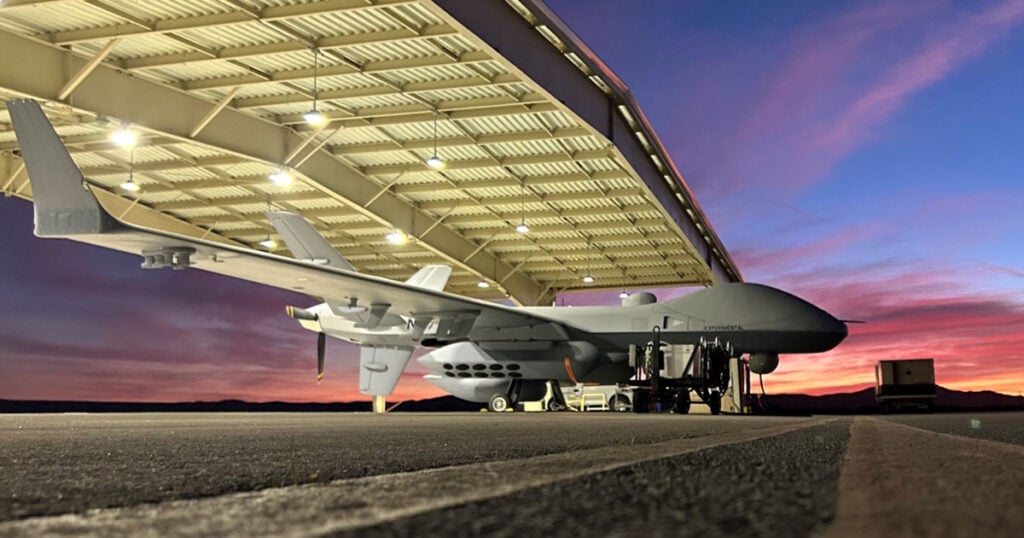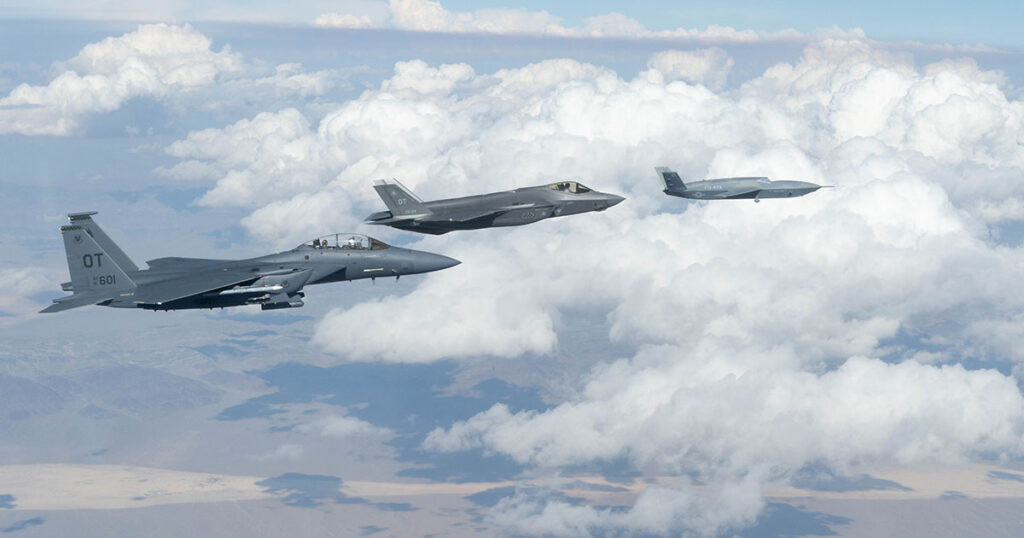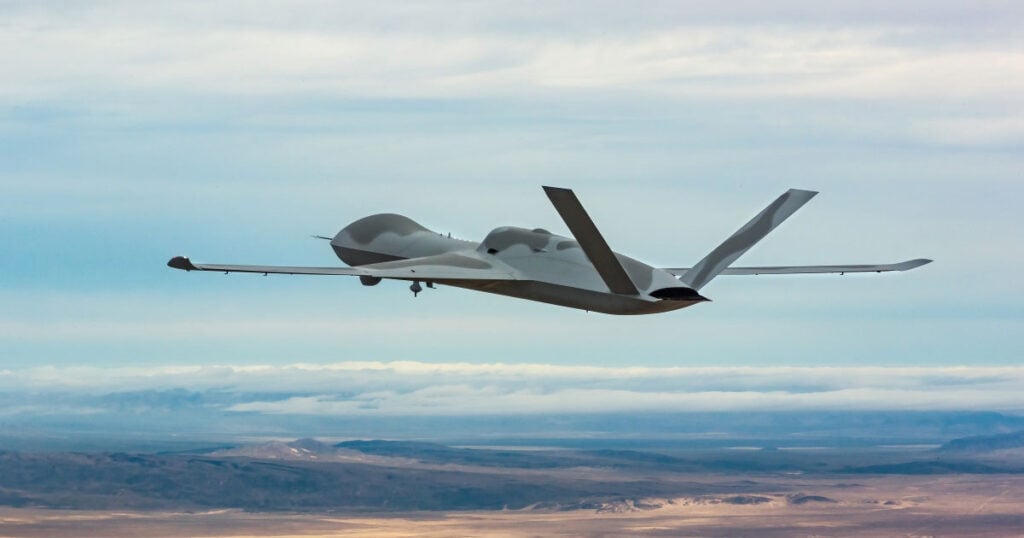
On June 11, 2025, General Atomics Aeronautical Systems, Inc. (GA-ASI) completed a test that successfully demonstrated a simulated autonomous shoot-down, using multiple aircraft and advanced software.
A GA-ASI-owned MQ-20 Avenger® unmanned jet used the latest government reference autonomy software in an exercise involving multiple live and virtual aircraft, as well as software supplied by Shield AI.
Because software-defined mission capabilities are evolving so fast, it’s critical that aircraft hardware be agnostic as to the origins of these upgrades. GA-ASI’s flights have underscored how compliance with what are called “government reference architectures” enables essential interoperability for hardware and software.
In the latest exercise, the MQ-20 Autonomous Collaborative Aircraft demonstrated that it could marshal; do dynamic midair station-keeping with several real aircraft; patrol a simulated combat area; make decisions autonomously; team with human command-and-control; and intercept two live aircraft autonomously, resulting in a simulated successful missile shot against the live targets.
The “live-on-live” event using representative Group 5 unmanned aerial vehicles (UAVs) proved how mature autonomy is today for future platforms.
Another feature of the test was a mid-flight transition from the government-provided suite of software to Shield AI’s Hivemind autonomy software, which subsequently performed a similar mission profile. This rapid switch aboard the MQ-20 took place without affecting aircraft stability or mission continuity. This demonstrates how standardized reference architectures are streamlining hardware and software integration, even from different vendors.
The test offered meaningful implications for the future of autonomy development. By adhering to a shared reference architecture, this model supports a flexible autonomy “app store” concept. It allows the government to incorporate capabilities from a broad vendor ecosystem without being tied to any single supplier. It promotes modularity, supports ongoing innovation, and enables more rapid deployment of autonomy features that align with the speed and agility often seen in commercial software development.
Michael Atwood, Vice President of Advanced Programs at GA-ASI, commented, “This event reflects the kind of interoperability and adaptability we believe is essential for future autonomy efforts. Being able to rapidly integrate and test autonomy elements from multiple vendors helps ensure the most effective capabilities are available to the warfighter, regardless of origin.”
GA-ASI has proven all this over a series of groundbreaking test events. The latest on June 11 underscored the ability of the government’s reference architecture to shorten integration timelines, avoid vendor lock-in and enable flexible autonomy solutions that can scale and adapt as mission needs evolve.