Tactical Drones
Discover cutting-edge solutions from 18 leading global suppliers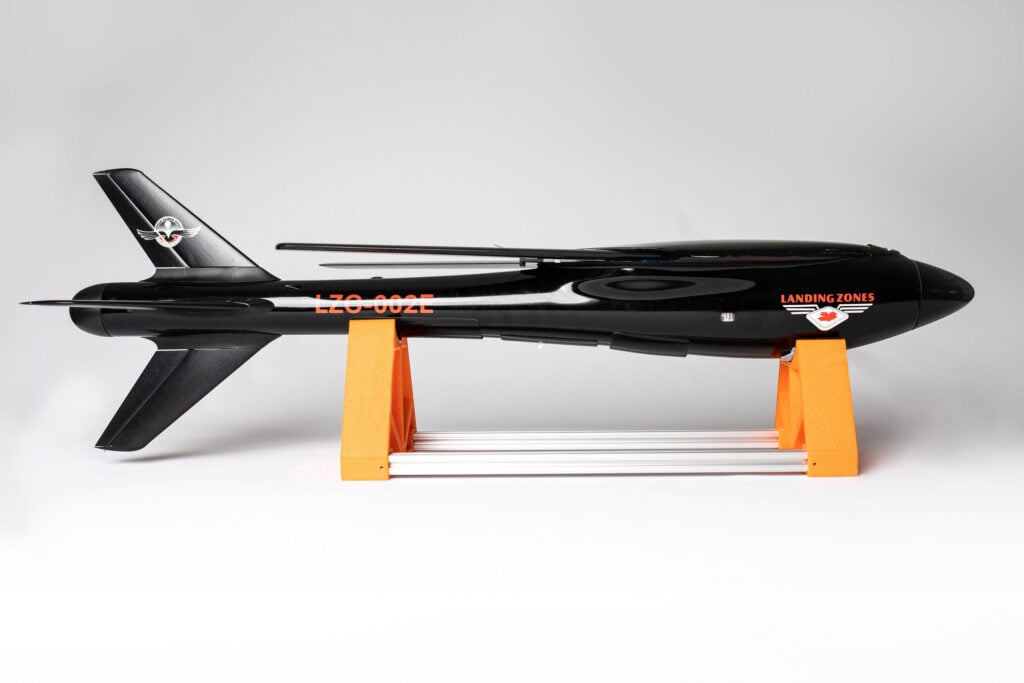
Landing Zones Canada Inc. has successfully completed a rigorous flight test campaign for its Eagle Advanced Payload Delivery System (APDS).
Designed to enhance military logistics and strike capabilities, the Eagle APDS is engineered for precision deployment in contested environments, ensuring mission success even in the most challenging landing zones. This milestone is seen as a significant leap forward in long-range, stealth-enabled aerospace technology.
Unlike conventional unmanned platforms, Eagle is said to be the first high-altitude balloon-launched APDS, merging advanced aerodynamics with operational flexibility.
The system seamlessly transitions between fully autonomous and man-in-the-loop controls, making it highly adaptable for dynamic battlefield scenarios. One of its defining features is a variable wing profile that enables smooth shifts from supersonic speeds to low-speed loitering, optimizing performance for diverse mission demands.
Key Capabilities of the Eagle APDS:
- High-Speed, High-Altitude Operations: Designed for extended-range missions, Eagle reaches stratospheric altitudes and delivers precision effects hundreds of miles downrange.
- Validated in Extreme Conditions: The comprehensive flight test campaign has confirmed Eagle’s ability to operate reliably in austere environments, reinforcing its resilience and adaptability.
- Mission Versatility: Whether for strategic operations or tactical deployments, Eagle’s hybrid autonomy and adaptable wing design make it an invaluable asset across multiple mission sets.
- Stealth and Survivability: Built for low observability, the Eagle APDS minimizes its radar signature, significantly enhancing operational survivability in contested airspace.
According to Landing Zones Canada, the Eagle APDS sets a new standard in advanced payload delivery with its capabilities and proven performance, solidifying the company’s position at the forefront of aerospace innovation.